Blog
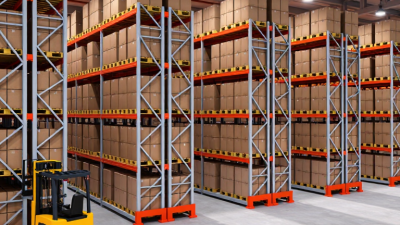
What Is Heavy Duty Double Deep Pallet Racking?
Heavy Duty Double Deep Pallet Racking is designed for warehouses that need more storage density than standard selective racking provides. It places one pallet behind another, creating deeper storage lanes and reducing aisle requirements. This layout can increase usable capacity, but forklift access becomes more demanding. Clear planning matters.
The 2024 MHI Annual Industry Report, produced with Deloitte, identifies labor shortages, rising operating costs, and technology investment as major supply chain concerns. These pressures encourage warehouse operators to use floor space more carefully. Double-deep systems can help, especially where pallet loads are stable and product turnover is moderate. However, higher density does not automatically mean better performance. It may increase travel distance and make rear pallets less accessible.
A practical installation begins with pallet measurements, load weights, beam levels, and forklift specifications. The rack must support the combined load safely, not merely the front pallet. Operators also need disciplined inventory control, because rear-positioned stock can become difficult to inspect. WERC benchmarking research highlights inventory accuracy, storage utilization, and order-cycle performance as important distribution-center measures. These metrics should guide the design.
The idea sounds simple.
The trade-off is real.
A well-designed Heavy Duty Double Deep Pallet Racking system can improve cubic utilization and reduce unnecessary aisles. Yet it requires suitable handling equipment, trained operators, and regular inspections. This article explains its structure, operating principles, benefits, limitations, and practical selection criteria. It also examines why density should be evaluated alongside accessibility, safety, and daily workflow.
Read more »
 By:Oliver
- November 2, 2026
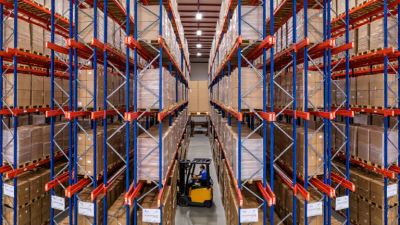
Why Use Heavy Duty Drive In Racking?
Warehouse space is costly, and every aisle affects storage capacity. Heavy Duty Drive In Racking can increase pallet density by allowing forklifts to enter storage lanes. It is often considered for large quantities of similar products, where access to every individual pallet is not essential. The trade-off is real: fewer access aisles can mean less selective retrieval.
The 2024 MHI Annual Industry Report, produced with Deloitte, found that 55% of surveyed supply chain professionals planned to increase investment in supply chain technology. That figure does not measure racking performance, but it reflects pressure to improve warehouse operations. Storage design is part of that effort. In a drive-in system, pallets are typically stored on rails, with loading and retrieval managed from the lane entrance. Product dimensions, pallet condition, forklift compatibility, and inventory rotation all matter.
The right choice depends on the operation. High-density storage can help when product runs are deep and turnover patterns are predictable. It can be less suitable when teams need rapid access to many different SKUs. A site assessment should consider clear height, floor condition, load specifications, and safe forklift clearances. Even a well-designed layout can disappoint if daily handling practices do not match it. That part is easy to underestimate.
Read more »
 By:James
- November 2, 2026
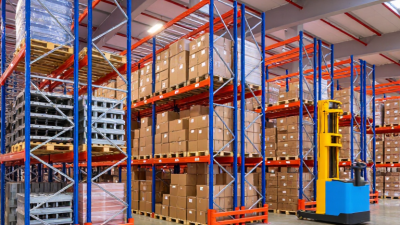
How to Choose Heavy Duty Selective Pallet Racking in 2026
Choosing Heavy Duty Selective Pallet Racking in 2026 is not just a matter of buying stronger beams. It is a decision about load safety, aisle space, forklift access, and future inventory changes. A pallet of steel components behaves differently from cartons of mixed goods. Small details matter.
Industry reports help explain why storage planning deserves closer attention. MHI’s Annual Industry Report tracks ongoing investment in supply chain technology and operational change. CBRE’s industrial and logistics research also monitors warehouse markets, where space and operating efficiency remain important considerations. These reports do not prescribe one rack design. They do show why businesses should assess storage capacity alongside throughput, available floor area, and changing product needs.
Start with the loads you actually handle. Record pallet dimensions, maximum weight, load overhang, and the number of pallet positions required. Then check the clear height, floor condition, sprinkler layout, and turning radius of your forklifts. A rack that looks spacious on a drawing may feel tight when a loaded truck enters the aisle. That is worth questioning.
This guide explains how to compare frame and beam capacities, select an appropriate layout, and evaluate safety features and installation requirements. It also highlights a common mistake: choosing capacity from average loads instead of the heaviest realistic pallet. Verify every design against supplier specifications and qualified engineering advice. Strong racks still need sound planning.
Read more »
By:James
- November 2, 2026