High-Density Pallet Flow Rack Systems: Engineering Guide to FIFO Storage, Speed Control & Global Procurement
Maximize warehouse cubic utilization by up to 85% while enforcing strict First-In, First-Out (FIFO) stock rotation. Engineered with heavy-duty structural steel channels, dynamic speed braking mechanics, and pallet separation safety devices.
Up to 85% Density
Consolidate travel aisles into deep gravity-fed dynamic flow lanes up to 20 pallets deep.
Guaranteed FIFO
Eliminate product expiration and stock degradation for food, beverage, pharma, and chemicals.
Braking & Separation
Patented mechanical speed governors and relief separators prevent backpressure load crushes.
In-House Structural
Fabricated using rugged SK3000 structural C-channels to withstand aggressive forklift impacts.
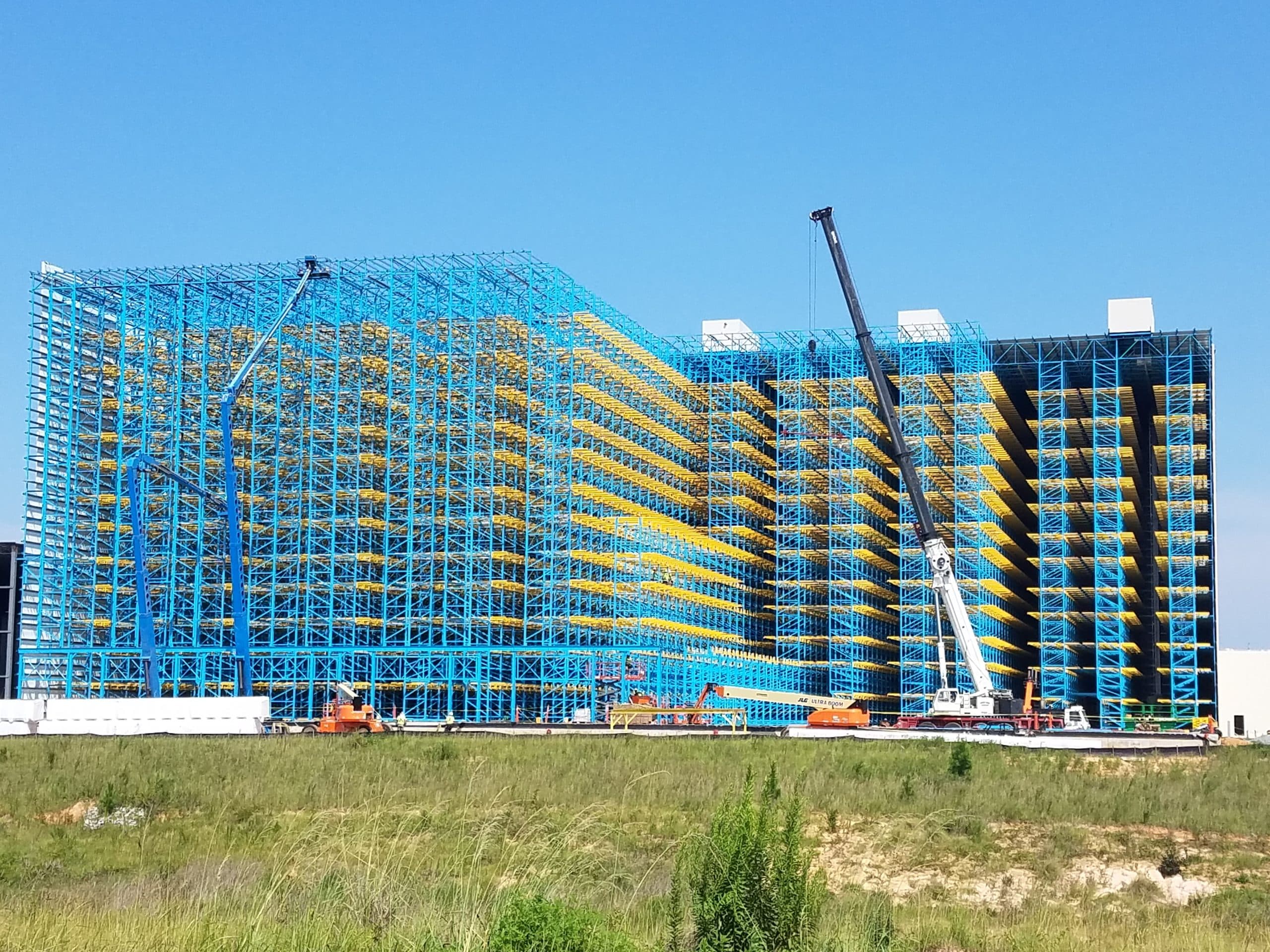
How Dynamic Pallet Flow Rack Solves Warehouse Density & Rotation
In modern high-throughput logistics, conventional selective racks waste up to 60% of total warehouse cubic footage on access aisles. A Pallet Flow Rack system—also referred to as gravity flow racking or dynamic roller racking—converts dead aisle space into continuous, ultra-dense storage lanes. Pallets are loaded from a dedicated rear charging aisle and glide effortlessly over pitched heavy-duty skate wheels or full-width steel rollers down to an unloading discharge face.
This physical separation of charging and retrieval operations creates an impenetrable safety barrier: forklift drivers restocking pallets never cross paths with order pickers discharging goods. Because gravity supplies the kinetic energy required for pallet transfer, operations achieve rapid inventory cycles without consuming electrical power or demanding complex robotic software.
- True FIFO Inventory Guarantee: The earliest pallet loaded into the lane is invariably the first unit retrieved, eliminating dead stock risks for date-sensitive consumer goods and perishables.
- Engineered Kinetic Deceleration: Self-energizing centrifugal speed controllers maintain steady pallet glide speeds between 50 to 60 FPM (feet per minute), preventing downstream runaway collisions.
- Integrated Pallet Separators: Automatic mechanical release latches segregate the first discharge pallet from accumulated rear hydrostatic line pressure, allowing safe and effortless extraction.
- Custom Roller Geometry: Available in staggered poly skate-wheel assemblies, heavy-duty split steel rollers, or full-width galvanized drums engineered to match your pallet footprints.
High-Performance Pallet Flow Rack Architecture
Steel King Industries, Inc. designs flow systems tailored to precise material handling profiles, weight classes, and environmental temperatures. Review our core configuration matrix below.
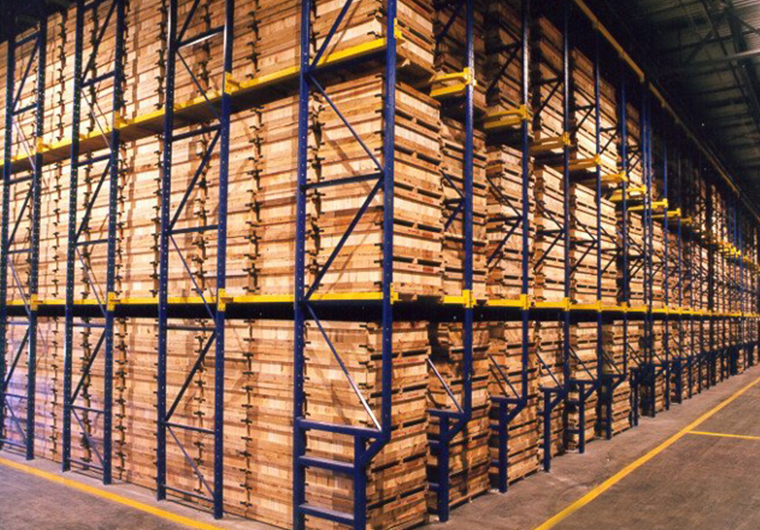
Deep-Lane Heavy-Duty Pallet Flow (Up to 20 Pallets Deep)
Designed for mega-distribution hubs, food processors, and cold-storage operations requiring massive holding capacity per single SKU. Built on SK3000 structural C-channels with reinforced impact charge faces.
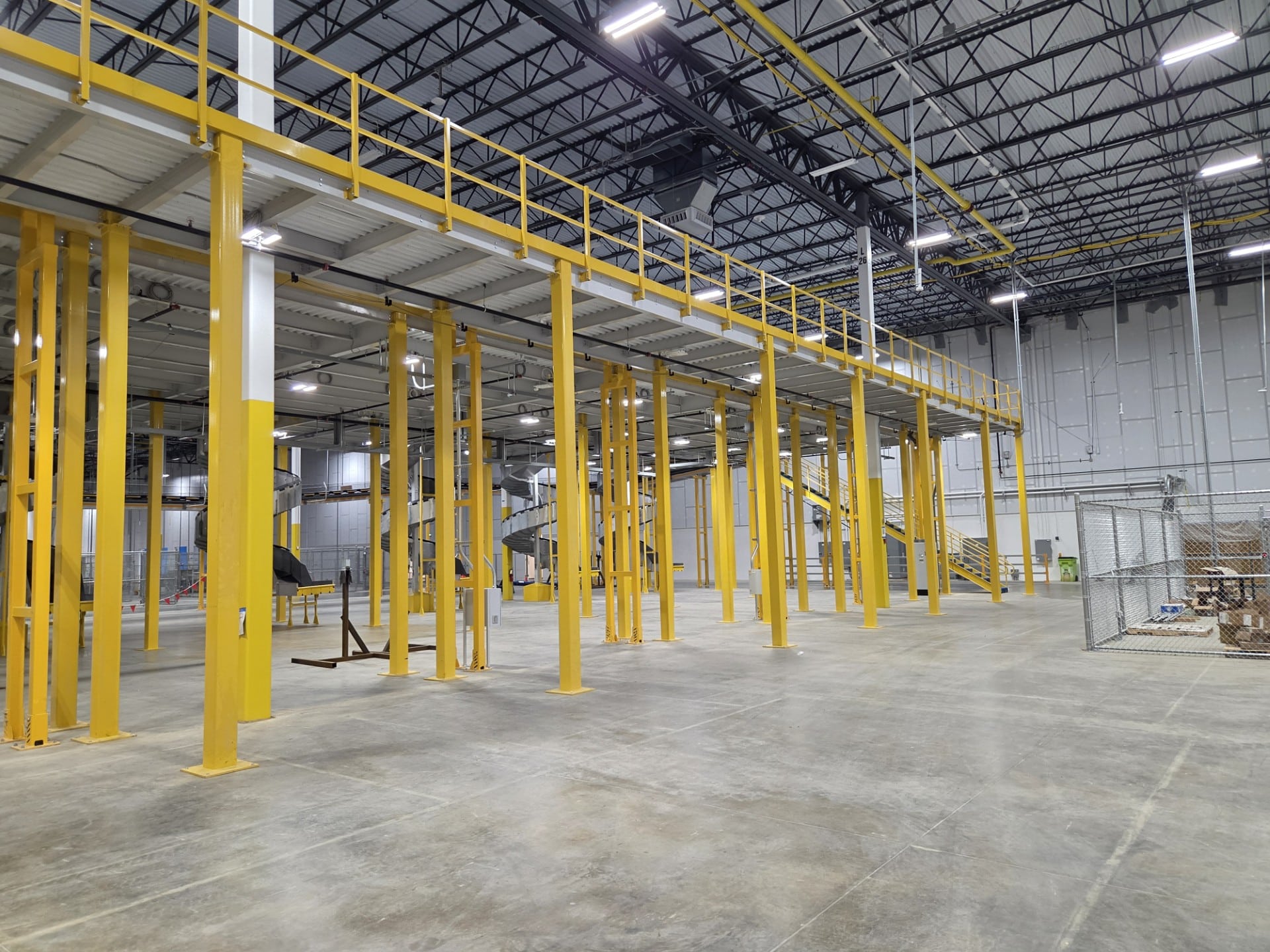
Shallow-Lane Flow & High-Throughput Pick Modules
Engineered for high-velocity case pick operations and multi-tier mezzanine modules. Pallet flow lines continually replenish pickers at floor and elevated deck levels, maximizing labor ergonomics.
Dynamic Speed Controllers
Indirect and direct braking rollers utilize centrifugal friction brake shoes to govern coasting speeds automatically, dampening runaway inertia regardless of operator skill.
Inquire on BrakesPallet Flow Separators
Mechanical disconnect stops isolate the front discharge pallet from thousands of pounds of rear hydrostatic queue pressure, eliminating load jamming and driver extraction hazard.
View Safety LatchesStructural C-Channel Uprights
Fabricated from hot-rolled 50,000 PSI structural channel steel. Delivers 300% greater structural impact resistance than standard roll-formed columns against repeated forklift bumps.
Check Structural RacksFull-Width Steel Rollers
Zinc-plated 2.5-inch diameter rollers mounted on heavy gauge structural steel frames. Ideal for plastic, metal, composite, and poor-condition wooden pallets with irregular underside boards.
View Roller TracksFuture Procurement Trends in Pallet Flow Rack Systems
Global supply chain volatility, land cost escalations, and strict ESG mandates are fundamentally transforming how procurement directors evaluate dynamic storage hardware.
Autonomous Forklift (AGV/AMR) Synergy
Modern pallet flow racks are increasingly specified with optical retro-reflective sensors, specialized lane centering guides, and precision end-stops engineered for robotic unmanned lift trucks to charge and retrieve pallets autonomously 24/7.
Cold Chain & ESG Energy Decarbonization
With industrial freezer energy costs skyrocketing, companies are retrofitting static racks with high-density gravity flow racks inside blast freezers. Reducing refrigerated airspace volume by 40% drops cooling utility expenditures drastically.
Advanced Pallet Compatibility Engineering
The global shift from standard wooden GMA stringer pallets to pooled composite, reinforced plastic, and perimeter-base metal pallets requires specialized dual-wheel lines and customized brake surface texturing to overcome lower friction coefficients.
Enhanced Life-Cycle Impact Armor
Procurement teams now prioritize total cost of ownership (TCO) over cheap initial bids. Steel King's structural steel channel uprights, bull-nose deflector guards, and heavy-gauge entry guides slash routine replacement down to zero.
Evaluating Storage Systems: Pallet Flow vs. Other Configurations
Choosing the correct high-density storage technology requires balancing selectivity, SKU count, pallet velocity, and forklift travel distances. Use this structural comparison matrix to validate your warehouse project requirements.
| Racking Architecture | Rotation Logic | Storage Depth | Space Utilization | Aisle Requirements | Operational Productivity |
|---|---|---|---|---|---|
| Pallet Flow Rack | Strict FIFO (First-In, First-Out) | 2 to 20+ Pallets Deep | Up to 85% Cubic Capacity | Two Dedicated Aisles (Charge & Pick) | Maximum; zero forklift entry, parallel stocking and picking without congestion. |
| Pushback Pallet Rack | LIFO (Last-In, First-Out) | 2 to 6 Pallets Deep | Up to 75% Cubic Capacity | Single Combined Aisle | High; pallets pushed up inclined nested carts, ideal for medium-turnover SKUs. |
| Drive-In / Drive-Through | LIFO (Drive-In) / FIFO (Drive-Thru) | 4 to 10 Pallets Deep | Up to 70% Cubic Capacity | Aisle-less interior bays | Slow; forklifts must drive into rack tunnels, elevating structural impact hazard. |
| Selective Pallet Rack | Any (Unrestricted) | 1 Pallet Deep (Single selective) | 40% - 50% Cubic Capacity | Aisles between every rack row | Low density; excessive forklift transit time and wide aisle footprints required. |
| Automated Pallet Shuttle | FIFO or LIFO (Software controlled) | Up to 40+ Pallets Deep | Up to 90% Cubic Capacity | One or Two Aisles | High automation; higher capital expenditure and electrical battery maintenance. |
Engineering note: Pallet flow systems maximize throughput velocity in staging docks, cross-docking distribution hubs, and temperature-controlled food preservation facilities where product expiry creates direct financial liability.
Why Specify Your Pallet Flow Rack With Steel King Industries, Inc.?
With continuous manufacturing operations since 1970, Steel King Industries, Inc. is an authoritative single-source manufacturer of industrial material handling systems. Unlike component brokers who assemble disparate imported pieces, we engineer, fabricate, and test full flow lane configurations in-house.
Heavy-Duty Structural Steel Integrity
Our flagship SK3000 structural channel uprights and C-channel beams are hot-rolled in North American mills, delivering unmatched resistance against impact abuse at charge and discharge interfaces.
Project-Specific Empirical Flow Testing
Every dynamic flow proposal can be validated in our testing labs using your exact pallet specimens, wrapping methods, and operational weights to determine the precise track pitch, brake spacing, and roller type.
Global Logistics & Professional Permitting
Our professional structural engineering team provides complete PE-stamped calculation packages compliant with RMI (Rack Manufacturers Institute) ANSI MH16.1, local building codes, and international seismic parameters.
Pallet Flow Procurement Project Checklist
Have these project parameters ready when consulting with our application engineering team:
- Pallet Construction: GMA wood (2-way or 4-way), plastic runner, perimeter base, or metal slave pallet
- Unit Load Dimensions: Pallet width, length, overall height including product overhang (W × D × H)
- Load Weights: Minimum and maximum pallet weights (crucial to establish brake trip velocities)
- Lane Depth & Throughput: Target pallet positions per lane (e.g., 4-deep, 10-deep, 18-deep) and hourly pick rates
- Environmental Conditions: Ambient dry warehouse, cooler (+34°F to +40°F), or blast freezer (-20°F to -30°F)
- Building Facility Envelope: Concrete slab thickness, compressive strength (PSI), and seismic classification
- Material Handling Fleet: Counterbalance, reach truck, automated guided vehicle (AGV), or AS/RS crane carriage
Frequently Asked Questions on Pallet Flow Racks
Clear, engineering-backed answers addressing the most frequent operational, design, and purchasing inquiries made by global warehouse directors and procurement specialists.
What pitch angle is required for optimal pallet flow rack performance?
The standard industry gradient for dynamic pallet flow racking ranges between 3/8-inch to 1/2-inch drop per linear foot (an approximate 3% to 4% grade slope). A shallower 3/8" pitch is frequently specified for rigid, heavy plastic pallets or metal containers with ultra-smooth runners, whereas softer, warped, or flexible wooden pallets often require a 7/16" or 1/2" pitch to prevent sagging friction between roller centers. The exact pitch angle is empirically validated during Steel King's design engineering phase.
How does a pallet flow system prevent dynamic runaway acceleration and backpressure?
To eliminate runaway velocity in lanes deeper than three pallets, Steel King installs internal mechanical centrifugal speed controllers evenly along the flow tracks. These internal brakes regulate pallet velocity to a controlled 50–60 feet per minute. To solve hydrostatic backpressure—where accumulating downstream pallets jam against the discharge face—we integrate mechanical pallet separators. When the forklift operator retrieves the front lead pallet, the separator triggers a release valve allowing the remaining pallets to advance in a controlled, single-file cascade.
Can pallet flow rack systems operate inside deep-freeze or blast-chiller facilities?
Absolutely. Gravity pallet flow is widely recognized as the premier storage configuration for cold storage and blast freezing applications down to -30°F (-34°C). Steel King equips freezer-grade pallet flow racks with hot-rolled structural steel uprights, fully sealed zinc-chromate roller bearings, low-viscosity synthetic lubricants engineered specifically for sub-zero temperatures, and corrosion-resistant galvanized roll tracks to avoid ice bridge friction and condensation issues.
When should an operation choose full-width steel rollers versus poly skate-wheels?
Polycarbonate skate wheels (configured in two-track or three-track arrangements) deliver tremendous cost efficiency and exceptional durability when all stored goods use standardized, undamaged 48"x40" GMA wooden pallets with consistent bottom board integrity. Full-width steel rollers are mandatory whenever inventory travels on varied pallets, broken bottom stringers, plastic pallets with uneven runners, steel mesh bins, or custom metal storage skids where individual wheels might snag in bottom gaps.
What maintenance routines are required to ensure continuous gravity flow reliability?
Because pallet flow operates via pure gravity mechanics, maintenance requirements are significantly lower than motorized conveyor or AS/RS shuttle systems. Recommended maintenance includes: bi-annual visual inspections for damaged bottom boards or stretch wrap entanglements in roller axles; checking speed brake spring tension and free-spinning bearing action; testing discharge separator latch functionality; and inspecting beam connection hardware and floor anchor bolts in accordance with RMI safety compliance guidelines.
Can an existing pushback or drive-in rack structure be retrofitted into pallet flow?
Yes, provided the existing upright column structural capacity, clear ceiling height, and floor slab load ratings meet the new dynamic gravity configuration. Steel King's engineering department regularly conducts structural retrofit audits, calculating whether existing structural channel or roll-formed frames can accommodate the downward pitch slope, dynamic impact braking loads, and dedicated charging/discharging traffic layouts.
Ready to Optimize Your Warehouse With Pallet Flow Rack Systems?
Connect with a Steel King Industries, Inc. application engineer for lane design, load analysis, and competitive manufacturing quotes.