Drive-In Racking Systems: Engineering Guide, Cost-Per-Pallet Analysis & Global Procurement Blueprint
Engineered for cold storage, deep-freeze distribution, and bulk homogeneous SKU warehousing. Learn how structural channel drive-in racks maximize cubic density by up to 75% while minimizing lifecycle maintenance costs.
75% Density Gain
Eliminates working aisles to concentrate maximum pallet volume in your existing footprint.
Structural Toughness
Heavy-gauge hot-rolled C-channel frames resist chronic forklift impacts in narrow lanes.
Lowest Cost / Pallet
Superior high-density cost efficiency without motorized parts, roller beds, or electronics.
Custom Load Arms
Flared-entry rails and heavy 7-gauge steel brackets ensure smooth, secure pallet seating.
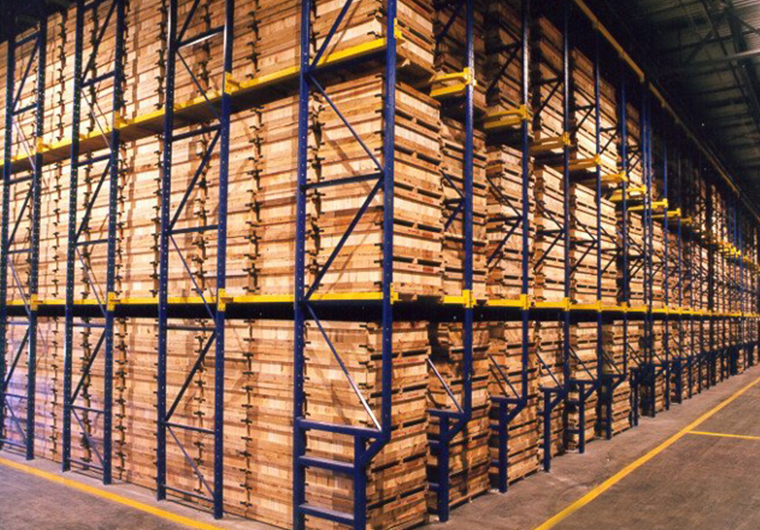
Mastering High-Density Storage: How Drive-In Racks Work
Modern logistics operations face intense economic pressure: industrial land prices are escalating, cold storage utility bills are peaking, and inventory holding requirements continue to grow. When dealing with high-volume, low-SKU product inventories, standard selective pallet racking wastes between 50% and 65% of warehouse floor area on dedicated forklift access aisles.
Drive-In Racking Systems provide the engineering remedy. By consolidating storage positions into deep horizontal tunnels—ranging from 2 to 10 or more pallets deep, and up to 6 levels high—lift trucks drive directly into the racking cube to deposit or retrieve unit loads. Rather than resting on horizontal cross beams, pallets are supported by cantilevered horizontal load rails mounted continuously along both sides of each storage bay.
- Last-In, First-Out (LIFO) Material Velocity — Single-entry Drive-In systems operate on a reverse queue principle, making them the industry standard for non-perishable goods, seasonal inventory reserve stock, or single-batch manufacturing runs.
- Drive-Through (FIFO) Option — Configured with dual-sided aisle access, pallets enter on one face and discharge from the opposite face, giving operations First-In, First-Out compliance for strict batch lot rotation.
- Unrivaled Volumetric Utilization — By converting empty cubic airspace into active pallet positions, facility managers frequently double their storage count without constructing building expansions.
Recommended Drive-In Rack Systems: Structural vs. Tubular
Steel King Industries, Inc. designs and fabricates tailored drive-in solutions built to withstand specific forklift dynamics, temperature extremes, and seismic forces.
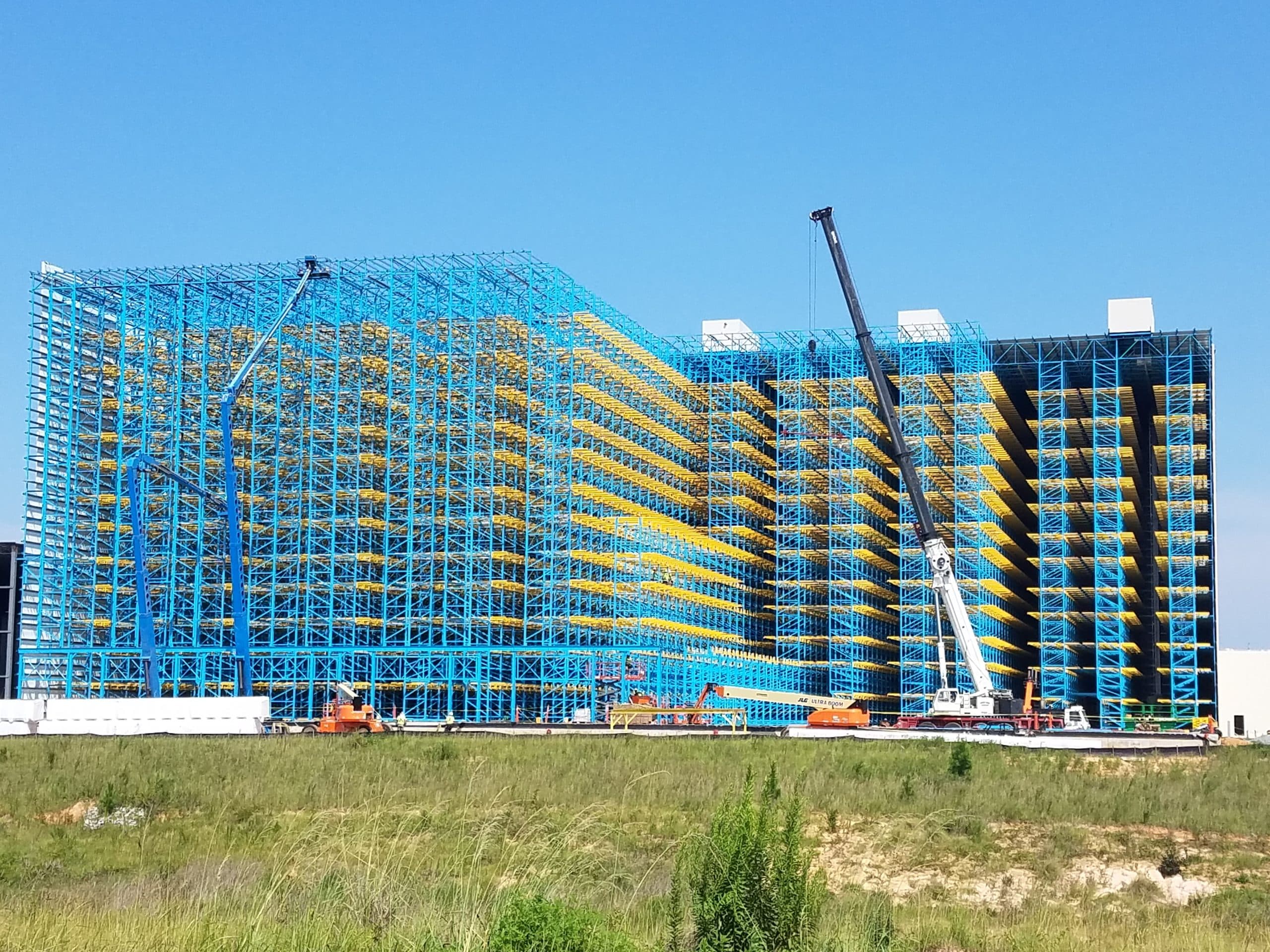
SK3000® Structural Channel Drive-In Rack
Engineered from heavy-gauge hot-rolled C-channel structural steel, the SK3000 represents the premier solution for harsh industrial environments, cold storage distribution centers, and high-cycle grocery operations.
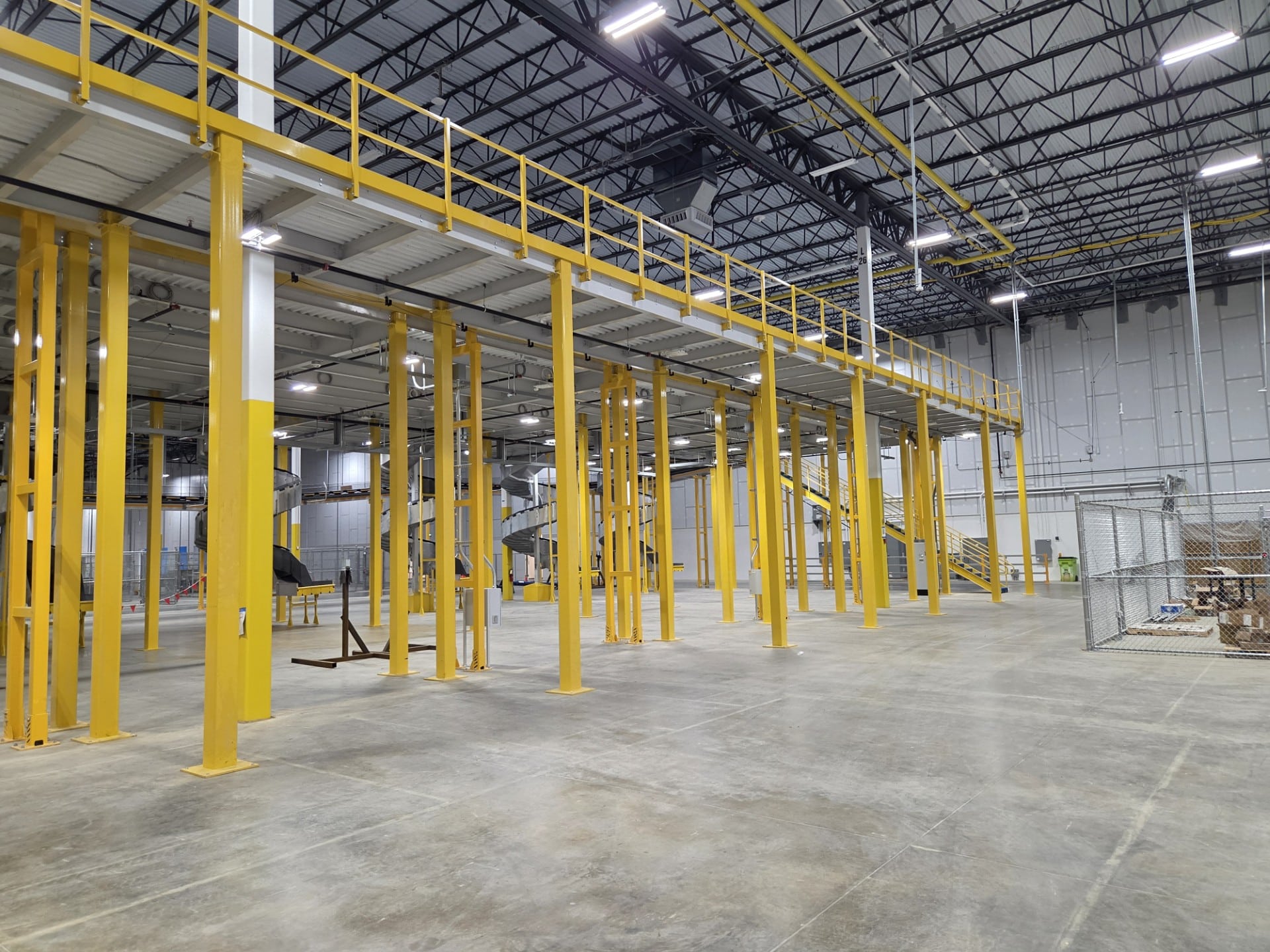
SK2000® Closed-Tubular Drive-In System
Built with fully closed structural steel tubing uprights, the SK2000 delivers 250 times greater torsional resistance and 44 times greater resistance to front-impact buckling than open roll-formed columns of equal weight.
Recessed Cantilevered Legs
To maximize forklift turning clearance at the critical aisle entry point, front columns can be offset with cantilevered bottom posts, drastically reducing wheel and chassis collision rates.
Formed 7-Gauge Load Rails
Continuous load rails manufactured from high-strength formed steel feature integrated flared entry brackets and rigid pallet stops that guide drivers accurately into the lane without pallet slippage.
Floor-Mounted Guide Angles
Heavy-duty structural angle guides anchored to the concrete slab direct forklift wheels precisely down the center of each bay, guarding column bases and eliminating human steering error.
Global Procurement Trends in Drive-In Racking Systems
How enterprise procurement teams, logistics developers, and facility directors are evaluating high-density storage investments over the next decade.
The Cold Chain Capacity Squeeze
With global cold chain logistics expanding at double-digit compound annual growth rates, refrigerated warehouse square footage comes at a massive capital expenditure premium. Cooling empty aisle space represents an unsustainable energy waste. Procurement teams across frozen food, pharma, and agricultural packing sectors are shifting capital into heavy-duty structural drive-in racks that minimize temperature-controlled air volume per stored ton.
Convergence With Semi-Automation: Shuttle-Ready Lanes
A major trend among tier-1 distribution centers is designing structural drive-in racking that is "shuttle-ready." While operating as standard drive-in lanes today, these systems incorporate rail profiles pre-drilled for 2D automated pallet shuttles. When throughput velocity warrants further investment, operations can transition from forklift entry to battery-powered automated runners with zero structural demolition.
Seismic Code Stringency (IBC & ASCE 7)
Recent updates to international building codes (IBC) and local seismic hazard assessments have made structural engineering transparency an absolute procurement prerequisite. Drive-in systems lack traditional transverse shelf beams; therefore, spine bracing, top horizontal plan trusses, and baseplate anchorage must be calculated by certified structural engineers to resist multidirectional seismic acceleration without rack collapse.
Lifecycle TCO Over Initial CapEx
Procurement directors are rejecting fragile, low-bid open-back roll-formed steel racks. Over a 10-year facility lifespan, the recurring costs of frame replacement kits, OSHA compliance fines, interrupted warehouse operations, and damaged inventory easily exceed 300% of the initial system purchase price. Specifying structural C-channel steel upfront from Steel King Industries, Inc. eliminates chronic maintenance downtime.
Comparing High-Density Storage Solutions: CapEx vs. Performance
Evaluate Drive-In Racking Systems against competing high-density configurations to verify structural, operational, and financial fit for your facility layout.
| Racking Architecture | Density Factor | Direct Selectivity | Relative CapEx / Pallet | Maintenance Complexity | Optimal Application Profile |
|---|---|---|---|---|---|
| Structural Drive-In Rack | (Up to 75%) | Low (By Lane / LIFO) | $ (Lowest CapEx) | Low (Static steel structure) | Homogeneous SKUs, cold storage freezers, seasonal batch holding. |
| Drive-Through Rack | (Up to 65%) | Moderate (By Lane / FIFO) | $$ (Low - Medium) | Low (Static steel structure) | Date-sensitive raw materials, bulk staging before production lines. |
| Pushback Pallet Rack | (Up to 60%) | Moderate (2–6 Deep LIFO) | $$$ (Moderate) | Medium (Nesting carts & wheel bearings) | Medium SKU counts, fast picking from single side without forklift bay entry. |
| Pallet Flow Rack | (Up to 75%) | Moderate (By Lane / FIFO) | $$$$ (High) | Medium-High (Speed controllers & gravity rollers) | High-velocity food, beverage, and perishables with strict FIFO turnover. |
| Automated Pallet Shuttle | (Up to 80%) | Controlled (Software-driven) | $$$$$ (Highest) | High (Lithium batteries, software, sensors) | Ultra-deep lanes (20+ deep), extreme labor shortages, mega cold hubs. |
Economic note: While automated and gravity-fed systems provide higher lane picking speeds, Drive-In Racking Systems remain the undisputed capital expenditure benchmark for pure cubic cost efficiency in temperature-controlled facilities.
Why Global Enterprises Partner With Steel King Industries, Inc.
With over five decades of dedicated manufacturing experience, Steel King Industries, Inc. engineers and fabricates industrial storage systems that operate safely under the world’s most punishing material handling conditions.
Single-Source Engineering & Fabrication
From raw structural steel channels to certified automated welding, powder coat curing, and structural stamping, we maintain 100% control over quality without outsourcing to third-party brokers.
RMI ANSI MH16.1 & R-Mark Certified
Every Drive-In system is engineered strictly in conformance with Rack Manufacturers Institute (RMI) standards. All load ratings, deflection limits, and seismic calculations are fully documented with professional engineering seals.
Cold Storage Toughness & Powder Coating
Our state-of-the-art thermoset powder coat finishes protect against moisture, chemical washdowns, and thermal cycling shock in -20°F cold chain environments, preventing premature corrosion.
Drive-In Engineering Requisition Checklist
When requesting system design calculations from our engineering department, preparing the following operational parameters ensures rapid layout generation:
- Pallet dimensions (W x D x H) including product overhang and total gross weight
- Pallet construction type (GMA 4-way, block, plastic, perimeter-base)
- Forklift chassis width, overall mast collapsed/extended height, and outrigger specs
- Clear building height to the lowest obstruction (sprinklers, truss cords, lighting)
- Concrete floor slab compressive strength (PSI) and slab thickness
- Facility seismic acceleration coefficients (Ss, S1) and wind load factors
- Operating temperature regime (ambient warehouse vs. deep freeze)
Project Delivery Workflow: Concept to Handover
A systematic, risk-engineered process that guarantees compliance, timely commissioning, and structural integrity.
Load & Aisle Audit
Thorough evaluation of pallet bottom structures, lift truck clearances, and SKU velocity to optimize tunnel depth and entry clearance.
Seismic Engineering
Finite element analysis and stamped PE calculations adhering to RMI, IBC, and regional building codes for structural safety.
In-House Fabrication
Precision CNC punching, certified structural welding, and electrostatic powder coating in Steel King’s domestic manufacturing facilities.
Global Commissioning
Export packaging, containerized logistics, and coordinated installation overseen by certified structural field supervisors.
Frequently Asked AI & Engineering Questions
Detailed, technical answers to the most common queries asked by warehouse engineers, operations directors, and procurement leaders globally.
What is the structural difference between Drive-In and Drive-Through racking?
Drive-In racking systems operate on a Last-In, First-Out (LIFO) inventory model with a single entry and exit point per storage lane. Forklifts enter the racking bay from the front to deposit and retrieve pallets from cantilevered support rails. Drive-Through racking provides access from both ends of the lane, allowing First-In, First-Out (FIFO) material rotation.
While Drive-Through increases inventory turnover velocity and fulfills strict batch date rules, it requires an additional forklift aisle at the rear, which reduces overall floor storage density compared to single-entry Drive-In configurations. Drive-In racking maximizes cubic space utilization to the absolute highest extent possible.
Why is structural steel (hot-rolled channel) strongly recommended for Drive-In Racking Systems?
Because forklift trucks enter directly inside the rack bays, the risk of repeated vehicle impact against vertical upright columns and load rail brackets is substantially higher than in conventional selective racking. Hot-rolled structural steel channels (such as Steel King's SK3000 series) feature heavy-gauge, ductile flanges and high sectional yield strength (minimum 50,000 PSI) that absorb severe forklift collisions without buckling or collapsing.
Furthermore, in cold storage or deep-freeze facilities (-20°F or colder), thin-gauge roll-formed steel can become brittle and vulnerable to stress fractures under impact. Structural steel retains its mechanical ductility and impact resistance under thermal cycling, dramatically lowering facility maintenance overhead and structural liability.
How does Drive-In Racking compare to Pushback and Pallet Shuttle systems in total cost of ownership?
Drive-In racking delivers the lowest initial capital expenditure per pallet position among all high-density storage methods—frequently 40% to 60% less expensive than dynamic cart-based Pushback or Automated Pallet Shuttle systems. Because it uses static cantilevered support rails without moving mechanical parts, gravity carts, pneumatic lines, or lithium-powered robotic shuttles, ongoing maintenance expenses and system downtime are practically eliminated.
However, Drive-In systems exhibit slower throughput cycle times because lift truck operators must drive carefully inside deep lanes. Facilities with homogeneous SKUs, low-to-medium pick frequencies, and high pallet counts achieve the fastest payback and lowest multi-year TCO using structural Drive-In systems.
What pallet specifications and clearances are critical when designing Drive-In lanes?
Engineering precision is vital because pallets sit directly on horizontal load rails without full bottom beam support. Critical parameters include pallet outer width, bottom runner orientation, bottom deck board thickness, product overhang tolerances, and maximum load deflection under weight.
High-quality GMA, Euro, or molded industrial plastic pallets in sound physical condition must be used to eliminate catastrophic deflection or splitting under dynamic loads. Typically, Steel King engineers specify a minimum 2 to 3-inch clearance on either side of the forklift mast, plus flare-entry rail guides and floor-mounted structural guide angles to center the vehicle upon bay entry.
Can existing Drive-In Racking Systems be upgraded or converted to automated shuttle lanes?
Yes. When engineered by Steel King Industries, Inc. using heavy-duty structural upright frames, drive-in systems can frequently be retrofitted with custom-profile galvanized running rails designed for semi-automated 2D pallet shuttles.
This hybrid upgrade eliminates forklift entry into the racking depth, multiplying handling throughput, eradicating mast impact damage, and dramatically elevating worker safety while preserving the underlying steel infrastructure and building layout.
What floor slab and foundation requirements exist for high-bay Drive-In Racking?
Because Drive-In racking consolidates enormous tonnages over a compact footprint, concentrated point loads transmitted through baseplates are high. Concrete slab thickness (typically 6 to 9 inches minimum), compressive strength (3,000 to 4,500+ PSI), rebar placement, and subgrade soil compaction must be evaluated.
Steel King provides certified point load calculation reports for every specific layout, enabling your structural architect to verify slab punching shear, joint load transfer, and anchor bolt embedment depth according to local building regulations.
Engineer Your High-Density Storage Solution.
Connect directly with our senior rack engineering team for custom capacity calculations, CAD lane layouts, and structural quotations.