Factory-Direct Wide Span & Industrial Storage Racking
Manufactured strictly according to FEM 10.2.02, RMI MH16.1, and AS4084-2012 structural standards. Explore our precision-fabricated heavy-duty racking catalog engineered for cold storage, automotive tooling, heavy pallets, and automated distribution hubs.
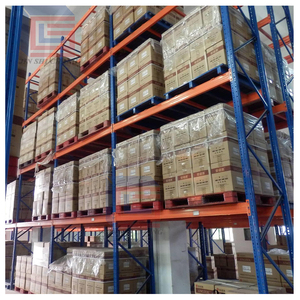
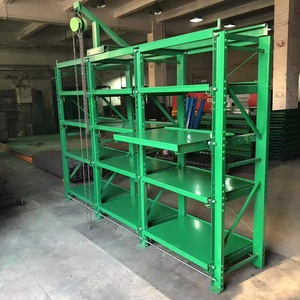
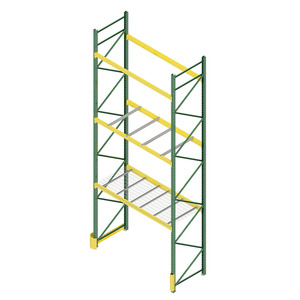

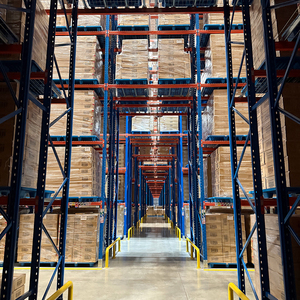
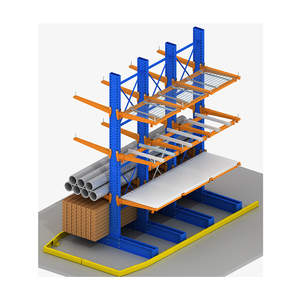
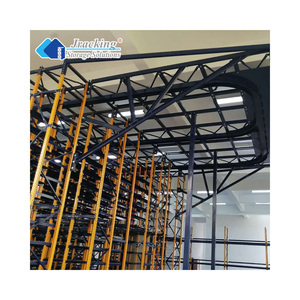
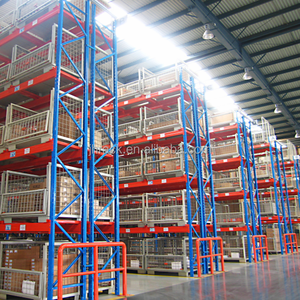
Engineering Anatomy of Heavy Duty Wide Span Racking: Structural Mechanics & Steel Yield Strength
In contemporary high-velocity intra-logistics environments, procurement directors and material handling project managers cannot evaluate industrial shelving simply on cost-per-bay metrics. Heavy-duty wide span racking (often configured as longspan shelving, wide span bulk racking, or heavy-duty step-beam picking bays) represents the crucial mechanical intersection between light hand-loaded shelving and ultra-heavy pallet storage systems. Engineered to accommodate high-volume manual picking of bulky, irregular, or concentrated unit loads, these systems bridge the span gap between 1,500 mm and 3,600 mm clear bay widths without sacrificing deflection tolerances under continuous maximum load configurations.
Critical Engineering Calculation: Deflection Limits vs. Worker Safety. Unlike static industrial pallet racks, wide span beams undergo constant dynamic vibrations from manual stock placement, high-density order consolidation, and occasional forklift impacts. Chinese OEM manufacturers adhering to FEM 10.2.02 and ANSI MH16.1 specifications mandate a beam vertical deflection limit of no greater than δ ≤ L/200 for standard cargo, and δ ≤ L/300 to L/400 when interfaced with sensitive automated pick-to-light or roller gravity lanes, where L is the horizontal clear distance between uprights.
1. Metallurgical Profiles: High-Tensile Q235B vs. Q355B Cold-Formed Steel
The structural foundation of certified Chinese wide span racking begins with continuous cold-roll formed structural grade steel. While commercial low-grade shelving utilizes repurposed scrap steel susceptible to micro-fractures under cyclic stress, our factory uses certified prime coils sourced directly from top-tier state mills such as Baosteel, Shougang, and Ansteel:
- Grade Q235B (Yield Strength fy ≥ 235 MPa, Tensile Strength 370–500 MPa): The worldwide industry standard for standard-depth upright posts (profiles ranging from 55×47mm up to 90×70mm, 1.5mm to 2.0mm wall thickness) and box/step beams for loads up to 1,200 kg per shelf level.
- Grade Q355B / Low Alloy High Strength (Yield Strength fy ≥ 355 MPa, Tensile Strength 470–630 MPa): Equivalent to ASTM A572 Grade 50 and EN 10025-2 S355JR. Essential for seismic zones (Seismic Design Category C through F), deep multi-tier mezzanine pick towers, and cold-storage operations operating down to -40°C where standard carbon steels suffer ductile-to-brittle transition failures.
2. Connector Mechanics: 3-Prong vs. 5-Prong Mechanical Claw Interlocking
One of the most frequent failure points in generic wide span and pallet storage frames occurs in the beam-end connector weldment. Our heavy-duty systems incorporate computer-optimized 3-prong and 5-prong stamped cold-formed steel hooks engineered with precision pitch options (50 mm or 75 mm hole matrices). Under finite element analysis (FEA), the tapered engagement locks the beam into the upright's teardrop or butterfly diamond perforations, generating a stiff semi-rigid joint that drastically reduces bay sway and eliminates the need for diagonal cross-bracing along the face of the bay, preserving 100% unobstructed loading clearance.
| System Configuration | Clear Span Width | Standard Shelf Depth | UDL Capacity / Level | Decking Substrate Options | Primary Application |
|---|---|---|---|---|---|
| Standard Wide Span (Step Beam) | 1,800 mm – 2,400 mm | 600 mm – 1,000 mm | 400 – 800 kg | Flush Galvanized Steel Panels / 18mm MDF | Automotive Parts, E-Commerce B2C Pick Bays |
| Heavy Duty Longspan (Box Beam) | 2,000 mm – 2,700 mm | 800 mm – 1,200 mm | 800 – 1,500 kg | Drop-In Electro-Welded Wire Mesh Decks | Heavy Machinery Components, Chemical Drums |
| Integrated Wide Span Pallet Bay | 2,300 mm – 3,600 mm | 1,000 mm – 1,100 mm | 1,500 – 3,000 kg | Heavy-Duty Steel Hat Channels & Decking | Dual-SKU Europallet (1200x800) Bulk Storage |
| Multi-Tier Mezzanine Catwalk Bay | 1,500 mm – 2,200 mm | 600 mm – 800 mm | 300 – 600 kg | Perforated Anti-Skid Galvanized Plank | High-Density Apparel, Pharmaceutical Distribution |
| Mold / Die Cantilevered Drawer Unit | 1,000 mm – 1,800 mm | 800 mm – 1,000 mm | 1,000 – 2,500 kg | Solid Heavy Plate Steel (Pull-Out Roller Bearing) | Injection Tooling, Stamping Dies, CNC Workshops |
Why Tier-1 Global Procurement Managers Partner Directly With Our Factory
By eliminating trading intermediaries, third-party warehousing markups, and fragmented subcontracting, our vertical manufacturing ecosystem in China delivers certified structural precision, customized engineering, and unmatched scale-driven cost advantages.
Full Automated CNC Continuous Roll-Forming
Equipped with 22 dedicated automatic roll-forming lines with high-speed online hydraulic punchers. Upright column profile perforations maintain an ultra-tight tolerance of ±0.2 mm over an 11,800 mm continuous structural length, preventing beam binding during warehouse field installation.
Robotic Laser Welding & Structural Integrity
Dual-station robotic GMAW welding cells eliminate human inconsistencies. Connector-to-beam joints receive continuous deep-penetration seam welds that withstand severe torsion tests and dynamic drop-impact verification before automated robotic palletization.
Electrostatic Thermoset Powder Finishing
Multi-stage automated pre-treatment: alkaline degreasing, ultrasonic acid rust removal, and nano-ceramic chemical conversion coating, topped with high-flow polyester epoxy powder baked at 200°C (thickness 70–90 μm). Certified 500-hour neutral salt-spray test compliance.
Seismic Engineering & PE Seal Verification
In-house structural engineering team utilizing ANSYS and RFEM software to generate non-linear response spectra, verifying seismic zone acceleration compliance (Eurocode 8, IBC, and Australian AS4084) complete with independent professional engineer (PE) certified calculations.
Factory Acceptance Testing (FAT) & Rigorous QA Protocols: Every production batch undergoes destructive testing on our 20-ton hydraulic test frame. We perform yield tensile testing, coupon bending tests, weld macro-etch examinations, and beam deflection mapping. Real-time mill test certificates (MTC 3.1) and high-resolution video inspection logs are submitted to international clients prior to container loading.
Global Procurement & Technology Trends Reshaping Heavy-Duty Wide Span Racking
In-depth analysis of supply chain decentralization, automation interfacing, ESG steel mandates, and smart-warehouse transformations taking place across global manufacturing centers.
The global industrial warehouse racking market is undergoing a seismic paradigm shift driven by the exponential growth of multi-channel micro-fulfillment centers, geopolitical diversification of distribution nodes, and increasing automation. For institutional buyers, warehouse system integrators, and third-party logistics (3PL) conglomerates, understanding where racking technology is heading over the 2026–2035 cycle is paramount to protecting multi-million dollar capital equipment investments from premature obsolescence.
1. Convergence with Autonomous Mobile Robots (AMRs)
Traditional static wide span racking is rapidly adapting into hybrid semi-automated hubs. AMRs and robotic sortation systems require unobstructed bottom-level clearances (1,200 mm to 1,600 mm vertical spans) without lower shelf obstructions. Modern wide span frames feature reinforced base footplates and structural tubular back-stays that maintain frame rigidity even when the bottom level is open to robot traffic.
2. Decarbonization & Green Steel Sourcing Mandates
Under the European Carbon Border Adjustment Mechanism (CBAM) and US Scope 3 emission reporting standards, overseas procurement managers face strict carbon accounting. Leading Chinese tier-1 racking manufacturers are transitioning their hot-rolled strip procurement toward Electric Arc Furnace (EAF) mills powered by renewable hydro and solar energy, slashing the carbon footprint per ton of steel manufactured by over 45% compared to blast furnace blast oxygen routes.
3. Modular Multi-Tier Pick Towers with Integrated Catwalks
With industrial real estate lease prices at historic highs worldwide, warehouse developers are abandoning single-level wide span shelving in favor of multi-tier pick modules (2 to 4 vertical mezzanine tiers). Wide span uprights are engineered as primary structural columns capable of supporting steel grating walkways, overhead LED conduits, gravity spiral chutes, and pneumatic case-lifters with uniform distributed floor loads up to 500 kg/m².
Strategic Factory-Direct Procurement: Total Cost of Ownership (TCO) Optimization
Sourcing heavy-duty wide span racking directly from certified Chinese manufacturers yields substantial operational and balance sheet advantages when managed with rigorous technical specifications:
- Container Cubing and Freight Density Optimization: Traditional heavy structural shapes waste up to 40% of container volume. Our proprietary knock-down (KD) upright frame designs, stackable nested step beams, and interlocking deck bundles enable packing up to 26.5 metric tons per 40ft High Cube container, reducing per-pallet shipping overheads significantly.
- OEM Dimensional Agnosticism: European standard frame depths (600 mm, 800 mm, 1,000 mm) vs. US Imperial dimensions (24", 36", 42", 48") are roll-formed seamlessly using CNC programmable rotary tooling, completely eliminating tooling amortization or tooling modification fees for project-specific sizing.
- Rapid Turnaround Cycle: While domestic Western manufacturers carry 16-to-28-week order backlogs, our fully automated 6,000-ton monthly capacity consistently delivers customized 10-to-20 container mega-projects within 20 to 25 business days ex-works.
Selecting the Right Warehouse System: Wide Span vs. Alternatives
Clear engineering guidance on picking density, floor efficiency, SKU selectivity, and operational cycle times to help logistics planners specify the right storage geometry.
Heavy Duty Wide Span Racking
Density: Medium-High | Selectivity: 100% Manual Access
Best For: High SKU fragmentation, non-palletized cartons, odd-sized boxes, manual replenishment, and mixed medium-velocity e-commerce operations where forklifts are restricted from inner pick aisles.
Selective Pallet Racking
Density: Moderate | Selectivity: 100% Forklift Access
Best For: Standardized full-pallet storage (GMA, Euro, Chep). Highly efficient for fast single-pallet transfer cycles via counterbalanced or reach trucks, but inefficient for carton picking below 2 meters.
Automated Radio Shuttle / ASRS Systems
Density: Maximum (85%+) | Selectivity: Software-Automated
Best For: Low SKU variety with huge batch volumes, cold storage facilities, and high-throughput distribution where labor costs or extreme sub-zero working conditions dictate complete human-free automation.
Frequently Asked Questions: Technical, Commercial & Shipping
Get immediate, transparent answers from our lead structural engineers regarding steel specifications, international standards compliance, container freight logistics, and safety protocols.
What are the exact dimensional limits for heavy duty wide span shelf beams without mid-span sagging? +
Our standard wide span step and box beams range from 1,200 mm to 3,000 mm in clear horizontal width. For spans up to 2,000 mm loaded up to 800 kg UDL per tier, an 60×40×1.5mm step beam is structurally sufficient. For spans exceeding 2,400 mm supporting up to 1,500 kg per tier, we roll-form an 80×50×2.0mm or 100×50×2.0mm box beam with dedicated tie-bars (cross-bracing support clips). Every bay configuration is mathematically modeled in accordance with RMI MH16.1 guidelines to guarantee deflection remains strictly below δ ≤ L/200 under 100% nominal continuous loading.
How does your Chinese factory verify load safety margins and prevent structural weld fatigue? +
Every batch of steel coils is accompanied by full metallurgical chemical and mechanical 3.1 Mill Test Certificates. During production, robotic welding cells ensure 100% penetration along critical beam-to-claw intersections. Furthermore, our dedicated Quality Inspection Department carries out physical load proof tests on assembled mock-up bays with hydraulic actuator test benches, enforcing an ultimate safety factor of 1.67 over nominal working load limits as mandated by Australian AS4084 and European FEM 10.2.02 codes.
Which shelf decking type should I specify: Drop-in steel panels, wire mesh decks, or timber particle board? +
Selection depends entirely on fire safety codes, cargo geometry, and budget:
• Galvanized or Powder-Coated Steel Panels: Cleanest finish, non-combustible, ideal for industrial manufacturing workshops, oily components, and small-item direct hand storage.
• Electro-Welded Wire Mesh Decking (with waterfall edges): Worldwide preferred standard for distribution warehouses. Promotes overhead fire sprinkler water penetration (NFPA 13 compliance), prevents dust accumulation, and illuminates lower levels.
• Moisture-Resistant Plywood / MDF (18mm to 25mm): Lowest initial capital cost, excellent for flat uniform box sliding, but requires fire-retardant chemical treatment in regulated logistics centers.
Can your factory engineer wide span and pallet racking to satisfy strict seismic design parameters? +
Yes. Our in-house structural engineering department frequently calculates dynamic response spectrum simulations for high-risk seismic environments (e.g., California Zone 4, New Zealand, Chile, Japan, and Southern Europe). We engineer heavy-gauge oversized baseplates (up to 200×200×10mm), dual M16/M20 chemical wedge floor anchors, heavy-wall Q355B structural columns, and reinforced torsional horizontal bracings to absorb lateral shear loads during earthquake events.
What surface finish is recommended for cold storage or high-humidity marine warehouse installations? +
For ambient warehouses, our multi-stage electrostatic thermoset epoxy powder coating (70–90 μm) provides superior scratch and impact resistance. However, for continuous cold storage (-20°C to -40°C), marine port terminals, or chemical fertilizer plants, we recommend Hot-Dip Galvanizing (HDG) conforming to ASTM A123 / EN ISO 1461. The structural components are dipped into molten zinc at 450°C, forming an impenetrable metallurgical zinc-iron alloy coating (minimum 65–85 μm thickness) that prevents corrosion for over 25 years.
What is the standard container loading optimization and lead time for wholesale international orders? +
Standard lead times for standard wide span projects (1 to 5 x 40'HQ containers) run between 18 to 22 calendar days. For custom multi-tier pick modules or mega-projects (10+ containers), lead time is typically 30 to 35 days. Our packing department utilizes specialized heavy-duty steel cradles, corrugated edge protectors, plastic stretch bundling, and moisture-barrier desiccants. We guarantee zero transit deformation and load up to 26,000–27,000 kg per container, minimizing oceanic freight charges per metric ton.
Request Your Custom Engineering Calculation & Wholesale Factory Quotation
Connect with our technical design team today. Provide your warehouse building layout (DWG / PDF), clear height limits, and unit weight profiles for a turnkey CAD proposal, structural load calculation sheet, and rapid FOB/CIF container shipping estimate.
Contact Us