High-Density Dynamic Logistics: Solving The Industrial Warehouse Footprint Crisis
In modern industrial warehouse infrastructure, real estate cost per square meter and operational refrigeration energy consumption represent the two highest perpetual operating expenses. Traditional static selective pallet racking dedicates between 60% and 65% of the total building footprint strictly to static forklift access aisles. As China's leading heavy-duty mobile pallet racking manufacturer and global exporter, our engineered motorized mobile racking solutions eliminate redundant aisles by mounting robust structural racking superstructures onto variable-frequency driven steel mobile chassis that travel over precision-leveled embedded guide tracks.
Technical Architecture: Operational Mechanics of Motorized Mobile Racking
A heavy-duty mobile pallet racking installation transforms standard storage rows into an interconnected dynamic system controlled via programmable logic controllers (PLC) and integrated RF-telemetry. By commanding mobile bases to glide laterally on high-tensile steel rails (grooved flat rails and crowned guide rails), only one working aisle opens at the exact picking location required. This architecture yields up to 185% to 200% storage capacity expansion compared to standard static selective racking in the exact same warehouse cube, completely bypassing the exorbitant capital expenditure of physical building expansion.
Designed for pallet loads reaching up to 4,000 kg per bay level and multi-bay train capacities exceeding 600 metric tons per mobilized carriage block, our manufacturing process utilizes cold-formed high-strength Q355B micro-alloyed steel, closed tubular welded upright frames, or heavy hot-rolled structural steel channels conforming to ANSI MH16.1, FEM 10.2.07, and EN 15512 seismic design specifications.
Featured Industrial Storage & Structural Solutions
Explore our heavy-duty storage configurations, fabricated in state-of-the-art facilities with robotic weld lines, CNC roll-forming tooling, and automated multi-stage electrostatic thermoset powder lines.
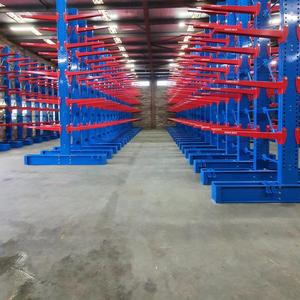
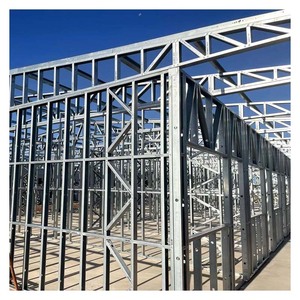
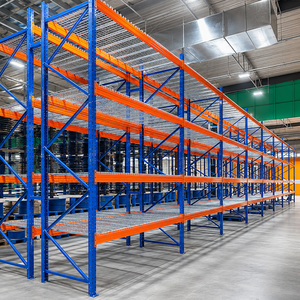
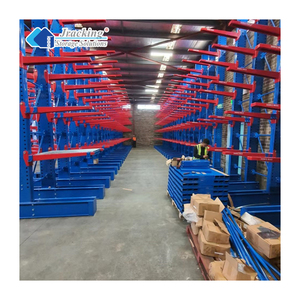
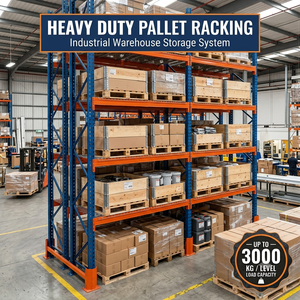
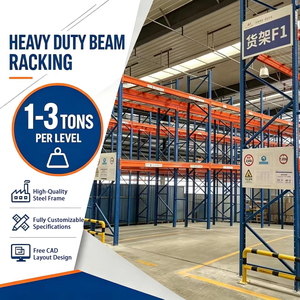
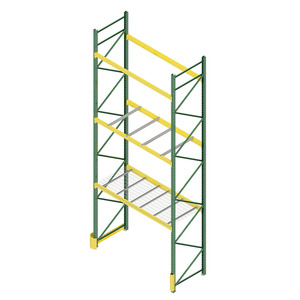
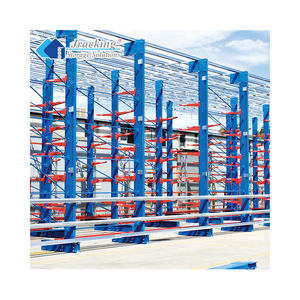
High-Density Storage Systems Structural & Operational Comparison
A rigorous engineering benchmark detailing physical space utilization, mechanical accessibility, operational handling efficiency, and investment recovery across leading storage modalities.
| Storage System Type | Footprint Utilization | Pallet Selectivity | Forklift Aisle Demand | Cold Chain Energy Impact | Standard Load Capacity |
|---|---|---|---|---|---|
| Heavy Duty Mobile Pallet Racking | 85% – 90% (Maximum) | 100% Individual SKU Access | 1 Consolidated Floating Aisle | Up to 40% Energy Savings | 1,000 kg – 4,000 kg / Bay |
| Standard Selective Racking | 35% – 45% (Sub-optimal) | 100% Individual SKU Access | Dedicated Aisle Every Row | High Thermal Losses (Waste) | 1,000 kg – 3,500 kg / Bay |
| Drive-In / Drive-Through Rack | 65% – 75% (Dense LIFO) | Low (< 20% SKU Access) | Deep Internal Drive Lanes | Moderate Thermal Density | 1,000 kg – 2,000 kg / Bay |
| Push-Back Cart Racking | 60% – 70% (2 to 6 Deep) | Moderate (Lane-level LIFO) | Multiple Dedicated Aisles | Moderate Efficiency | 1,000 kg – 1,500 kg / Position |
| Automated AS/RS Crane System | 85% – 95% (Automated Vertical) | 100% Automated Access | Narrow Crane Travel Aisle | High Initial Capital Cost | 500 kg – 2,500 kg / Bay |
Emerging Procurement Trends in Global Heavy Racking Logistics
Strategic analysis for Chief Procurement Officers and Logistics Engineers navigating supply chain modernization, decarbonization mandates, and robotics interoperability.
1. Interoperability with Autonomous Mobile Robots (AMRs)
The convergence of mobilized racking carriages with Autonomous Mobile Robots (AMRs) and automated guided forklifts (AGVs) is replacing manual counterbalanced trucks. Modern mobile racking controllers now integrate standard OPC-UA industrial protocol and REST APIs, allowing Warehouse Management Systems (WMS) to dynamically command carriages to open designated aisles in automated synchronization with incoming AMR picking waves.
2. Decarbonization & Extreme Cold-Chain Density
Cold storage facilities account for enormous electrical power expenditures. As regional electrical grids enforce strict Scope 1 & 2 carbon penalties, logistics operators are transitioning freezers down to -30°C within compact motorized footprints. Mobile pallet racking cuts empty chilled cubic air space by nearly 50%, enabling rapid return-on-investment (ROI) within 24 to 36 operating months.
3. High-Integrity Metallurgy & Seismic Resilience
International procurement specifications now reject recycled lower-grade commercial mild steel in favor of certified structural cold-formed Q355B and hot-rolled structural steel channels. With seismic zone construction escalating in Europe, the Americas, and Australasia, racking designs require 3D Finite Element Analysis (FEA) validating ductility, sway stiffness, dynamic acceleration damping, and floor anchor tensile resistance under full dynamic payload.
Evolutionary Leap: From Primitive Static Rails to Intelligent Sensor-Driven Bases
The progression of heavy-duty material handling over four decades demonstrates how engineering breakthroughs have turned static steel channels into smart, fault-tolerant mechatronic systems.
Generation I: Electro-Mechanical Push Systems
Early mobile storage systems utilized single heavy central drive shafts and high-friction plain bearings. These systems suffered from high wear rates, mechanical carriage skewing, frequent chain derailments, and lack of personnel safety guarding, restricting usage to lightweight archiving.
Generation II: Multi-Motor Distributed Drives
Introduction of independent geared motor wheel assemblies distributed along each chassis segment. Synchronization was achieved via hardwired electrical relays, improving load capability up to 10 tons per carriage, though soft starts and safety stopping curves remained abrupt.
Generation III: Variable Frequency PLC Controls
Adoption of Siemens and Schneider PLC logic paired with Variable Frequency Inverters (VFD). Smooth acceleration and deceleration ramps prevented unstable pallet tipping. Integrated multi-point photoelectric photocell light curtains ensured primary aisle safety.
Generation IV: Smart Integrated Digital Twins
Our current cutting-edge standard: Dual-zone optical time-of-flight laser scanners, continuous distance encoder calibration, automatic thermal night park spacing (for optimal cold airflow), cloud telemetry, and safety-rated Category 4 / PLe architectures.
Why Global Buyers Rely On Our Manufacturing Infrastructure
Combining structural steel engineering precision with large-scale production volume, robust export verification, and verified metallurgical compliance.
Certified High-Tensile Steel & Automated Rolling
All structural uprights and box beams are formed from prime certified structural steel (Q235B & Q355B) sourced from top-tier state-owned mills with Mill Test Certificates (EN 10204 3.1). Continuous CNC multi-station cold roll-forming lines guarantee punch-pitch accuracy within ±0.2mm across entire 12-meter profiles.
Structural Weld Integrity & Powder Metallurgy
Equipped with OTC robotic arc-welding cells, beam end-connectors receive complete joint penetration welding with ultrasonic non-destructive testing (NDT). Surface finishing utilizes an 8-stage pre-treatment wash including zinc-phosphating, followed by GEMA automatic electrostatic powder booths, yielding corrosion resistance exceeding 500 hours salt spray testing (ASTM B117).
Engineered Export Bundling & Maritime Protection
International shipping demands damage-free transit across variable ocean temperatures. Our export crating features custom steel dunnage saddles, full perimeter edge protectors, waterproof heat-shrink anti-humidity PE barrier wraps, and vapor-corrosion-inhibiting (VCI) desiccant capsules tailored for 40ft High Cube containers.
Frequently Asked Questions by Industrial Engineers & Sourcing Directors
Comprehensive engineering clarity regarding foundation slab criteria, fire sprinkler design, safety SIL certifications, and mechanical commissioning tolerances.
What are the concrete floor slab leveling tolerances required for heavy-duty mobile pallet racking?
Mobile pallet racking requires strict slab flatness and point-load resistance due to concentrated wheel loads traveling along fixed linear paths. Rails are embedded either during the second pour of a dual-pour slab or precision-grouted into diamond-saw cut channels in existing floors. As per DIN 18202 and FEM 9.831 / FEM 10.2.07 standards, the elevation deviation along the rail axis must not exceed ±1.0 mm per 1 meter run, with an overall absolute elevation difference across parallel rails capped at ±2.0 mm across the entire mobilized aisle breadth. Foundation slabs typically require minimum 200 mm to 300 mm thickness with double-layer rebar mesh and compressive concrete rating of C28/35 to C35/45.
How does fire suppression and ceiling ESFR sprinkler design work with mobilized racking rows?
Compliance with NFPA 13 and EN 12845 is resolved through automated integration between the facility's master fire detection system and our PLC central control cabinet. When an alarm or water-flow sensor triggers, our mobile racking system enters an emergency fire safety mode: all mobile bases automatically disengage operational lockouts and glide to create uniform intermediate gaps (Fire-Aisle Park Positioning), evenly dispersing aisle spacing across all carriages. This allows ceiling Early Suppression Fast Response (ESFR) sprinkler heads to penetrate down through the storage flues without obstruction. Flexible overhead hose loop arrays or articulated pantograph pipe swivels can also deliver in-rack sprinkler coverage for class IV plastics and aerosol storage.
What safety protocols and optical interlocks protect personnel and forklift operators inside open aisles?
Our motorized bases employ a fail-safe, redundant multi-tier safety architecture complying with EN 15095 (Power-Operated Mobile Racking Safety Standard) and ISO 13849-1 Performance Level d (PLd) / Safety Integrity Level 2 (SIL 2). Safety elements include:
- Optical Light Curtains: Positioned across the main frontal entry of every mobile carriage to immediately cut motor power if a person or forklift crosses the threshold while carriages are moving.
- Full-Length Infrared Bumpers & Safety Edges: Low-mounted mechanical pressure bars and opto-electronic sensor strips along the bottom chassis detect any foreign object or stray pallet timber over 15 mm high, halting travel within fractions of a second.
- Proximity Laser Area Scanners: Floor-level 2D LiDAR scanners on every carriage head monitor dynamic clearance cones, preventing impact and slowing mobile trains safely before mechanical contact.
- Manual Emergency Stops & Lockout Key Switches: Readily accessible push buttons located every 8 meters along upright frames and at aisle end stations.
How does mobile racking handle extreme sub-zero temperatures down to -30°C in food logistics?
Cold storage deployment requires specialized mechanical and electrical engineering. Standard carbon steel can exhibit ductile-to-brittle transition below zero; hence, we specify cold-tough micro-alloyed structural steels that preserve Charpy V-notch impact toughness down to -40°C. Motor reducers are equipped with synthetic synthetic ester/PAO ultra-low temperature lubricants and internal thermal resistance heating strips. Electrical enclosures feature IP65-rated stainless steel cabinets with built-in thermostatic PTC heating elements to prevent internal moisture condensation during defrost cycles. Furthermore, our PLC software features an automated "Night Thermal Circulation Cycle", systematically opening spaced ventilation gaps to allow uniform refrigeration airflow throughout high-value frozen inventories.
What is the average installation and rail-laying schedule for a 5,000-pallet overseas project?
A typical 5,000-pallet position heavy-duty mobile racking project proceeds in three orchestrated phases. Phase 1 involves rail embedding, alignment, and high-strength non-shrink grouting (approx. 10 to 14 days). Phase 2 focuses on chassis assembly, carriage bogie positioning, motor drivetrain installation, and mechanical superstructure frame erection (approx. 18 to 22 days). Phase 3 involves busbar/cable-tray wiring, sensor optical calibration, PLC programming, load testing, and cold-run commissioning (approx. 7 to 10 days). We dispatch senior structural and electrical commissioning engineers to lead on-site contractor crews anywhere in the world, guaranteeing handover within 35 to 45 working days post-container arrival.
Can an existing static selective racking system be retrofitted onto mobile motorized bases?
Yes, provided the existing upright frames and beams meet verified load rating, structural integrity, and standardized column baseplate dimensions. Our engineering team conducts structural verification modeling using ANSYS/STAAD.Pro to evaluate how the existing uprights distribute shear, moment, and dynamic braking forces into new motorized mobile chassis carriages. The floor slab must also be core-drilled and tested for concrete compressive depth to ensure it can accommodate rail cut-ins and concentrated linear wheel loadings.
Ready to Double Your Warehouse Storage Density?
Engage directly with our senior intralogistics structural engineers. We provide comprehensive CAD warehouse layout calculations, 3D structural simulations, seismic feasibility reports, and transparent factory-direct pricing within 24 hours.
Contact Us