Industry Technical Whitepaper
Engineering Seismic-Resilient Logistics: Pallet Racking Dynamics in Peru
An authoritative structural, logistical, and environmental analysis for supply chain managers, warehouse developers, and EPC contractors operating within the Peruvian territory.
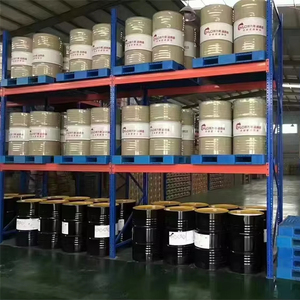
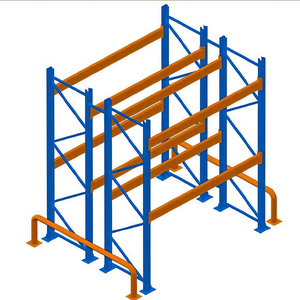
Procuring warehouse pallet racking systems for the Peruvian territory requires an engineering perspective that goes far beyond standard static calculations. Located directly along the Pacific "Ring of Fire," Peru features one of the most demanding seismic operating environments in South America. From the bustling industrial enclaves of Huachipa, Lurín, and Callao in metropolitan Lima to the regional logistics corridors of Arequipa, Trujillo, and Chiclayo, warehouse racking systems act not merely as steel furniture, but as safety-critical structural systems capable of dissipating violent dynamic ground motions.
1. Regulatory Compliance: The Nexus of Norma Técnica E.030 and RMI MH16.1
In Peru, industrial racking installations must strictly satisfy the provisions laid down in the Reglamento Nacional de Edificaciones (RNE), particularly Norma Técnica E.030 Diseño Sismorresistente and Norma E.090 Estructuras Metálicas, while simultaneously conforming to global racking baselines established by the Rack Manufacturers Institute (ANSI MH16.1) and European standard EN 15512.
Under Peruvian seismic zoning, coastal departments—including Metropolitan Lima and Callao—are categorized within Seismic Zone 4 (Peak Ground Acceleration factor $Z = 0.45g$). When an earthquake occurs, a fully loaded pallet rack experiences severe horizontal shear and overturning moments. A system designed only for generic low-seismic international profiles will suffer frame buckling, connector shear failure, or catastrophic progressive collapse. Our engineering team calculates specific ductilities ($R$ coefficients) and dynamic response spectra using Finite Element Analysis (FEA), integrating oversized anchor baseplates, high-ductility anchor bolts with minimum embedment depths exceeding 150mm, and heavy structural back-to-back ties.
| Engineering Factor |
Standard International Racks |
Our Peru Seismic-Engineered Solutions |
| Steel Grade Standard |
Standard Cold-Formed Light Carbon |
Certified Q235B / Q355B or Hot-Rolled Structural Channels (ASTM A36/A572) |
| Seismic Resistance (E.030) |
Calculated for Zone 1–2 (0.10g–0.25g) |
Engineered dynamically for Zone 4 ($Z=0.45g$) with high-ductility frames |
| Corrosion Resistance Rating |
Basic spray paint (30–40 μm) |
Multi-stage pre-treatment + 80–120 μm thermo-cured epoxy polyester powder |
| Floor Baseplates & Anchors |
Standard stamped plates (2.5–3.5 mm) |
Heavy laser-cut plates (8.0–12.0 mm) with dual expansion/chemical shear studs |
| Beam-to-Column Connection |
3-Lug friction connectors without locks |
5-Lug heavy wrap-around cold-forged connectors with mechanical safety drop pins |
2. Navigating Peru's Microclimates: The Salt and Humidity Challenge of Callao
Peru's economic spine is intimately tied to the sea. The Port of Callao handles more than 75% of the country's containerized maritime freight. However, coastal Lima and Callao present relative humidity levels frequently fluctuating between 85% and 98%, paired with constant atmospheric salinity carried by ocean breezes and persistent garúa mist. Standard non-passivated cold-formed racks develop galvanic rust within 18 months, undermining structural integrity at critical welded baseplates.
To overcome this corrosive degradation, we utilize advanced multi-stage chemical surface conversion (zinc phosphating or nano-ceramic pre-wash) followed by heavy electrostatically applied epoxy-polyester powder coating cured at 180°C. For aggressive environments—such as marine-proximate pick facilities, fertilizer warehouses, or fishmeal storage—we supply hot-dip galvanized (HDG) structural frames compliant with ASTM A123, ensuring decades of rust-free service life without maintenance disruption.
3. Supply Chain Dynamics & Real Estate Pressures in Metropolitan Lima
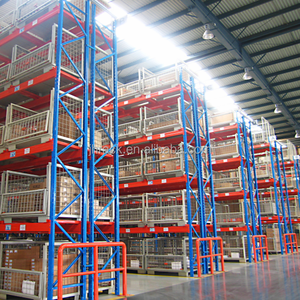
Industrial real estate across Lima has reached record land values in consolidated industrial nodes like Ate, Cercado de Lima, and San Luis. Consequently, industrial distribution hubs have shifted outward toward Lurín and Chilca to the south, and Huachipa and Gambetta to the north and west. With prime warehouse land commanding high lease rates per square meter, warehouse managers are forced to verticalize operations to clear heights of 10 to 14 meters.
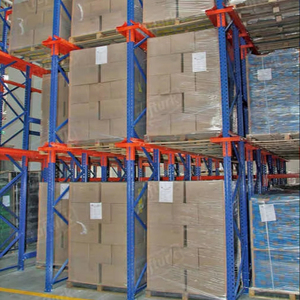
This dynamic makes high-density systems essential. Conventional selective racking offers immediate 100% pallet accessibility, but occupies extensive aisle space. By deploying Drive-In Racking, Double-Deep configurations, and automated Electric Mobile Racks, logistics operators in Peru double their cubic pallet storage capacity within their existing building shell, drastically lowering per-pallet capital expenditure.