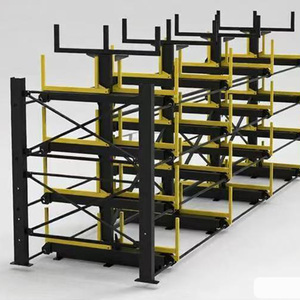
Maxdom Double-Sided Metal Arm Heavy Cantilever System
Specialized double-sided cantilever system designed for raw steel profiles, PVC extrusion packs, and timber yard logistics.
Hot-Rolled Q235B
5,000kg/Arm
Engineered for high load-bearing capacity, operational longevity, and seamless modular integration across modern Serbian distribution, automotive, and heavy manufacturing clusters.
Specialized double-sided cantilever system designed for raw steel profiles, PVC extrusion packs, and timber yard logistics.
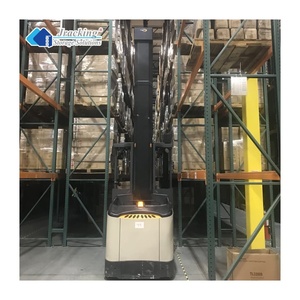
Fully adjustable industrial pallet racking engineered for standard 1200x800mm Euro-pallets and heavy industrial packaging units.
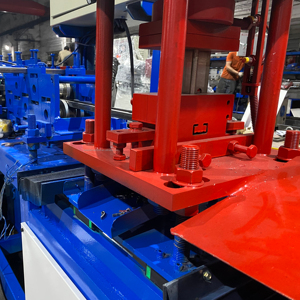
Continuous automated roll-forming equipment with PLC servo control producing high-precision upright profiles and omega posts.
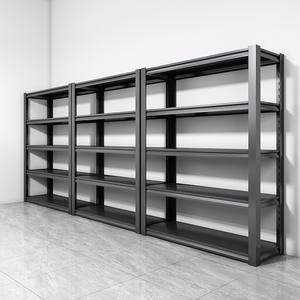
Boltless manual picking unit combining high-strength shelving decks with customizable hanging pegboards for workshops.
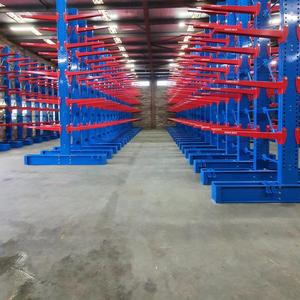
High-impact column cantilever rack finished with outdoor electrostatic thermoset powder coating for harsh industrial storage.
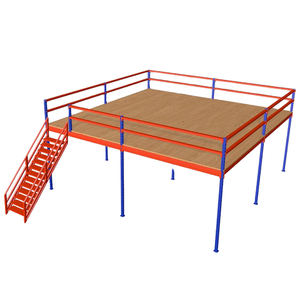
Structural column-supported attic loft platform engineered to double or triple vertical usable space without building expansion.
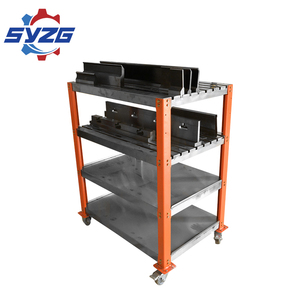
Heavy pull-out drawer racking with roller bearings for precision CNC bending brake punches, dies, and injection tooling molds.
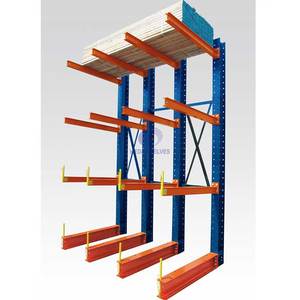
Lightweight high-tensile cantilever racking engineered for cleanroom staging, specialized metal alloys, and covered outdoor depots.
A rigorous review of cold-formed vs. hot-rolled structural load paths, deflection limits, seismic mitigation, and flooring integrity for Serbian industrial facilities.
Rack-supported mezzanines utilize standardized heavy-duty upright frames (omega profiles) as supporting columns, ideal for dense carton-picking and multi-tier archive depots. Structural mezzanines employ heavy H-beams (HEA/HEB) and square hollow structural sections (SHS) to create expansive open spans exceeding 6 to 9 meters beneath the deck. We engineer both topologies depending on whether your ground-floor operation requires unhindered autonomous mobile robot (AMR) transit or high-density pallet racking integration.
Our OEM calculations conform strictly to European standards (Eurocode 3: EN 1993-1-3 for cold-formed members and EN 1993-1-1 for structural steel). Deflection criteria under maximum uniform live load (UDL) are capped at L/300 to L/500 for secondary beams, mitigating operational bounce under manual trolley and pallet truck movement. For dynamic automated conveyors or automated storage and retrieval systems (AS/RS), decking deflection is tightened to L/600 to prevent structural drift and premature joint fatigue.
Serbia's seismic landscape—especially central Sumadija, Western Morava, and the southern Morava basin—demands verified horizontal drift calculation under Eurocode 8 (EN 1998-1) and Serbian SRPS standards. We incorporate vertical X-bracing, horizontal diaphragm ties, and ductile base-plate assemblies with dynamic expansion or chemical M12-M20 anchor bolts. Footplates are sized to distribute point loads safely across the concrete slab (C25/30 or C30/37), avoiding localized punching shear failures.
| Structural Parameter | Light Picking Loft (Tier 1/2) | Medium Logistics Mezzanine | Heavy Production / Die Platform |
|---|---|---|---|
| Target Loading Capacity | 300 - 500 kg/m² | 600 - 1,200 kg/m² | 1,500 - 2,500 kg/m² |
| Primary Structural Grid | Cold-rolled C/Sigma purlins + Omega posts | IPE 200–300 beams + Cold-formed columns | Hot-rolled HEA/HEB 240+ with SHS 150x150 columns |
| Decking Substrate | 28-38mm High-density tongue & groove chipboard | Perforated steel grating / Solid BRP decking | Heavy checkered tear drop plate welded/bolted |
| Typical Column Clear Span | 3.0m x 3.0m to 4.0m x 4.0m | 4.5m x 5.0m to 6.0m x 6.0m | 6.0m x 6.0m up to 9.0m open bays |
| Intralogistics Interface | Manual stairs, gravity chutes, cargo nets | Electric scissor lifts, hydraulic freight lifts | Overhead monorail hoists, heavy pallet drop gates |
Every OEM racking mezzanine engineered in our factory incorporates mill-certified high-yield steel, fully documented batch traceability (EN 10204 3.1 certification), and high-durability surface treatment.
Serbia's positioning along Pan-European Corridor X and Corridor VII (Danube River) makes it the premier logistics hub of Southeast Europe. Here is how our OEM racking mezzanines solve localized floor space bottlenecks.
Serbia has become an automotive manufacturing nexus for wiring harnesses, electric drive motors, precision die stamping, and rubber components. Production floors require maximum footprint for machinery while maintaining buffer inventories of raw copper, coils, and molds. Our heavy mezzanine floors create overhead mold tooling vaults and cleanroom assembly zones directly above active stamping presses, utilizing high-load steel decking capable of handling dynamic tool vibration and 1.5-ton spot loads without transmitting acoustic noise below.
With prime warehouse leasing rates in the Belgrade-Novi Sad logistics axis reaching historic premiums, distribution operators in Stara Pazova and Šimanovci cannot afford unutilized clear height (typically 10.5m to 12.0m). Our multi-tier racking mezzanines (2-tier and 3-tier configurations) deliver pick towers with integrated conveyor paths, carton live storage, and fire suppression sprinkler clearance, multiplying usable order fulfillment space by 300% without renegotiating land lease footprints or municipal building permits.
In Free Customs Zones (Slobodne Zone), fast inventory turnaround and secure bonded storage are statutory imperatives. Our modular loft platforms provide secure ground-level bonded storage cages combined with second-tier administrative customs clearing offices, quality testing laboratories, or return-handling departments. The fully demountable bolted structural configuration allows multinational tenants to classify the mezzanine as movable equipment rather than permanent capital construction, enabling favorable fiscal depreciation.
Strategic economic vectors driving industrial real estate demand and the rapid adoption of high-density vertical mezzanine systems across the Republic of Serbia.
European OEMs continue redirecting critical production from distant Asian origins closer to Central and Western European consumer markets. Serbia has emerged as the premier nearshoring destination due to competitive labor, duty-free trade agreements with the EU (Stabilization and Association Agreement), and robust power infrastructure. Factories moving into brownfield or greenfield shells face immediate pressure to ramp capacity, making pre-engineered, fast-install mezzanine systems the fastest bridge to operational viability.
Despite steady construction along the E-70 and E-75 highway junctions, speculative Grade-A logistics space in Serbia maintains low vacancy rates (<5%). Developers face increasing construction material and permitting lead times. Enterprise occupiers are prioritizing internal vertical intensification over external expansion. By retrofitting an engineered OEM mezzanine floor into existing Class-B or Class-A halls, Serbian companies avoid costly multi-year warehouse relocations and eliminate severe lease escalation penalties.
Serbian distribution centers are aggressively adopting pick-to-light, spiral conveyors, and vertical reciprocating conveyors (VRCs). Modern mezzanines must no longer serve merely as passive static storage. They must act as dynamic engineering structures. Our OEM design team provisions specialized load-spreading beam matrices, vibration dampers, integrated safety gates (tilting and sliding pallet gates), and perimeter kick plates that ensure full compliance with EU workplace safety regulations (EN ISO 14122).
Detailed technical answers addressing customs clearance, structural certification, slab verification, and installation logistics when sourcing direct from our factory.
Our OEM engineering files are generated in strict adherence to Eurocode 3 (Steel Structure Design) and Eurocode 8 (Seismic Resistance), which align directly with Serbian national technical standards (SRPS EN 1993 and SRPS EN 1998). Upon project sign-off, we supply complete 3D structural calculation books, finite element analysis (FEA) reports, anchor shear load certificates, and EN 10204 3.1 material test certificates for smooth review by Serbian licensed civil engineers (Građevinski inženjeri sa Licencom 410) during municipal permitting.
We require the concrete slab thickness (typically 150mm to 250mm), concrete compressive strength grade (e.g., MB 30 / C25/30 or C30/37), subgrade soil modulus (k-value), and the presence of single or double rebar mesh/steel fiber reinforcement. If underlying slab data is unavailable, our engineers will design an expanded baseplate footprint with elastomeric leveling pads to reduce point load concentration beneath 35 kg/cm², preventing localized slab cracking.
Fire safety compliance in Serbia is rigorously governed by the Ministry of Internal Affairs (MUP - Sektor za vanredne situacije). We supply open-mesh electro-forged or press-locked steel gratings (33x33mm or 33x11mm mesh) that offer >75% clear open area for unhindered ceiling sprinkler penetration. Where solid floors are mandated, we supply flame-retardant Bfl-s1 tongue-and-groove composite panels underlaid with galvanized corrugated steel decking to maintain integrity.
We routinely manage export shipments via direct maritime transit to Adriatic gateways (Port of Bar, Montenegro; Port of Rijeka, Croatia; or Port of Koper, Slovenia), followed by bonded rail or bonded truck transit directly to Serbian inland terminals (Belgrade Customs Terminal, Novi Sad, or Niš). Alternately, shipments can route via Danube barge networks. All structural beams and uprights are color-coded, bundled in weather-proof shrink wrapping, and packed with steel dunnage for damage-free offloading.
Standard OEM design review and structural drawing finalization requires 5 to 7 business days. Upon drawing confirmation and deposit, factory fabrication (precision roll-forming, laser cutting, robotic welding, shot blasting, and powder coating) takes 20 to 25 days for projects up to 2,000 square meters. Transit to Serbia takes approximately 28 to 35 days depending on the chosen sea-freight routing, giving a total turnaround of 7 to 9 weeks from concept to site delivery.
Yes. Our mezzanine systems are 100% bolt-together modular assemblies. There is zero on-site hot welding required, eliminating facility fire hazards and hot-work permits during installation. If your operational lease expires or you require building reconfiguration, all primary girders, joists, stairs, and handrails can be disassembled, transported, and re-erected in a new layout with minimal component replacement.
Drawing on over five decades of heavy structural engineering heritage, we eliminate intermediaries by integrating structural design, precision fabrication, testing, and export logistics under one accountable roof.
Our production facilities house continuous heavy cold roll-forming lines capable of profiling high-yield steel coils up to 4.0mm thickness with tight dimensional tolerance (±0.5mm). High-power fiber laser cutting stations and automated multi-head punching systems execute bolt-hole arrays with absolute pitch repeatability, guaranteeing flawless alignment and bolt insertion during overseas job-site installation.
Every manufacturing step—from incoming steel coil tensile inspection to automatic submerged-arc welding and electrostatic powder coating—undergoes ISO 9001:2015 audited quality control. Coating thickness is verified with magnetic thickness gauges, and weld joints undergo ultrasonic and magnetic particle testing to ensure defect-free structural behavior under dynamic forklift loading.
Our multilingual application engineering department partners directly with Serbian EPC contractors, logistics integrators, and plant directors. Using Tekla Structures and AutoCAD, we prepare turnkey GA drawings, 3D BIM models for Revit integration, step-by-step visual installation manuals, and packed assembly hardware kits that drastically compress on-site labor duration.