Featured Industrial Racking & High-Density Enclosures
Rigid cold-rolled and structural steel racking systems manufactured to rigorous international benchmarks, precision-matched to Australian standard pallets and automated intralogistics specifications.
High Bay Racking Architecture: AS 4084-2023 Structural Governance
Designing racking for heights exceeding 12 to 30 metres requires comprehensive second-order p-delta analysis, dynamic seismic simulation under AS 1170.4, and verified post-buckling performance for Australian intralogistics centres.
Structural Engineering Benchmarks for High Bay Systems
High-bay storage rack engineering in Australia operates under an exacting legal and regulatory paradigm. The release of AS 4084-2023 (Steel Storage Racking) mandates stringent design verifications that differentiate standard selective floor pallet racking from vertical high-bay structures. In a high-bay installation—often integrating Automated Storage and Retrieval Systems (AS/RS), automated stacker cranes, or narrow-aisle VNA reach trucks operating above 15 metres—the cumulative axial load on lower upright profiles demands cold-formed high-tensile structural steel possessing verified yield strengths (minimum 350 to 450 MPa).
Torsional buckling and frame unbraced lengths represent critical failure modes in vertical facilities. Closed tubular column geometries (such as engineered hollow structural sections) deliver torsional stiffness indices up to 200 times higher than open C-channel sections of identical gauge. This torsional rigidity restricts rotational distortion caused by pallet placement eccentricities and fork truck mast sway, significantly mitigating cyclical metal fatigue and accidental impact deflection.
Furthermore, our engineering exporter framework complies directly with AS 1170.4 (Earthquake Actions in Australia). Australia's seismic zoning requires precise calibration of response spectrum factors ($k_p$) and hazard design factors ($Z$) across geographic regions from the Sydney Basin to Adelaide and seismic-sensitive Western Australian fault lines. Each upright footplate, dynamic wedge anchor, and spine bracing lattice is engineered via Finite Element Analysis (FEA) to absorb and dissipate lateral kinetic energy while preventing catastrophic progressive collapse under full unit rated payloads.
Comparative Structural Matrix: High Bay System Architectures
| Racking Engineering Topology | Structural Profile Spec | Height Envelope | Deflection Threshold ($L/d$) | Seismic Absorption Index | Optimal Handling Dynamic |
|---|---|---|---|---|---|
| AS/RS Clad High Bay | Structural Hollow Tubing / Cold-Rolled Q355B | Up to 40 Metres | ≤ L/500 Extreme Precision | High Damping Braced Lattice | Automated Stacker Cranes & Shuttles |
| Very Narrow Aisle (VNA) | Continuous Cold-Formed High Tensile Post | 12m – 18 Metres | ≤ L/350 Controlled | Slab Anchor Shear Transfer | Wire / Rail-Guided Man-Up Turret Trucks |
| Double Deep High Bay | Closed Box Section Interlocking Beams | 9m – 14 Metres | ≤ L/250 Standard | Mid-Spine Portal Tie Integration | Deep Reach Pantograph Reach Trucks |
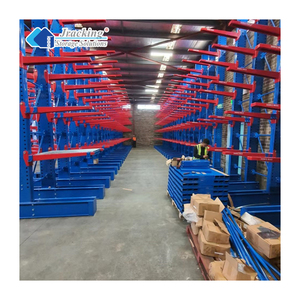
| Heavy Duty Cantilever | Hot-Rolled I-Beam Columns (UB/UC) | 6m – 12 Metres | ≤ L/300 Cantilevered | Base Moment Connection Resistant | Side Loaders & Multi-Directional Forklifts |
Engineered for Australia's Prime Logistics Corridors
From port-centric intermodal precincts in Western Sydney to temperature-controlled super-hubs in Melbourne, our structural high bay installations solve key logistical bottlenecks across Australia.
E-Commerce & 3PL Fulfillment Corridors
Within the Western Sydney Aerotropolis, Horsley Park, and Eastern Creek logistics estates, land acquisition rates command high cubic volume reclamation. High bay racking configurations extending beyond 16 metres enable logistics operators to consolidate massive SKU profiles.
- Automated guided vehicle (AGV) interface
- Integration with 1165 x 1165mm CHEP pallets
- High-speed vertical reciprocating conveyors
Cold Chain & FMCG Temperature Control
Across Truganina, Altona, and Dandenong South, refrigerated distribution facilities require thermal cubic efficiency. Operating at -25°C, power consumption costs mean storage density must be optimized via high-bay mobile and deep-shuttle installations.
- Low-temperature impact grade structural steel
- Anti-corrosive galvanised finishings
- Dense FIFO/LIFO automated pallet flow runners
Port Logistics & Subtropical Bulk Distribution
Positioned along the Port of Brisbane and the Yatala industrial strip, import distribution operations face elevated humidity and marine atmospheric conditions. Rack durability demands superior powder coatings and specialized ventilation spacing.
- ISO 12944 standard C3/C4 protective coatings
- Heavy structural uprights resisting forklift impacts
- High moisture resistant wire mesh decks
Mining Supply & Heavy Engineering Spares
Supplying heavy parts, drill rods, and process machinery to the North-West mining regions requires outsized load capacity. Industrial cantilever and structural high-bay racking systems withstand extreme point loads exceeding 4,000 kg per level.
- Hot-rolled structural universal beams (UB)
- Bolted connection nodes for severe wind loads
- Custom fork-saddle attachments for cylindrical stock
Australian Warehousing Evolution: The Vertical Transition
Tight industrial land vacancy across major Australian capital cities is forcing a strategic pivot from horizontal square-metre sprawl to automated, high-bay cubic utilisation.
Automation Convergence (AS/RS & Shuttle Systems)
Skyrocketing labour operational expenditure and workplace safety requirements under Safe Work Australia guidelines have escalated the adoption of Autonomous Mobile Robots (AMRs) and high-elevation Automated Storage and Retrieval Systems. High bay racks are no longer passive steel shelving; they serve as sub-millimetre precision guide tracks for high-speed automated cranes reaching speeds up to 4 m/s.
Industrial Land Scarcity & 30m+ Clad Buildings
With East Coast prime warehouse industrial yields compressing and prime land rates in Sydney exceeding $1,500/sqm, builders are moving to "Rack-Clad" or "Rack-Supported" buildings. In these designs, the high-bay racking system acts as the core load-bearing skeleton supporting the external wall cladding and roof, cutting conventional structural construction capital by up to 28%.
Green Star Certification & Decarbonised Steel
Major institutional Australian landlords (such as Goodman, ESR, and Dexus) mandate 5-Star Green Star building ratings. Our racking systems feature lower embodied-carbon steel, fully modular demountable components that retain 98% scrap reclamation value, and energy-neutral powder-coating processes completely free of VOC emissions.
Why Tier-1 Australian Contractors Source Directly From Us
Over five decades of heavy structural engineering, unified manufacturing oversight, and specialized export packaging designed for seamless trans-Pacific sea transport.
Full In-House Engineering & AS Verification
Every high bay project is backed by chartered structural engineers providing full engineering documentation, seismic dynamic calculation packs, and beam deflection certificates aligned with AS 4084-2023 and the National Construction Code (NCC) of Australia.
Single-Source Steel Fabrication Control
From raw coil slitting to cold roll forming, robotic welding, automated shot-blasting, and thermoset powder baking, we operate complete vertical production. This eliminates quality variances and ensures consistency across upright frames, beams, and brace lattices.
Export Packing & Break-Bulk Logistical Support
High bay beams and uprights up to 12m length are containerised via specialized roll-in flat rack containers or custom open-top configurations. Bundled with heavy-gauge steel bands, corner edge guards, and moisture-absorbing desiccant systems to guarantee pristine delivery across Melbourne, Sydney, Brisbane, and Fremantle ports.
Frequently Asked Technical & Compliance Questions
Authoritative guidance on Australian pallet standards, statutory safety requirements, slab engineering requirements, and international export procedures.
How do your high bay racking designs conform to AS 4084-2023 requirements in Australia?
Our high bay storage systems are manufactured strictly in alignment with the Australian Standard AS 4084-2023, which governs the structural design, testing, and operation of steel storage racks. Unlike generic racking, systems destined for Australia undergo rigorous physical component testing, including stub-column load testing, beam end-connector shear and moment tests, and baseplate uplift resistance verification.
Furthermore, all structural engineering calculations include secondary $P-\Delta$ and $P-\delta$ elastic stability evaluations, factoring in seismic load criteria defined by AS 1170.4 for specific Australian postcodes. We provide detailed design compliance certificates and rack rating plates specifying Safe Working Loads (SWL) for beam levels and total bay capacities, signed off for inclusion in local council Development Applications (DA) and Complying Development Certificates (CDC).
Can the racking accommodate both standard Australian CHEP pallets and ISO/Euro pallets?
Yes. The standard Australian timber pallet (popularised by CHEP and Loscam) measures 1165 mm × 1165 mm, distinct from the European standard (1200 mm × 800 mm) and US standard (1219 mm × 1016 mm / 48" × 40"). Because the Australian pallet has a square footprint with bottom boards that run in both directions, frame depths must be precisely engineered—typically at 840 mm or 1050 mm—to allow correct 50 mm front and rear overhangs.
For operations handling mixed international container cargo, we engineer dual-support cross members, pallet support bars, or step-beam recessed wire mesh decks that securely hold Euro and ISO pallets without losing capacity ratings or compromising forklift operator line of sight.
What concrete floor slab specifications and flatness classes are necessary for high bay installations?
High bay storage structures concentrate significant point loads onto the industrial concrete ground slab. An upright frame carrying multiple 2,500 kg pallet beam levels can easily exert concentrated baseplate reactions exceeding 120 kN to 250 kN per post. The concrete slab must typically possess a compressive strength of at least 32 MPa to 40 MPa, reinforced with steel fabric or post-tensioned steel tendons to control crack widening.
Regarding floor tolerances for Very Narrow Aisle (VNA) and automated stacker crane operations over 12 metres, floor flatness must comply with Concrete Society Technical Report 34 (TR34) classifications—specifically Superflat or DM1 / FM2 limits. Excessive slab angular deviation or joint curling causes dynamic mast sway at high elevations, triggering laser misalignment or structural rack collisions.
What are the statutory requirements for rack safety inspections under Safe Work Australia?
Under Model Work Health and Safety (WHS) regulations enforced across NSW, Victoria (WorkSafe VIC), Queensland, and other states, warehouse operators have a duty of care to maintain racking structures in a safe working condition. AS 4084-2023 mandates that comprehensive rack safety audits must be performed by a competent, independent structural inspector at intervals not exceeding 12 months.
Damage classification adheres to a green/amber/red risk escalation metric: upright column out-of-plumb deviations greater than 1/200th of upright height, beam residual plastic deflections exceeding $L/250$, or cracked connector welds require immediate load removal and component replacement. Our tubular and structural designs incorporate heavy-gauge steel column guards and end-of-aisle structural crash barriers to prevent impact-induced damage.
How do you manage sea freight, customs clearance, and Australian Biosecurity (DAFF) compliance?
Exporting structural steel systems into Australia requires strict compliance with the Department of Agriculture, Fisheries and Forestry (DAFF) biosecurity protocols. All timber dunnage, pallets, and skids used in shipping are 100% ISPM 15 certified and heat-treated (HT), accompanied by certified fumigation documentation to prevent customs delays or biosecurity hold orders at Australian container freight stations.
Components are pre-sorted and packaged in sequencing clusters to match site erection phases, minimizing laydown yard congestion. Full customs documentation packs—including Clean On-Board Bills of Lading, Verified Gross Mass (VGM) declarations, Commercial Invoices with correct HS Code classifications (7308.90), and Manufacturer Certificates of Origin—are issued through digital EDI channels prior to container vessel berthing.
Can rack structures be engineered to integrate with in-rack fire suppression sprinkler systems?
Yes. High bay racking facilities storing combustible goods above 7.6 metres trigger mandatory in-rack sprinkler requirements under AS 2118.1 (Automatic Fire Sprinkler Systems) and the Building Code of Australia (BCA). Standard ceiling ESFR (Early Suppression, Fast Response) heads cannot deliver water penetration through multi-tiered dense pallet arrays.
We work directly with hydraulic fire engineers to pre-punch upright webs and engineer dedicated vertical sprinkler riser channels and horizontal piping saddles along rack spines. This maintains minimum 150 mm longitudinal and transverse flue spaces between pallets, preventing hydraulic pipe shearing during normal pallet handling while guaranteeing compliance with insurance fire codes (including FM Global and NFPA 13 benchmarks).
Scale Your Vertical Storage Capacity Across Australia
Connect with our structural engineering and export specialists for comprehensive bay layout design, AS 4084-2023 compliance reviews, and competitive direct factory export quotes.