Precision Stacking & Heavy-Duty Material Handling Racks
From modular boltless tiered storage to high-yield cantilever arms and automated vertical elevators, explore structural platforms engineered for maximum load factor safety and warehouse cubic efficiency.
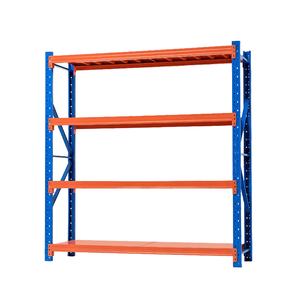
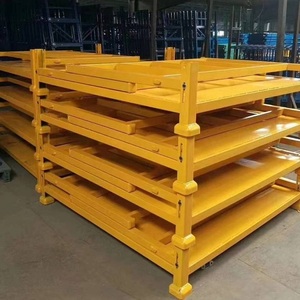
Heavy Duty Collapsible Stacking Racks Custom Sizes and Load Capacity Available
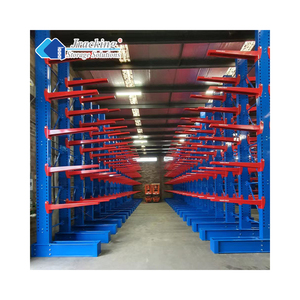
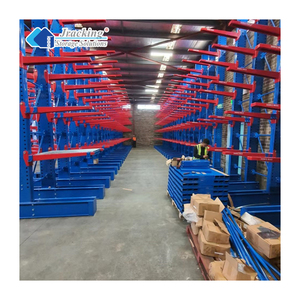
Jracking Industrial Shelving Warehouse Racks Heavy Duty Steel Cantilever Storage Rack System For Steel Pipe Storage
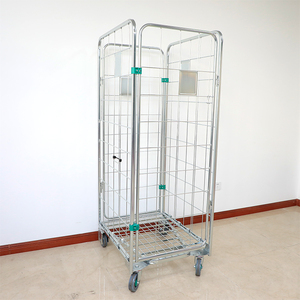
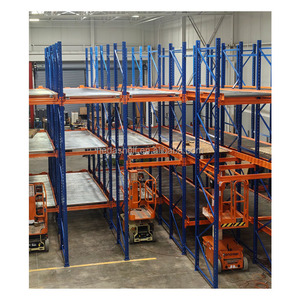
Heda Manufacturer Wholesale Heavy Duty Steel Gravity Flow Rack Customizable Warehouse Racking System FIFO
Engineering Integrity in Modern Heavy-Duty Stacking Racks
Modern supply chains operate under unprecedented volumetric stress. Facility managers and logistics procurement teams are tasked with maximizing internal warehouse clear height while facing fluctuating inventory cycles and shifting floor plans. In this environment, static, rigid racking bolted to concrete slabs can sometimes introduce spatial bottlenecks. This operational friction has propelled Heavy Duty Stacking Racks (also referred to across industry specifications as portable modular racks, tier-stacking frames, and post pallets) to the forefront of warehouse material handling.
Unlike permanent selective pallet racks that mandate wide forklift turnaround aisles and permanently consume cubic building footprint, heavy-duty stacking racks represent dynamic, relocatable infrastructure. Engineered from high-tensile structural steel tubular profiles (such as ASTM A500 Grade B or international equivalent Q235B/Q355B cold-formed and hot-rolled structural steel), these assemblies leverage precision self-aligning conical feet and target cups. This modular interface enables secure vertical stacking 3 to 6 tiers high without placing mechanical load onto fragile bulk merchandise or collapsing non-stackable cartons. When operational velocity demands changes during peak seasons or production line resets, modular stacking racks can be dismounted, collapsed, or nested with up to a 6:1 tare return ratio, freeing up thousands of square meters of prime warehouse slab space.
Technical Comparison: Structural Steel vs. Tubular Roll-Formed Stacking Racks
Procurement engineers must evaluate structural tolerances, steel metallurgical properties, and torsional resistance to make informed capital allocation decisions. The matrix below benchmarks primary heavy-duty storage typologies:
| System Architecture | Structural Profile Spec | Static Load Range (Per Tier) | Nesting / Return Ratio | Impact Resistance | Target Applications |
|---|---|---|---|---|---|
| Heavy Duty Post Stacking Rack | ASTM A500 Gr. B / Q355B Closed Tube | 1,000 kg – 3,500 kg (7,700 lbs) | 4:1 to 6:1 Nesting | High (Torsional Tube Weld) | Tire storage, bulk fabric, auto sub-assemblies, bulk bags |
| Hot-Rolled Structural Channel Rack | ASTM A36 C-Channel / Q235B Heavy Flange | 2,500 kg – 5,000 kg+ | Fixed / Bolted Module | Maximum (Forklift Collision Resilient) | Heavy dies, cold chain deep-freeze, steel coils, engine blocks |
| Cantilever Long-Span Stacking Rack | Hot-Rolled I-Beam Columns & Welded Bases | 800 kg – 2,000 kg per arm | Semi-knockdown | Superior Long-Load Balance | Steel pipes, PVC conduit, timber lumber, structural extrusions |
| Foldable Roll Cage & Cargo Carts | Welded Mild Steel Wire Mesh & Tubular | 500 kg – 800 kg | A-Frame 5:1 Folding | Medium (Light Dynamic Velocity) | Retail distribution, 3PL e-commerce sortation, postal logistics |
| Gravity Flow Dynamic Storage Rack | Roller tracks on Heavy Channel Uprights | 500 kg – 1,500 kg / pallet | Fixed FIFO Slope Track | High (Braked Roller Guides) | Perishable food & beverage, pharmaceutical dates, high-turn DC |
Macro Procurement Trends Shaping Industrial Stacking Systems (2025–2030)
Global supply chain vulnerability, evolving leasing models, and strict warehouse safety directives are transforming corporate procurement specifications for heavy-duty material handling equipment.
1. Shift Towards Asset-Light Fleets
Shortened 3PL commercial warehouse leases have reduced enterprise appetites for permanent floor-anchored installations. Tier-stacking modular units offer complete capital mobility—enabling equipment liquidation, subleasing relocation, or containerized overseas transfer without slab reconstruction penalties.
2. Stringent Carbon Accounting & Steel LCA
Leading multi-national procurement teams require Environmental Product Declarations (EPD) and Life Cycle Assessments (LCA). Suppliers utilizing scrap-based Electric Arc Furnace (EAF) steel and non-toxic zinc phosphate powder finishes command priority in sustainable corporate supply pipelines.
3. Seismic Compliance in Flexible Storage
Standard warehouse safety codes are tightening oversight on non-anchored vertical stacking. Purchasing managers must verify supplier calculations for base-to-height stability ratios (under FEM 10.2.02 and RMI MH16.1 guidelines), ensuring maximum load safety factors exceeding 1.67 under full vertical payload.
Engineering & Manufacturing Innovation: The Next Generation of Stacking Racks
The design engineering behind modular industrial stacking racks has shifted from conventional manual arc welding to automated high-precision manufacturing. Modern automated manufacturing facilities utilize 5-axis 3D laser tube cutting machines that slot joint interfaces with tolerances within ±0.3 mm. This tight tolerance eliminates the structural skewing historically observed when stacking field-welded units four levels high.
Simultaneously, surface metallurgy has progressed. Cold-chain storage environments operating down to -30°C cause standard low-grade carbon steels to experience ductile-to-brittle transitions, resulting in micro-fracturing under dynamic forklift shocks. Leading manufacturers address this by using fine-grained, micro-alloyed steel formulations with added niobium and vanadium, treated with electrostatic thermoset polyester-epoxy hybrid powder coatings or hot-dip galvanization conforming to ASTM A123 / EN ISO 1461. The outcome is complete anti-corrosion barrier protection that withstands acidic, alkaline, and washdown environments.
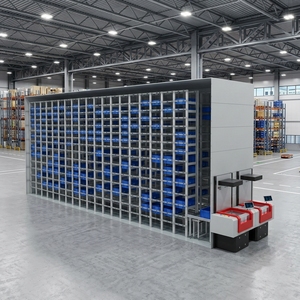
Furthermore, integration with Autonomous Mobile Robots (AMRs) and automated lift transfer stations is creating new hybrid applications. Stacking racks are now frequently engineered with undercarriage AGV guide channels, optical reflector positioning plates, and reinforced 4-way forklift entry fork tunnels, bridging the gap between manual bulk storage and fully automated distribution hubs.
Why Global Tier-1 Enterprises Partner With Us
Single-source engineering accountability, verified structural calculations, and complete supply chain transparency from raw steel coil to on-site commissioning.
Full RMI & CE Documentation
Every custom-fabricated stacking rack configuration is delivered with complete Finite Element Analysis (FEA) stress models and factory load test documentation.
High-Yield Certified Steel
We source certified prime Q235B, Q355B, and ASTM grade hot-rolled structural steel with mill test certificates (MTC) verifying tensile strength and chemical composition.
OEM & Custom Sizing
From heavy automotive transmission bins to agricultural seed box racks and deep cantilever arms, our modular tooling matches your custom pallet dimensions and fork clearance.
Global Export Packaging
Bundled with protective dunnage and high-density container loading schemas, eliminating ocean transit deformation and maximizing TEU container freight space.
Frequently Asked Questions by Industrial Sourcing Teams
Clear, engineering-backed answers addressing structural calculations, safety protocols, load ratings, and cross-border project logistics.
FAQ 01 How are maximum safe stacking heights and load ratings calculated for tier racks?
Stacking rack load integrity relies on both dynamic stability and static column yield strength. Under RMI ANSI MH16.1 and Australian AS 4084 guidelines, the combined vertical assembly must incorporate a minimum safety design factor of 1.67:1 to 2.0:1 against structural yield. For example, a tier rack rated at 1,500 kg (3,300 lbs) per level stacked 4 units high requires the base frame corner posts to safely support 4,500 kg of superimposed static vertical weight plus eccentric dynamic impact forces during forklift placement. Engineering teams evaluate the base-to-height aspect ratio; if total stacking height exceeds 4 times the minimum base dimension (4:1 ratio), stability attachments or wider target plates must be integrated.
FAQ 02 What is the functional difference between structural steel C-channel and closed tubular steel for stackable frames?
Closed tubular sections (such as square and rectangular hollow structural steel, HSS) deliver balanced torsional resistance and high column buckling strength in multiple axes, making them the standard choice for portable nesting and tier racks. Conversely, hot-rolled structural steel C-channels provide heavy web thicknesses that resist severe forklift impacts in high-traffic distribution corridors and cold-storage operations. Structural steel is less prone to catastrophic deformation upon collision, while closed tubular profiles provide a higher strength-to-weight ratio and cost efficiency for stackable post pallets.
FAQ 03 How do portable stacking racks compare with fixed drive-in or push-back pallet racks in total cost of ownership (TCO)?
Fixed high-density solutions like drive-in or push-back systems require substantial upfront capital expenditure, building architectural permits, floor anchor drilling, and designated non-recoverable aisle real estate. In contrast, portable stacking racks eliminate slab modification costs, reduce installation time by 80%, and convert dead warehouse floor space into dynamic storage during seasonal volume surges. Their ability to collapse or nest when depleted eliminates empty warehouse footprint waste, offering a lower TCO for fast-changing SKUs, seasonal agriculture, manufacturing buffers, and bulk tire distribution.
FAQ 04 Which surface finishing treatment should be specified for sub-zero freezer and outdoor yards?
For controlled indoor ambient warehousing, high-adhesion electrostatic thermoset powder coating (60–80 microns dry film thickness) offers durable impact and abrasion resistance. However, for cold-chain deep freeze facilities (-20°C to -30°C) with persistent moisture condensation, or for unshaded outdoor staging yards subject to UV and rainfall, Hot-Dip Galvanization (HDG) compliant with ASTM A123 / ISO 1461 is recommended. HDG forms an iron-zinc alloy layer that provides cathodic self-healing protection, preventing internal tubular rust and structural thinning over decades of continuous use.
FAQ 05 What data is required by our engineering team to provide a certified layout and manufacturing quotation?
To generate structural layouts and certified pricing, we require: (1) Unit load envelope dimensions (Width × Depth × Overall Height including pallet and product overhang); (2) Maximum gross payload weight per rack tier; (3) Stacking height target (e.g., 1-on-1, 1-on-3); (4) Material handling equipment profile (counterbalanced forklift, reach truck, mast clear lift height, fork tine dimensions); (5) Environmental conditions (ambient, cold storage, corrosive exposure, or external yard storage); and (6) Regional seismic zone requirements for proper base footprint sizing.
Ready to Engineer Your Modular Storage Architecture?
Connect with our structural racking engineers to discuss load ratings, custom nesting prototypes, and containerized export pricing for your distribution facility.