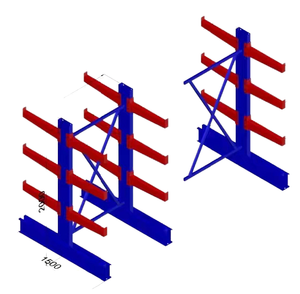
Direct-From-Factory Solutions
High-Performance Cantilever & Industrial Storage Portfolio
Engineered for high load-bearing safety, dimensional stability, and harsh environment resilience. Select from hot-rolled I-beam configurations, outdoor galvanization, or modular platforms.
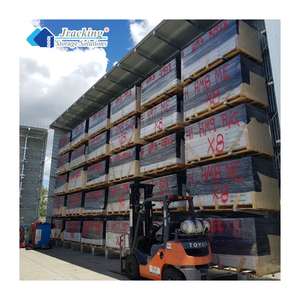
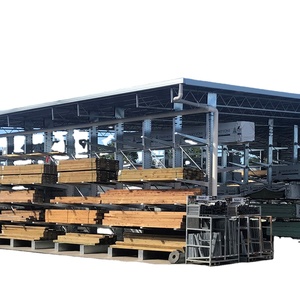
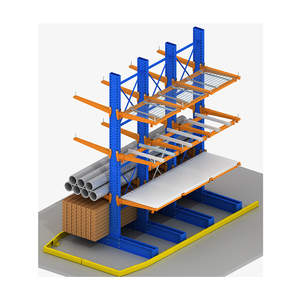
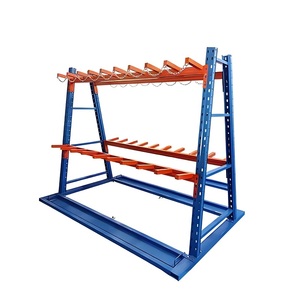
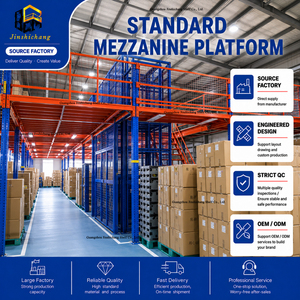
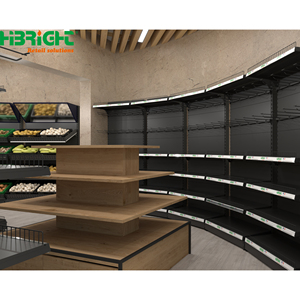
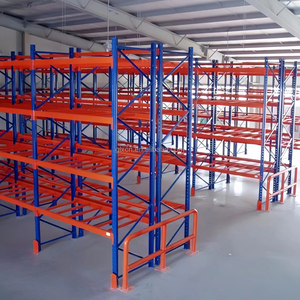
Factory Expertise & Quality Rigor
Engineering Integrity: Why Top Industrial Facilities Trust Our Manufacturing
Unlike standard pallet racking constrained by front upright columns, heavy-duty cantilever systems require rigorous structural calculations to safely resist moment arm stresses, point-load deflection, and dynamic lateral loads.
Structural Hot-Rolled I-Beam Construction
Fabricated from high-tensile grade Q235B and Q355B hot-rolled steel channels. Our solid structural uprights provide superior impact resistance against heavy forklift collisions compared to standard roll-formed sheet metal, making them the gold standard for high-throughput lumber and piping yards.
ANSI MH16.1 & Seismic Design Validation
Every column profile, pin-arm connection, and cross-brace module is engineered strictly under RMI ANSI MH16.1 and EN 15512 specifications. We provide complete finite element analysis (FEA) and site-specific seismic baseplate engineering to ensure rapid permitting clearance.
Anti-Bending Pivot Arm Geometry
Our patented cantilever arms feature an integrated upward camber design (usually 2° to 4°) that deflects to horizontal under maximum load capacity. Secure hairpin or heavy grade-8 bolted hinges allow arms to swing upward if bumped accidentally by material handling gear, eliminating column tear-out.
Specification Guide
Structural Hot-Rolled vs. Cold Roll-Formed Cantilever Systems
Choosing the correct structural specification is critical for balancing total project CAPEX with facility safety and lifecycle longevity.
| Evaluation Parameter | Structural Hot-Rolled I-Beam Rack | Cold-Formed C-Section Cantilever | Operational Impact & Recommendation |
|---|---|---|---|
| Load Capacity Per Arm | 1,000 kg – 5,000+ kg | 200 kg – 800 kg | Hot-rolled handles heavy steel slabs, thick pipe bundles, and industrial molds without creeping deflection. |
| Forklift Impact Resistance | Ultra-High (Solid flange steel) | Moderate (Prone to tearing & crushing) | Hot-rolled systems withstand frequent side-loader and counterbalanced truck collisions without upright buckling. |
| Outdoor Anti-Corrosion | Hot-Dip Galvanized (HDG, ISO 1461) | Electro-galvanized or standard powder coat | Structural HDG provides 25+ years of rust-free performance in marine, sub-zero, or high-humidity yards. |
| Vertical Arm Adjustability | 100mm / 101.6mm bolted centers | 50mm / 75mm slotted quick-fit | Roll-formed enables tool-free repositioning for light retail; bolted hot-rolled provides uncompromised structural stability. |
| Best Operational Application | Heavy steel distribution, lumber yards, naval staging | Light plumbing pipes, plastic extrusions, auto trim | Align profile selection directly with total SKU weight density and operational forklift velocity. |
Market Trends & Next-Gen Tech
Emerging Trends Reshaping Industrial Cantilever Racking Procurement
Material handling is transitioning rapidly from manual storage toward automated, telemetry-driven, and high-density vertical fulfillment.
Integration with Cantilever AS/RS & Rail Shuttles
Traditional manual forklifts struggle to pick beyond 9 meters in long-span environments. Modern procurement strategies are adopting cantilever-supported automated cranes and multidirectional automated guided vehicles (AGVs) that maneuver 12-meter bar stock down ultra-narrow aisles (VNA), unlocking 200% higher volumetric warehouse utilization.
Self-Sustaining Rack-Clad Building Structures
Rising commercial building costs are driving demand for rack-supported cantilever warehouses. In these configurations, heavy-duty structural columns serve a dual purpose: supporting massive long loads internally while simultaneously carrying the building's exterior cladding, roof trusses, and overhead solar arrays, saving up to 35% in construction overhead.
IoT Load-Cell Monitoring & Deflection Telemetry
The latest industrial procurement guidelines place strict focus on real-time structural health monitoring. Smart cantilever arms equipped with wireless strain gauges continuously measure deflection, arm balance, and shock strikes, alerting warehouse safety supervisors before dangerous metal fatigue, bending, or overloading hazards occur.
Procurement Knowledge Base
Frequently Asked Questions About Heavy Duty Cantilever Racking
Critical engineering and logistics questions addressed by our chief structural engineers.
How do I correctly calculate load capacity for cantilever arms?
Arm capacity is rated on the assumption of a Uniformly Distributed Load (UDL). If a load is placed toward the outer tip of the arm rather than centered along its length, the bending moment increases exponentially, cutting the effective weight capacity in half. Always verify that arm length matches or slightly exceeds your deepest bundle dimensions.
What is the standard spacing between cantilever upright columns?
Column spacing is dictated by the rigidity of the stored material. Flexible goods like PVC piping, flexible conduit, and thin timber require closer spacing (typically 1.0m to 1.5m) to prevent material sagging between arms. Rigid materials like structural steel H-beams can span 2.0m to 2.5m column centerlines safely.
Can cantilever racks be used outdoors in extreme weather?
Yes. Outdoor cantilever systems must be specified with a Hot-Dip Galvanized (HDG) finish adhering to ASTM A123 or ISO 1461. Furthermore, outdoor installations must include roof canopies and undergo engineering analysis for local wind loads, snow drift accumulation, and seasonal freeze-thaw soil movement.
What warehouse slab thickness is required for heavy cantilever installations?
Because cantilever racking exerts intense point loads and overturning moment forces at the baseplate, slab integrity is paramount. Standard installations generally demand a minimum 150mm to 250mm reinforced concrete slab with a 3,000 to 4,000 PSI compressive strength, anchored with high-tensile wedge expansion bolts.
Accelerate Your Project With Custom Cantilever Engineering
Our certified structural engineers provide complementary CAD layout schematics, arm deflection analysis, and accurate factory-direct quotations tailored to your exact warehouse footprint.