Catalog & Specifications
High-Performance Heavy Duty Industrial Racking & Handling Units
Explore heavy-duty cold-rolled tubular systems, automated shuttles, structural channels, and mobile warehousing solutions configured for immediate logistical deployment.
50+
Years of Manufacturing Heritage
100%
In-House Roll Forming & Welding
RMI / CE
ANSI MH16.1 & Seismic Compliance
40+
Global Export Markets Served
Manufacturing Capabilities
Engineering Superiority: What Distinguishes Top 10 Heavy Duty Steel Shelving Factories
A rigorous evaluation of steel grades, torsional resistance, welding automation, and automated coating lines.
Structural vs. Roll-Formed Steel Mastery
Top-tier manufacturing facilities deploy dual-line metallurgy: Q235B and Q355B cold-rolled coils for automated light-to-medium boltless tubular racking, alongside ASTM A36 hot-rolled C-channel profiles for impact-prone freezer and distribution environments. Upright posts utilize closed-seam tubular engineering, yielding 250% higher torsional rigidity than conventional open-back step profiles.
Robotic Automation & Certified Welding
Standardized AWS D1.1 and EN ISO 3834 robotic welding workstations handle end-plate connectors and beam collar assemblies. Automated multiaxis robotic cells eliminate human fatigue defects, guaranteeing consistent penetration, minimal heat deformation, and verified microstructural grain uniformity along critical load-bearing seams.
Thermoset Epoxy Powder Coating Infrastructure
Surface longevity hinges on chemical pre-treatment. Factories operating at whitepaper benchmark standards utilize 7-stage automated spray wash/iron phosphating lines before electrostatic powder deposition. Finished components withstand 500+ hours of continuous salt spray testing (ASTM B117), essential for sub-zero cold chain and marine transit resilience.
Engineering Review: Structural Dynamics, Deflection Ratios, and Seismic Calculation
Procuring heavy duty steel shelving systems is an infrastructure investment requiring deep structural calculations rather than simple catalogue matching. Warehouse shelving systems must maintain strict deflection tolerances. Standard industrial norms (such as RMI ANSI MH16.1 and FEM 10.2.02) dictate that under maximum safe working load (SWL), beam deflection must not exceed L/180 (or L/240 in high-tolerance automated crane facilities), where L represents the clear span distance between upright upright columns.
Furthermore, seismic resilience requires site-specific Finite Element Analysis (FEA). Anchor footings, baseplates, and upright column gauge profiles must be engineered around soil category, floor slab thickness, compressive concrete strength (minimum 3,000–4,000 PSI), and regional peak ground acceleration (PGA). Premium factories supply comprehensive structural calculation dossiers, certifying torsional resistance against seismic lateral sway and inadvertent dynamic impact from reach trucks.
| Racking Architecture | Typical Steel Profile | Pallet Density Factor | Selectivity Profile | Primary Industrial Use-Case |
|---|---|---|---|---|
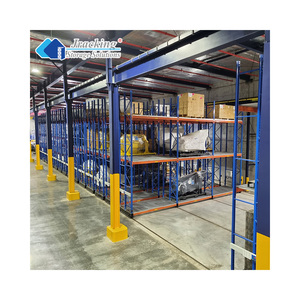
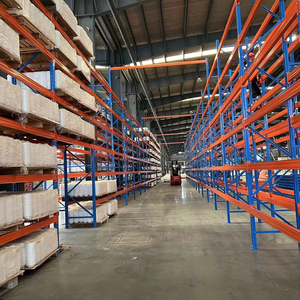
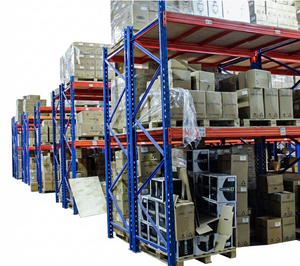
| Selective Pallet Racking | Roll-formed Omega / Tubular | Baseline (100% Aisles) | 100% Immediate Access | Fast-moving retail distribution, mixed SKU hubs |
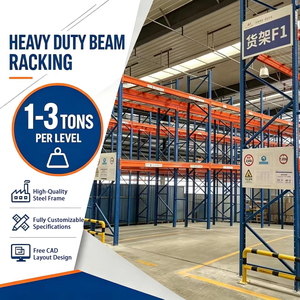
| SK3000 Structural Bolted | Hot-Rolled Structural Channel | Moderate to High | 100% Selective | Heavy manufacturing, deep freeze, abusive environments |
| Electric Mobile Pallet Rack | High-Tensile Cold Rolled | Ultra-High (Single Aisle) | 100% Random Access | Cold storage expansion, zero-floorprint extensions |
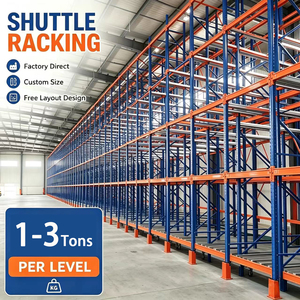
| Radio Shuttle Cart Racking | Dual-Track Galvanized Profiles | Maximum Deep Storage | Batch / Lane Dependent | High-volume food & beverage, seasonal buffer hubs |
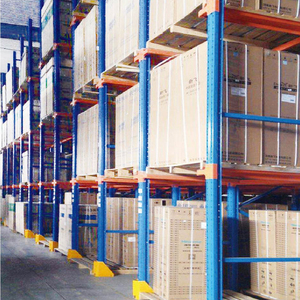
| 5-Layer Drive-In System | Reinforced Cold-Rolled Channel | High (LIFO / FIFO) | Lane Dependent | Homogeneous bulk commodities, raw ingredients |
Market Trends
Future Sourcing Trends in Heavy Duty Steel Shelving (2025–2030)
How automation integration, autonomous mobile robots (AMRs), sustainability compliance, and hybrid composite metallurgy are redefining global manufacturing standards.
1. AS/RS & Cobot Convergence
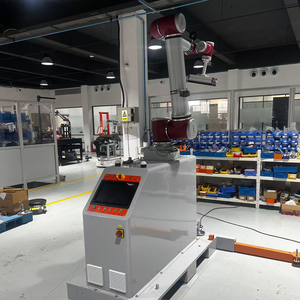
Static racks are shifting to automation-ready structures. Warehouses are deploying collaborative palletizing robots (e.g., JAKA 20KG automation arms) directly interacting with high-density pick faces, requiring sub-millimeter tolerances across beam levels and rail alignments.
2. Structural Decarbonization (Scope 3)
Global multi-national enterprises now evaluate heavy-duty shelving suppliers against carbon intensity metrics. Sourcing teams prioritize factories utilizing scrap-fed Electric Arc Furnace (EAF) steel coils and zero-VOC electrostatic powder coatings.
3. Dynamic IoT Strain Monitoring
Next-generation heavy-duty installations incorporate wireless strain-gauge sensors embedded inside critical upright columns, monitoring real-time dynamic loads, deflection thresholds, and accidental forklift collision impulses.
4. Galvanized & Hybrid Surfaces
Surging cold chain and offshore logistics have boosted demand for continuous pre-galvanized upright frames and duplex powder-over-zinc coatings that resist micro-cracking and corrosive condensates at -30°C.
Procurement Roadmap
B2B Buyer's Technical Evaluation & Factory Audit Checklist
Verify factory compliance across six core engineering parameters before issuing a formal Purchase Order (PO).
Mill Test Certificates (MTC)
Request EN 10204 Type 3.1 Mill Test Certificates. Validate that yield strength ($f_y$), tensile strength ($f_u$), and elongation percentages precisely match technical datasheets, preventing the substitution of inferior scrap grades.
Impact & Column Base Protection
Examine column reinforcement geometry. Professional installations utilize wraparound heavy-gauge floor-anchored steel column guards or welded structural deflector boots to absorb low-level forklift impact shocks.
Pallet & Decking Cross-Compatibility
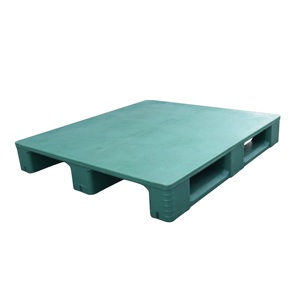
Ensure seamless dimensional fit between steel rack cross-beams and load surfaces, whether operating with 100% virgin HDPE plastic Euro pallets, wire mesh decking, or solid steel shelves, guaranteeing uncompromised dynamic load safety.
Engineering FAQ
Frequently Asked Questions: Heavy Duty Steel Shelving Procurement
Critical answers directly addressing structural capacities, international codes, and installation protocols.
What is the definitive engineering difference between structural steel and roll-formed tubular racking?
Structural steel racking is hot-rolled into standardized C-channel profiles (ASTM A36) and bolted together with high-tensile Grade 5 or Grade 8 bolts. It features thick flanges that provide exceptional resistance to heavy forklift collisions, making it standard for freezers, drive-in systems, and harsh industrial environments. Roll-formed tubular racking uses sheet steel passed through a cold roll forming line, featuring closed seams and teardrop or keyhole slots for rapid, tool-free boltless assembly. Closed tubular uprights deliver 250% higher torsional resistance than standard open-channel uprights at an optimized structural weight.
How do project engineers compute maximum allowable load capacity and safety factors?
Load capacity is governed by industry engineering codes like RMI ANSI MH16.1, FEM 10.2.02, or EN 15512. The structural engineer determines the total dead load, live load, product load, and dynamic loading impulses. The safety factor for steel components typically ranges between 1.5 to 1.95 against ultimate yield strength. In addition, vertical deflection under maximum uniform distributed load (UDL) cannot exceed the span divided by 180 (L/180) to maintain structural equilibrium and prevent catastrophic buckling.
What building floor data is required before finalizing a heavy duty rack order?
You must supply: (1) Concrete slab thickness (typically 6 to 10 inches or 150–250 mm), (2) Concrete compressive strength rating (typically 3,000–4,000 PSI or 20–30 MPa), (3) Subgrade soil compaction values, (4) Reinforcement rebar placement, and (5) Floor flatness/levelness specifications (FF/FL numbers or DIN 15185 standards). The factory's structural engineering department requires this data to size the column baseplates and choose anchor expansion bolts correctly to prevent floor punch-through or pull-out failure during seismic lateral forces.
Can electric mobile racks and radio shuttle systems function safely in cold storage freezers?
Yes. Specially engineered radio shuttles and electric mobile racks are designed for continuous cold storage operation down to -25°C or -30°C. They require cold-rated, low-temperature lubricants, condensation-sealed IP65 electrical enclosures, cold-resistant polyurethane wheels, and specialized lithium-iron batteries with integrated thermal management. High-density shuttle systems maximize cubic refrigeration efficiency, often reducing cold-room floor space requirements by up to 50%.
What documentation should international buyers demand from overseas racking factories?
Overseas buyers should require: (1) Raw material Mill Test Certificates (EN 10204 3.1) showing chemical composition and yield stress, (2) Third-party CE / ISO 9001 / ISO 14001 certificates, (3) Formal PE (Professional Engineer) stamped structural calculation calculations covering regional seismic codes, (4) Powder coating cross-hatch adhesion and salt spray test reports (ASTM B117), and (5) Complete assembly drawings and load warning plaques per OSHA/ANSI mandates.