Heavy-Duty Push Back Racking: Precision Engineering & High-Density Storage
Modern high-throughput warehousing demands maximum volumetric cubic utilization without sacrificing pallet selectivity or operational velocity. As material handling facilities, cold storage distribution centers, and third-party logistics (3PL) terminals face accelerating real estate expenditures, heavy-duty push back racking systems have emerged as the foundational architecture for nested pallet containment. Operating on an inclined rail track nested cart configuration, push back racking offers 2-deep to 6-deep Last-In, First-Out (LIFO) inventory handling with exceptional load bearing thresholds exceeding 3,000 lbs (1,360 kg) per pallet position. Below, our industrial engineering team evaluates the definitive manufacturing standards, core product portfolios, procurement dynamics, and future technological evolutions shaping industrial intralogistics.
High-Efficiency Storage Systems Portfolio
Explore our structural channel, cold rolled steel, and dynamic warehouse racking engineered for extreme load parameters and demanding operational duty cycles.
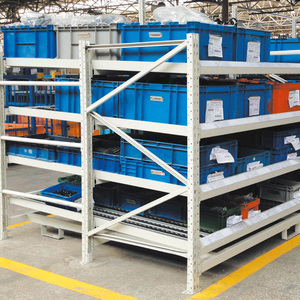
High Density Gravity Flow Pallet Rack
Customized 5-level cold rolled steel powder coated gravity roller tracks designed for automated carton and heavy pallet FIFO flow control.
Technical Specs →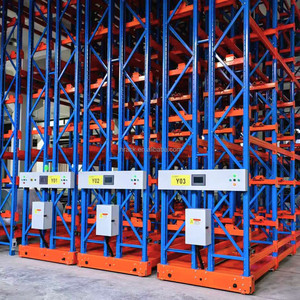
Electric Mobile Storage Racking System
Automated track-guided mobile chassis systems consolidating aisle footprint for high-density cold store and archive applications.
Technical Specs →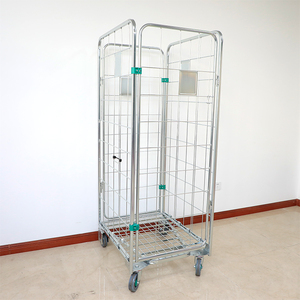
Foldable Steel Cargo Storage Roll Cage
Heavy-duty 500kg capacity galvanized logistics cages with collapsible engineering for streamlined return transport and parcel distribution.
Technical Specs →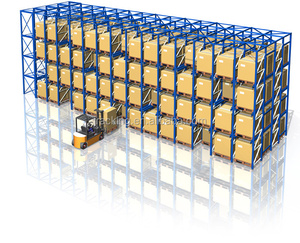
Drive-In Cold Room Pallet Racking
Structural steel channel drive-in systems engineered specifically for -30°C blast freezers and bulk seasonal SKU consolidation.
Technical Specs →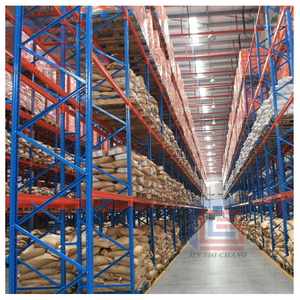
Selective Pallet Warehouse Rack
Universal 100% selectivity tubular & roll-formed racking engineered for adjustable beam levels and varied multi-SKU access.
Technical Specs →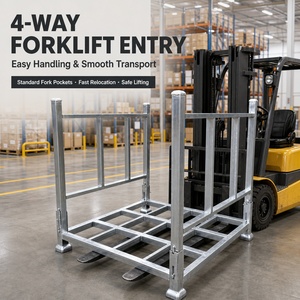
Stackable Portable Pallet Rack Frame
Self-nesting dynamic post racks enabling flexible modular storage staging without requiring fixed building anchoring installations.
Technical Specs →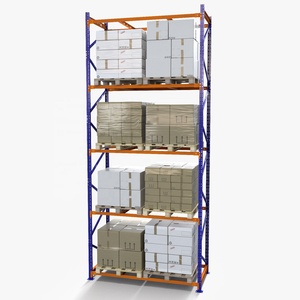
Multi-Level Pick Module Mezzanine Shelves
Integrated cat-walk and multi-tier structural mezzanine picking towers maximizing overhead headroom utilization in fulfillment centers.
Technical Specs →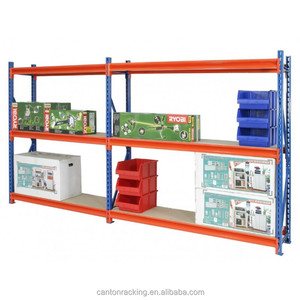
Long Span Medium-Duty Shelving System
Boltless drop-in heavy-duty step beam shelf solution for split-case manual pick modules, retail repacking, and e-commerce distribution.
Technical Specs →How Heavy Duty Push Back Systems Outperform Alternative High-Density Systems
A push back pallet racking system relies on a series of nested rolling carts that glide along heavy-gauge steel channel tracks pitched at a 3% slope. When a forklift places the initial pallet on the uppermost nested cart, subsequent pallets are used to gently push back that first cart, exposing the next nested cart underneath. Upon unloading, gravitational velocity forces the rearward pallets forward to the pick face at a controlled cadence.
Reduced Forklift Mast Entrapment
Unlike Drive-In systems where lift trucks enter long structural bays—creating significant collision risks with upright columns—push back rack operators interface exclusively at the outer front aisle face, preserving equipment longevity and reducing insurance liabilities.
Independent Level Accessibility
Each vertical tier and horizontal lane operates as an isolated storage conduit. Warehouses manage unique SKU distribution per lane level, dramatically lowering honeycombing losses compared to entire drive-in bay dedications.
Cart Linkage & Flanged Wheel Kinetics
Precision-machined steel wheels with sealed bearings eliminate derailment. Heavy-gauge structural safety catches and cart bumper linkages prevent dislodgement under sudden braking or irregular pallet placement dynamics.
Warehouse Storage Systems Performance Evaluation
Compare load capacities, footprint efficiency, and material handling truck compatibility across commercial racking methodologies.
| Racking Methodology | Storage Density | Lane Rotation | Selectivity | Impact Vulnerability | Forklift Clearance Requirement |
|---|---|---|---|---|---|
| Heavy-Duty Push Back | High (75%–85% Cubic) | LIFO (By Lane) | Medium-High (1 SKU per lane) | Low (Truck stays in main aisle) | Standard Counterbalance / Reach |
| Drive-In / Drive-Through | Extreme (85%–90% Cubic) | LIFO / FIFO | Very Low (1 SKU per full bay) | High (Mast enters frame bays) | Narrow Mast / Overhead Clearance |
| Pallet Gravity Flow | Extreme (85%–90% Cubic) | FIFO (Strict) | Moderate (1 SKU per lane depth) | Low (Dedicated load/pick aisles) | Counterbalance at Load & Unload |
| Selective Pallet Rack | Low (40%–50% Cubic) | Any (FIFO / LIFO) | 100% Immediate | Moderate (Frequent aisle turns) | Standard Aisle / Turret Truck |
| Automated Pallet Shuttle | Maximum (90%+ Cubic) | Software-Controlled | High (Automated retrieval) | Extremely Low (Automated car) | Robotic AGV / Integrated Crane |
The Future of Heavy-Duty Push Back Racking Procurement Trends
Project managers, logistics directors, and global EPC procurement leads must navigate changing supply chains, carbon initiatives, and robotic integrations. The push back racking ecosystem is experiencing three structural transformations over the 2026–2032 industrial planning cycle.
Hybrid Automation & AMR Integration
Procurement contracts increasingly require push back racking systems designed with high-tolerance laser-guided pick stops. Autonomous Mobile Robots (AMRs) and Automated Forklifts (AGVs) equipped with computer vision need consistent front-pallet positioning within ±3mm tolerances to execute automated picks without sensor fault trip-outs.
Cold Chain Sustainability & Thermal Physics
With cold room energy tariffs escalating globally, push back systems deployed in sub-zero freezers reduce chilled air volume waste by over 45%. Sourcing teams prioritize structural C-channel steel formulations (ASTM A36/A572) that avoid ductile-to-brittle cold transition fractures under continuous -25°C freezing environments.
Parametric Seismic Verification & BIM
Permitting authorities now mandate certified nonlinear finite element analysis (FEA) compliant with RMI (Rack Manufacturers Institute) ANSI MH16.1 specifications. Turnkey manufacturers delivering native Revit/BIM digital twins with real-time floor slab shear load calculations win high-value infrastructure contracts.
Emerging Technical Evolutions in Racking Fabrication
Racking manufacturers are advancing fabrication through heavy robotics, specialized metallurgy, and predictive structural telemetry.
Cold-Formed Tubular SK2000 Closed Steel
Closed tubular uprights providing 250% higher torsional resistance against lateral forklift impacts than open-back roll-formed columns.
Hot-Dip Galvanized & Zinc Coatings
High-durability anti-corrosion finishes preventing cart rail degradation from caustic washdowns in food, meat packaging, and dairy centers.
Integrated Friction Speed Retarders
Internal centrifugal mechanical braking controllers installed in long 5-deep and 6-deep runs to eliminate heavy runaway pallet surges.
IoT Structural Strain Gauge Nodes
Low-power telemetry modules mounted on anchor bases logging deflection, post-impact stress cracking, and seismic vibrations in real-time.
Why Source Directly From Our Manufacturing Facilities
Since 1970, Steel King Industries, Inc. has stood as a premier single-source manufacturing power. By commanding entire fabrication lines—from raw American mill steel sourcing to robotic roll-forming, hot structural channel fabrication, and robotic powder coat lines—we offer unmatched reliability for enterprise distribution capital projects.
Single-Source Engineering Accountability
Eliminate finger-pointing between separate component suppliers. We manufacture the upright frames, step load beams, inclined structural push back cart rails, welded carriage beds, and heavy safety guarding in-house. A single engineering seal covers your complete facility installation.
RMI & ANSI MH16.1 Certified Compliance
Every push back assembly undergoes rigorous static and dynamic load strain testing. Certified professional structural engineers verify project-specific site slab thickness, geotechnical soil anchor strength, and high seismic zone coefficient factors across North America, Europe, and global territories.
Global Export & Turnkey Field Execution
Our global logistics and distributor execution teams handle oceanic containerization, export skidding, customs clearance, and factory-authorized certified installation rigging. We protect project timelines from civil ground-breaking through municipal certificate of occupancy.
Frequently Asked Questions by Warehouse Directors
Direct answers to the most common engineering, operational, and procurement queries regarding heavy-duty push back racking systems.
What is the maximum practical lane depth for a heavy-duty push back racking system? +
How does push back racking compare to drive-in racking for cold storage operations? +
Can push back carts accommodate broken, warped, or non-standard pallet styles? +
What structural building specifications are required before push back installation? +
What regular maintenance is required on heavy-duty push back rolling carts? +
Optimize Your Warehouse Footprint Today
Connect directly with our senior application engineers to receive custom layout drawings, load calculations, seismic certifications, and factory-direct pricing for your heavy-duty push back project.