High-Capacity Tool Storage Racks & Industrial Storage Solutions
Fabricated with high-yield Q235B/Q355B cold-rolled structural steel, precision roll-formed uprights, and safety-locking mechanisms designed for stamping dies, injection molds, tooling cribs, and automated workflows.
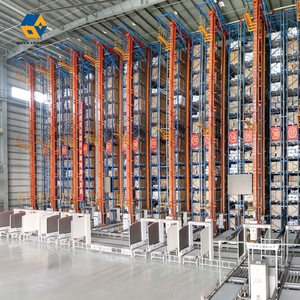
Modular ASRS Shelving Unit for Small to Medium Warehouses
Integrated mini-load automated crane racks built for high-speed CNC tooling retrieval, dies, and critical maintenance spares.
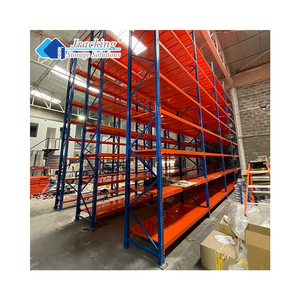
Jracking Dexion Style Warehouse Shelving Heavy Duty Pallet Rack
Classic adjustable teardrop & diamond slotted frame profile engineered for heavy stamping fixtures, raw steel coils, and machine subassemblies.
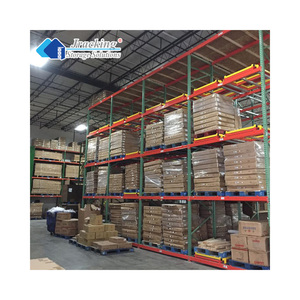
Jracking Warehouse Storage Heavy Duty Pallet Rack Push Back Steel Rack
Gravity-cart nested carriage system engineered for tool fixtures and heavy stock storage up to 6 pallets deep with minimal aisle footprint.
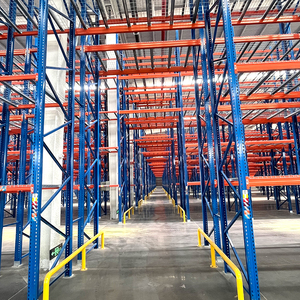
Jracking Industrial Racks EURO Standard Steel Pallet Racking CE Certified
Manufactured in full compliance with EN 15512 and CE safety standards, optimized for heavy equipment repair bays and die casting departments.
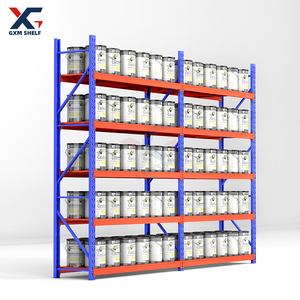
Factory Heavy Duty Metal Shelving Industrial Storage Rack Shelf System
Versatile box-beam configuration featuring reinforced drop-in steel deck panels, specifically designed for dense hand-loaded tool and component inventory.
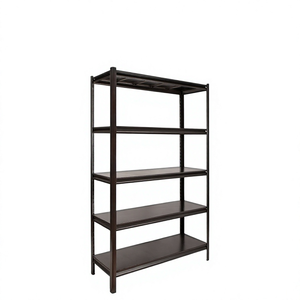
Warehouse Steel Boltless Rivet Storage Racks Anti-rust Shelving Units
Rapid interlock tubular rivet racks for assembly workcells, maintenance sheds, and manual tooling stations requiring rapid reconfiguration without bolts.
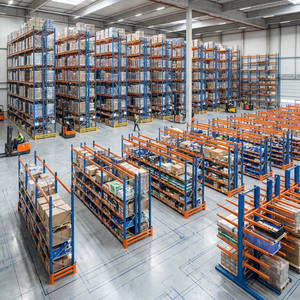
Industrial Heavy Duty Pallet Racking System Adjustable Storage Shelving
The industrial benchmark for 100% selective tool and pallet retrieval. Equipped with welded footplates, column wrap protectors, and seismic bracings.
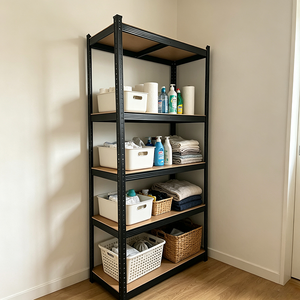
Light Duty Slotted Angle Storage Rack Adjustable 5 Tier Shelving Unit
High-precision slotted cold steel framework tailored for precision tool bits, inspection gauges, calibrated measuring tools, and spare hardware storage.
Enterprise OEM/ODM Manufacturing Infrastructure
Tooling and stamping dies represent mission-critical capital investments. Our factory delivers end-to-end metallurgical control, finite element modeling, and robotic manufacturing to ensure zero structural deflection under extreme point loading.
High-Yield Steel Sourcing & FEA Design
Every structural column and step beam is formed from certified high-tensile hot-rolled or cold-rolled structural steel (Q235B / Q355B / SS400). Advanced Finite Element Analysis (FEA) verifies torsional stiffness, weld throat stresses, and seismic resonance under both static loading and crane-induced dynamic shocks.
Robotic Precision Profiling & Welding
Continuous automated roll-forming lines guarantee upright dimensional tolerances within ±0.5mm across 12-meter profiles. Fully automated robotic welding cells execute dual-fillet weld connections between connector pins and box beams, eliminating cold joints and ensuring flawless compliance with AWS D1.1 welding standards.
Full OEM/ODM Customization Architecture
From roll-out drawer die storage with safety interlocks that prevent multi-tier tip-over to heavy-duty cantilever systems for stamping bolster plates, we customize frame depths, pitch geometries (50mm, 75mm, 76.2mm), structural channels, and electrostatic powder coatings tailored to harsh cutting oil environments.
Engineering Whitepaper: Managing Concentrated Point Loading in Die & Tool Racking
Standard warehouse pallet racking is engineered primarily for Uniformly Distributed Loads (UDL), where a wooden or composite pallet spreads weight evenly across two horizontal crossbeams. In stark contrast, heavy-duty tool and die storage presents high-concentration point loads transmitted via solid steel bolster blocks, casting plates, or narrow leveling shims. Storing a 5-ton progressive stamping die on an unreinforced rack creates extreme bending moments and localized flange buckling.
Our OEM/ODM engineering protocols address this through Structural C-channel beams, internal beam stiffeners, drop-in structural steel pans (up to 6mm thickness), and welded heavy-duty cross-tie supports. Furthermore, our roll-out tool storage drawers integrate high-precision industrial roller bearings with positive mechanical safety interlocks: when one drawer is pulled out, all other levels are automatically deadbolted, ensuring that the cumulative center of gravity never crosses the tipping threshold.
Every system conforms directly with RMI ANSI MH16.1-2023 (Specification for the Design, Testing and Utilization of Industrial Steel Storage Racks), European standard EN 15512:2020, and Australian AS 4084:2023. Load placards and site-specific certified calculations are supplied with every overseas delivery.
Heavy-Duty Tool Storage Racking Structural Matrix
Match your tooling payload, handling machinery, and floor slab profile against our core structural engineering configurations.
| Storage Racking System | Load Capacity (Per Level) | Primary Application Profile | Handling Equipment | Structural Upright Type |
|---|---|---|---|---|
| Roll-Out Die Storage Rack | 1,000 – 3,500 kg / drawer | Stamping dies, plastic injection molds, tooling jigs | Overhead bridge crane, monorail hoist | Welded structural channel / tubular steel |
| Structural Channel Pallet Rack | 3,000 – 8,000 kg / pair | High-tonnage die sets, raw steel billets, foundry molds | Heavy counterbalance forklift, VNA truck | Hot-rolled structural channel (C3, C4, C5) |
| Modular AS/RS Tooling Rack | 300 – 1,500 kg / location | High-mix CNC tooling, precision fixtures, robotic grippers | Automated stacker crane, shuttle robot | Precision roll-formed closed tubular profiles |
| I-Beam Cantilever Racking | 1,500 – 6,000 kg / arm | Extrusion dies, bar stock, pipe molds, long tooling mandrels | Side-loader forklift, 4-way reach truck | Wide-flange hot-rolled H-Beams / I-Beams |
| Pushback High-Density Rack | 1,000 – 2,500 kg / cart | Standardized mold bases, tool replenishment carriers | Standard counterbalance forklift | Heavy teardrop / structural hybrid frame |
Future Trends in Industrial Tool Storage & Material Handling
The manufacturing floor is undergoing a seismic digital transformation. Heavy-duty tool racking is rapidly evolving from passive metal structures into intelligent, data-connected automation nodes.
1. Direct AMR/AGV Interfacing & Autonomous Tool Delivery
Modern smart factories are phasing out manual forklift transfers of high-tonnage dies. Next-generation tool storage systems feature docking apertures and roller beds engineered to mate directly with Autonomous Mobile Robots (AMRs) and automated heavy die carts. This eliminates human exposure to heavy mold transfers, prevents forklift collision damages to rack uprights, and shrinks aisle clearances from 3.5 meters down to just 1.8 meters, delivering a 45% increase in usable factory floor area.
2. IoT Strain Gauge Telemetry & Overload Sentinel Systems
Accidental overload during rapid tooling changeover represents a major catastrophic collapse risk. Cutting-edge OEM tool racks now incorporate embedded piezoelectric strain sensors and RFID transponders within beam flanges and shelf joints. The system continuously cross-checks actual die weights against finite element rated deflection parameters. If a technician attempts to seat a mold that exceeds beam tolerance, acoustic alerts trigger instantly and telemetry logs the event across the factory MES system.
3. Eco-Powder Coating & Carbon-Neutral Structural Steel
Global environmental mandates and European CBAM (Carbon Border Adjustment Mechanism) standards are driving Tier-1 automotive and aerospace tool rooms to audit the embedded carbon in their plant infrastructure. Our manufacturing facilities have implemented low-temperature thermosetting epoxy coatings that emit zero volatile organic compounds (VOCs). Concurrently, we utilize electric-arc-furnace (EAF) steel coils containing over 80% recycled scrap, slashing the cradle-to-gate carbon footprint per ton of racking by 42%.
4. Modularity and Fast Reconfigurable Pitch Architecture
Shortened product lifecycles in consumer electronics and automotive platforms demand quick-change tooling cribs. The future belongs to hybrid slotted-angle and roll-formed profiles featuring universal teardrop and hex-key geometry. Plant managers can reconfigure tier elevations in 50mm increments in minutes without hot-work permits or specialized rigging, dramatically shortening line changeover downtime during new vehicle program rollouts.
Enterprise Tool Racking Procurement: Total Cost of Ownership (TCO)
A rigorous engineering and economic guide for procurement directors, plant engineers, and supply chain managers.
Total Cost of Ownership vs. Initial Capex: Avoiding the "Cheap Steel" Trap
When sourcing heavy-duty tool storage racking from international factories, procurement teams frequently focus exclusively on the FOB price per kilogram of steel. This metric is fundamentally deceptive in heavy-die storage applications. Substandard fabricators frequently use re-rolled non-prime coils with inconsistent yield strengths (falling below 235 MPa), irregular weld seam penetration, and rudimentary air-dry paints that peel under stamping lubricant exposure.
The total lifecycle cost equation must encompass: TCO = Initial Capex + Assembly Rigging Hours + Maintenance & Column Straightening + Downtime Collision Risk + Insurance Liability. Investing in closed-tube tubular uprights or hot-rolled structural channels with factory-welded column base protectors delivers an average 300% longer operational life in high-traffic die-handling aisles. Additionally, factory pre-assembly of modular frames and precision-drilled anchor holes reduces contractor on-site installation labor by 35%.
When issuing RFQs, procurement engineers should mandate mill test certificates (MTC) according to EN 10204 3.1, demand seismic baseplate design calculations verified by a certified Professional Engineer (PE), and require 1,000-hour ASTM B117 salt spray corrosion testing for all powder-coated surfaces.
Frequently Asked Questions on Heavy-Duty Tool Racking
Direct answers from our structural engineering and international project teams.
What structural differences exist between standard warehouse pallet racking and heavy-duty tool/die racking?
Standard warehouse pallet racks are designed to carry uniformly distributed palletized goods (typically 1,000 kg to 2,000 kg per pair of beams) with minimal point loading. In contrast, heavy-duty tool and die racks must support severe point-load concentrations (often 3,000 kg to 10,000 kg localized on small feet or steel blocks), dynamic shock loads during overhead crane positioning, and cantilevered loads when roll-out shelves are extended.
Consequently, tool racks utilize thicker steel gauges (typically 2.5mm to 4.5mm cold-rolled or heavy structural channels), welded gussets, heavy-gauge solid steel decking, internal stiffening channels, and mechanical anti-tip interlocks to maintain stability and prevent beam twisting.
How does your factory accommodate custom OEM/ODM tool storage specifications?
Our OEM/ODM capability encompasses full custom structural engineering. Clients provide tool dimensions, weights, handling crane parameters, and building floor slab blueprints. Our engineering department develops 3D SolidWorks models, runs dynamic FEA simulations, and optimizes profile thicknesses.
We customize upright punch spacing (50mm, 75mm, 76.2mm Dexion style, or Teardrop style), integrate specialized roller tracks, CNC tool holder pockets (BT30, BT40, BT50, HSK63), custom drawer extension percentages (60% to 100% full-extension), and custom RAL epoxy colors matching client plant standards.
What seismic considerations and floor slab specifications are required before installation?
Because heavy tool racks transmit very high concentrated loads through their baseplates, a typical minimum requirement is a 150mm to 250mm reinforced concrete slab with a compressive strength of at least 25 to 30 MPa (3,500 to 4,500 psi). For seismic zones (such as Seismic Design Categories D, E, or F), we engineer enlarged footprint baseplates (often 12mm to 20mm thick) with multiple heavy wedge anchor bolts per column.
All calculations follow local building codes (IBC/ASCE 7 in North America, Eurocode 8 in Europe) to prevent floor punch-through or baseplate shearing during seismic ground accelerations.
What surface treatments are implemented to withstand tooling cutting fluids and stamping lubricants?
Industrial tool cribs and stamping presses expose racking to synthetic coolants, mineral oils, and hydraulic fluids that quickly dissolve low-grade enamel paints. We apply a rigorous 7-stage chemical pre-treatment cycle consisting of hot degreasing, zinc phosphating, and deionized water rinsing.
Components are subsequently coated with high-density thermosetting epoxy-polyester powder cured at 200°C (392°F), achieving a dry film thickness of 70–100 microns. This finish exhibits outstanding cross-hatch adhesion (ASTM D3359 Class 5B), 2H+ pencil hardness, and complete inertness against typical industrial cutting fluids.
What documentation and certifications are provided with export shipments?
Every international order is supported by a comprehensive documentation package: 3.1 Mill Test Certificates verifying raw steel chemistry and yield strength, Factory Quality Inspection Reports, CE Declaration of Conformity (EN 1090-1 / EN 15512), ISO 9001 and ISO 14001 certificates, detailed assembly blueprints with color-coded component markers, and certified load capacity plaques.
Accelerate Your Tool Storage Engineering Project
Connect directly with our senior application engineers. Receive custom CAD layout drawings, structural finite element capacity analyses, and competitive direct-factory pricing within 24 hours.