1 / 5

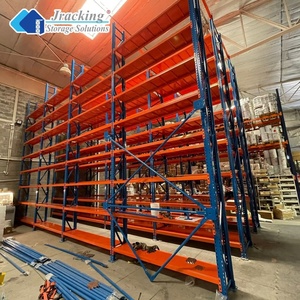
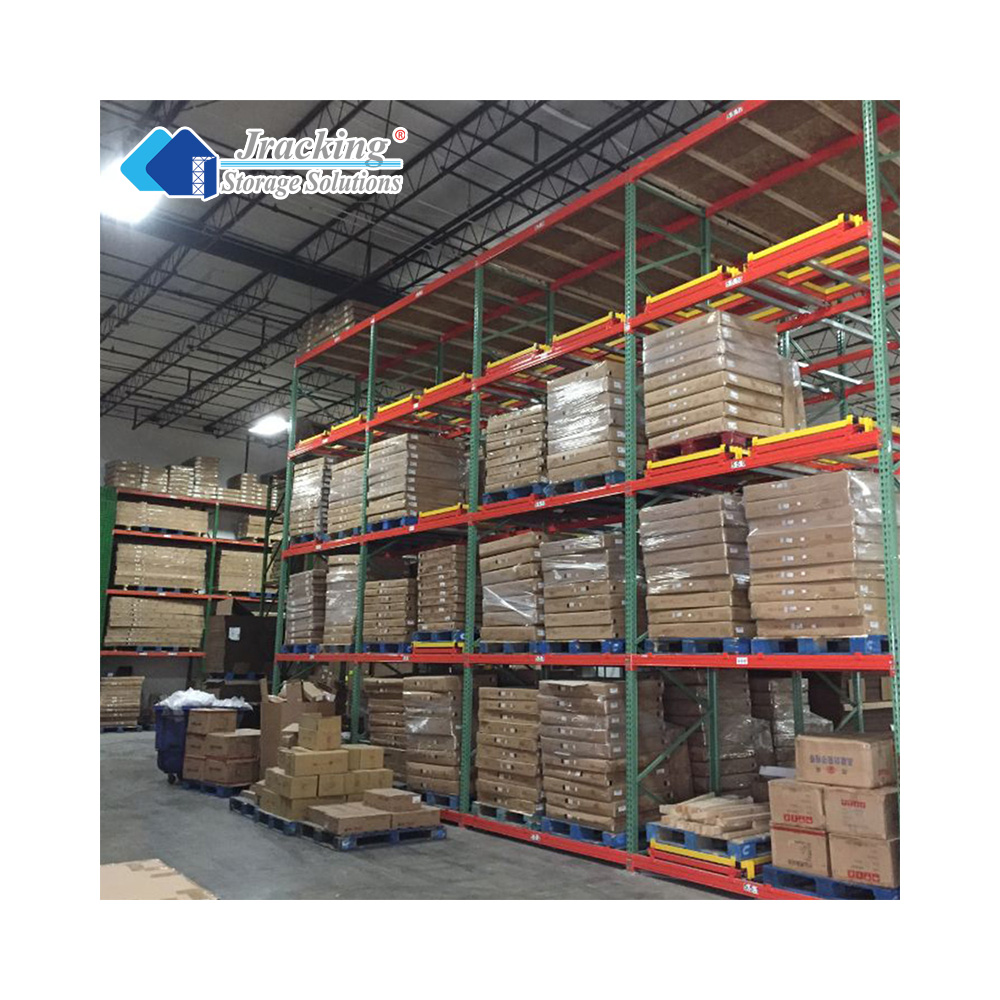
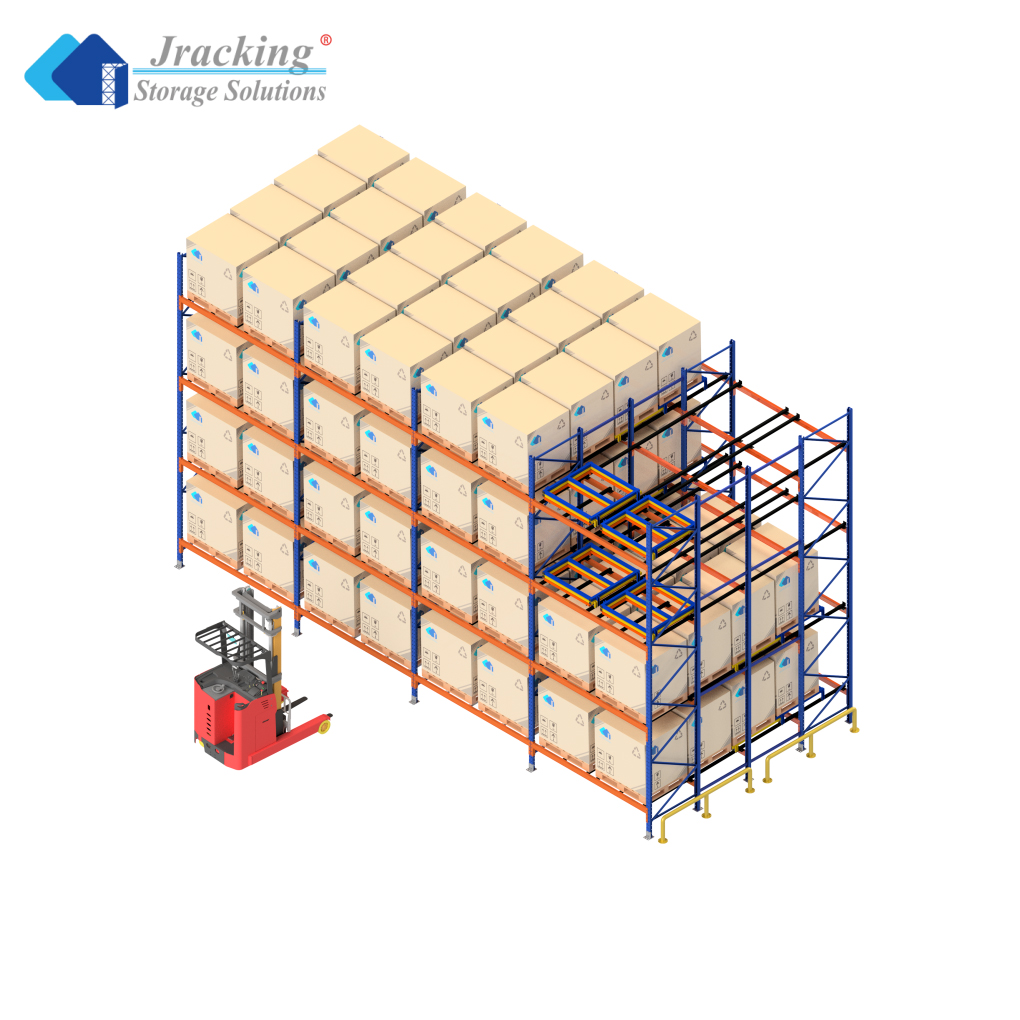
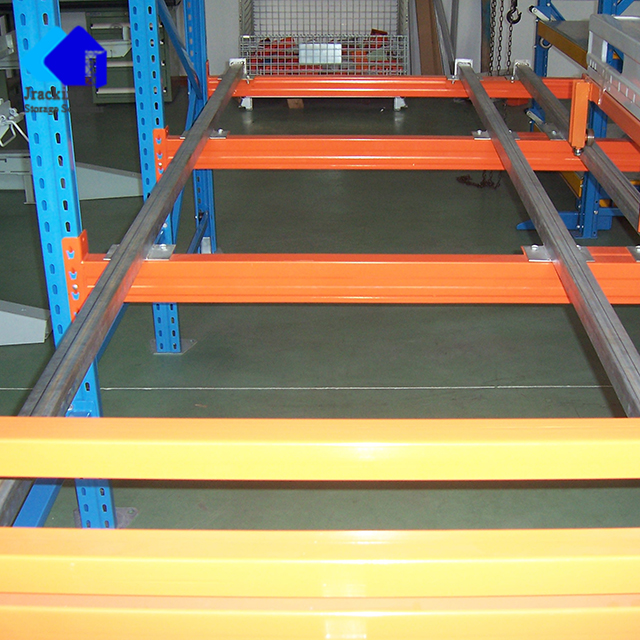
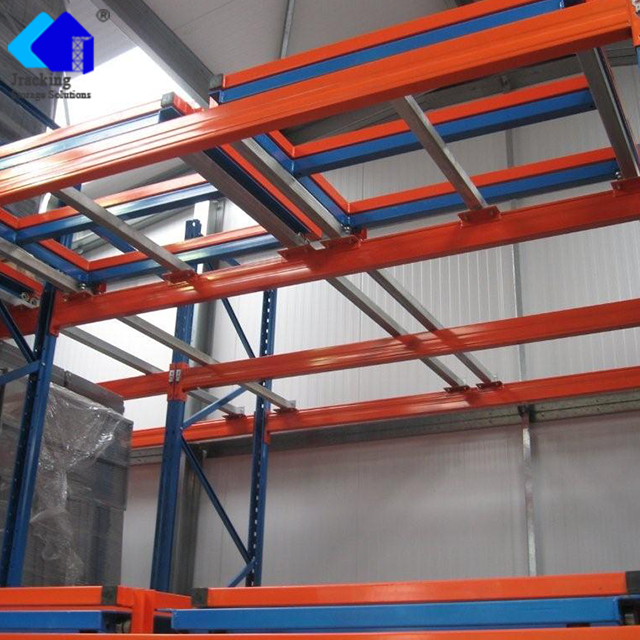
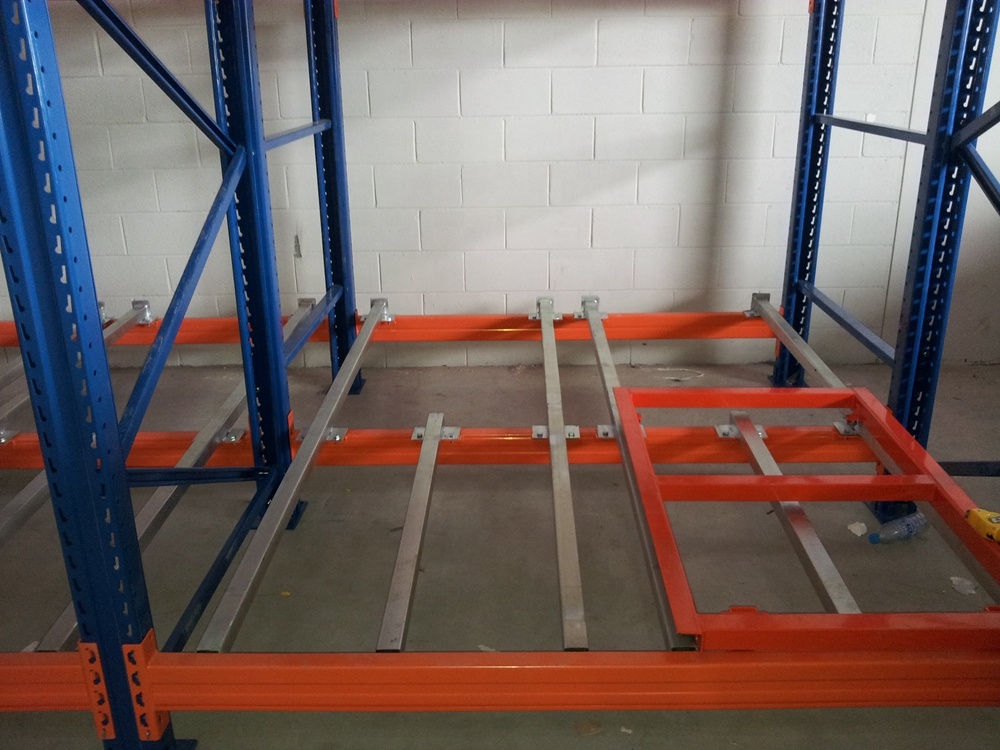
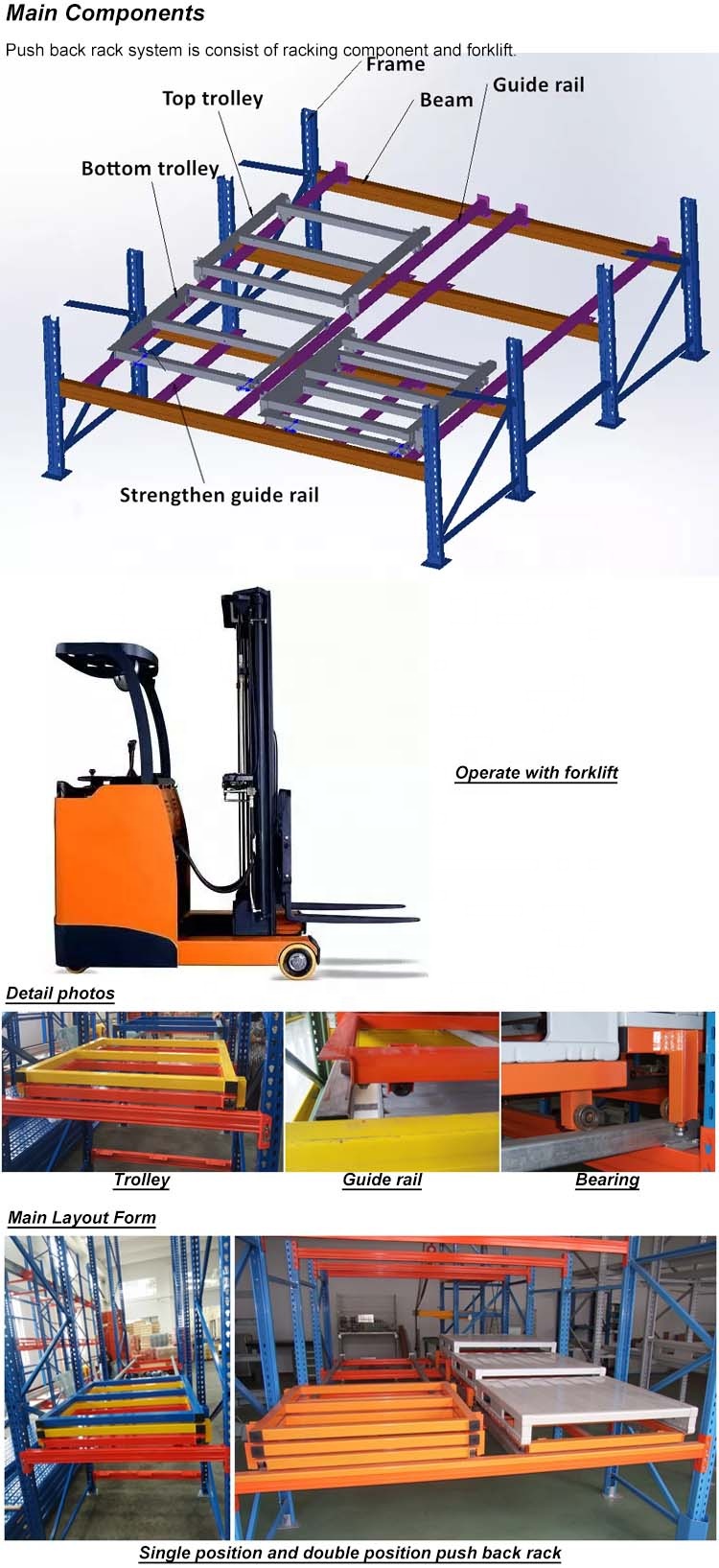
Jracking Push Back Rack is composed of pallet rack and combined with trolley and around 2° guide rail. The push back pallet rack uses heavy-duty carts to form 2 to 5-pallets-deep configurations, single pallet loading capacity is less than 1000kg.
| Name | Push back rack | Material | Steel |
| Size | Customized Size | Color | Customized |
| Depth | Customized | Weight Capacity | 500-5000kg |
| Width | Customized | Height | Customized |
| Finish | Powder Coated | ||
| Usage | Warehouse Storage System | ||
| Application | Widely Used | ||
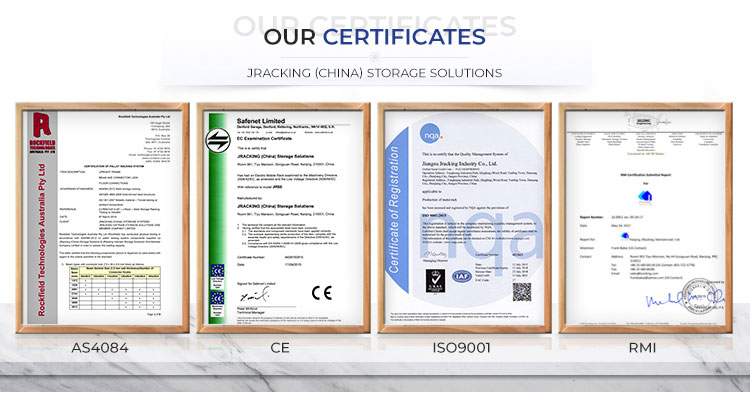
| Certification | CE, AS4084-2012 /CE/ ISO/RMI | ||
| Free Sample | Available (Delivery Cost on Buyer) | ||
| OEM | Available | ||

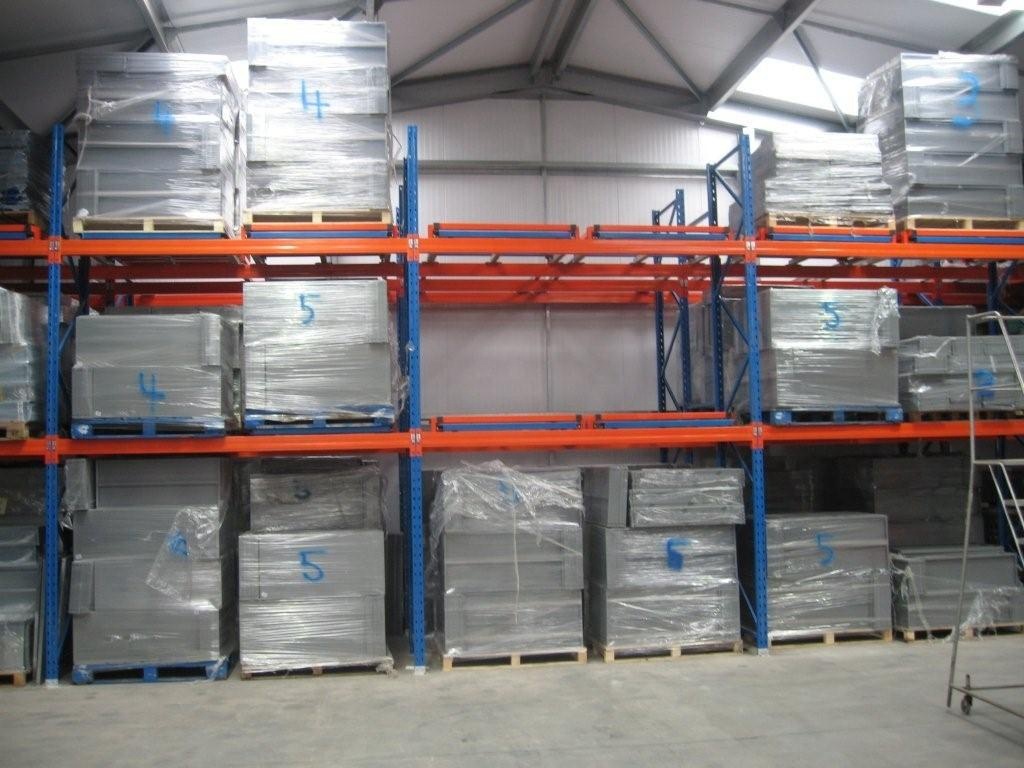
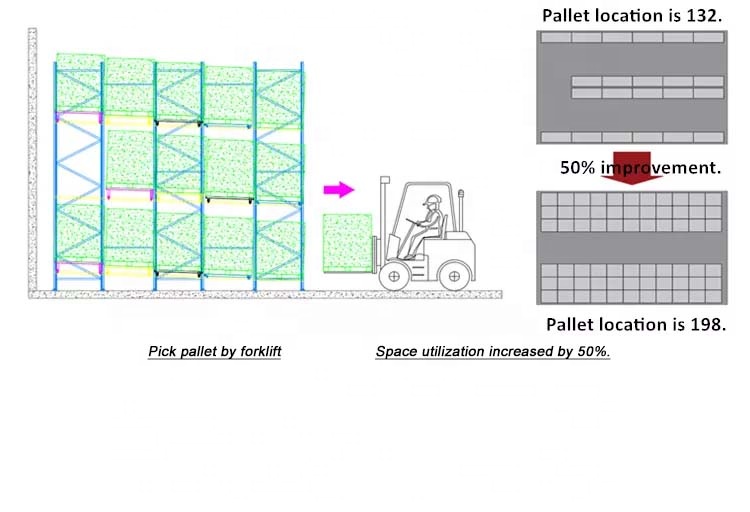
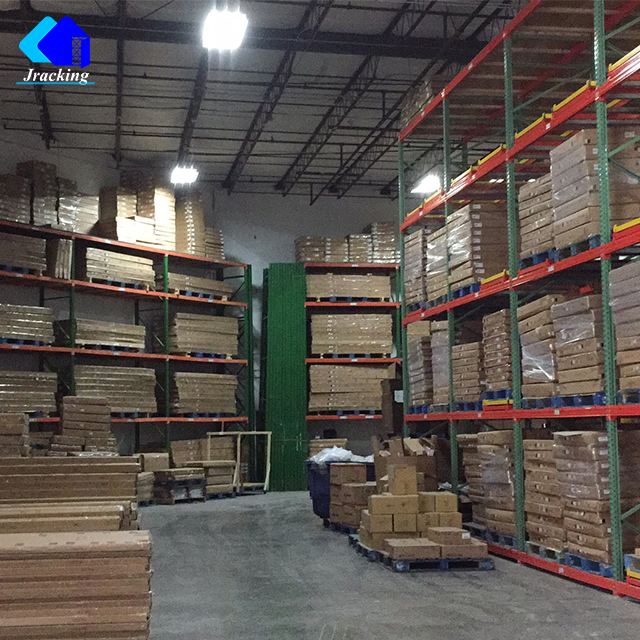
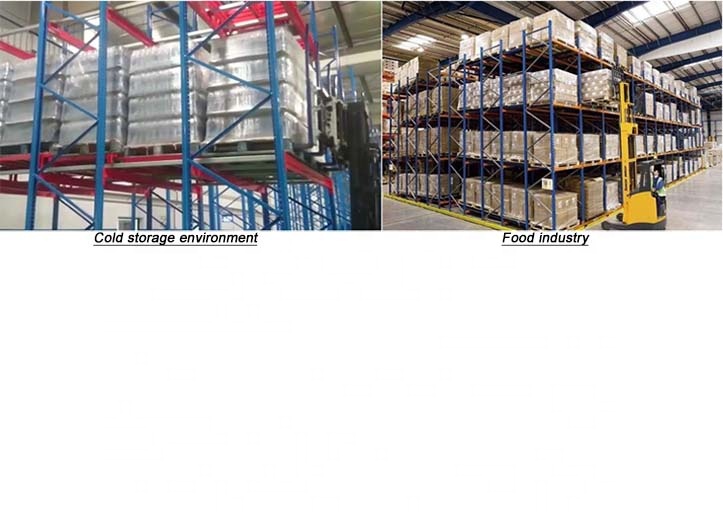
The push back rack is suitable for the products with large quantity and few varieties. Such as:
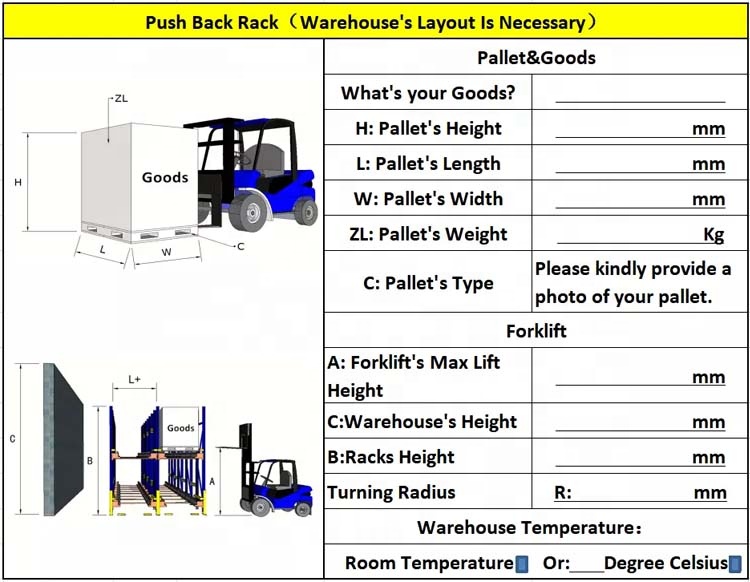
The following chart is intended to show the basic required information for a push back rack quote. To get the most suitable design and cost-effective quote, please feel free to contact our Sales.
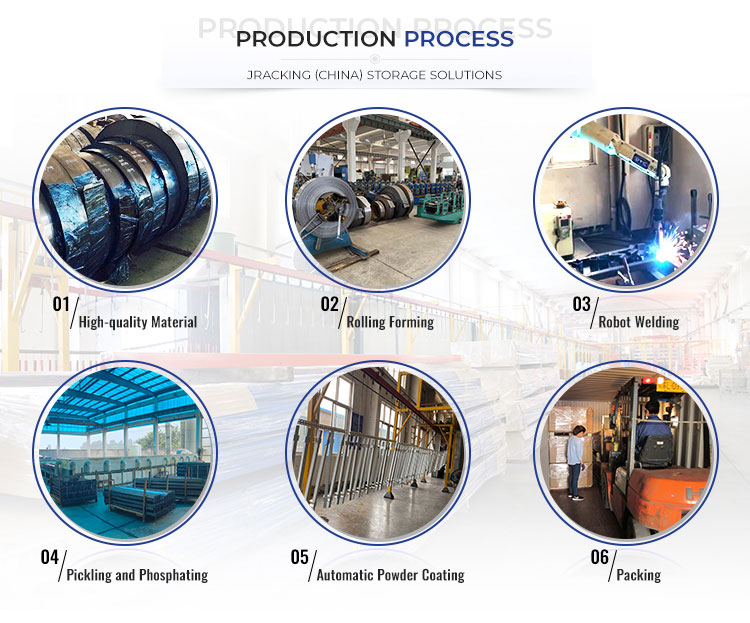
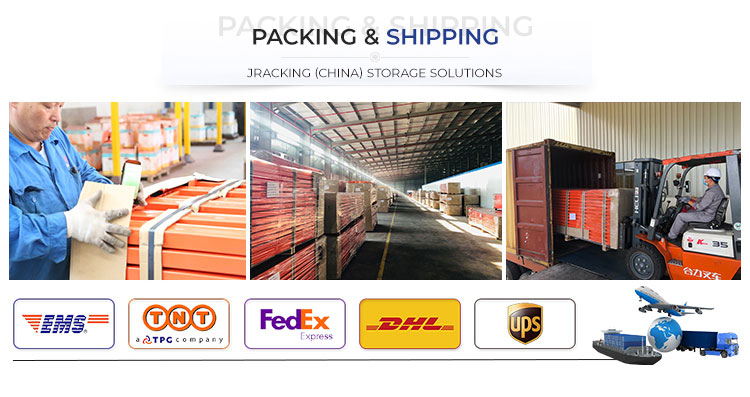
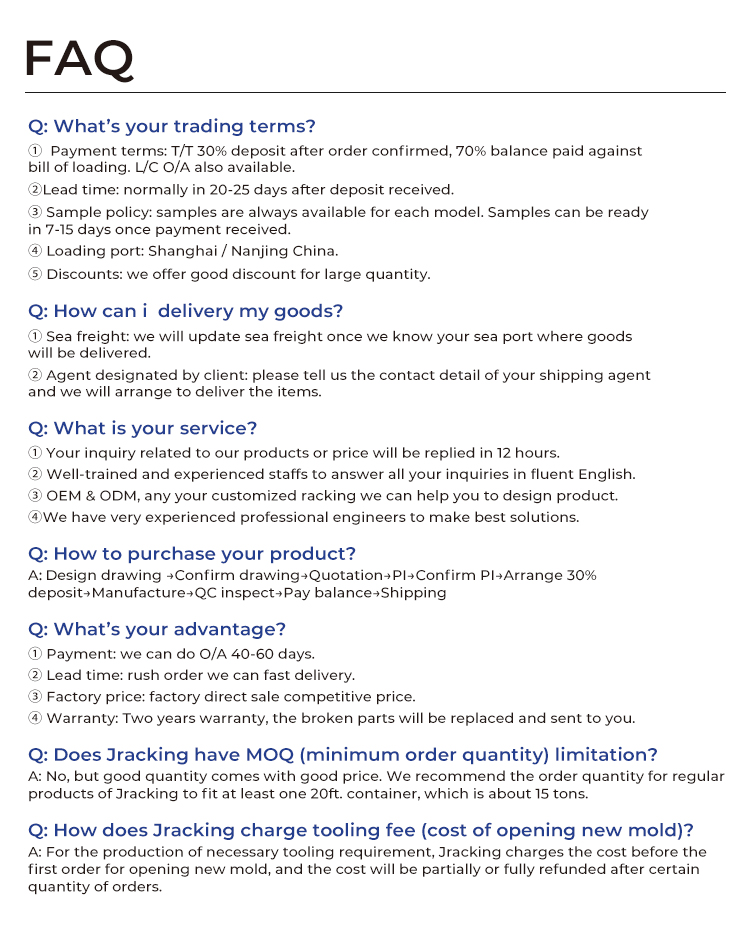

Pallets are placed on wheeled carts that ride on inclined rails. When a pallet is loaded from the front, it pushes the pallet behind it back one position. When unloading, the front pallet is removed, and gravity gently moves the rear pallets forward to the picking aisle.
Our push back systems are typically configured between 2 to 5 pallets deep per lane, with an individual pallet load capacity generally specified up to 1000kg, and customizable higher based on engineering requirements.
Yes, standard counterbalance or reach forklifts can operate push back racking without entering the rack structure. Forklifts only need to align with the front pick face, which significantly reduces rack damage and operational hazards.
Yes, push back racking is ideal for cold storage and freezers. Its high-density configuration maximizes cold room space efficiency, while the durable powder-coated steel finish and low-temperature bearings ensure reliable operation.
The system is designed and manufactured in compliance with international standards, holding CE, AS4084-2012, ISO, and RMI certifications to ensure structural stability and industrial safety.