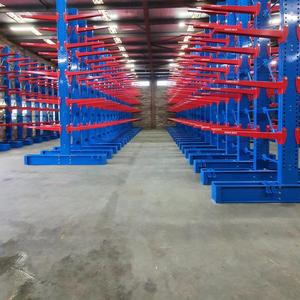
High-Density Matrix
Featured Industrial Racking & Storage Inventory
Engineered for high load-bearing capacity, extreme impact resistance, and scalable warehouse space optimization.
Enterprise Manufacturing Excellence
Single-Source Racking Engineering & Global OEM/ODM Capacity
Inheriting over 50 years of structural engineering rigor, our direct-to-factory model integrates in-house roll forming, robotic welding, automated powder coating, and certified seismic analysis.
50+
Years Engineering Pedigree
100%
In-House Structural Fabrication
ANSI/RMI
MH16.1 Certified Compliance
Zero
Structural Deflection Tolerance
Structural Mechanics of Heavy Duty LIFO (Last-In, First-Out) Storage Systems
In modern supply chain engineering, floor space is a premium financial liability. Last-In, First-Out (LIFO) pallet storage architecture represents one of the most effective mechanical paradigms to compress warehouse footprint, mitigate unproductive travel corridors, and maximize volumetric storage density. As a dedicated OEM/ODM manufacturer, our industrial racking frameworks focus on two primary LIFO mechanics: Push-Back Cart Systems and Drive-In/Drive-Through Structural Tunnels.
Unlike simple selective racking where every pallet requires an accessible aisle—resulting in a storage footprint comprised of up to 60% empty corridors—LIFO systems consolidate inventory into multi-depth lanes ranging from 2 to 6 pallets deep in push-back configurations, and up to 10+ pallets deep in structural drive-in lanes. The kinetic force of push-back systems utilizes gravitational slope dynamics (typically an engineered 1.25% to 1.5% incline), allowing nested steel rolling carts on precision ball-bearing steel wheels to advance smoothly toward the pick face when the front pallet is retrieved.
| Storage Topology | Operational Flow | Footprint Utilization | Structural Load Rating | Forklift Damage Mitigation |
|---|---|---|---|---|
| Push-Back Racking (2-6 Deep) | LIFO (Gravity Assisted) | Up to 75% Floor Efficiency | 1,500 - 3,000 kg per pallet position | Extremely High (Forks never enter rack structure) |
| Drive-In High Density | LIFO (Single Entry Point) | Up to 85% Floor Efficiency | 1,000 - 2,500 kg per position | Engineered Column Guarding / Rub Rails Required |
| Selective Pallet Racking | 100% Selectivity (Any) | 35% - 45% Floor Efficiency | Standard to Extreme Heavy Duty | Standard Column Protectors |
| Double Deep Reach Racking | LIFO (Pantograph Reach) | 55% - 65% Floor Efficiency | 1,000 - 2,000 kg per position | Medium Impact Vulnerability |
OEM/ODM Structural Profiles: Tubular vs. Hot-Rolled Channel Steel
A critical design distinction in our OEM/ODM manufacturing facility lies in material selection tailored to site-specific seismic and impact environments:
- Roll-Formed Closed Tubular Columns (SK2000 Equivalent): Closed structural tubing offers up to 250% higher torsional resistance against lateral forklift collisions compared to open-back standard roll-formed uprights. With continuous welded seams and teardrop or keyhole stamping, it combines tool-free reconfiguration agility with rugged warehouse longevity.
- Structural Hot-Rolled Channel (SK3000 Equivalent): Fabricated from structural C-channel steel (ASTM A36/A572 Grade 50) with heavy-gauge bolted structural beam connections. This profile is engineered strictly for punishing environments such as cold-storage freezers (-30°C), heavy chemical storage, and high-frequency drive-in lanes where forklift impacts are a statistical inevitability.
Automated Shuttle & Hybrid LIFO
Procurement is rapidly shifting toward semi-automated pallet radio shuttles mounted inside push-back rails, eliminating mast elevation inside deep tunnels and delivering maximum throughput speed.
Cold Chain Thermal Density
Refrigerated warehouse expansion costs up to 3x standard ambient construction. High-density LIFO systems consolidate refrigerated volume, reducing refrigeration kilowatt per pallet ton.
Certified Seismic Engineering
B2B global buyers demand PE (Professional Engineer) stamped finite-element calculation packages matching local IBC and Eurocode requirements prior to steel fabrication.
Future Sourcing & Procurement Analysis: What Global EPC Contractors Must Check
When procuring industrial heavy-duty LIFO racking systems directly from overseas OEM/ODM manufacturing facilities, relying solely on per-kilogram raw steel quotes frequently induces catastrophic downstream expenses. An authentic technical procurement evaluation must integrate structural load redundancy, finish durability, and mechanical fail-safes.
1. Slab Dynamics & Soil Foundation Interaction
A 5-deep push-back or 6-high drive-in racking cluster generates intense point-load concentrations through the column footplates, often exceeding 80 to 120 kN per upright column. OEM/ODM suppliers must engineer custom enlarged baseplates (minimum 10mm to 16mm thick) with multi-anchor bolt patterns (Hilti or equivalent mechanical wedge anchors) to disperse dynamic load vectors across industrial concrete slabs without exceeding localized puncture shear limits.
2. Coating Integrity & Environmental Corrosivity
In cold storage or maritime port logistics centers, standard cosmetic paint fails within 18 months due to micro-condensation and thermal contraction. Our OEM/ODM processes mandate multi-stage automated phosphating pre-treatment followed by thermosetting electrostatic polyester-epoxy powder coatings cured at 200°C. For extreme humidity, external open-shed operations, or brine environments, complete hot-dip galvanizing conforming to ASTM A123 / ISO 1461 guarantees over 30 years of zero-maintenance corrosion protection.
3. Cart Binding Prevention & Dynamic Tracking in Push-Back Systems
The most common mechanical breakdown in low-cost push-back racking is cart racking/jamming caused by uneven pallet loading or rail deflection under point loads. Our heavy-duty carts feature precision flanged steel wheels running on structural angle-iron guides with anti-lift retaining tabs. Every cart frame is fully welded using robotic welding cells to maintain exact geometric squareness, preventing wheel skew even under 1,500 kg off-center loads.
Technical FAQ
Frequently Asked Questions on Heavy Duty LIFO Procurement
Direct technical answers from our structural racking engineers and global logistics supply chain specialists.
When should an enterprise prioritize a LIFO system over a FIFO (First-In, First-Out) system?
LIFO (Push-Back or Drive-In) is ideal for non-perishable inventory, bulk raw materials, industrial machinery parts, and SKUs with high pallet-per-SKU ratios where stock rotation is not bound by strict expiration dates. FIFO (such as Pallet Flow or standard selective) requires dedicated loading and unloading aisles, which consumes up to 35% more floor space. If you store homogeneous products with medium-to-low turnover velocity, LIFO maximizes volumetric density while requiring half the forklift access corridors.
What is the maximum practical depth for an OEM Heavy Duty Push-Back racking system?
Push-back systems are standardly engineered from 2 to 6 pallets deep per lane. While 6-deep push-back represents the functional mechanical ceiling (due to the cumulative force required by the forklift to push back 5 nested loaded pallets uphill), operations requiring 7 to 20+ pallet depths should transition to our Drive-In structural system or automated Radio Pallet Shuttle systems.
How does your OEM/ODM factory ensure seismic compliance for North American and European projects?
Every customized racking project undergoes rigorous Finite Element Analysis (FEA) based on RMI ANSI MH16.1 specifications (USA), IBC (International Building Code), or EN 15512 (Europe). We factor in site-specific ground acceleration parameters (Ss and S1 values), soil classes, and local building drift codes, supplying full engineering calculation books and stamped drawings to support municipal permitting.
Can standard counterbalanced or reach forklifts operate with your LIFO push-back racking?
Yes. A fundamental economic advantage of push-back LIFO systems is that forklifts never enter the rack structure—they remain strictly in the operating aisle. Any standard counterbalance or narrow-aisle reach truck with sufficient lifting mast capacity can service push-back lanes, eliminating the need for expensive specialized deep-reach pantograph trucks.
What documentation is required to initiate an OEM/ODM customized racking proposal?
To provide an exact structural drawing and bill of materials, we require: (1) Warehouse architectural CAD layout showing clear heights, column spacing, and dock doors; (2) Pallet dimensions (W x D x H) including overhang and gross load weight; (3) Forklift model specifications with maximum lift height and turning radius; and (4) Floor slab thickness and compressive concrete strength (PSI/MPa).
Transform Your Warehouse Floor Density Today
Connect with our senior structural engineering team to receive an optimized CAD layout, finite element analysis, and direct-factory OEM/ODM quotation within 24 hours.