Precision-Engineered Heavy Duty Racking & Pallet Systems
Explore our industrial storage and logistics handling portfolio. From smart automated shuttle corridors to high-load collapsible stacking structures, every component is rigorously load-tested to RMI ANSI MH16.1 specifications.
Structural Mechanics of Heavy-Duty Collapsible Pallet Racks
An in-depth analysis of high-yield steel fabrication, load-distribution physics, collapsible kinematics, and how OEM custom engineering radically drives reverse-logistics ROI for international exporters.
Dynamic Multi-Tier Stacking
Fabricated using interlocking corner cup and pin assemblies, our collapsible post pallets ensure static stability up to 4 to 6 units high when fully loaded (up to 2,500 kg per basket), preventing structural deformation under high torsional stresses.
Optimized Reverse Logistics Kinematics
Engineered with patented safety-hinged drop gates and collapsible perimeter uprights, achieving an exceptional 4:1 folded volume compression. This minimizes empty return transport freight, ocean container dwell costs, and backhaul empty-mile expenditures.
Certified Metallurgy & Robot Welds
Constructed strictly from certified Q235B and Q345B structural carbon steel. Automated robotic MIG welding eliminates human weld-bead variances, delivering certified fatigue resistance across automated cross-docking environments.
Technical Evolution & Future Sourcing Trends: Heavy Duty Collapsible Racks
As international supply chains evolve toward lean buffer staging, automotive just-in-sequence (JIS) line-feeding, and automated material handling integration, static structural racking often imposes rigid operational constraints. Enterprise distribution centers increasingly demand dynamic, movable, and collapsible footprint assets. Collapsible pallet racking systems—often referred to in heavy manufacturing as manuracks, post pallets, or collapsible stillages—represent the critical bridge between temporary buffer staging and dense, multi-tier vertical storage.
1. Finite Element Analysis (FEA) and Dynamic Load Tolerancing
Modern custom OEM rack fabrication moves far beyond standard cold-rolled channel bending. In our precision fabrication centers, every custom dimensional profile undergoes comprehensive Finite Element Analysis (FEA). We model stress-concentration hotspots around hinge joints, fork pocket entries, and bottom perimeter base frames. In dynamic warehouse environments where heavy forklifts handle non-standard loads, dynamic impact factors must be engineered into every bracket. Unlike stationary pallet racking, collapsible racks face multidirectional stresses during forklift pickup, crane hoist handling, and multi-tier stacking operations.
- Structural Yield Strength: Utilizing certified Q235B/Q345B hot-rolled hollow sections and structural steel angles engineered to resist buckling at maximum rated capacities of up to 3,000 kg per layer.
- Deflection Ratios: Adhering to stringent deflection thresholds (< 1/250th of beam length) under full static rated load, ensuring that automated shuttle systems and guided forklift tines experience zero operational interference.
- Dual-Locking Hinge Safety: Eliminating accidental uncoupling during transit through auto-locking spring pins and secondary mechanical cotter locks that withstand abrupt deceleration in intermodal transit.
2. Reverse Logistics Optimization: The Financial Calculus of 4:1 Collapse Ratios
For multinational manufacturing companies—particularly in the automotive, agricultural equipment, chemical container, and retail seasonal peak sectors—the economics of returnable transit packaging (RTP) hinge directly on reverse logistics efficiency. Rigid steel stillages demand identical shipping cube volumes when empty, causing freight spend to escalate drastically during empty return journeys.
| Evaluation Parameter | Standard Rigid Steel Stillages | Fixed Selective Pallet Racks | OEM Heavy Duty Collapsible Pallet Racks |
|---|---|---|---|
| Cube Compression Ratio (Empty) | 1:1 (Zero space reclamation) | Permanent Footprint | 4:1 up to 5:1 Stack-Fold Compression |
| 40ft High Cube Container Capacity | ~64 units (Empty return) | N/A (Disassembly required) | 260 to 320 units (Folded flat return) |
| Facility Floor Reconfigurability | Low (Static block footprint) | Zero (Bolted to floor slab) | 100% Dynamic Floor Cleared in Minutes |
| Civil Engineering & Foundation | No anchoring needed | Anchor bolts & slab test needed | Zero Floor Anchoring; Instant Stacking |
| Automation Compatibility | Moderate (Varied tolerances) | High (When fixed) | High (Custom OEM laser-guided tolerances) |
3. Future Trends: Automation-Ready (AGV/AMR) Interfaces & Anti-Corrosion Nanotechnology
As logistics facilities transition toward lights-out automation, collapsible pallet racks are being redesigned to interface directly with Autonomous Mobile Robots (AMRs) and Automated Guided Vehicles (AGVs). Modern OEM specifications frequently require high-precision visual optical targets, integrated barcode plate recesses, and chamfered bottom-side forklift guides that enable optical-sensor-driven AGVs to achieve sub-millimeter dock alignment.
Simultaneously, environmental resilience is being elevated through next-generation surface treatments. In lieu of standard single-coat industrial liquid paints that chip under repeated stacking impact, global tier-1 logistics operators now specify dual-phase hot-dip galvanization (HDG) exceeding 85 microns, or eco-friendly epoxy-polyester electrostatic powder coating with thermoset baking. This provides superior anti-scratch performance and rust prevention across extreme sub-zero cold chains (-30°C) and marine shipping climates.
Why Tier-1 Global Procurement Teams Partner With Us
Combining over five decades of industrial structural manufacturing expertise with advanced OEM customization, we solve the world’s most demanding spatial, load-bearing, and intermodal logistics challenges.
-
ANSI MH16.1 & ISO 9001 Certified Quality Control: Every rack batch undergoes rigorous proof-load stress testing, weld crack acoustic checks, and zinc coating thickness validation.
-
Complete OEM / ODM Geometry Customization: Tailored base deck dimensions (1200x1000, 1100x1100, custom oversize), removable post heights, drop-gate configurations, and steel mesh infill selections.
-
Export Engineering & High-Density Flat-Pack Export: Optimized nesting packaging designs maximize container payload up to the legal weight limit, dramatically lowering shipping cost per unit.
-
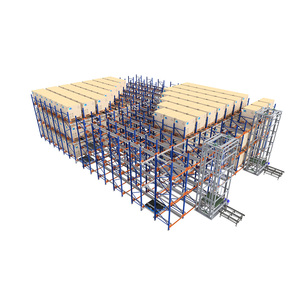
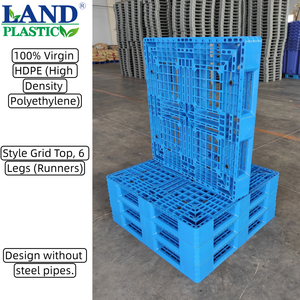
Integrated Material Handling Ecosystem: Comprehensive compatibility across automated radio shuttles, cantilever frameworks, wire mesh decking, and heavy industrial plastic pallets.
Standardized Quality Assurance Protocols for Custom Exporters
Ensuring operational reliability, personnel safety, and global compliance across every export consignment.
Material Traceability Certificates
Mill test certificates (MTC 3.1) are supplied with all raw steel orders, certifying precise carbon, manganese, and silicon chemical composition to eliminate structural embrittlement risks.
Overload Proof Stress Validation
Factory witness testing executes 1.5x safe working load (SWL) static tests for 48 continuous hours. Residual deformation is verified within strict tolerance bands using electronic laser calipers.
Salt Spray & Environmental Testing
Surface treatments undergo 500 to 1000-hour ASTM B117 neutral salt spray testing to prevent intergranular corrosion, making them suitable for seaside transshipment hubs and cold store warehouses.
Frequently Asked Questions on Heavy Duty Collapsible Racks
Expert answers addressing load capacities, custom engineering parameters, export logistics, and safety standards.
What is the maximum static and dynamic load capacity of custom collapsible pallet racks?
Our heavy-duty collapsible post pallet racks are engineered for dynamic loads (forklift transit) typically ranging between 1,000 kg and 2,500 kg per unit. Under static conditions when stacked 3 to 5 levels high, the bottom rack is calculated with a safety factor of 1.5 to 2.0, supporting cumulative static weights up to 10,000 kg. Custom structural post upgrades using Q345B grade steel can be engineered for specialized industrial dies or heavy machinery castings requiring higher load thresholds.
How does the 4:1 collapsible mechanism function during warehouse operations?
The collapsible mechanism utilizes heavy-duty pivot hinges and locating lock pins. Operators release the spring-loaded safety locks, allowing the vertical corner posts or perimeter steel side walls to fold inward smoothly onto the base frame. A single forklift operator can collapse a unit in under 45 seconds without needing hand tools. When folded, 4 to 5 units nest securely within the vertical footprint of a single assembled rack, saving up to 80% of floor space and drastically reducing backhaul freight costs.
Can OEM racks be customized to accommodate irregular dimensions or specific industrial goods?
Yes. As a dedicated OEM/ODM manufacturer, we design around your exact cargo profile. Common customizations include sheet steel, wire mesh, or perforated steel base decks; removable or hinged half-drop front gates for ergonomic pick access; integrated forklift guides and crane lifting eyes; and custom interior dunnage (textile liners, nylon saddles, or poly inserts) to protect delicate automotive stampings or finished goods.
What surface finishes are recommended for long-term corrosion resistance?
For standard indoor ambient warehousing, high-grade electrostatic polyester powder coating (60–80 microns) provides strong wear and impact resistance in a wide spectrum of corporate RAL colors. For external yard staging, refrigerated freezers (-20°C to -40°C), or marine coastal transport, hot-dip galvanization according to ISO 1461 / ASTM A123 is strongly recommended to protect both interior and exterior tube walls against corrosion.
What technical documentation is provided for international export and customs compliance?
Every international shipment includes a comprehensive technical dossier: Certified Mill Test Certificates (MTC), Factory Acceptance Test (FAT) reports, Finite Element Analysis (FEA) structural load certificates, 3D GA drawings, assembly and safe-handling manuals, and compliant Fumigation-Free export packing declarations to guarantee smooth customs clearance worldwide.
Ready to Optimize Your Storage Footprint & Reverse Logistics?
Speak with our senior structural storage engineers today. Request custom OEM drawings, certified static calculation models, and factory-direct volume export pricing.