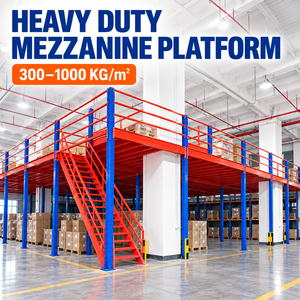
Heavy Duty Warehouse Mezzanine Floor Platform With Pallet Racking For Storage Expansion
- Up to 1,500 kg/sqm floor capacity
- Multi-level picking integration
Precision-Engineered Heavy Duty Storage Systems for High-Density Cold Rooms, Mega Warehouses, and Automated Logistics
Get a QuoteFabricated using high-tensile Q235B and Q355B structural steel, our drive-in and dynamic warehouse systems deliver up to 80% floor-area cube utilization across ambient, chemical, and blast-freezer operations.
A deep-dive technical evaluation for logistics architects, plant engineers, and global procurement directors navigating high-density cubic storage optimization.
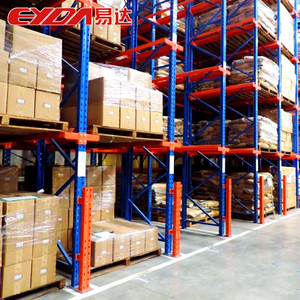
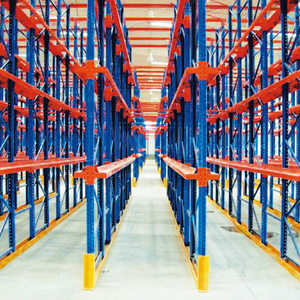
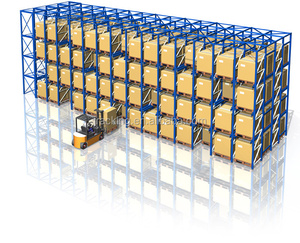
Unlike conventional selective racking where dual horizontal load beams span between frames to distribute vertical force through direct tension and compression, Industrial Drive-In Pallet Racks eliminate standard aisle crossbeams. Instead, forklifts drive directly into longitudinal rack bays to place pallets onto continuous side support rails fixed to structural cantilever brackets.
This unique absence of horizontal cross-aisle ties introduces substantial torsional strain and eccentric gravity loads onto the upright frames. When a 1,200 kg pallet sits on asymmetric support arms, the upright column experiences simultaneous axial loading, lateral bending, and rotational moments. Our Chinese manufacturing facility counteracts these dynamic stress concentrations through heavy-gauge, cold-rolled omega-profile uprights (featuring up to 13 distinct work-hardened bend folds) paired with cold-formed, dual-flanged support rails.
By installing full-depth overhead horizontal truss beams and back-frame cross X-bracing in Last-In First-Out (LIFO) configurations, our design eliminates frame swaying, maintaining strict vertical plumb within tolerances conforming to ANSI MH16.1 (USA) and FEM 10.2.02 (Europe) building safety codes.
A critical procurement dilemma faced by global buyers is choosing between hot-rolled structural steel channel racking and high-tensile cold-rolled tubular/open-section racking. Each metallurgy profile addresses distinct operational risks:
1. Hot-Rolled Structural Channel Racks: Fabricated from structural C-channels with structural bolted connections. These heavy-gauge components offer extreme resistance to forklift impact forces at aisle entrances and withstand severe mechanical abuse in high-velocity cold-storage distribution hubs.
2. High-Strength Cold-Formed Steel: Precision roll-formed from certified Baosteel Q235B or Q355B coils. These modular systems feature teardrop or hexagonal punch slots at 50mm, 75mm, or 76.2mm (3-inch) pitch intervals. They minimize total steel tare weight while maximizing strength-to-weight performance through work-hardened corners, providing unmatched cost efficiencies for international container shipping.
Our manufacturing plant integrates automated CNC punching lines and laser-guided robotic welding arms, guaranteeing that every bracket weld seam achieves full penetration without micro-porosity, ensuring resilient performance in seismic zone 4 environments.
| Racking Architecture | Cubic Space Utilization | Pallet Selectivity | Inventory Handling Model | Forklift Impact Exposure | Optimal Cold Room Applicability |
|---|---|---|---|---|---|
| Drive-In Racking (LIFO) | 75% - 85% (Ultra-High) | Low (Lane-by-lane access) | Last-In, First-Out (Single entry) | High (Inside-bay navigation) | Excellent (Reduces refrigeration volume) |
| Drive-Through Racking (FIFO) | 70% - 80% (High) | Moderate (Lane-by-lane access) | First-In, First-Out (Dual entry) | High (Continuous drive-through) | Very Good (Strict batch expiration) |
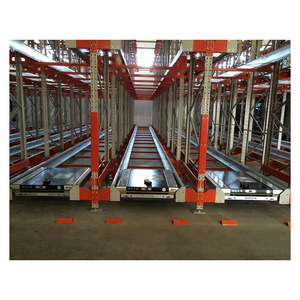
| Radio Shuttle Drive-In | 85% - 90% (Maximum) | Lane Selective via Runner | Flexible (Both LIFO & FIFO) | Low (Forklift remains in main aisle) | Best-in-Class (Maximum energy savings) |
| Standard Selective Rack | 40% - 50% (Baseline) | 100% Direct Immediate Access | Random Access (FIFO / LIFO) | Low (Forklift in dedicated aisles) | Poor (High wasted air volume costs) |
How automation, ESG emissions mandates, and smart metallurgy are redefining international warehouse storage procurement for 2026–2030.
Rising warehouse labor costs and collision risks are driving enterprises to upgrade manual drive-in lanes with semi-automated radio shuttles. Future-ready drive-in racking profiles fabricated in our factory feature pre-punched mounting tracks and dual-gauge guide rails, allowing warehouses to transition from standard forklift drive-in lanes to high-speed autonomous shuttle carts without disassembling the primary rack structure.
Global corporate ESG mandates require verified Carbon Border Adjustment Mechanism (CBAM) compliance. Our factory utilizes recycled Electric Arc Furnace (EAF) steel coils coupled with zero-VOC, heavy-metal-free electrostatic powder coatings. This sustainable manufacturing process provides up to 500-hour salt-spray corrosion resistance while reducing embodied product carbon by 28% compared to traditional blast furnace lines.
With the global surge in cold-chain logistics for biopharmaceuticals and frozen fresh goods, structural brittleness at -30°C has become a top safety risk. Next-generation drive-in racking utilizes micro-alloyed steel rich in manganese and vanadium, maintaining ductile impact resistance without cold-short brittle fracturing under continuous thermal-cycling warehouse regimes.
Direct from China's premier industrial racking production cluster—delivering end-to-end design engineering, strict quality control, and dependable international delivery.
Our production facility houses 18 continuous roll-forming lines with automated flying-shear punch dies. Upright columns up to 12 meters in length are cold-formed as a single continuous profile, eliminating intermediate joint splices and delivering structural stability exceeding international building tolerances.
By purchasing direct from our OEM workshops, international clients eliminate distributor markups and commercial broker fees. We offer flexible FOB, CIF, DDU, and DDP trade terms with transparent material traceability sheets and third-party SGS/BV chemical composition certificates on every batch.
Every complex warehouse layout is simulated through ANSYS structural finite element analysis (FEA). Our registered structural engineers calculate soil slab capacity, baseplate anchor pull-out shear stress, and live-to-dead seismic load ratios in compliance with local municipal codes across the USA, EU, Australia, and the Middle East.
Share your warehouse floor plan, clear ceiling heights, and pallet load specs. Our engineering department delivers a complete 3D design and quotation within 24 hours.
Direct, transparent answers covering structural safety, forklift specifications, and international export logistics.
Forklift clearance inside drive-in racking bays must be designed with extreme precision. Generally, a minimum clear allowance of 75mm to 100mm is engineered between the outer edge of the pallet and the upright frame on each side. We strongly advise outfitting the bay floor with heavy-duty structural steel floor guide angles (such as 100x75x8mm structural steel) or raised guide rails. These rails mechanically center the forklift during deep-bay entry, preventing mast collisions with the load rails and protecting upright columns from recurring impact damage.
From an engineering and operational standpoint, the practical depth for standard manual drive-in racking (LIFO) is between 5 to 8 pallets deep per lane, reaching up to 4 or 5 pallet tiers high. While lane depths of 10+ pallets are technically buildable, excessive depth increases operator forklift travel time inside confined bays, compounding collision risks and lowering overall pallet turnaround efficiency. For lane depths exceeding 8 pallets, we recommend specifying our semi-automated Radio Pallet Shuttle systems to protect equipment and optimize throughput speeds.
Forklift impact at the entrance of drive-in bays represents the primary operational hazard in high-density storage facilities. Our factory employs a comprehensive, multi-layer protection strategy: First, entrance uprights feature welded double-upright reinforcements (post-reinforcers up to 1,500mm high). Second, heavy-gauge, wrap-around yellow polyurethane or structural steel column guards are anchored directly to the concrete slab independent of the rack leg. Third, full-length heavy C-channel floor guide rails guide vehicle tires cleanly into the lane while transferring accidental wheel thrust into the reinforced floor slab.
To engineer a precise layout and competitive wholesale price quotation, our engineering office requires: (1) Warehouse CAD floor plan detailing clear height beneath roof trusses, lighting fixtures, and fire sprinkler clearance; (2) Concrete slab thickness and compressive strength rating; (3) Pallet dimensions (Length x Width x Height, including load overhang); (4) Maximum gross unit load weight per pallet; (5) Forklift model, overall chassis width, and maximum lift height; and (6) Local municipal seismic, wind, and building design code designations.
Export logistics protection is integrated into our manufacturing quality control process. Upright frames, cantilever arms, and pallet rails are bundled using heavy-gauge PET straps, reinforced corner paper protectors, and multi-layer waterproof stretch wrap. Structural steel channel components are mounted on custom steel skids to allow efficient forklift side-loading into 40ft High Cube (HQ) or open-top shipping containers. All fasteners, baseplates, and hardware are crated in seaworthy, non-coniferous fumigated plywood cases with clear shipping marks.
Yes. We specialize in custom OEM engineering for warehouse expansions and legacy system retrofits. Our tooling shop maintains high-precision punch dies for standard North American teardrop profiles, European 50mm pitch patterns, and Australian 76.2mm hole centers. We can replicate existing frame profiles and beam end-connector hook configurations, providing material composition certificates to ensure seamless structural integration with your facility's legacy racking assets.
Connect with our structural racking engineers to discuss floor layouts, load capacities, seismic calculations, and direct container shipping lead times.
Get a Quote