Certified High-Capacity Pallet Storage Systems
Engineered for global warehouse distribution hubs, heavy cold chains, automated manufacturing facilities, and seismic-critical zones.
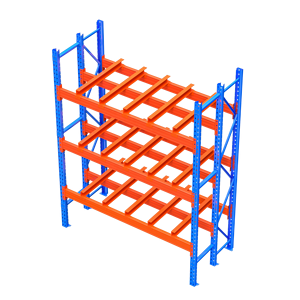
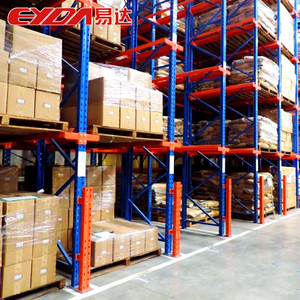
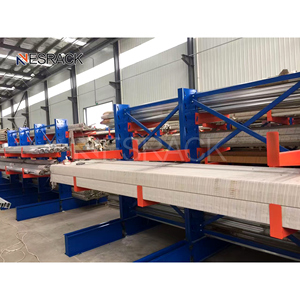
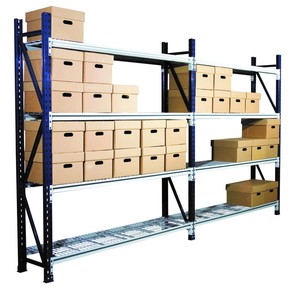
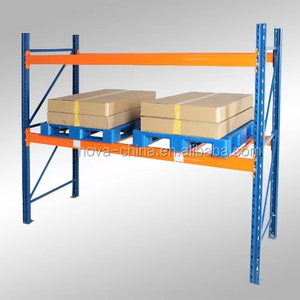
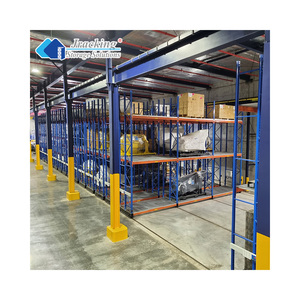
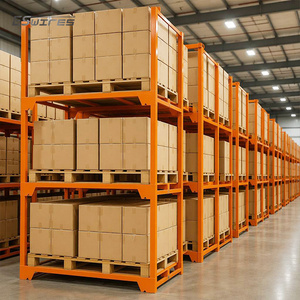
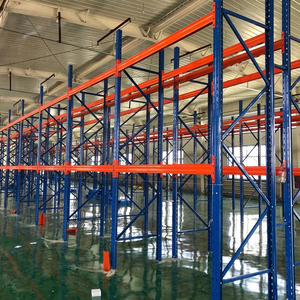
Engineering Differentiation: Cold-Formed vs. Hot-Rolled Structural Profiles
A technical evaluation for procurement directors, logistics engineers, and material handling consultants.
In modern industrial warehouse infrastructure, choosing between cold-rolled tubular/open-channel racking and hot-rolled structural steel (C-channel) racking represents the foundational decision governing Total Cost of Ownership (TCO), operational safety, and lifecycle seismic resistance. As an internationally certified China pallet racking manufacturer, our automated continuous profiling lines produce components strictly complying with ANSI MH16.1 (Specification for the Design, Testing and Utilization of Industrial Steel Storage Racks), EN 15512, and AS 4084-2023.
| Evaluation Parameter | Cold-Rolled Boltless Racking (SK2000 Equivalent) | Hot-Rolled Structural Channel Racking (SK3000 Class) | AS/RS Clad-Rack High-Bay Modules |
|---|---|---|---|
| Primary Steel Grade | Q235B / Q355B high-tensile strip coil | ASTM A36 / SS400 structural C-Channel | Q355B / S355JR certified micro-alloyed steel |
| Impact Resistance | Moderate (Requires base column & frame protectors) | Extremely High (Tolerates repetitive forklift collisions) | Rigid structural tolerances (Zero forklift impact design) |
| Torsional Rigidity | High torsional stability via closed tubular profile | Ultra-high sectional modulus along primary axis | Finite Element Analysis (FEA) verified continuous trussing |
| Standard Load Capacity | 800 kg – 3,500 kg per tier (Uniformly Distributed) | 2,000 kg – 5,500+ kg per tier heavy industrial | 1,000 kg – 2,000 kg/pallet at 40+ meters elevation |
| Recommended Operations | Distribution centers, FMCG fulfillment, retail 3PL | Freezer logistics, rough lumber/die staging, heavy mining | Fully automated unmanned crane/shuttle warehouses |
Strategic Procurement Trends: What B2B Buyers Must Prepare For
Market intelligence derived from supply chain digitalizations, cold-chain capacity booms, and automated shuttle integration.
1. Convergence of Pallet Shuttles & Multi-Tier Systems
Global procurement is shifting rapidly from conventional static drive-in systems toward radio four-way pallet shuttle systems. Radio-controlled shuttles moving inside specialized multi-level profiles dramatically cut forklift travel distances while tripling pallet access speeds in automated temperature-controlled environments.
2. Rigorous Seismic & Wind Displacement Verification
Global warehouse real estate funds and insurance underwriters now demand project-specific dynamic simulation models. Modern procurement schedules mandate verified deflection indexes, anchor pull-out shear tests, and non-linear pushover seismic calculations under PGA ratings up to 0.4g.
3. Anti-Corrosion Surface Engineering for Extreme Freezers
With cold chain facilities expanding globally, standard single-coat paint application is obsolete. The market demands heavy-duty automated thermo-setting epoxy polyester powder coatings cured at 200°C, or hot-dip galvanizing according to ISO 1461, preventing micro-fissuring and rust down to -30°C.
Engineering & Manufacturing Trends: Next-Gen Racking Solutions
Transforming raw steel coils into high-performance multi-level storage frameworks through advanced automation.
Automated Continuous Roll-Forming with Real-Time Piercing
Modern CNC production lines incorporate optical servo feeding with tolerance envelopes held within ±0.2mm over an 11-meter column length. Continuous inline laser inspection ensures zero mismatch along drop-lock beam connector interfaces.
Digital Twin & Automated Strain Monitoring
Next-generation heavy-duty selective pallet racks are increasingly fitted with integrated strain sensors along lower structural uprights. These micro-sensors measure dynamic live load distribution and warn warehouse operators before accidental overload failures occur.
Rack-Supported Clad-Building Integration (AS/RS)
Instead of erecting a standard structural warehouse building and installing independent racks inside, engineers design the pallet racking itself to carry roof trusses and side wall cladding. This eliminates structural columns and delivers up to 35% overall capital cost reductions.
Enterprise Strengths: Why Global EPCs Choose Us as Their Manufacturing Partner
End-to-end technical control from raw steel coil slitting to international containerized shipping logistics.
Single-Source Factory Accountability
Unlike trading entities, we execute design engineering, steel slitting, profiling, robotic welding, shot blasting, and powder coating inside our wholly owned manufacturing complex. This guarantees unbroken material traceability and consistent dimensional integrity.
Engineering Compliance (RMI, FEM, AS4084)
Our in-house technical teams utilize ANSYS structural simulation platforms to calculate column buckling loads, joint rotational stiffness, and seismic shear factors, delivering signed engineering calculation packages for international municipal building permits.
Export-Grade Protective Bundling & Shipping
Heavy steel components are susceptible to container transit abrasion. We employ steel-strapped solid timber dunnage, protective corner wrapping, and custom steel pallet frames to guarantee zero deformation during long-distance ocean voyages.
Frequently Asked Questions (Procurement & Technical FAQ)
Essential guidance covering technical calculations, order minimums, international shipping, and installation safety.
Q1: What exact building data is required before your engineering team can generate a load calculation and AutoCAD layout?
To prepare an accurate engineering proposal, we require: (1) Architectural DWG drawings detailing clear roof height beneath sprinklers and building column grids; (2) Pallet dimensions (Width x Depth x Overall Height including overhang) and maximum gross weight per pallet; (3) Handling equipment model, minimum aisle turning radius (AST), and maximum lift mast height; (4) Concrete slab depth and compressive strength (e.g., 200mm slab, 30 MPa); and (5) Local geographic seismic peak ground acceleration (PGA) coordinates.
Q2: What differentiates hot-rolled structural steel pallet racking (SK3000 type) from cold-rolled tubular racking (SK2000 type)?
Cold-rolled racking is manufactured from high-tensile strip steel coils shaped at room temperature through multi-stage rolling stations, offering an optimal strength-to-weight ratio and cost efficiency for general logistics distribution. Hot-rolled structural racking is fabricated directly from heavy structural steel channels (C-channels) joined by heavy-duty bolts. Structural racking features substantial wall thicknesses that resist severe forklift impacts, making it ideal for high-throughput food cold storage, chemical drums, and rough industrial manufacturing hubs.
Q3: How do your manufacturing facilities prevent weld embrittlement and paint flaking in cold storage applications down to -30°C?
For deep-freeze projects, we utilize low-temperature impact tested certified steel grades (such as Q355D or European S355J2). Robotic welding lines operate with high-purity argon-CO2 shielding gas to eliminate micro-porosities. In surface treatment, components undergo automated shot blasting to Sa2.5 cleanliness, followed by zinc-rich primer and cold-elastic exterior polyester powder coatings cured precisely at high temperatures to maintain flexural elasticity in sub-zero environments.
Q4: How are international wholesale orders packaged to prevent container damage and optimize customs offloading?
Upright frames are bundled in pre-assembled or knockdown forms utilizing heavy steel strapping with protective plastic corner guards. Beams are bundled in matched sets with nested hooks to eliminate scratching during container braking. All bundles are elevated on dedicated wooden skids or steel channels, enabling standard warehouse forklifts to unload full 40-foot high-cube containers within 45 minutes without human climbing hazards.
Q5: What third-party testing reports and factory certifications accompany your steel storage rack shipments?
Every commercial export consignment is supported by: (1) Raw material mill test certificates (MTC) proving yield strength, tensile strength, and chemical composition; (2) Weld penetration ultrasonic inspection certificates; (3) Surface coating thickness and cross-hatch adhesion test logs; and (4) Third-party test reports (SGS/TÜV) validating ultimate failure loads versus designated working safety factors (typically 1.5 to 1.95 according to RMI / EN 15512 specifications).
Ready to Engineer Your Optimal Warehouse Storage System?
Connect with our technical structural engineers for custom CAD layouts, seismic verification calculations, and direct factory container pricing.