Heavy-Duty Dynamic Storage & Material Handling Systems
Precision-engineered carton flow shelves, gravity roller beds, high-density live pallet racks, and industrial warehouse frameworks built for continuous fulfillment cycles.
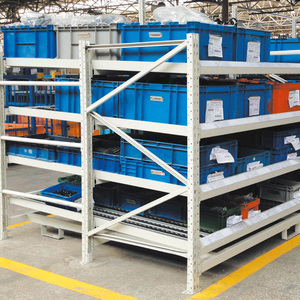
High Density Heavy Duty Cold Rolled Steel Powder Coated Flow Rack Warehouse Gravity Shelves
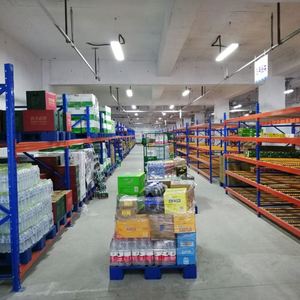
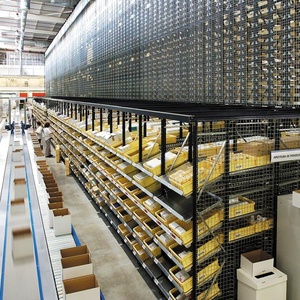
High Efficiency Durable Heavy Duty Adjustable 5-Layer Carton Gravity Flow Rack Distribution Centers
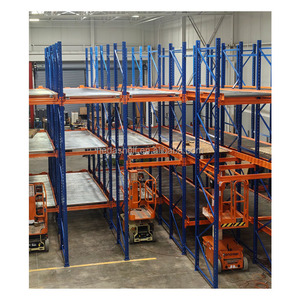
Manufacturer Wholesale Heavy Duty Steel Gravity Flow Rack Customizable Racking System FIFO
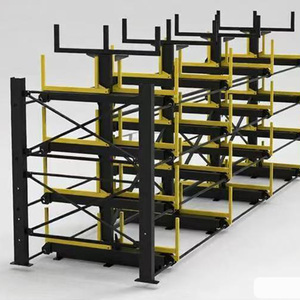
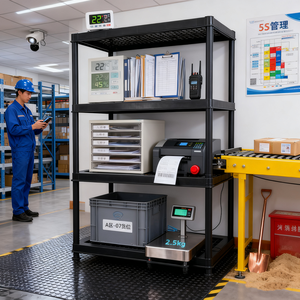
Multi-Tier Multi-purpose Modular Garage Shelf for Office, Maintenance Bays and Facilities
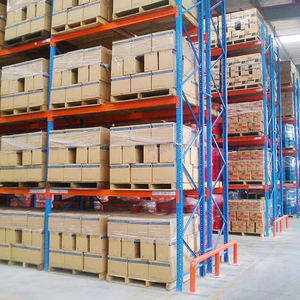
Combined Load-Row Connected Industrial Pallet Racking System Heavy Duty Warehouse Storage Steel
Engineered for Demanding Intralogistics Environments
Steel King Industries delivers turnkey mechanical integrity, certified metallurgical formulations, and verified load ratings directly from single-source manufacturing facilities.
CE Certified Structural Steel
Manufactured using premium cold-rolled Q235B and high-yield structural steel channels. Complies rigorously with EN 15512, RMI ANSI MH16.1, and international seismic stabilization protocols to resist continuous forklift abuse and extreme dynamic loads.
High-Flow Precision Roller Beds
Engineered with impact-resistant polypropylene skate wheels or high-grade galvanized steel rollers mounted in reinforced cold-stamped channels. Provides smooth, jam-free gravity movement across pitch slopes as gentle as 2.5° to 4°.
High-Density Pick Module Integration
Engineered to interface seamlessly with mezzanine catwalks, vertical pick towers, and multi-tier conveyor automation. Decouples replenishers from order-pickers to elevate picking productivity by up to 60% compared to static wide-span shelving.
Engineering Carton Flow Gravity Systems: Kinematics, Deflection, and Throughput Ergonomics
In high-throughput e-commerce fulfilment, third-party logistics (3PL), and FMCG processing centers, case-picking throughput directly controls operating margins. Traditional static shelving introduces excessive picker travel, severe replenishment bottlenecks, and ergonomic strain. Heavy duty carton flow racking converts deep storage footprints into continuous dynamic picking faces utilizing natural gravity feed.
By segregating loading operations (rear induction aisle) from picking access (front release face), facility managers achieve strict First-In, First-Out (FIFO) stock rotation without cross-traffic collisions. This architecture eliminates SKU search latency, accelerates replenishment cycles, and compresses pick-face frontage by up to 50%.
Key Engineering Specifications Comparison
| Structural Attribute | Light Duty Standard Flow Track | Heavy-Duty Industrial Roller Beds (Steel King Standard) | Operational Impact |
|---|---|---|---|
| Frame Steel Spec | 1.2 mm – 1.5 mm Sheet Metal | 2.0 mm – 3.2 mm High-Tensile Cold Rolled Q235B Channel | Resists accidental forklift impact; eliminates upright buckling. |
| Track Carrying Capacity | 40 – 80 kg/meter | Up to 250 – 450 kg/meter Dynamic Load | Accommodates dense liquids, heavy hardware, and fluid battery packs. |
| Track Bed Flexibility | Fixed Lane Guides | Full-Width Universal Poly / Steel Rollers with Snap-In Dividers | Enables rapid SKU reslotting without tools or beam unbolting. |
| Incline Pitch Range | Fixed 3.5° welded brackets | Adjustable 1.5° – 6.0° Infinitely Variable Brackets | Allows fine-tuning across corrugated boxes, plastic totes, and blister trays. |
| Impact Surface | Raw Sheet Lip | Reinforced 4.0 mm Heavy Duty Steel Impact Loading Trays | Protects roller bearings during aggressive bulk case drops. |
Dynamic track deflections must not exceed L/240 under full unit loads to prevent rolling dead zones. Premium carton flow racks incorporate cold-formed, structural steel tube side rails and heavy gauge rear load trays designed specifically to absorb the kinetic shock of incoming carton cases.
Strategic Procurement & Technology Trends in Dynamic Storage
How supply chain modernization, warehouse automation, and ESG compliance are redefining heavy duty carton flow racking investments for the coming decade.
Future Procurement Trends
Supply chain directors are shifting away from standalone static shelving toward modular, reconfigurable dynamic cells capable of rapid SKU reconfiguration.
- Universal Bed Architectures: Modern RFQs prioritize full-width staggered roller beds over dedicated narrow track tracks, allowing facilities to alternate tote sizes without re-anchoring track hardware.
- Total Cost of Ownership (TCO) Metrics: Procurement teams increasingly evaluate heavy duty cold-rolled steel structures over cheaper thin-gauge alternatives to prevent premature replacement costs under 24/7 fulfillment loads.
- Seismic & Environmental Verification: Stricter international building codes require verified finite element analysis (FEA) engineering calculations for dynamic racking installed near pedestrian picking paths.
Product Engineering Evolution
The convergence of manual fulfillment and intelligent material handling is transforming passive gravity racks into data-integrated picking workcells.
- Pick-to-Light & Put-Wall Integration: Carton flow discharge fronts now incorporate integrated wiring channels, digital shelf displays, and laser sensor pick gates to drive 99.98% inventory accuracy.
- Low-Noise Kinetic Poly Wheels: Next-generation high-impact polymers and sealed precision stainless-steel ball bearings reduce warehouse ambient noise levels below 65 dB even in high-velocity sorting modules.
- Hybrid AMR / AGV Infeed Systems: Racks are increasingly manufactured with open rear clearance profiles to enable autonomous mobile robots (AMRs) to replenish case loads directly into gravity flow lanes.
Frequently Asked Questions for Project Engineers & Buyers
In-depth technical answers addressing engineering validation, dynamic incline angles, structural safety, and custom warehouse fabrication requirements.
What is the standard roller incline angle recommended for heavy duty carton flow racks?
The standard operating pitch for industrial carton flow tracks typically ranges between 2.5° and 4.5° (approx. 4% to 8% grade). The exact angle depends on carton weight, bottom surface rigidity, and tote material. Rigid plastic containers with smooth injection-molded bottoms require a shallower angle (around 2.5° to 3.0°), while recycled corrugated paper cartons with slight belly sag require steeper inclines (3.5° to 4.5°) to overcome frictional resistance. Our engineering systems offer multi-position bracket holes that allow effortless field adjustment per lane.
How does carton flow racking enforce strict First-In, First-Out (FIFO) material rotation?
Carton flow systems rely on segregated physical aisles. Replenishment technicians load inventory into the elevated rear charging face. Gravitational kinetic force propels the cases forward along precision roller beds until they reach the front picking face, bounded by a rigid end-stop lip. When an operator picks the front carton, the next box in line automatically glides forward to restock the pick face. This mechanical separation guarantees that the oldest inventory is always picked first, preventing stock obsolescence in food, pharmaceutical, and date-sensitive retail environments.
What structural certifications and engineering standards must heavy duty warehouse racks satisfy?
Industrial storage racking must be fabricated in conformity with established international structural codes. In the European Union, compliance with CE Marking under EN 15512 (Steel static storage systems – Adjustable pallet racking systems – Principles for structural design) and EN 15635 is essential. In North America, racking must meet RMI ANSI MH16.1 specifications. Steel King verifies every installation with site-specific seismic calculations, load plaques, and yield test reports for cold-rolled and hot-rolled channel uprights.
Can carton flow beds be retrofitted into existing selective pallet rack upright frames?
Yes. Our heavy duty carton flow shelves and drop-in roller tracks are designed for universal compatibility. Utilizing custom-engineered step-beam hanger brackets or universal frame adapter clips, our roller systems can be installed directly into existing selective teardrop, structural bolted, or slotted pallet rack uprights. This enables warehouse operators to convert lower pallet positions into high-efficiency split-case picking tunnels without dismantling the overhead bulk pallet storage infrastructure.
What technical data is required to generate an accurate architectural drawing and quote?
To produce an optimized CAD proposal, our structural engineering team requires: (1) Minimum, maximum, and average carton or tote dimensions (L × W × H); (2) Gross carton weight ranges; (3) Casing material (corrugated cardboard, plastic tote, wooden box); (4) Building slab specifications including floor levelness and load capacity; (5) Facility clear ceiling height and column grid drawings; and (6) Required throughput velocity or picking line integration requirements (e.g., pick-to-light, conveyor pick spurs).