Recommended High-Performance Storage Racking Systems
Precision-engineered, load-certified storage platforms designed to streamline high-density warehousing, container management, and automated fulfillment.
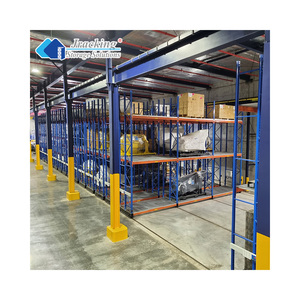
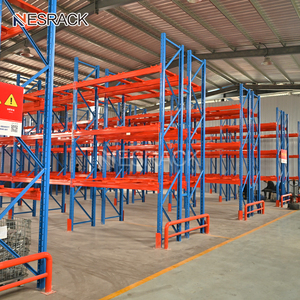
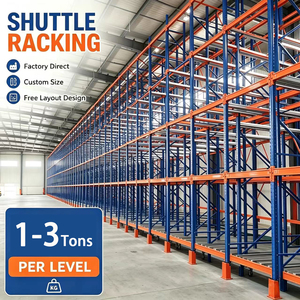
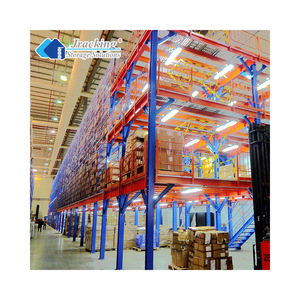
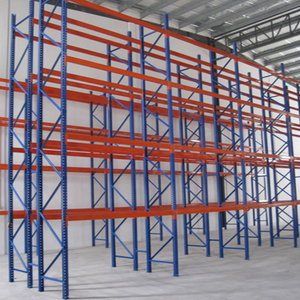
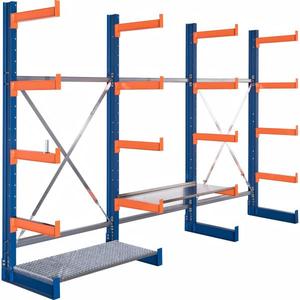
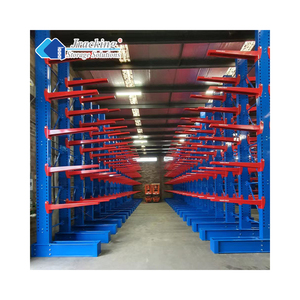
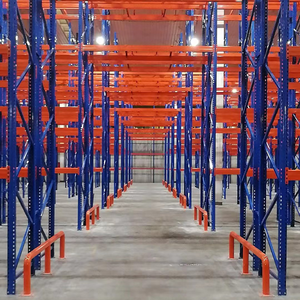
Engineering Structural Integrity: The Technical Anatomy of CE Certified Bin Racking
A procurement-grade evaluation of load-bearing mechanics, metallurgy certifications, and European standards for international supply chain resilience.
Metallurgical Chemistry & Cold-Forming
Our heavy-duty upright frames utilize cold-rolled structural steel (Grade Q235B and Q355B / S355JR equivalent). Controlled coil slitting and progressive 14-to-18-stage roll-forming profiles ensure that stress points along the column flange maintain maximum torsional resistance without micro-fracturing at the bend radii.
Finite Element Seismic Analysis
Structural validation complies with Eurocode 3 (EN 1993-1-3) and ANSI MH16.1. Every heavy duty bin racking layout undergoes computer simulation under loaded conditions, factoring in base-plate anchor shear pull-out forces, seismic acceleration co-efficients, and cyclic deflection thresholds under full bin capacity.
Surface Pretreatment & Finishing
Bin storage interfaces undergo a comprehensive 7-stage chemical immersion: acid pickling, zinc phosphating, and deionized rinses, followed by electrostatic powder deposition cured at 200°C. This guarantees salt spray corrosion resistance exceeding 500 hours for humid, maritime, or cold storage conditions.
Comparative Engineering Matrix: Industrial Bin Racking by Application Tier
Review load ratings, spatial volume coefficients, and picking throughput velocities across primary system configurations.
| Storage Topology | Structural Profile | Safe Working Load (SWL) | Vertical Utilization | Best Architectural Match |
|---|---|---|---|---|
| Heavy Duty Bin Shelving | Closed box beam + Drop-in corrugated steel decking | 500 - 1,500 KG per Level | Up to 6,000 mm clear height | Automotive sub-assembly parts, stamping dies, casting molds |
| Multi-Tier Mezzanine Platform | Interlocking perforated planks + Tubular columns | 350 - 1,200 KG / m² floor rating | Double/Triple clear height (3 - 12m) | Omnichannel e-commerce pick-towers, SKU-dense distribution |
| Automated Radio Shuttle Racking | Cold-drawn running rails + Structural guide brackets | 1,000 - 2,500 KG per Pallet/Bin | Maximum ceiling density (>85% cube) | Cold storage logistics, bulk food ingredients, buffer holding |
| Mobile Electric High-Bay Racks | Integrated wheel chassis + Floor-embedded rails | 1,500 - 4,500 KG per Bay | Eliminates static access aisles | High real-estate valuation zones, archival & hazardous holding |
| Cantilever Bin/Cradle Rack | Tapered I-beam column + Free-standing pivot arms | 800 - 3,500 KG per Arm Level | Linear unbounded horizontal run | Steel pipes, continuous profiles, lumber packages, heavy bar stock |
Future Procurement Trends: Transforming Static Racks into Smart Intralogistics
Strategic foresight for industrial buyers planning multi-year warehousing investments from 2026 to 2035.
1. Convergence of AS/RS & Autonomous Mobile Robots (AMRs)
Traditional static bin racking is rapidly modernizing into automated interfaces. Next-generation procurement frameworks require suppliers to engineer shelf lip tolerances, base-leg leveling accuracy (±1.0 mm), and frame rigidity to interface directly with top-picking automated robots, shuttles, and mini-load crane mast systems without deflection anomalies.
2. Digital Twin Sensors & Real-Time Deflection Monitoring
Leading industrial logistics enterprises now request strain-gauge readiness and structural health telemetry within rack columns. Structural sensors deployed on critical uprights transmit vibration, forklift impact data, and live load stresses directly to warehouse management platforms, preemptively identifying structural fatigue prior to critical failure.
3. Decarbonized Steel Metallurgy & Circular LCA
With corporate carbon mandates shifting supplier scorecards, global buyers prioritize tier-one rack suppliers utilizing Electric Arc Furnace (EAF) recycled high-tensile steels. Standardizing on modular bolt-together structural channel frames allows full dismantling, reconfiguration, and 100% downstream material recycling, lowering Scope 3 carbon balances.
Enterprise Advantages: Single-Source Factory Direct Accountability
From initial structural layout drafting to automated coating and international container logistics, we eliminate intermediary margin stacking and operational risks.
Certified Direct Manufacturer
Our plants control primary coil slitting, multi-stage automated roll forming, robotic welding, and powder coating lines. Zero outsourced core components ensure unyielding structural consistency.
Full Code Compliance
Every industrial project is engineered in strict accordance with European EN 15512, RMI ANSI MH16.1, and AS4084 regulations, backed by certified load certificates and seismic calculations.
Seamless Automation Integration
We deliver racking solutions tailor-made for high-density applications, including radio shuttles, pushback carts, automated multi-tier mezzanines, and cold storage conditions down to -30°C.
Global Export Engineering
Comprehensive ocean export packaging, bundle nesting, container space optimization, marked components, and detailed step-by-step CAD installation schematics accelerate on-site installation.
Frequently Asked Questions: Global Industrial Procurement
Critical clarifications on technical parameters, international certification verifications, and custom engineering inquiries.
Q1: How does CE Certification affect industrial storage racking procurement?
CE Certification affirms that the storage rack complies with European standard EN 15512 for structural design and EN 1090-1 / EN 1090-2 for steel construction execution. It confirms that the supplier utilizes trace-certified raw steel coils, certified weld procedures, automated dimensional tolerance audits, and rigorous Factory Production Control (FPC). For multinational buyers, CE compliance ensures smooth local building permit approvals, fire safety sign-offs, and industrial insurance underwriting.
Q2: What design considerations are mandatory when selecting heavy duty bin storage for small parts?
Unlike standard pallet racking configured solely for homogeneous skid footprints, heavy duty bin systems must be designed for non-uniform line loads, localized point loads, and manual or picking-cart interaction. Critical specifications include utilizing reinforced front column face-guards, slotted upright adjustability (usually in 50mm or 75mm increments), drop-in steel or wire-mesh deck panels with integral underside stiffeners, and full compatibility with standard industrial plastic tote footprints (e.g., Euro-bins, KLT containers).
Q3: What data is required to engineer a custom warehouse storage layout?
To produce an authoritative structural drawing and quote, provide: (1) Architectural CAD floor plans indicating clear height, slab expansion joints, column grids, and egress doors; (2) Concrete slab thickness, compressive core strength (psi or N/mm²), and rebar layout; (3) Dimensions (L x W x H), tare weight, and maximum filled load weight of bins or pallets; (4) Operating material handling equipment (e.g., counterbalanced, reach truck, VNA, or automated shuttle); and (5) Local seismic zone coefficients.
Q4: Can your heavy duty systems withstand cold-chain and sub-zero storage?
Yes. Sub-zero applications down to -30°C (such as pharmaceutical freezers and blast freezing logistics) require specialized metallurgy to eliminate low-temperature brittle fracture risks. We fabricate cold-chain systems using S355JR or Q355D grade structural steels verified for Charpy V-notch impact toughness at sub-zero thresholds, paired with specialized low-temperature powder coatings and corrosion-resistant hot-dip galvanized finishes.