Featured Industrial Storage & Material Handling Equipment
Factory-direct structural steel racking systems, dynamic gravity flows, and handling solutions engineered for dense cubic volume optimization and high-frequency distribution hubs across Seoul and Gyeonggi Province.
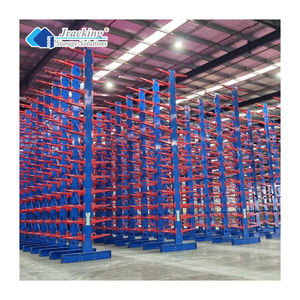
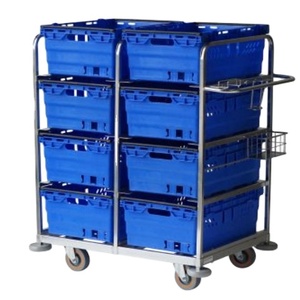
Professionally Produced Factory Wholesale 4 Tier Storage Wire Mesh Containers Warehouse Roll Trolley
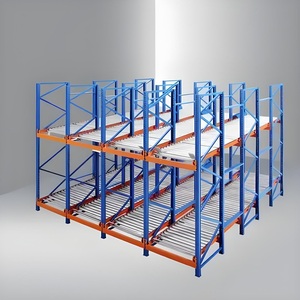
Custom Industrial Warehouse Pallet Flow Steel Roller Racks Gravity Racking
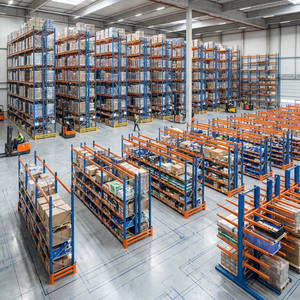
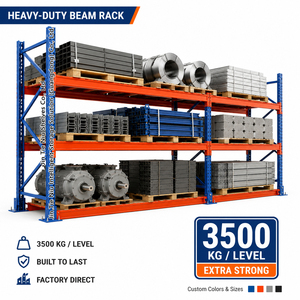
3500kg Extra Strong Industrial Steel Coil Motor Storage Heavy Duty Beam Pallet Warehouse Rack
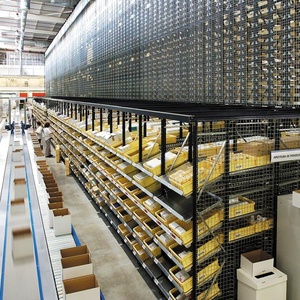
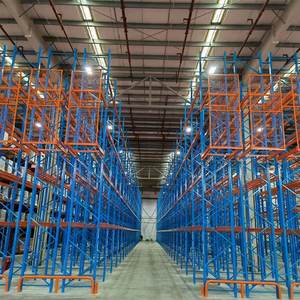
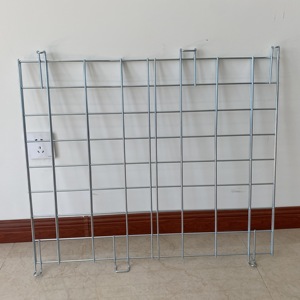
Cheap Galvanized And Powder Coated Welded Wire Mesh Shelf With 50KGS Capacity For Roll Cages
Navigating Greater Seoul's Warehouse Space Constraints
How Very Narrow Aisle (VNA) architecture addresses the economic realities of industrial land premiums across Incheon, Gimpo, Yongin, and the Seoul Metropolitan Area (SMA).
The Escalating Land Economy in the Seoul Capital Area
The Seoul Metropolitan Area (Sudogwon), comprising Seoul, Incheon, and Gyeonggi-do, houses over 26 million residents and generates more than 75% of South Korea's daily e-commerce and retail parcel traffic. Consequently, strategic warehousing locations along the Gyeongbu Expressway, Yeongdong Expressway, and Seoul Ring Expressway have seen industrial real estate valuations surge rapidly. With industrial land acquisition costs frequently surpassing 3,000,000 KRW to 6,000,000+ KRW per pyeong (approx. 3.3 m²), supply chain operators can no longer afford the spatial inefficiencies inherent in conventional wide-aisle storage configurations.
Conventional selective pallet racking systems require operating aisle clearances ranging between 3.2 meters and 3.8 meters to accommodate standard counterbalance forklifts. In this model, up to 55% of total warehouse slab footprint is dedicated entirely to transit corridors rather than revenue-generating pallet positions. VNA engineering compresses these working aisles down to 1,500mm–1,800mm, transferring square-meter transit waste into high-density cubic storage capacity.
Vertical Expansion: Capitalizing on 12m to 20m Clear Heights
Modern Grade-A distribution centers throughout Icheon, Yongin, and Pyeongtaek are increasingly designed with clear interior ceiling heights ranging from 12 meters to upwards of 20 meters. Standard reach trucks lose lift capacity and structural stability above 9 meters due to mast deflection and operator sightline degradation. In contrast, VNA systems—paired with either articulated turret trucks, man-up order-picking combi-trucks, or inductive wire-guided semi-automated handling units—maintain full load capacity up to 18 meters.
By transforming horizontal sprawl into precision-aligned vertical storage, our VNA pallet racking factories empower Seoul logistics directors to double overall warehouse cubic utilization without expanding site footprints, renegotiating land leases, or incurring relocation capital expenditures.
VNA Architecture vs. Alternative High-Density Systems
A multi-variable engineering matrix analyzing footprint density, access velocity, and mechanical capital investment for modern South Korean fulfillment infrastructure.
| System Classification | Aisle Width Requirement | Floor Space Utilization | Pallet Selectivity | Handling Equipment Type | Target Seoul Warehouse Profile |
|---|---|---|---|---|---|
| Very Narrow Aisle (VNA) | 1.5m – 1.8m | 85% – 90% Cubic Volume | 100% Direct Immediate (FIFO) | Turret Trucks / Wire-Guided Combi-Pickers | High-throughput 3PL, K-Beauty, Pharmaceutical Hubs |
| Standard Selective Rack | 3.2m – 3.8m | 40% – 50% Cubic Volume | 100% Direct Immediate (FIFO) | Standard Counterbalance Forklifts | Low-ceiling general factories, bulk transit docks |
| Double-Deep Pallet Rack | 2.8m – 3.2m | 60% – 70% Cubic Volume | 50% Direct (LIFO per cell) | Pantograph Deep-Reach Forklifts | Medium SKU consolidation, bulk dry grocery stock |
| Drive-In / Drive-Through | 1.8m (Entry Lane) | 75% – 85% Cubic Volume | Low Selectivity (LIFO/FIFO batches) | Standard Reach / Counterbalance | Deep-freeze cold storage with uniform SKU batches |
| Fully Automated AS/RS | 1.4m – 1.6m | 90% – 95% Cubic Volume | 100% Direct (Automated crane) | SRM (Storage & Retrieval Machines) | Mega-scale automated central distribution centers (CDC) |
Optimized for KS A 2114 Standards
Our upright frame depths (typically 1,000mm to 1,050mm) and beam clear spans (2,300mm to 2,500mm) are precision-fabricated to support standard South Korean T-11 (1,100mm × 1,100mm) pallets side-by-side with zero lateral overhang risk, alongside ISO and Euro-spec pallets.
Mechanical Guidance Options
We supply precision hot-rolled low-profile steel guide rails (75mm × 50mm × 6mm or 100mm × 50mm × 6mm) anchored via high-tensile chemical wedge bolts, or customize bottom-channel clearance for floor-embedded inductive RFID wire guidance systems.
Deflection Tolerance & Safety Factor
Engineered strictly to RMI ANSI MH16.1 and EN 15512 standards. Upright column buckling calculations maintain a safety coefficient ≥ 1.67, with horizontal beam deflection held under L/200 to eliminate binding or mast strike during high-lift turret truck retrieval.
Localized Application Scenarios Across the Capital Belt
Tailored cold-chain, pharmaceutical, semiconductor, and omnichannel fulfillment architectures adapted to regional operational demands.
Sub-Zero Cold Chain in Icheon & Yongin
Refrigerated and frozen distribution centers operating at -20°C to -25°C carry thermal conditioning overheads exceeding standard ambient facilities by 300%. Deploying VNA in sub-zero hubs drastically shrinks conditioned air space per pallet position. Our structural and high-tensile cold-rolled uprights receive anti-brittleness metallurgical heat treatment and electrostatic polyester powder coating to withstand heavy condensation cycles and thermal shock.
Next-Day E-Commerce Hubs in Gimpo & Incheon
Fulfilling dawn delivery (Saebyeok Baesong) mandates immediate, unhindered SKU access. Unlike bulk drive-in or deep push-back systems, VNA provides 100% selective pick access to every single pallet position simultaneously. Paired with high-speed man-up order-picking cabins, operators can conduct batch split-case picking across bottom tiers while replenishment crews manage upper-tier pallet bulk storage without cross-aisle bottlenecks.
Semiconductor Spares & Electronics in Gyeonggi
For semiconductor support facilities in Hwaseong, Pyeongtaek, and Icheon, high-value component storage requires micro-tolerance stability, cleanroom-grade surface finishes, and zero particle flaking. Our VNA racking is supplied with zinc-galvanized wire mesh decking, heavy-duty drop-in coil supports, and integrated anti-static grounding continuity to protect sensitive electronics and mission-critical manufacturing sub-assemblies.
Engineering Standards: KBC Seismic Design & Floor Tolerances
Designing beyond minimum safety margins to ensure structural equilibrium under dynamic seismic loads and extreme mast elevation.
Seismic Acceleration Compliance (KDS 41 / KBC 2016)
The Korean Peninsula is categorized under distinct seismic risk zones, with the Seoul Capital Area classified as Seismic Zone 1 (highest regional hazard rating, seismic zone factor S = 0.22g). Racking structures exceeding 6 meters in height qualify as non-building structural systems and must resist lateral base shear under dynamic seismic excitation.
Our VNA systems utilize FEA (Finite Element Analysis) modeling to simulate modal vibration periods and spectral response. We incorporate heavy-duty baseplates (minimum 12mm to 20mm thickness), multi-anchor expansion bolting into 25MPa+ slab concrete, welded heavy tubular diagonal bracing, and structural high-tensile grade 8.8 bolted beam-to-column connections that mitigate harmonic resonance and prevent catastrophic collapse during seismic events.
Superflat Floor Flatness Requirements (DIN 15185 & VDMA 10214)
In a VNA installation with 15-meter top beam elevations, a floor inclination of merely 2mm across the truck's wheel track can result in a dangerous mast deflection of over 100mm at height. Such sway induces mast impact with racking uprights, pallet drop hazards, and accelerated guide roller wear.
Our engineering services include on-site digital profilograph assessments ensuring warehouse slabs meet DIN 15185 or VDMA 10214 F-min 75 to F-min 100 superflat tolerances. Where existing Gyeonggi facility slabs exhibit excessive waviness, we specify precision laser grinding or engineer heavy-duty shimming packs and structural levelling grout plates (non-shrink cementitious grout) underneath every column baseplate to achieve true verticality (<1/1000 plumb tolerance).
National Fire Safety Code (NFSC 103) & KOSHA Work Safety Integration
Under South Korea's National Fire Safety Code (NFSC 103), storage facilities with clear storage heights exceeding 10.2 meters (or holding high-hazard packaging) require certified in-rack automatic fire sprinkler systems. Our upright columns and step beams are pre-punched with CNC-machined clearance openings and engineered with dedicated horizontal clearance conduits. This enables mechanical contractors to route main sprinkler feed pipes and quick-response ESFR heads directly along transverse flue spaces without compromising beam load ratings or pallet vertical clearance.
Furthermore, all installations adhere to Korea Occupational Safety and Health Agency (KOSHA) standards, incorporating reinforced column wrap guards, heavy steel portal ties across top aisles, pallet back-stops, and end-of-row heavy-duty circular bollards anchored to absorb accidental forklift impact.
Single-Source Factory Capabilities Serving South Korea
From raw structural coil slitting to precision roll-forming and robotic welding, we guarantee end-to-end quality control and rapid export logistics to Incheon and Busan.
Q235B & Q355B Prime Steel
We source only fully traceable, mill-certified structural carbon steel coils. No downgraded or mixed-scrap alloy is used, ensuring uniform yield strength and zero stress fracturing during cold-forming.
CNC Roll-Forming Lines
Continuous computerized 24-station roll-forming lines guarantee upright post tolerances within ±0.5mm across a 12-meter continuous piece, eliminating twist, camber, and uneven beam connector lock-in.
Automated Powder Coating
Multi-stage chemical pre-treatment with iron phosphate washing followed by automated Swiss Gema electrostatic powder spray booths, yielding a robust 70–90μm durable, scratch-resistant epoxy-polyester surface finish.
Direct DDP Shipping to Seoul
Dedicated export packaging in heavy steel-banded crates with moisture-barrier film. Seamless ocean freight handling to Incheon Port (ICN) and Busan Port, with bonded customs clearing and direct on-site staging.
Frequently Asked Questions by Warehouse Planners in Seoul
Authoritative technical answers addressing structural certification, installation timelines, material handling equipment synergy, and regional building compliance.
What are the exact floor flatness criteria required in Seoul warehouses for VNA systems?
VNA turret trucks and man-up order pickers do not have suspension systems; they operate on high-durometer polyurethane load wheels. For top beam levels below 10 meters, floors must satisfy DIN 18202 Table 3 Group 4 or ASTM E1155 F-min 75. For high-bay installations reaching 10m to 18m, the floor must conform to DIN 15185 or VDMA 10214 (Guideline for Floor Flatness in Narrow Aisles), corresponding to an F-min rating between 85 and 100.
If your leased or newly built facility in Incheon or Gyeonggi does not meet these parameters, our structural engineering team can provide floor profiling assessments and coordinate precision laser-guided grinding (track grinding) across wheel paths before upright frame anchor drilling.
How do your racking systems accommodate the Korean Standard T-11 (1100x1100mm) pallet format?
Unlike Western markets that primarily engineer around European (1200×800mm) or North American (1200×1000mm) pallets, our factory custom-configures beam lengths specifically for the KS A 2114 T-11 standard (1,100mm × 1,100mm). We typically configure 2,500mm clear beam spans for two-pallet cells or 3,600mm spans for three-pallet cells, leaving a calculated 100mm operating clearance between adjacent pallets and 75mm frame clearance.
Frame depths are precision-sized to 1,000mm or 1,050mm, ensuring a balanced 50mm front-to-rear overhang that securely centers the bottom blocks on the load beams, meeting local fire marshal regulations regarding transverse flue space maintenance.
Can VNA racking be integrated with Automated Guided Vehicles (AGVs) and Autonomous Mobile Robots (AMRs)?
Yes. The tight dimensional tolerances of our factory-machined VNA racking make it an ideal backbone for autonomous warehouse automation. In modern smart logistics hubs in Yongin and Gimpo, hybrid operations deploy manned turret trucks within narrow storage aisles while utilizing autonomous counterbalance AMRs or underride AGVs at aisle-end P&D (Pick and Deposit) stations.
We engineer customized cantilevered P&D consoles equipped with optical retro-reflective target cutouts and inductive proximity sensor brackets that allow robotic guidance systems to pinpoint pallet hand-off coordinates with sub-millimeter precision.
What documentation and structural engineering calculations are provided for local Korean permits?
Every industrial racking deployment serving the South Korean market is accompanied by a full comprehensive engineering submittal package. This includes:
- Full 3D CAD fabrication layouts, elevation sectional profiles, and connection node details.
- Structural calculation reports verifying compliance with RMI ANSI MH16.1, EN 15512, and KDS 41 (Korean Design Standard for Structural Calculations).
- Seismic performance verification including spectral acceleration coefficient calculations for Seoul Zone 1.
- Mill test certificates (MTR) confirming steel yield strength, elongation percentages, and chemical alloy composition.
- Certified fire loading compliance drawings detailing sprinkler nozzle clearances for NFSC 103 review.
What is the standard production and shipping lead time to Seoul job sites?
For standard project scopes ranging between 2,000 and 15,000 pallet positions, factory fabrication is completed in 3 to 4 weeks following final shop drawing approval. Ocean transit from our export manufacturing facility to Incheon Port (ICN) typically requires only 3 to 6 days at sea. With established customs broker partners and direct container flatbed staging, materials can arrive on site in Gyeonggi-do within 30 to 35 calendar days from order placement.
Request an Engineered Layout & Feasibility Analysis
Connect directly with our structural engineering department to review warehouse CAD layouts, calculate volumetric pallet gains, and receive an itemized manufacturing quotation.
Required Project Specifications Checklist
To accelerate your structural calculation and volumetric optimization proposal, please prepare the following facility parameters:
- Building Clear Height: Distance from finished concrete slab to lowest obstruction (HVAC, joists, or fire lighting).
- Pallet Footprint & Overhang: Exact pallet dimensions (e.g., T-11 1100×1100, Euro 1200×800) and load overhang.
- Maximum Unit Weight: Heaviest pallet unit weight including product, packaging, and tare pallet mass.
- Material Handling Equipment: Intended VNA turret truck brand, model number, collapsed mast height, and minimum aisle specification.
- Concrete Slab Strength: Slab depth (mm), reinforcement bar layout, and compressive strength (MPa / psi).
- Site Location: Municipal district (e.g., Yongin, Incheon, Gimpo) to accurately assign regional KDS 41 seismic zoning factors.
Direct Factory Consultation
Our engineering desk reviews international inquiries daily. We provide complimentary 2D AutoCAD storage layout designs and volumetric density simulations tailored to Greater Seoul industrial specifications.
Ready to Maximize Your Seoul Warehouse Cubic Capacity?
Gain 50%+ more pallet capacity on your existing footprint with precision-manufactured VNA structural racking.