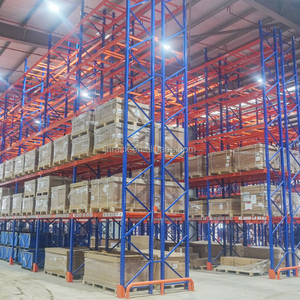
Export-Grade Heavy Duty Systems
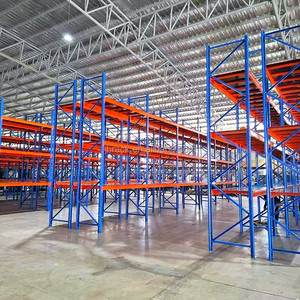
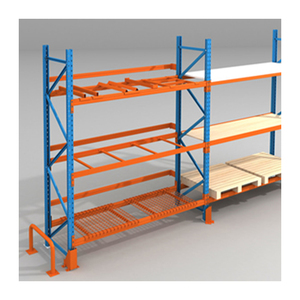
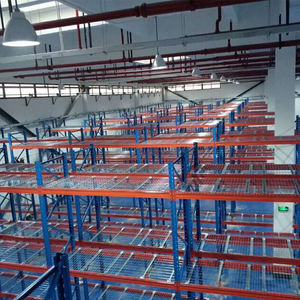
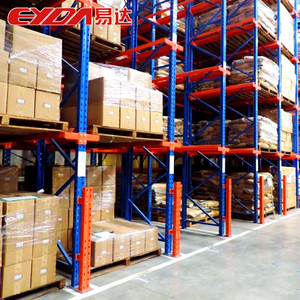
Featured Industrial & Roller Pallet Racking Lineup
High-density gravity flow lanes, corrosion-protected pallet racking, and modular structural steel frameworks manufactured under rigorous EN 15512 and ISO 9001 certified QA protocols for Danish industrial facilities.
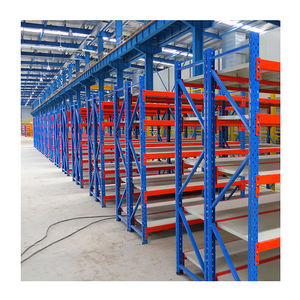
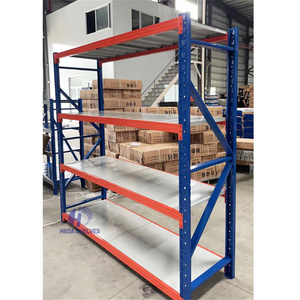
Technical Whitepaper & Kinetic Engineering
Kinematics of Live Roller Pallet Racking: Precision Gravity Flow
How dynamic roller incline gradients, centrifugal brake controllers, and pallet separation mechanisms eliminate floor congestion while upholding Danish and European workplace safety directives.
In modern high-density distribution architecture, static racking often imposes unacceptable trade-offs between storage density and product selectivity. For operations managing FMCG, pharmaceutical distribution, or perishable food chains across Denmark and the broader Scandinavian sector, dynamic roller pallet racking (widely designated as gravity flow or pallet live storage) solves this mechanical dilemma. Operating on an engineered slight decline (typically calibrated precisely between 2.5% and 3.5% based on unit weight and runner profile), dynamic roller systems transform standard vertical warehouse cubes into autonomous FIFO (First-In, First-Out) conveyance buffers.
The primary engineering challenge within gravity live storage is controlling kinetic acceleration over deep lanes (ranging from 4 to upwards of 25 Euro-pallets deep). As loaded pallets descend down the roller track, uncontrolled momentum presents severe operational risks to warehouse personnel, racking uprights, and product structural integrity. As an expert international manufacturer and supplier exporting to Denmark, our structural and mechanical systems incorporate three mandatory kinetic safety subsystems: continuous cylindrical steel rollers, internal centrifugal speed controllers, and mechanical end-stop separation locks.
1. Controlled Velocity & Centrifugal Braking Dynamics
Without mechanical governance, a 1,000 kg pallet traveling down a 20-meter gravity roller run would attain excessive speed, striking the front discharge beam with destructive force. Our roller tracks feature indirect or direct-drive centrifugal brake drums spaced at calculated intervals along each flow lane. These brake rollers remain disengaged at crawl speeds during initial entry but automatically generate internal friction resistance proportionally to the pallet's angular velocity. This guarantees that whether a pallet carries a lightweight 250 kg pharmaceutical tote load or a 1,250 kg dairy bulk container, the terminal rolling velocity remains safely throttled below 0.3 meters per second (compliant with DS/EN 15095 safety thresholds).
2. Pneumatic & Mechanical Pallet Separators
When an order-picking forklift approaches the retrieval face, extracting a pallet subjected to the cumulative back-pressure of twelve subsequent pallets rolling behind it is mechanically hazardous. High back-pressure causes pallet binding, splintering of bottom skids, and forklift mast damage. Our engineering incorporates heavy-duty mechanical separation devices at the unloading end. When the lead pallet reaches the front stop, an automatic floor-level rocker linkage isolates the second pallet 150 mm behind it, relieving all hydraulic and line pressure on the retrieval unit. Only after the lead pallet has been fully lifted and removed by the forklift does the trip-lever release, permitting the remaining train to advance smoothly by exactly one position.
3. Roller Profiles & Euro-Pallet Skid Alignment
The standard wooden Euro-pallet (1200 mm × 800 mm per DS/EN 13698-1) and industrial pallet (1200 mm × 1000 mm) present bottom skids that must be guided precisely along structural roller lines to avoid track derailment or skid deflection. Our roller frames are CNC-punched with variable pitch settings (typically 50 mm to 100 mm center-to-center) using high-tensile galvanised steel tubing rated up to 240 kg per single roller. Heavy-duty zinc electro-plating or hot-dip galvanising ensures that roller surfaces resist oxidation even under aggressive ambient relative humidity conditions common in Baltic and North Sea maritime logistical zones.
| Storage Mechanism | Space Utilization | FIFO / LIFO Velocity | Aisle Requirements | Handling Equipment Impact | Compliance Standards |
|---|---|---|---|---|---|
| Gravity Roller Flow Racking | Up to 85% Density | Strict FIFO (Autonomous) | 2 Aisles Only (Load / Unload) | Reduced Forklift Travel by 40% | DS/EN 15512, DS/EN 15635 |
| Standard Selective Racking | 40% - 50% Density | Random Access / Mixed | Aisle for Every Double Row | High Reach Truck Aisle Wear | EN 15512, ANSI MH16.1 |
| Drive-In / Drive-Through | 65% - 75% Density | Strict LIFO (Drive-In) | Single Access Point | High Impact Collision Risk | EN 15629, DS/EN 15635 |
| Cart Pushback Racking | 60% - 70% Density | LIFO by Dynamic Lane | Single Dedicated Front Aisle | Moderate Push Resistance | FEM 10.2.02, EN 15512 |
| Automated AS/RS Crane Racking | 90%+ Maximum | Automated Algorithmic | Crane Mast Aisles (Zero Human) | Specialist Automated Cranes | EN 528, DS/EN ISO 12100 |
Strategic Danish Applications
Deploying Roller Pallet Solutions Across Key Danish Hubs
From Greater Copenhagen pharmaceutical clusters to the vital dry-port intersections of the Triangle Region (Trekantområdet), our systems solve Denmark’s acute warehousing challenges.
Trekantområdet (Taulov & Fredericia Hubs)
The Jutland-Funen logistical gateway serves as Denmark’s premier consolidation zone. High land costs and heavy 3PL turnover demand maximum cubic capacity. Our deep-lane gravity flow lines allow multimodal freight forwarders to buffer up to 30 pallet positions per bay along intermodal rail-road interchange docks, preventing demurrage and expediting cross-dock sorting.
Medicon Valley Life Sciences (Kalundborg & Hovedstaden)
Operating within cleanrooms and cold-chain distribution zones requires zero particulate shedding and unyielding batch-rotation control. Our stainless-finish and epoxy-coated roller tracks enforce immaculate FIFO compliance for vaccines, insulin products, and biologics, integrating seamlessly with temperature-controlled cold vaults (-25°C) without lubricant crystallization.
Nordic FMCG & Dairy Distribution (Aarhus & Esbjerg)
Denmark's world-leading dairy and agricultural exporters require continuous high-velocity throughput with zero stock expiration. By replacing static racks with multi-tier roller flow pick modules, food processing facilities achieve non-stop picking replenishment with zero traffic conflicts between feeding forklifts and pickers on front face walkways.
Planning a Warehouse Upgrade or Greenfield Build in Denmark?
Our structural engineers provide custom static calculations, CAD layout designs, and complete import logistics handling directly to Danish ports.
Regulatory Landscape & Market Evolution
Navigating DS/EN Standards, ESG Mandates & Automation Integration
A technical overview of compliance requirements enforced by Danish working environment authorities (Arbejdstilsynet) and the shift toward zero-emission warehouse intralogistics.
Warehouse installations in Denmark are governed by some of the most rigorous occupational health, structural integrity, and sustainability standards in the European Union. Procurement officers and supply chain directors cannot treat racking as generic commodity steel. Every installation must satisfy Danish Standards (Dansk Standard) harmonized under European codes, specifically DS/EN 15512 (Steel static storage systems – Adjustable pallet racking systems – Principles for structural design) and DS/EN 15635 (Application and maintenance of storage equipment).
Arbejdstilsynet (Danish Working Environment Authority) Compliance
Arbejdstilsynet actively audits Danish logistics facilities for ergonomic and mechanical risks. In standard selective configurations, high reach truck maneuvering in tight aisles contributes to repetitive impact damage on uprights, leading to structural micro-deflections and catastrophic collapse risks. By contrast, roller flow pallet racking drastically reduces forklift entry cycles into racking structures. Upright frames are positioned only at loading and unloading faces, which we equip with heavy-duty structural wrap-around column protectors, sacrificial steel deflection shoes, and floor-anchored bullnose barriers. Furthermore, acoustic dampening synthetic roller coatings can be supplied to ensure ambient noise inside enclosed pick tunnels remains well below the Danish statutory threshold of 80 dB(A).
Sustainability & the Green Transition (Den Grønne Omstilling)
Denmark's ambitious climate goal of reducing greenhouse gas emissions by 70% by 2030 directly impacts industrial real estate. Warehouse developers are moving away from fossil-fueled heating and high electricity loads. Roller pallet racking functions on pure physical gravity, eliminating the continuous electric motor energy demanded by powered mobile racking or autonomous vehicle shuttle tracks. When installed in deep-freeze facilities, our high-density gravity flow racks compress stored cube volume by up to 50%, reducing refrigerated building envelopes and generating direct reductions in kilowatt-hour cooling consumption. Our steel components are fabricated utilizing electric arc furnace (EAF) steel with low embodied carbon, supporting BREEAM-NOR and DGNB Denmark sustainable building certifications.
01
Site Metric Analysis
Comprehensive review of slab thickness, concrete compressive strength, clear building height, and pallet load spectrum.
02
EN 15512 Statics
Finite element beam-to-column joint stiffness calculations and project-specific seismic engineering documentation.
03
Kinetic Track Testing
In-factory gravity track trial running client pallet samples to calibrate exact roller pitch and centrifugal brake counts.
04
Nordic Delivery & QA
Export packaging in moisture-sealed sea containers, delivered to Esbjerg, Copenhagen, or Fredericia with assembly blueprints.
Enterprise Manufacturing Advantages
Single-Source Engineering, Fabrication & Global Reliability
Decades of manufacturing authority delivering industrial pallet storage, structural channel racks, and integrated material handling equipment directly to international buyers.
Structural & Closed Tubular Uprights
We offer both hot-rolled structural steel channel uprights for aggressive industrial applications and closed tubular roll-formed profiles. Tubular upright columns deliver superior torsional stiffness—offering up to 250 times more resistance to torsional impact than traditional open-back C-sections, drastically lowering forklift collision failures.
Lifecycle Damage Reduction
A dynamic system is only as durable as its wear surfaces. Every beam connection utilizes heavy-duty high-tensile locking pins with automatic mechanical safeties. Our comprehensive suite of rack protection products includes heavy-gauge aisle-end rub rails, bolt-on column impact sleeves, and structural steel guide angles tailored for wire-guided and VNA trucks.
Turnkey International Export Rigor
Exporting industrial steel structures across the Atlantic and North Sea requires meticulous logistics. Upright frames and roller beds are bundled with protective dunnage, steel strapped, and wrapped in industrial VCI moisture-barrier films to ensure unblemished transit through marine conditions into Aarhus or Copenhagen ports.
Procurement Clarity
Frequently Asked Questions for Danish Warehouse Specifiers
Practical answers to technical inquiries regarding floor loading, temperature suitability, pallet quality requirements, and cross-border installation coordination.
What slab strength and floor flatness (FF/FL) are required in Denmark for multi-tier roller pallet systems?
Gravity roller flow systems concentrate cumulative vertical point loads onto concrete footplates. Because multiple pallet positions sit inside a single structural bay, footplate base pressures frequently exceed 60 kN per leg. Typically, a reinforced concrete slab thickness of at least 180 mm to 220 mm with a compressive strength grade of C25/30 or C30/37 is required per DS/EN 1992 (Eurocode 2).
Floor flatness should conform to DIN 18202 Table 3 Group 3 or 4 standards. While gravity roller beds can be mechanically shimmed and leveled during installation, maintaining an even cross-aisle profile is critical to prevent pallets from drifting against structural side guides.
How do damaged or non-standard wooden Euro-pallets perform on roller flow beds?
Roller systems depend on smooth mechanical contact between the bottom pallet skids and the galvanized roller steel. Missing base chamfers, loose nails, cracked skids, or protruding bottom boards can cause a pallet to stall midway down a 15-meter lane. To counteract standard pallet variance in open exchange pools, our roller beds utilize three or four full-width roller tracks per bay rather than two narrow wheel lines.
For operations handling irregular pallets, half-pallets (600x800 mm), or plastic slave pallets, we engineer specialized roller spacing (50 mm pitch) and full-width split-roller configurations equipped with auxiliary tracking guides.
Can roller pallet racking be operated inside blast freezers and sub-zero cold stores (-28°C)?
Yes. Roller pallet flow is widely favored in Danish cold storage facilities because it condenses chilled cubic airspace. However, low temperatures alter mechanical friction. Standard industrial lubricants solidify below -10°C, causing conventional bearings to seize.
Our cold-chain roller assemblies incorporate synthetic low-temperature grease rated to -35°C, sealed precision stainless-steel ball bearings, and specialized non-hygroscopic centrifugal speed controllers. In addition, all structural uprights and roll-formed beams use steel with guaranteed Charpy V-notch impact toughness at sub-zero temperatures (e.g., S355J2 steel grades) to prevent cold embrittlement fractures.
How does our enterprise coordinate with local Danish installers and engineering certifiers?
We work directly alongside Danish EPC contractors, local material handling integrators, and certified structural engineering consultants. Every shipment includes comprehensive erection drawings, anchor bolt specification tables, load warning notice plaques (Belastningstabeller) calibrated in Danish, and static calculation packages signed by qualified structural engineers.
Our international project management team provides real-time digital erection oversight and coordinates with accredited third-party inspection firms to sign off on statuary DS/EN 15635 initial commissioning protocols prior to hand-over.
What documentation is required to initiate a structural project quote and flow simulation?
To produce an exact proposal and flow layout, our engineering team requires: (1) Architectural DWG/PDF drawings indicating clear internal roof heights, column locations, and fire sprinkler clearances; (2) Detailed pallet load definitions including width, depth, height, overhang, and minimum/maximum gross weights; (3) Floor slab specifications; and (4) Daily SKU velocity targets (pallets per hour in/out). Contact our engineering sales desk to begin technical assessment.
Start Your Engineering Collaboration
Optimize Your Danish Facility with Precision Roller Pallet Racking
Connect with our structural racking engineers to discuss load parameters, layout drawings, and competitive export delivery schedules tailored to your Danish distribution hub.