55+
Years of US Engineering History
100%
RMI ANSI MH16.1 Certified Compliance
3,500kg
Heavy Structural Bay Capacities
40ft+
High-Bay AS/RS Clear Height Execution
Engineered High-Rack Storage Portfolio
Purpose-built warehouse pallet racks, cantilever frameworks, wire decking, and modular equipment tailored for high-throughput logistics across North America.
Navigating Industrial Racking Specification in the United States Market
In modern high-velocity distribution centers (DCs) and supply chain fulfillment nodes throughout the United States, rack infrastructure represents more than passive steel frames. It forms the mission-critical skeletal backbone for high-bay inventory concentration, robotic automation, and material handling workflows. Sourcing industrial high-rack systems requires a deep technical alignment with distinct North American building safety frameworks, regional seismic hazards, fire suppression standards, and high-frequency forklift impact challenges.
Procurement directors and material handling engineers are continuously balancing three opposing vectors: storage density, pallet selectivity, and structural resilience. Whether a project requires selective teardrop boltless tubular uprights (such as the standard SK2000 pattern) for agile retail fulfillment, or heavy structural C-channel bolt-together frames (SK3000 specification) for high-impact refrigerated environments, selecting the right manufacturing partner dictates the long-term total cost of ownership (TCO) and personnel safety across multi-decade operational horizons.
Engineering Integrity: The RMI ANSI MH16.1 Imperative
Racking installations across North America are strictly governed by the Rack Manufacturers Institute (RMI) specification ANSI MH16.1 (Specification for the Design, Testing and Utilization of Industrial Steel Storage Racks), incorporated into the International Building Code (IBC). In seismic-active logistical territories—such as California (Inland Empire, Central Valley), the Pacific Northwest, and the New Madrid Seismic Zone—racking systems must be calculated using site-specific Seismic Design Categories (SDC C through F).
Calculations encompass dead loads, live product weights, seismic acceleration factors (Ss and S1), floor slab thickness, and concrete compressive strength (typically 3,000 to 4,500 PSI). Structural tubular uprights and bolted heavy-gauge footplates distribute rotational moments and shear forces smoothly into building slabs, preventing cataclysmic progressive collapse during seismic ground motion or accidental forklift collisions.
| Racking Topology | Density Profile | Pallet Selectivity | Inventory Flow | Standard US Application Scenarios |
|---|---|---|---|---|
| Selective Teardrop Rack | Baseline (1x) | 100% Direct Access | FIFO / LIFO Flexible | E-commerce fulfillment, cross-dock hubs, high-SKU distribution |
| Double Deep Racking | High (+30-40%) | ~50% Direct Access | LIFO | General manufacturing, dry grocery, multi-pallet per SKU batches |
| Pushback Rack Systems | Very High (2-6 Deep) | Per-Lane Selectivity | LIFO (Gravity Return) | Cold storage freezers, buffer storage, high cost/sq. ft real estate |
| Pallet Flow (Gravity) | Maximum Density | Per-Lane Selectivity | Strict FIFO Flow | Perishable foods, dairy, pharmaceutical lot control operations |
| Automated AS/RS High-Bay | Ultra-High (Up to 130ft) | Automated Dynamic | Software Controlled | Lights-out distribution centers, automated shuttle nodes, labor-constrained hubs |
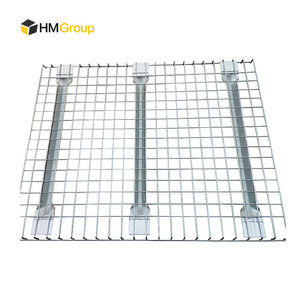
Beyond structural steel tolerances, integration with NFPA 13 (Standard for the Installation of Sprinkler Systems) dictates storage configuration. In high-bay facilities exceeding 30 feet in height, standard solid decking creates dangerous water-shadowing effects during fire events. The inclusion of industrial steel wire mesh decking with flared universal channels ensures seamless compliance by preserving minimum 50% open flue spaces, allowing ESFR (Early Suppression, Fast Response) ceiling-level fire sprinklers to penetrate multiple rack tiers uninhibited.
Localized US Application Scenarios
Engineered storage solutions solving localized temperature, velocity, and heavy inventory challenges in critical US industrial belts.
☐
Cold Storage & Food Logistics
Refrigerated and blast freezer facilities in the Midwest and Mid-Atlantic face extreme operating costs per cubic foot. Utilizing heavy-duty hot-rolled structural steel (SK3000 design) resists embrittlement in sub-zero environments down to -20°F. Structural channel frames absorb forklift impact without catastrophic failure while dense pushback and drive-in profiles minimize cooled airspace waste.
⚙
Automotive & Heavy Manufacturing
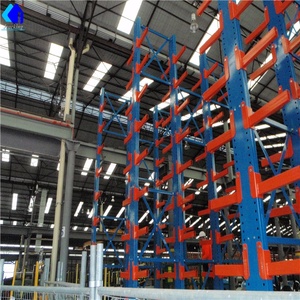
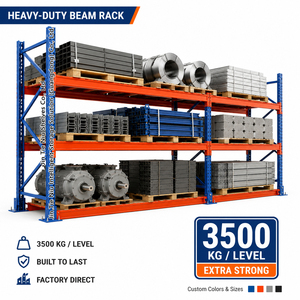
Concentrated in the Rust Belt and Southeast auto corridor, tier-1 suppliers and stamping plants require coil racks and 3,500kg heavy-duty beam profiles. Structural channel steel handles extreme concentrated point-loads, heavy stamping dies, and raw sheet materials while integrated cantilever racks accommodate long extruded structural bar stock.
⚡
Omnichannel & 3PL Fulfillment
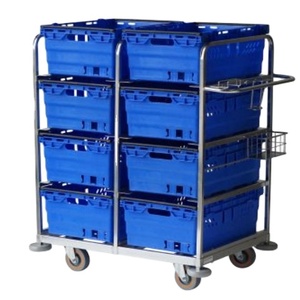
High-turnover distribution centers along major shipping corridors (Inland Empire, Dallas-Fort Worth, Pennsylvania I-81 corridor) demand universal teardrop pallet systems. Paired with high-tier multi-level catwalk mezzanines and wire mesh roll trolleys, facilities achieve rapid unit picking and seamless SKU reprofiling without downtime.
Modern Logistics Trends
Vertical Densification & AS/RS Automation Trends in the USA
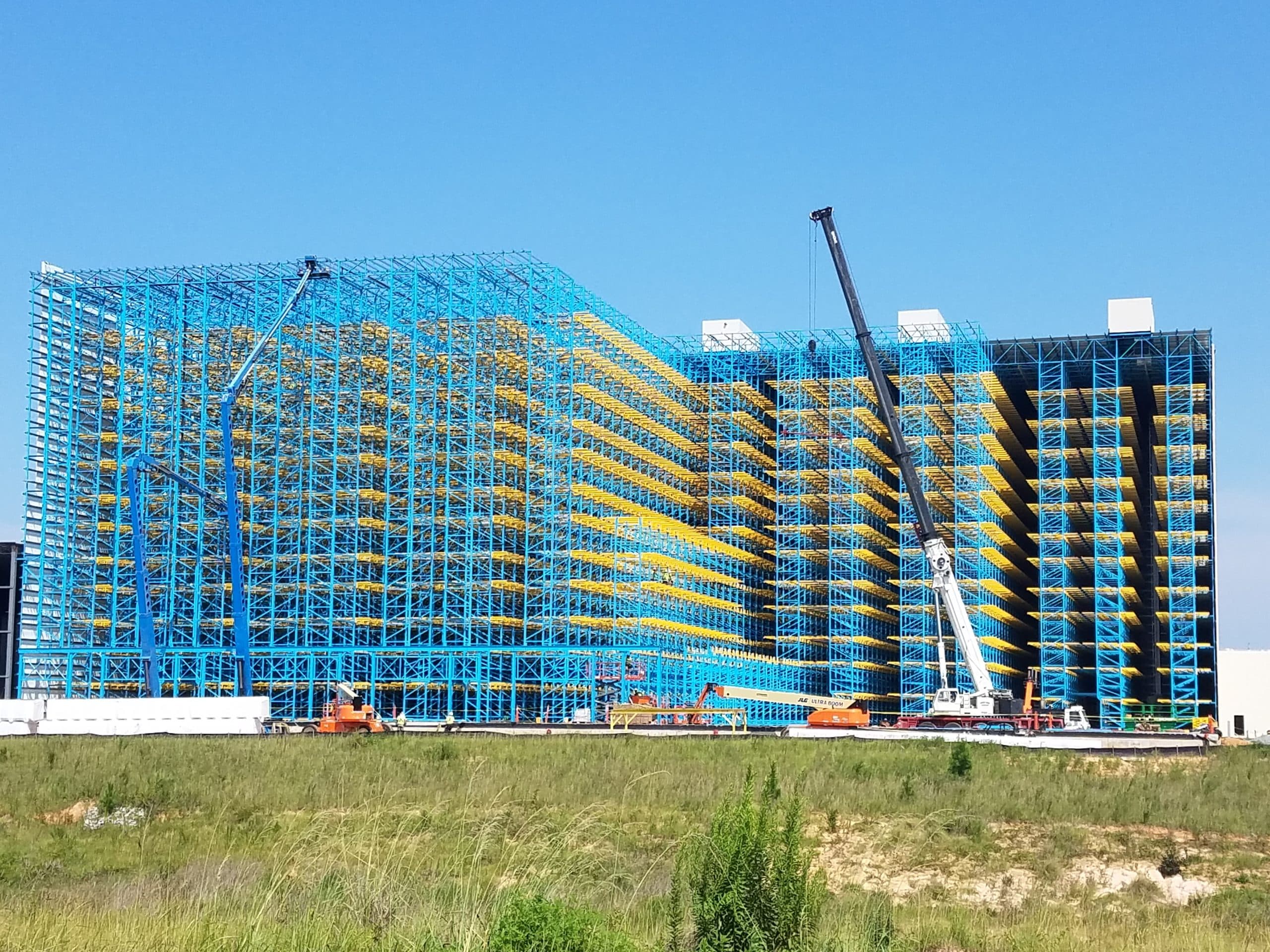
With urban land costs surging near major US metropolitan ports and population centers, logistics developers are transitioning from horizontal sprawling structures toward vertical high-bay architectures. Modern warehouse developments regularly specify clear ceiling heights reaching 36 to 45 feet, creating a pronounced requirement for structural rack reliability.
Automated Storage and Retrieval Systems (AS/RS) and autonomous mobile robot (AMR) top-running shuttle systems require deflection tolerances far tighter than traditional forklift environments. In rack-supported AS/RS buildings—where the racking structural channel uprights directly carry the warehouse exterior siding and roof loads—fabrication tolerances must meet sub-millimeter precision to ensure flawless robotic crane positioning along high-speed vertical guide rails.
Space Multiplication
Multi-Level Work Platforms & Mezzanines
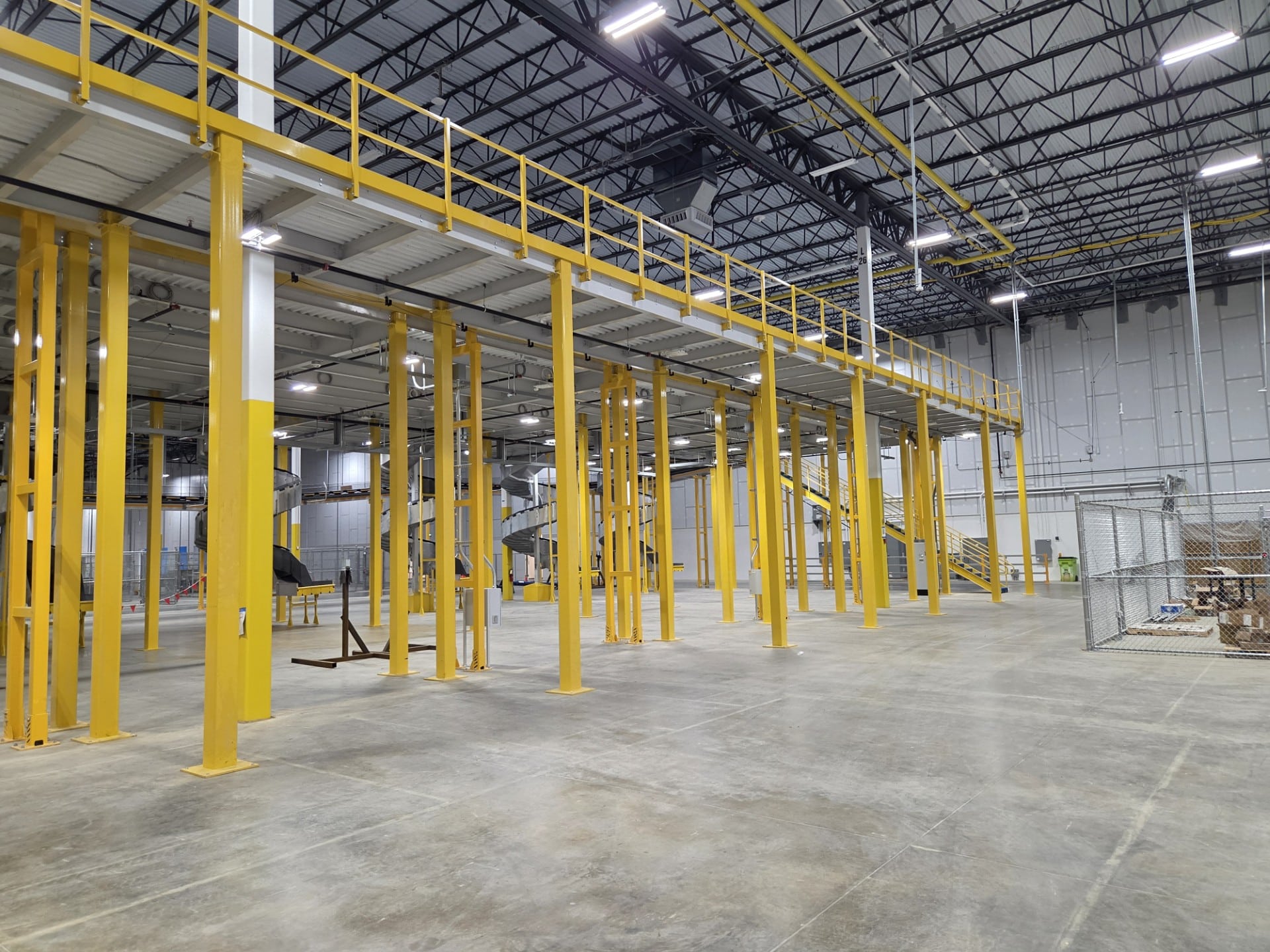
Rather than undergoing expensive facility relocations or capital-intensive horizontal building expansions, facility operators utilize engineered multi-level work platforms and rack-supported pick towers to multiply existing usable square footage. These platforms integrate sophisticated pick modules, high-speed sortation conveyors, spiral chutes, and heavy-duty steel safety guarding.
Engineered to meet stringent OSHA 1910 and IBC life-safety egress standards, heavy-gauge flooring decks and structural steel cross-bracing eliminate vibration harmonics from automated equipment, ensuring safe multi-shift order picking and micro-fulfillment efficiency.
Enterprise Strengths: The Single-Source Advantage
Combining over five decades of engineering heritage with vertically integrated manufacturing, certified compliance, and lifecycle system protection.
✓
55+ Years Engineering Heritage
Founded on precision fabrication since 1970. Decades of specialized focus on industrial pallet racking, rack-supported AS/RS structures, structural platforms, and safety containment architectures.
⚒
100% In-House Fabrication
Complete control over cold-forming, laser punching, structural hot-rolling, certified welding (AWS D1.1/D1.3), and automated powder coating ensures uncompromised quality from coil steel to job site delivery.
🛡
PE-Stamped Structural Calculations
In-house professional engineering teams licensed across all 50 states furnish site-specific load capacity plaques, seismic boundary calculations, and anchor embedment details required by municipal permitting bodies.
☶
Lifecycle Safety Guarding
End-to-end impact mitigation solutions including heavy-duty column protectors, heavy tubular aisle-end guardrails, and pallet stops that safeguard capital assets and personnel in high-traffic facilities.
Frequently Asked Questions by US Warehouse Procurement Teams
Technical guidance direct from certified rack engineers addressing seismic permits, steel gauges, fire suppression, and impact resistance.
What is the structural difference between roll-formed teardrop and hot-rolled structural pallet rack?
Roll-formed teardrop pallet racking (such as our SK2000 style) is fabricated from continuous cold-rolled sheet steel into closed tubular uprights or open back-columns. It delivers exceptional torsional resistance, rapid tool-free beam adjustability on 2-inch increments, and broad compatibility with US standard inventory. It is the cost-effective standard for retail distribution, e-commerce, and general dry logistics.
Hot-rolled structural pallet rack (such as our SK3000 series) is manufactured from heavy structural C-channels with bolted beam connections. With thick flanges that withstand repeated forklift impacts, structural channel rack is mandatory in heavy industrial applications, scrap steel handling, lumber yards, drive-in systems, and high-turnover cold storage freezers where impact risk is severe.
How do seismic codes (IBC / RMI ANSI MH16.1) affect pallet rack procurement in the United States?
Under the International Building Code (IBC) and local municipal requirements, industrial steel storage racking is classified as a building structure. In high-risk Seismic Design Categories (such as SDC D, E, and F in California, Washington, and parts of the South), standard off-the-shelf racking will fail municipal plan checks.
Racking in these territories requires heavier steel column gauges, oversized baseplates (e.g., 6"x8" or 8"x8" with multiple wedge anchor holes), heavier horizontal/diagonal bracing, and certified structural engineering calculation packages stamped by a state-registered Professional Engineer (PE). Sourcing from an RMI-compliant manufacturer ensures the system passes plan checks and fire department inspections without costly retrofit delays.
Why is wire mesh decking preferred over solid wood or sheet steel decking in US facilities?
The primary driver is NFPA 13 life safety and fire sprinkler performance. Solid plywood or steel sheet decking creates internal umbrellas that deflect fire sprinkler discharge, allowing flames to spread laterally within the rack bays. Wire mesh decking features an open pattern (typically 2"x4" or 2.5"x4.5") that delivers more than 50% open area, allowing sprinkler water to penetrate instantly down to lower tiers.
Additionally, wire mesh decking eliminates dirt and dust accumulation, prevents pallet slippage, increases overhead lighting illumination on lower pallet levels, and offers universal dropped flared channel fits for step beams and structural box beams alike.
What slab specifications and data are required prior to engineering a high-bay rack project?
To safely engineer upright footings and prevent slab punching or anchoring failures, our engineering department requires:
1. Concrete Compressive Strength (f'c): Typically specified between 3,000 PSI and 4,500 PSI.
2. Slab Thickness: Standard industrial slabs range from 6 to 10 inches; unreinforced or thinner slabs dictate reduced column point loads or load-spreading baseplates.
3. Slab Reinforcement Details: Rebar grids, wire mesh, or fiber reinforcement profiles.
4. Subgrade Modulus (k): Soil compaction rating beneath the concrete slab.
5. Expansion Joint Layout: Anchors cannot be installed within minimum setback distances (typically 4 to 6 inches) of saw-cut control joints.
How do pallet flow and pushback systems contrast for dense FIFO vs. LIFO storage?
Pallet Flow Racks use inclined roller or skate-wheel tracks operating on gravity under strict First-In, First-Out (FIFO) logistics. Pallets are loaded from the rear charge aisle and coast to the front discharge picking face. They are ideal for high-throughput, date-sensitive goods such as dairy, produce, meat, and pharmaceutical supplies.
Pushback Racks operate on a nested cart system along inclined rails under a Last-In, First-Out (LIFO) methodology. Standard forklifts push back previously stored pallets along a single operating aisle. This eliminates dedicated loading aisles, conserving valuable floor area in cold storage warehouses and general staging operations where products are stored 2 to 6 pallets deep per SKU.
Transform Your Warehouse Storage Density
Consult with certified structural racking engineers to develop custom RMI-compliant layouts, capacity load calculations, and turnkey supply chain storage systems.
Contact Us