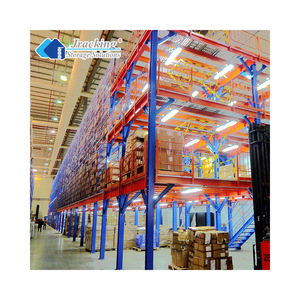
Engineered Product Lineup
Industrial Flow Racks & Material Handling Equipment
Explore heavy-duty prefabricated shelving, high-capacity dynamic flow units, cantilever systems, and modular platforms tailored for fulfillment excellence.
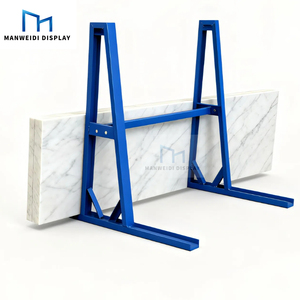
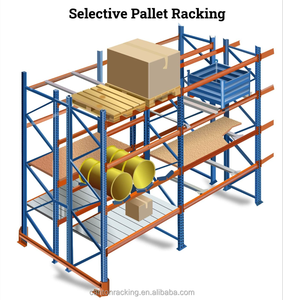
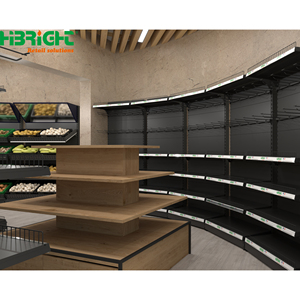
Engineering Whitepaper
Kinematic Principles of Carton Flow Racking in NZ Supply Chains
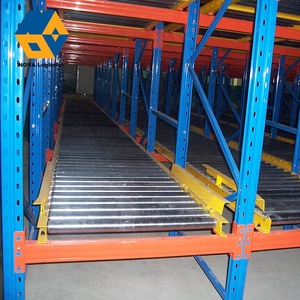
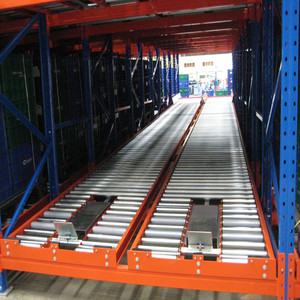
Carton flow racking transforms manual split-case picking from an inefficient walk-and-search process into an ergonomic, high-density order fulfillment operation. Utilizing inclined roller beds engineered with dynamic polypropylene wheels or heavy-duty aluminum rollers, cartons are deposited at the replenishment rear face and glide forward smoothly under gravitational force to the retrieval pick face.
Unlike standard static shelving, dynamic carton live storage operates on a pure First-In, First-Out (FIFO) rotational sequence. By separating stock loading operations from order picking aisles, congestion is eliminated, picking walking distances are compressed by up to 75%, and pick accuracy increases substantially. In New Zealand facilities, each gravity bed is calibrated with gradient adjusters ranging between 2.5% and 5% to handle variable packaging types—including corrugated cases, plastic totes, and thermoformed split packs—without impact shock or system hang-ups.
Strict FIFO Rotation
Automatic stock rotation eliminates batch expiration risks for dairy, produce, and pharmaceutical inventory.
Zero Interference Aisles
Replenishers work entirely in rear aisles while order pickers operate uninterrupted in designated picking zones.
Pick-to-Light Synergy
Engineered front presentation shelves match perfectly with digital light indicators and pick carts.
Volumetric Floor Savings
Consolidate hundreds of active SKUs into compact footprints, reducing required floor footprint by 35% to 50%.
Local Market Integration
Carton Flow Deployment Across New Zealand Sectors
From high-volume logistics parks in South Auckland to cold storage nodes in Christchurch, carton flow racking addresses acute local operational challenges.
Omnichannel & E-Commerce Fulfillment
Distribution hubs in Wiri, Highbrook, and Airport Oaks face intense demand for rapid direct-to-consumer dispatch. Carton flow lanes provide dense pick fronts for high-velocity fast-moving consumer goods (FMCG), beauty products, and electronics, allowing multiple pickers to navigate dense picking corridors without bottlenecking.
Temperature-Controlled & Cold Storage
Given New Zealand’s massive primary export industry in meat, dairy, and seafood, refrigerated facilities in Canterbury and Hawke’s Bay operate under expensive cubic thermal footprints. Carton flow systems feature freeze-rated roller tracks rated to -30°C, accelerating picking while condensing thermal space requirements.
Pharmaceutical & Healthcare Logistics
Supplying clinical networks across District Health Boards requires total traceability and strict FIFO management. Carton flow systems configured with adjustable lane dividers guarantee zero SKU intermixing and error-free pick runs for critical medicines, vaccine stocks, and veterinary supplies nationwide.
Strategic Logistics Analysis
Warehouse Modernization Trends Across New Zealand
Key economic, structural, and regulatory currents shaping material handling investments across the North and South Islands.
01
Rigorous Seismic Engineering (AS/NZS 4084:2023)
Following updates to the AS/NZS 4084 storage standards, Kiwi warehouse operators demand verified structural compliance. High-seismic zones such as Wellington and Christchurch require dynamic ductility modeling, heavy baseplate anchorage, and specialized sway bracing calculations to withstand peak ground accelerations without failure.
02
Industrial Land Constraints & Vertical Optimization
With industrial land rates exceeding historical highs across Auckland and Tauranga, logistics operators are converting floor real estate into vertical density. Multi-tier carton flow pick towers integrated with overhead mezzanine structures and automated spiral conveyors maximize cubic air rights above traditional floor pick slots.
03
Labor Availability & Ergonomic Work Environments
High warehouse labor overhead and ongoing labor shortages emphasize operator productivity. Modern carton flow systems reduce worker fatigue through customizable drop-in layback trays, angled presentation shelves, and pick-to-light compatibility that streamline repetitive split-case movements and lower physical strain.
System Engineering Comparison
Carton Flow Racking vs. Alternative Storage Systems
Evaluate load characteristics, throughput capability, and architectural parameters to select the appropriate picking infrastructure.
| Storage System Type | Picking Throughput | Inventory Rotation | Floor Space Efficiency | Primary NZ Application Profile |
|---|---|---|---|---|
| Carton Flow Racking | Ultra High (350+ Lines/hr) | Guaranteed FIFO | High (Reduces aisles by 50%) | High-velocity split-case, e-commerce, pharma, food |
| Static Longspan Shelving | Low-Medium (80-120 Lines/hr) | Manual LIFO / FIFO | Low (Multiple access aisles needed) | Low-velocity spare parts, slow-moving retail stock |
| Double Deep Pallet Racking | Moderate Pallet Flow | Strictly LIFO | Very High (Reduced aisles) | Bulk unitized pallet staging, raw materials |
| Cantilever Racking | Moderate (Crane/Forklift) | Open Selectivity | Specialized | Timber, structural extrusions, piping, building goods |
| Multi-Tier Pick Towers | Very High (Multi-operator) | Hybrid FIFO/LIFO | Maximum Cubic Utilization | Mega-distribution centers with clear heights >9 meters |
Manufacturing Authority
Engineered Precision & Heavy-Duty Structural Integrity
Backed by decades of specialized industrial steel fabrication, in-house quality assurance, and international seismic engineering compliance.
50+
Decades of Manufacturing Heritage
Decades of continuous engineering development allow us to manufacture high-yield tubular and structural steel profiles that outlast standard commercial racking under punishing industrial duty cycles.
100%
In-House Design & Fabrication
Every frame upright, roll-formed track, structural bracket, and safety barrier is engineered, laser-cut, roll-formed, and powder-coated in-house to maintain rigorous dimensional tolerances and structural integrity.
3D
Parametric Engineering & Seismic Design
We provide full structural layout calculations, site-specific earthquake engineering, and free 3D CAD visualization models to ensure smooth council building consents and warehouse management system (WMS) integration.
Buyer Knowledge Base
Frequently Asked Questions by New Zealand Procurement Teams
Critical structural, seismic, and operational answers for warehouse planners, operations managers, and procurement leads.
How do carton flow systems comply with New Zealand seismic standard AS/NZS 4084:2023?
Under AS/NZS 4084:2023, storage racking across New Zealand is classified as an engineered building element subject to dynamic earthquake forces. Compliance requires site-specific engineering analysis accounting for soil subsoil class (A through E), importance level (IL2 or IL3), and local seismic hazard factors (Z-factor ranging from 0.13 in Auckland to 0.40+ in Wellington). Our carton flow systems incorporate oversized heavy-gauge baseplates, heavy duty chemical or mechanical anchor bolts, and specialized spine and frame bracing to resist seismic base shears and lateral displacement without track dislodgement.
What is the recommended pitch/gradient for carton flow roller tracks?
The standard operating slope ranges between 2.5% and 5% (approximately 30 mm to 60 mm drop per meter of lane depth). Stiff plastic totes glide on lower slopes (2.5%–3.5%), whereas soft or uneven corrugated cardboard boxes require slightly steeper angles (3.5%–5%) to overcome rolling friction. Our systems provide tool-less vertical slot adjustment increments of 25 mm, allowing facility technicians to fine-tune gradients whenever tote weights or packaging substrates vary.
Can carton flow beds be retrofitted into existing selective pallet racking uprights?
Yes. Our universal drop-in carton flow tracks and hanger brackets interface directly with international teardrop profiles, slotted structural channel sections, and box beam configurations. This lets facilities convert underutilized lower beam elevations of pallet racks into dynamic carton picking tunnels while retaining full-pallet reserve staging on upper beam levels, maximizing storage ROI without full infrastructure replacement.
What are the weight capacities per lane and shelf level?
Standard duty roller tracks support 25 kg to 50 kg per linear foot, with total uniformly distributed shelf capacities ranging from 250 kg up to 500 kg per level. For heavy engineering components, fluid containers, or concentrated steel tote loads, reinforced structural steel tracks with continuous solid-steel axle assemblies support dynamic load capacities exceeding 1,000 kg per level.
Do we need council building consent to install carton flow picking racks in NZ?
In New Zealand, storage racking exceeding 3.0 meters in overall height—or racking of any height in public retail areas—generally requires a Building Consent under the New Zealand Building Act. Consent applications require Producer Statements (PS1 for Design, PS4 for Construction Review) signed by an IPENZ / Engineering New Zealand Chartered Professional Engineer (CPEng). We provide complete structural engineering calculations, load rating signage, and technical documentation to streamline council sign-offs.
Accelerate Your Warehouse Picking Velocity
Connect with our structural racking engineers to receive custom 3D layout drawings, comprehensive seismic engineering verifications, and tailored carton flow system specifications for your facility.