Industrial Storage Rack Systems for Panamanian Hubs
Precision-formed cold and structural steel systems calibrated for intense container turnovers, multi-tier mezzanines, and high-density distribution centers.
Tailored Storage Architectures for Panama's Core Commercial Hubs
Panama's status as the logistical capital of the Americas requires racking infrastructure tailored to extreme maritime throughput, nearshoring assembly, and regional re-export corridors.
Colón Free Trade Zone (Zona Libre de Colón)
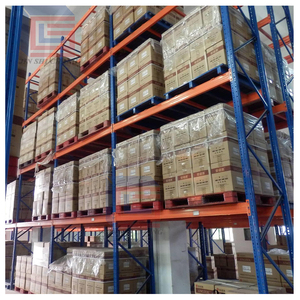
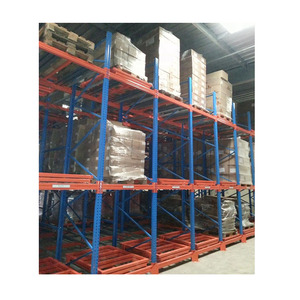
As the Western Hemisphere's largest free port, ZLC facilities demand ultra-high-density storage setups. Our heavy-duty selective and double-deep racking configurations support fast carton picking, rapid customs turnaround, and massive vertical cubic space utilization under duty-free tax shelters.
Optimized for: High-velocity pallet rotation & multi-SKU cross-dockingPanama Pacífico Special Economic Area
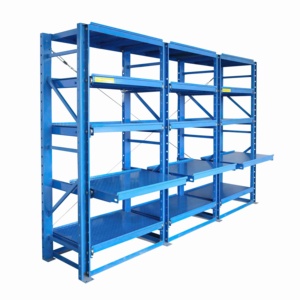
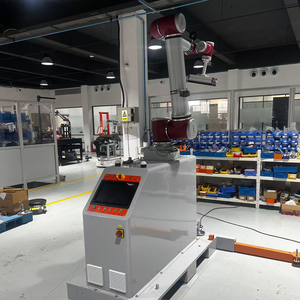
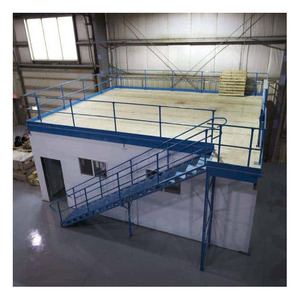
Targeted at multinational corporate headquarters, light manufacturing, and high-tech value-added assembly. We supply modular structural mezzanine platforms, roll-out mold racks for precision plastic injection tools, and collaborative robotic workstation palletizers that comply with rigorous international safety audits.
Optimized for: Multi-tier pick modules & light manufacturing cleanroomsTocumen International Airport Logistics Hub
For high-value pharmaceutical distribution, cold-chain biologics, and express perishable cargo transiting between South and North America. Our cold-store rated drive-in and pallet flow racking systems maintain structural integrity in sub-zero freezer environments (-30°C) with frictionless gravity feed rollers.
Optimized for: Cold chain integrity, FIFO sequencing & pharma complianceBalboa, PSA & Manzanillo Port Terminals
Intermodal terminals interfacing with the Panama Canal face intense saline environments and mechanical shocks from constant reach-stacker movements. Our heavy structural channel racks with C5-M anti-corrosion protective coatings provide superior resistance to impact and marine salt fog.
Optimized for: Coastal heavy machinery, container de-stuffing & raw materialsTrans-Isthmian Multimodal Dry Canal & Inter-American Highway Logistics
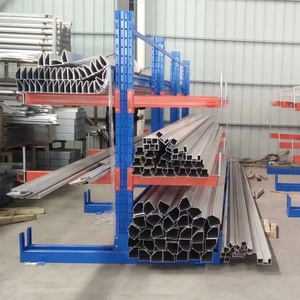
Panama's terrestrial logistics ribbon connects the Atlantic and Pacific oceans within an 80-kilometer span. Warehouses operating along Via Tocumen, Juan Díaz, and Panama Norte serve both local retail chains (Super 99, Riba Smith, El Machetazo) and regional wholesalers. We deliver flexible push-back, drive-in, and cantilever storage solutions capable of handling variable inventories from heavy PVC construction conduit to fast-moving FMCG goods.
Optimized for: Elastic inventory profiles, bulk retail buffering & fast seasonal re-slottingLogistics Nearshoring & Infrastructure Dynamics in Panama (2025–2030)
Panama has evolved far beyond a maritime tollway. With the global recalibration of supply chains toward "nearshoring" and "friendshoring," the Republic of Panama functions as the critical node for Latin America and the Caribbean. International manufacturers, 3PL corporations, and medical device fabricators are establishing regional consolidation warehouses to buffer against trans-Pacific supply shocks.
However, operating high-density distribution centers in the Isthmus introduces unique environmental and structural challenges that commodity racking cannot endure. Specifying industrial racking systems for Panamanian operations requires a calculated structural engineering methodology encompassing microclimate humidity management, seismic resilience, and building code compliance.
Technical Fact: Panama City and Colón experience year-round relative humidity (RH) fluctuating between 80% and 98%, accompanied by warm maritime ambient air rich in airborne chlorides. Uncoated or sub-standard electrostatic paint quickly suffers galvanic degradation, delaminating at slotted connector nodes within 18 to 24 months.
Atmospheric Corrosion Mitigation: Specifying Powder Coated vs. Hot-Dip Galvanized Racks
In high-throughput facilities located within 15 kilometers of the Pacific or Atlantic shorelines, conventional single-layer dry powder finishes show rapid degradation around teardrop punch-holes and beam locking tabs. As an OEM manufacturer supplying Panama, we employ a 7-stage chemical pre-treatment process (zinc phosphating followed by zirconium nanocoating) prior to electrostatic application of thermosetting TGIC polyester powder at 80–120 microns dry film thickness (DFT).
For unconditioned, ambient-air container warehouses in Colón or open-sided sheds near Balboa Port, we engineer structural rack systems hot-dip galvanized (HDG) to ASTM A123 / ISO 1461 standards, providing an impermeable zinc layer exceeding 85 microns that ensures over 25 years of corrosion-free lifecycle under ISO 12944 C4 and C5-M atmospheric corrosive classifications.
Seismic Structural Engineering: REP-04, AISC 360 & RMI ANSI MH16.1
Although Panama experiences fewer severe seismic catastrophes than neighboring Costa Rica or Colombia, the Panamanian Structural Regulations (Reglamento de Diseño Estructural para la República de Panamá - REP-04) strictly delineate seismic design categories, especially along the active faults of the Pedro Miguel and Gatún fracture zones. High-bay pallet racking structures are formally recognized by structural engineers as "building-like non-building structures."
Our engineering division calculates racking frame capacities in accordance with RMI (Rack Manufacturers Institute) ANSI MH16.1 and seismic parameters defined by ASCE 7 and IBC (International Building Code). We calculate baseplate thickness, column profile geometry, and anchor bolt embedment depths to resist cyclic lateral shear and overturning moments. Closed-box tubular uprights or heavy structural hot-rolled channels (ASTM A572 Grade 50) are deployed rather than thin open-back C-profiles, maximizing torsional rigidity under loaded seismic conditions.
Floor Slab Interaction and Slab-on-Grade Capacity Verification
Many modern industrial warehouses in Panama Pacífico and Milla 8 are erected on reclaimed alluvial or compacted coastal soils where floor slabs feature specified point-load bearing limitations (typically 45 to 80 kN per leg). Our engineers generate comprehensive footprint load distributions, engineering oversized footplates (up to 200 x 200 x 12 mm) with precision dual Hilti wedge anchor configurations to disperse punching shear safely across the concrete slab without risking micro-fissures or moisture-barrier rupture.
Engineering Comparison Matrix: High-Density Racking Configurations
Selecting the optimal rack architecture requires balancing unit load selectivity, cubic volumetric utilization, fork truck mast requirements, and capital expenditure:
| System Architecture | Cubic Volume Utilization | Pallet Selectivity | Inventory Rotation | Recommended Panamanian Application | Structural Load Rating |
|---|---|---|---|---|---|
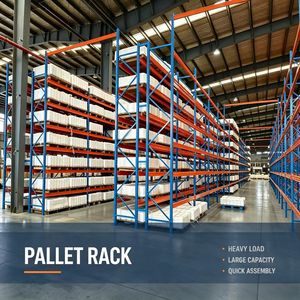
| Selective Pallet Racking | 40% - 50% | 100% Immediate | FIFO / LIFO Flexible | ZLC Multi-Client 3PL Hubs, General Wholesale Distros | 1,000 - 4,500 kg / Level |
| Double Deep Racking | 60% - 68% | 50% Direct Access | LIFO (FMCG Batches) | Dry Food Buffer Warehouses, Beverage Consolidation | Up to 3,500 kg / Level |
| Push-Back Rack (Carts) | 70% - 78% | Lane Selective (2-6 Deep) | LIFO Gravity Flow | Cold Storage Pre-chambers, Intermediate Fast-Pick Lines | Up to 1,500 kg / Pallet |
| Drive-In / Drive-Through | 75% - 85% | Low (Per Lane) | Strict LIFO (Drive-In) / FIFO | Deep Freeze Rooms, Single-SKU Raw Material Staging | Up to 2,000 kg / Pallet |
| Multi-Tier Mezzanine | 180% - 250% (Footprint) | 100% Hand Pick | Continuous Replenishment | E-Commerce Picking, Apparel Processing, Spare Parts | 300 - 1,000 kg / m² Floor |
| Heavy Duty Cantilever | 60% - 70% | 100% Open Access | Free Profile Stacking | Alum. Extrusions, PVC Tubing, Steel Rebar, Timber Yards | 500 - 5,000 kg / Arm |
*All load calculations subject to site-specific seismic base shear analysis and slab-on-grade concrete compressive strength (f'c ≥ 28 MPa).
Why Tier-1 Panamanian Operations Partner Directly With Our Factory
Eliminating middleman markups while receiving direct access to certified structural engineering, high-volume automated roll-forming, and turn-key export logistics.
Certified High-Tensile Steel Coil (Q355B / ASTM A572 Gr 50)
We source prime steel directly from tier-one mills with mill test certificates (MTC). Guaranteed yield strengths (fy ≥ 355 MPa) prevent structural buckling under high deflection scenarios in multi-level high-bay applications.
Automated Continuous Roll-Forming & Robotic Welding
Our facility houses 26 precision roll-forming lines capable of stamping complex Omega (Ω) and teardrop profile geometries with zero accumulative pitch error. Structural welds are executed via OTC and Fanuc multi-axis robotic stations.
Full Compliance with RMI ANSI MH16.1 & EN 15512 (FEM)
Every beam-to-column connector, locking pin, diagonal brace, and footplate undergoes rigorous finite element analysis (FEA) and physical cyclic load testing to meet or surpass global racking safety benchmarks.
Specialized Sea-Freight Packaging for Tropical Transits
Components are bundled with heavy steel strapping, non-marking composite corner guards, and wrapped in industrial VCI (Vapor Corrosion Inhibitor) plastic shrink film to prevent sea-salt micro-abrasion and moisture exposure inside 40HQ containers.
Frequently Asked Questions by Panamanian Warehouse Managers
Crucial commercial, customs, engineering, and logistics clarifications for engineering directors and procurement specialists in Panama.
What are the transit lead times and shipping routes from your factory to Panama?
Our manufacturing lead time for standard selective or drive-in racking orders (5 to 15 standard 40HQ containers) is typically 18 to 25 calendar days. Ocean freight shipments depart directly from major deep-water ports (Ningbo or Shanghai) on direct trans-Pacific routes to the Port of Balboa (Pacific entrance) or the Port of Manzanillo / Colón Container Terminal (Atlantic side).
Ocean transit duration ranges between 22 and 28 sailing days depending on the carrier line (Maersk, CMA CGM, Evergreen, COSCO). We provide complete CIF, CFR, or FOB documentation packages, including Bill of Lading, Certificate of Origin, Packing List with detailed piece counts, and mill inspection sheets for smooth Panamanian customs processing.
How do import duties and tax exemptions apply when importing racks into Zona Libre de Colón or Panama Pacífico?
Shipments consigned to licensed enterprises operating within special economic zones—such as the Colón Free Zone (Zona Libre de Colón), Panama Pacífico (Law 41), or designated Free Zones (under Law 32 of 2011)—benefit from full exemption from Panamanian import tariffs (Arancel Nacional de Importación) and the 7% ITBMS (Impuesto de Transferencia de Bienes Corporales Muebles y la Prestación de Servicios).
For operations located outside special regimes (e.g., commercial warehouses in Parque Industrial Las Américas, Costa del Este, or Transístmica), pallet racking is classified under HS Code 7308.90 (Structures and parts of structures of iron or steel). We provide accurate commercial invoices, HS classifications, and cargo dimension declarations to ensure your local customs broker (Corredor de Aduanas) files customs clearances through the SIGA (Sistema Integrado de Gestión Aduanera) without delay or customs hold inspections.
Can your engineering team assist with local building permit approvals and structural stamp validation in Panama?
Yes. We generate comprehensive AutoCAD 2D structural floor layouts, 3D clearance models, anchor pull-out load calculation sheets, and frame capacity rating plaques in compliance with RMI ANSI MH16.1 and local REP-04 seismic codes. Our technical calculation packages clearly state dead loads, live loads, seismic acceleration coefficients, and wind uplift factors (for rack-supported warehouses or external sheds).
These documents provide your local Panamanian civil engineers or consulting architects with the necessary structural calculations to attain Municipal approvals (Permiso de Construcción) and certifications from the Fire Department (Benemérito Cuerpo de Bomberos de la República de Panamá - DINASEPI) for high-rack life safety and in-rack sprinkler clearance clearances.
How do we ensure our warehouse floor slab is capable of supporting multi-tier or heavy drive-in racking?
Prior to finalizing manufacturing specifications, our engineering team requires your warehouse slab data: concrete slab thickness (typically 150 mm to 250 mm for industrial facilities in Panama), compressive cylinder strength (f'c rating, standardly 250 kg/cm² to 300 kg/cm² or 25–30 MPa), reinforcement rebar or steel-fiber specification, and subgrade modulus (k-value).
Using this data, our engineers calculate the maximum concentrated post load transmitted by the rack column. If the concentrated load exceeds allowable slab punching shear limits, we engineer customized enlarged heavy-gauge baseplates (e.g., 250 mm x 250 mm x 16 mm) and dual or quadruple anchor spacing configurations to safely disperse the dynamic weight across multiple slab planes.
What anti-corrosion finish is recommended for facilities located near the Panama Canal or coastal ports?
For standard temperature-controlled warehouses with air conditioning or dehumidification systems (20°C–25°C, RH < 65%), our electrostatic thermosetting TGIC polyester powder coating over a phosphate-pretreated steel substrate offers exceptional scratch resistance and long service life. However, for ambient warehouses, open loading docks, or coastal facilities within 5–10 km of the sea in Balboa, Colón, or Tocumen, we advise:
1. Heavy TGIC powder coating with an epoxy-rich zinc primer undercoat (total DFT > 120 µm); or
2. Hot-Dip Galvanizing (HDG) to ASTM A123 standards for upright frames and baseplates. Zinc immersion provides complete metallurgical bonding on internal and external faces of hollow or formed steel profiles, preventing rust development inside enclosed tubular upright columns.
Do you provide installation supervision or turnkey erection services across the Republic of Panama?
We offer two installation coordination paths for Panamanian projects. First, we provide comprehensive installation manuals, numbered structural component lists, torque-wrench bolt specifications, and high-definition video walkthroughs that enable your local millwright team or preferred contractor to erect the systems smoothly. Second, for complex automated systems, pushback systems, or multi-level steel mezzanine structures, we can dispatch seasoned factory installation supervisors to oversee assembly, verify column plumbness with optical lasers, supervise torque verification, and issue final load commissioning certificates on-site.
Accelerate Your Panama Logistics Operations With Direct Factory Racking
Whether you are designing a high-throughput 3PL hub in Colón Free Zone, establishing an e-commerce fulfillment floor in Panama Pacífico, or retrofitting a cold-storage warehouse along Vía Tocumen, our structural engineers are ready to deliver custom CAD layouts, seismic calculations, and direct container quotation packages within 24 hours.
Contact Us