Engineered Product Catalog
High-Performance Pallet Racking & Storage Systems for Hungarian Facilities
Direct manufacturer-engineered solutions compliant with European EN 15512 and FEM industrial rack design directives, configured for heavy industrial capacities.
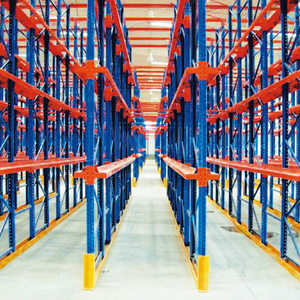
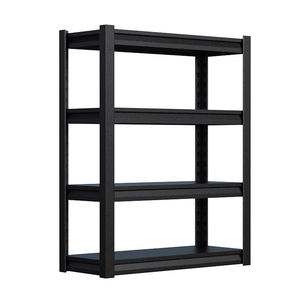
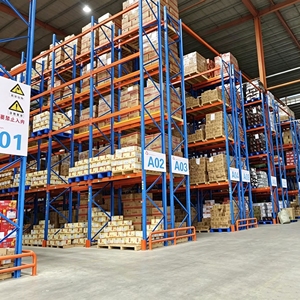
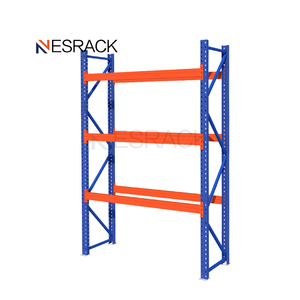
Whitepaper & Strategic Technical Overview
Engineering Selective Pallet Racking for Hungary's Strategic Logistics Nodes
Balancing Euro-Pallet (EPAL) interchangeability, seismic compliance (Eurocode 8 / MSZ EN 1998), and rapid logistics turnover in Central and Eastern Europe.
Hungary has rapidly consolidated its position as the preeminent logistics and advanced manufacturing gateway of Central and Eastern Europe (CEE). Anchored by the junction of three major Pan-European transport corridors (Corridors IV, V, and X) and centered around the expansive Greater Budapest logistical ring road (M0 motorway network), modern industrial facilities in Hungary face unique intralogistics demands. For warehouse operators, supply chain directors, and automotive component tier-suppliers operating in Pest, Győr-Moson-Sopron, Fejér, and Hajdú-Bihar counties, installing an optimized selective pallet racking system is no longer simply about buying structural steel—it is an exercise in structural precision, localized regulatory compliance, and total lifecycle optimization.
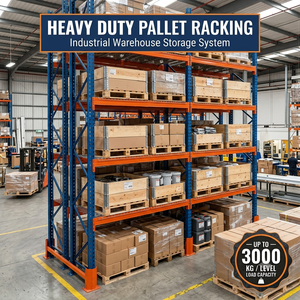
Selective pallet racking represents the industry benchmark for operations requiring 100% SKU selectivity and uninhibited pallet accessibility. Unlike high-density bulk storage solutions such as drive-in or deep-lane shuttle racks, selective configurations allow warehouse management systems (WMS) to access every single pallet location instantaneously without repositioning adjacent loads. In Hungary's accelerating logistics landscape—characterized by high throughput, multi-tenant 3PL facilities, and fast-moving retail consumer goods (FMCG)—this unhindered accessibility forms the foundation of operational agility.
EPAL & Industrial Pallet Handling
Hungarian warehousing predominantly handles standard Euro-pallets (EPAL 1: 800 x 1200 mm) alongside occasional ISO industrial pallets (1000 x 1200 mm). Our selective rack beam levels are precision-engineered in 1800 mm, 2700 mm, and 3600 mm clear spans to house two, three, or four EPAL units per bay with mandatory 75–100 mm safety clearances between pallet perimeters and upright profiles.
Eurocode 8 & Seismic Integrity
Under Hungarian standard MSZ EN 1998-1 (Eurocode 8) and EN 16681, racking structures are defined as freestanding steel frameworks requiring site-specific ground acceleration (agR) analysis. While Hungary is historically characterized by moderate-to-low seismic risk, alluvial river basin soils along the Danube and Tisza corridors necessitate verified floor anchor pull-out ratings and specialized baseplate designs.
Advanced Surface Finishes & Durability
Facilities across Central Hungary face variable thermal envelopes—from heated ambient facilities to non-conditioned cross-dock terminals and multi-temperature cold storage (-28°C). Our racking utilizes electrostatic epoxy-polyester thermoset powder coatings (60–80 microns) or pre-galvanized high-yield structural steel coils to eliminate micro-cracking, flaking, and corrosive atmospheric degradation.
Regional Industrial Footprint
Localized Applications Across Hungary’s Key Economic Hubs
Tailored selective racking configurations engineered for the operational realities of Hungary's premier logistics clusters.
Budapest & M0 Ring 3PL & FMCG
High-throughput national distribution centers in Biatorbágy, Szigetszentmiklós, Ecser, and Fót. Focused on high-density narrow-aisle (VNA) selective configurations to optimize premium warehouse footprint.
- Aisle Width: 1.75m – 1.9m (VNA)
- Clear Heights: 10.5m – 14.5m
- Floor Spec: DIN 18202 Table 3 Line 4
- Throughput: 24/7 Pallet Cycling
Győr & Northwest Hub Automotive JIT
Serving Tier-1 and Tier-2 component suppliers around automotive engine and vehicle manufacturing facilities. Requires heavy-gauge selective beam profiles capable of carrying dense metal stillages.
- Load Capacity: Up to 3,500 kg/level
- Configuration: Wide-Aisle Reach Truck
- Safety: Heavy Stanchion Crash Barriers
- Customs: Bonded Inventory Segregation
Debrecen & East EV & Battery Tech
Pioneering gigafactory and battery cathode component staging across Debrecen and Miskolc. Demands strictly non-combustible racking elements, integrated in-rack sprinkler mounts, and anti-static containment.
- Fire Protection: FM Global In-Rack Sprinkler Ready
- Steel Grade: High-Yield S355 Structural
- Protection: Conductive Grounding Straps
- Certification: TÜV Rheinland / CE Compliance
Kecskemét & South Industrial OEM
Southern manufacturing corridors connecting the M5 motorway to Balkan trade routes. Designed for versatile batch storage, returnable shipping racks, and fluctuating buffer warehouse volumes.
- Bay Heights: 6.5m – 9.0m Multi-Tier
- Pallet Profile: Mixed EPAL & Custom Skids
- Finish: Abrasion-Resistant Powder Coat
- Turnover: FIFO High-Density Selective
55+
Years Engineering Heritage
100%
In-House Manufacturing
EN 15512
European Design Standard
>3,000kg
Beam Pair Load Rating
Engineering Specification Guide
Selective Pallet Racking vs. Alternative High-Density Systems
A technical decision matrix helping procurement engineers select the optimal storage geometry for their facility's SKU profile and clear height.
| Racking Architecture | Direct Selectivity | Floor Space Utilization | Material Handling Unit Required | Best Suited For | Investment Ratio |
|---|---|---|---|---|---|
| Standard Selective Pallet Rack | 100% Immediate Access | 40% – 50% Floor Coverage | Standard Counterbalance / Reach Truck | High SKU variety, fast-moving 3PL, FMCG | Baseline (1.0x) |
| Very Narrow Aisle (VNA) Selective | 100% Immediate Access | 60% – 70% Floor Coverage | Articulated Forklift / VNA Man-Up Turret | High-bay warehouses, premium cost land | 1.3x – 1.5x |
| Double-Deep Pallet Racking | 50% Direct Selectivity | 60% – 65% Floor Coverage | Deep-Reach Pantograph Truck | Multiple pallets per identical SKU line | 1.2x – 1.35x |
| Drive-In / Drive-Through Rack | Low (Last-In, First-Out) | 75% – 85% Floor Coverage | Standard Forklift (Drive-in mast) | Cold storage, bulk seasonal commodities | 1.4x – 1.7x |
| Automated AS/RS Rack-Supported | Computer Controlled (100%) | 85% – 95% Vertical Cube | Automated Stacker Cranes (SRM) | High-throughput mega-hubs, 24/7 facilities | 3.5x – 6.0x |
Note: Racking structural calculations must be calibrated against the building's concrete slab thickness (typically 180–250 mm for C25/30 or C30/37 reinforced concrete) and joint placement under OTSZ fire regulations.
Logistics Market Trends
Market Shifts Driving Pallet Racking Modernization Across Hungary
Strategic economic factors redefining intralogistics procurement and warehouse engineering standards in the 2025–2030 cycle.
Supply Chain Regionalization & Nearshoring
Global supply chain shocks have spurred multinationals to relocate critical buffer inventories within the European Union's borders. Hungary serves as the premier inland consolidation hub for tier-suppliers from Southern and Eastern Europe. Consequently, regional distribution centers demand flexible, reconfigurable selective racking bays that can instantly pivot between industrial container storage and standard pallet racking.
Stringent OTSZ National Fire Safety Standards
The Hungarian National Fire Safety Code (Országos Tűzvédelmi Szabályzat - OTSZ) places rigorous constraints on high-bay pallet racking installations exceeding 6 meters in height. Modern installations require verified transverse flue spaces (75–100 mm between back-to-back bays) and longitudinal flue channels to ensure rapid downward water penetration from ESFR ceiling sprinklers, accompanied by certified mesh decking panels.
Automation Compatibility & AGV Integration
Labor market constraints in western and central Hungarian industrial belts are accelerating the deployment of Automated Guided Vehicles (AGVs) and Autonomous Mobile Robots (AMRs). Racking structures must maintain ultra-tight beam deflection tolerances (under L/200 or L/300) and feature precise bottom-entry guide angles to allow optical and laser scanner guidance without structural collisions.
Procurement & Engineering Intelligence
Frequently Asked Questions: Sourcing Selective Pallet Racking in Hungary
Essential answers directly addressing load calculations, local regulatory certifications, logistics timelines, and structural safety.
Which structural design standards must pallet racking satisfy in Hungary?
Racking systems in Hungary must adhere to European standards EN 15512 (Steel static storage systems - Specification of beam-pallet racks), EN 15620 (Tolerances, deformations and clearances), and EN 15635 (Application and maintenance of storage equipment). For seismic verification, national annex MSZ EN 1998-1 and EN 16681 apply, certifying the structure's resilience under seismic accelerations typical of the Pannonian Basin.
What steel grades are used, and how is beam deflection controlled?
Our upright frames and step/box beams are cold-formed from high-yield structural steel coils conforming to EN 10025 (typically Q235B, Q355B, or European equivalent S235JR and S355MC). Under full uniform distribution of maximum design loads (UDL), vertical beam deflection is strictly restricted to less than L/200, ensuring maximum safety and smooth forklift fork insertion without load sagging.
How do you accommodate the OTSZ fire safety requirements for high-bay racks?
To comply with Hungarian OTSZ fire directives, we engineer back-to-back rack ties maintain standardized 200 mm to 300 mm gaps, preserving unimpeded vertical flue spaces. Furthermore, for picking levels or non-standard skids, we integrate hot-dip galvanized wire mesh decking or perforated drop-in steel panels providing >70% open water flow area for ceiling sprinkler activation.
Can your racking systems be installed on existing warehouse concrete slabs?
Yes. During our initial engineering design review, our technical team calculates the concentrated point loads exerted by the upright baseplates onto your slab. Baseplates are customized in width and thickness to distribute the compressive force within your slab's permissible capacity (typically 40–80 kN per footplate). We supply certified ETA-approved mechanical or chemical anchor bolts tailored to your slab's concrete grade.
What safety accessories are recommended to minimize forklift impact damage?
Forklift impacts represent the leading cause of upright collapse. We provide robust heavy-gauge structural steel corner column guards, wrap-around post protectors lined with energy-absorbing rubber cushions, full-bay heavy-duty end-of-aisle double crash barriers, rear pallet push-through stops, and bright yellow-black powder coating (RAL 1023) for maximum forklift driver visibility.
What documentation is provided to support official facility operating permits?
Every industrial project is accompanied by comprehensive engineering documentation: fully stamped structural CAD layout drawings, static calculation dossiers, manufacturer declarations of conformity (DoC), CE/TÜV documentation, load warning capacity plaques (stating permissible bay and shelf loads in accordance with EN 15635), and detailed O&M inspection manuals.
Single-Source Factory Advantage
Why International Logistics Operators Partner With Us
Combining heavy industrial steel fabrication capacity, tight engineering tolerances, and direct export logistical expertise to Europe.
Continuous In-House Manufacturing
From uncoiling and precision roll-forming to robotic welding, automated laser punching, and electrostatic powder coating lines, every component is manufactured within our own facility. Eliminating external middlemen guarantees rigid metallurgical control, strict dimensional tolerances, and substantial capital savings for large scale projects.
Export Packaging & Seamless European Logistics
Longitudinal structural uprights and beam packs are bound with steel strapping, corner-protected with heavy-gauge angles, and shrink-wrapped with UV-resistant film to ensure damage-free intermodal transport. We coordinate shipping documentation, EUR1/COO certifications, and optimized 40ft HC container packing layouts directly to ports of entry (Koper, Rijeka, or direct rail).
Complete Intralogistics Ecosystem
Beyond selective pallet racking, we design, engineer, and fabricate complete warehouse infrastructure: multi-tier pick modules, structural steel work platforms, mezzanine systems, pallet flow dynamic racks, drive-in systems, wire mesh containers, and precision stamping parts to equip your complete logistics facility from slab to roof.
Ready to Optimize Your Storage Infrastructure in Hungary?
Submit your warehouse architectural DWG drawings, clear heights, and pallet weight specifications for a fully engineered selective pallet racking proposal, structural calculation, and factory quotation.