Heavy-Duty Warehouse & Pallet Storage Assemblies
Engineered in compliance with ISO9001 and ANSI MH16.1 structural steel criteria, fully tailored for automated logistics hubs, cold storage distribution centers, and standard multi-tier industrial warehouses across Osaka prefecture.
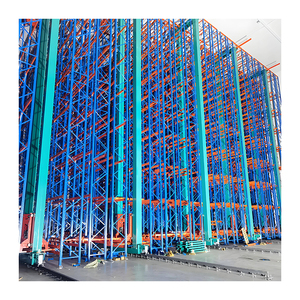
High-Density Pallet Shuttle Racking System Automatic Steel Frame 3000kg Load Capacity
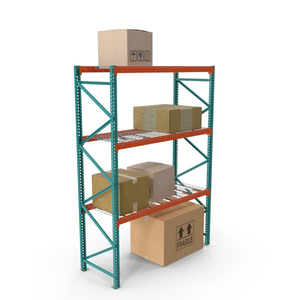
Heavy Duty Steel Beam Pallet Racking System Customizable Stacking 3000kg Load
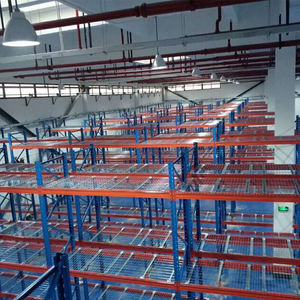
OEM ODM Selective Pallet Racking For Warehouse Storage With Adjustable Beam
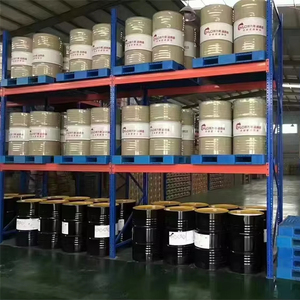
Pallet Racking Warehouse Storage Heavy Duty Shelves Goods Pallet Storage Rack
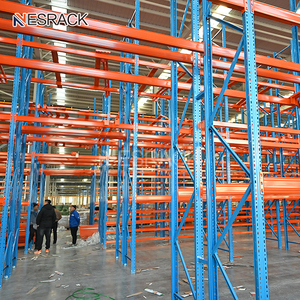
Warehouse Heavy Duty 5 Layer Steel Adjustable Selective Pallet Rack System
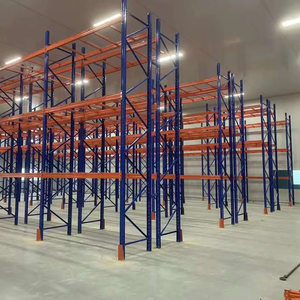
Boltless Heavy Duty Pallet Rack 1000kg/Layer 5-Tier Adjustable Powder Coated Rack
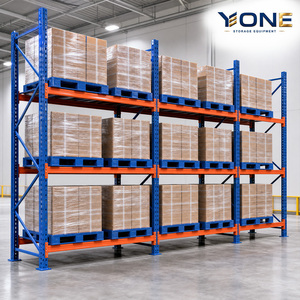
Durable Steel Storage Rack Heavy Duty Selective System For Logistics Solutions
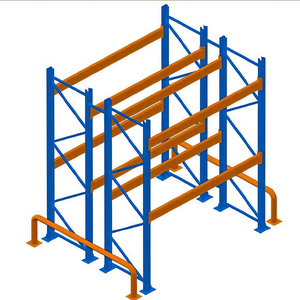
Epoxy Powder Coated Heavy Duty Metal Pallet Racking Custom Dimension Storage
Localized Application Scenarios Across Osaka’s Logistics Waterfront
Osaka represents the commercial heart of Western Japan, where high land costs along Osaka Bay and stringent Building Standard Law (Kenchiku Kijun-hō) guidelines dictate precision warehouse storage execution.
Osaka Nanko & Yumeshima Cold-Chain Terminals
The concentration of cold-chain and temperature-controlled logistics in the Osaka Port district requires high-density shuttle racking and heavy-duty structural steel (Q345B/Q235) capable of maintaining structural elasticity at -25°C to -30°C. Standard steel becomes brittle under sub-zero conditions; our specialized metallurgical formulations prevent impact failure during continuous forklift engagement.
Higashiosaka Advanced Machinery Manufacturing
Higashiosaka houses thousands of precision tooling, die-casting, and automotive parts factories. These facilities rely on custom heavy-duty selective steel beam racking with concentrated point-load tolerances exceeding 3,000 kg per beam tier. By implementing roll-formed boxed uprights with teardrop or boltless interlocking lugs, floor space is optimized while handling high-density steel stamping dies.
Sakai-Senboku & Ibaraki E-Commerce Hubs
With massive fulfillment centres consolidating along the Meishin and Hanshin Expressway corridors, rapid SKU picking and robotic integration are paramount. Multi-tier selective racking and automated shuttle frames allow facilities to expand vertically up to 14 meters, fully integrating with AMR shuttles and AGVs while adhering strictly to regional seismic damping regulations.
Osaka Racking Market: Seismic Compliance & Structural Specifications
Procuring industrial storage racking for Japanese deployment demands an engineering-first evaluation. Learn how local geotechnical factors shape system geometry and metallurgy.
| System Type | Structural Profile | Typical Beam Clear Span | Load Rating (UDL) | Osaka Seismic Design Rating |
|---|---|---|---|---|
| Heavy Duty Shuttle Racking | Enclosed Structural Tube / C-Channel | 1,350 mm – 1,450 mm (Per Bay) | 1,500 – 3,000 kg / pallet | Base Isolation & Top Tie-Bracing (Zone 1) |
| Selective Pallet Racking | Cold Roll-Formed Omega Uprights (90x70 / 120x95) | 2,300 mm – 3,900 mm | 1,000 – 2,500 kg / level | Floor Anchor M16x120 + Heavy Horizontal Bracing |
| Drive-In / Drive-Through | Structural Hot-Rolled Channel SK3000 | Customized Pallet Rails | 1,200 – 2,000 kg / pallet | Top Cross-Ties & Cantilever Spine Reinforcements |
| 5-Layer Industrial Rack | Step Beam Interlocking with Safety Pins | 2,500 mm – 2,700 mm | 800 – 1,500 kg / layer | JIS B 1180 Bolt Tension Integrity Checked |
Seismic Lateral Force (Co Coefficient)
Due to the proximity of the Nankai Trough and the Osaka Plain fault lines, warehouse installations must accommodate structural drift. Racking calculations must factor an increased base shear coefficient (Co ≥ 0.20 to 0.30), utilizing heavy-gauge baseplates and dual-anchor floor tie points into reinforced concrete slabs.
Standard Japanese Pallet Dimensions (T11)
Unlike Western standard GMA pallets (48×40 inch) or European EUR-pallets (1200×800 mm), Japan’s dominant industrial footprint is the JIS T11 standard pallet (1,100×1,100 mm). OEM/ODM export orders require precise beam span engineering (typically 2,500 mm internal clear width for two pallets) to minimize wasted horizontal cubic volume.
Automated Retrofitting Demand
Driven by Japan's "2024 Logistics Problem" and persistent labor shortages across Kansai, logistics managers are retrofitting standard selective racks into semi-automated 4-way pallet shuttle systems. Our modular frames accommodate shuttle rail retrofits without tearing down base upright assemblies.
Why Kansai Importers & General Contractors Rely on Our Facilities
Combining heavy-industry manufacturing capacity with rigorous quality control, our direct factory facilities streamline foreign sourcing with full transparency.
Certified Q235B & Q345B Steel
We source raw carbon steel strictly from verified domestic primary mills, providing full metallurgical mill test certificates (MTC) matching JIS G3101 SS400 standards.
Robotic Continuous Welding
Automated multi-axis robotic welding stations ensure deep penetration, spatter-free structural seams across all beam connector brackets and upright column footplates.
High-Adhesion Powder Coating
Automated 7-stage pre-treatment phosphating wash paired with Gema electrostatic powder coat systems ensures salt-spray resistance exceeding 500 hours, perfect for coastal bays.
Custom OEM/ODM Engineering
Dedicated structural engineers produce full CAD layouts, finite element stress simulations (FEM), and stamped loading calculation reports within 48 hours of intake.
Questions Osaka Logistics & Warehouse Engineers Ask Most
Direct technical answers regarding customs clearance, seismic anchoring, JIS compatibility, and lead-time guarantees for Kansai port deliveries.
We engineer custom beam lengths explicitly for Japanese inventory. A standard bay is designed with an internal span of 2,300 mm to 2,500 mm to securely accommodate two standard T11 pallets with 100 mm safety clearance between pallets and upright frames. Upright frame depths are adjusted to 1,000 mm to provide a safe 50 mm pallet overhang front and rear.
Yes. We supply full finite element analysis (FEA) and structural load calculations confirming compliance with Japanese architectural standard criteria (Building Standard Law). Our documentation verifies shear load, overturning moment, floor slab pressure (kg/cm²), and anchor pull-out ratings under specified seismic lateral loads.
Standard fabrication cycle for OEM/ODM orders ranges between 15 to 25 business days. Cargo is packed in bundled steel cassettes to eliminate container damage during transit. Direct sea freight voyages to the Port of Osaka or Kobe Port typically take 3 to 7 days depending on the departure terminal, ensuring low inventory turnaround times.
For dockside locations in Suminoe-ku, Konohana-ku, or Sakai port facilities exposed to marine humidity, we recommend our thermoset epoxy-polyester architectural powder coating (60–90 microns thickness) with pre-degreasing zinc phosphating, or full hot-dip galvanizing (HDG) to ASTM A123 standards for sub-zero freezer cold-chain rooms.
Equip Your Osaka Warehouse With Engineered Structural Reliability
Connect with our technical storage engineers to review warehouse CAD layouts, receive structural capacity calculations, and obtain a factory-direct container FOB/CIF quotation.
Send an Inquiry