Industrial Catalog
High-Yield Storage Systems Engineered for Uruguay's Distribution Hubs
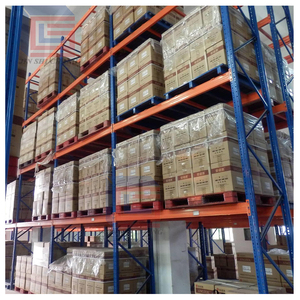
Manufactured under strict ISO 9001 and RMI standards. Structural steel sections treated with anti-corrosive electrostatic powder coats for coastal and humid logistics environments.
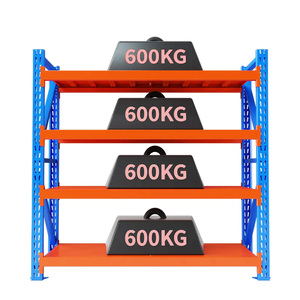
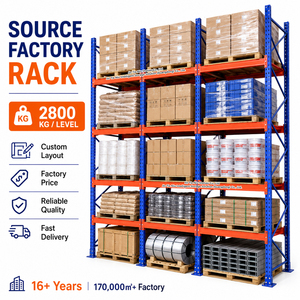
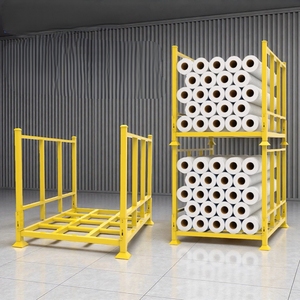
Industrial Stacking
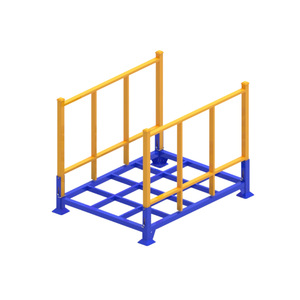
Removable Folding Coiled Material & Industrial Stacking Rack
Explore Specifications →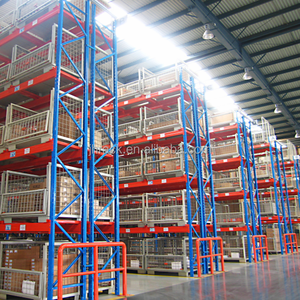
50,000+
Pallet Positions Installed
Q235B / Q355
Certified Structural Steel
100%
RMI / CE / ISO Compliant
4,500 KG
Max Capacity Per Beam Pair
⚙ Strategic Logistical Expansion: Racking Infrastructure Across Uruguayan Free Zones
The Oriental Republic of Uruguay has cemented its status as South America's most stable and sophisticated maritime and transshipment bridge. Under the legal framework of Ley de Zonas Francas (Law 15.921), logistic enclaves such as Zonamerica, Parque de las Ciencias, and the Port of Montevideo have evolved into regional redistribution powerhouses. For industrial storage rack manufacturers and procurement officers, supplying this market requires a granular understanding of strict warehouse efficiency ratios and international safety compliance.
Industrial warehousing space across Montevideo and Canelones demands hyper-optimized cubic density. High land acquisition costs along the Route 101 and Route 8 logistics corridors necessitate storage systems that extend up to 14 meters in clear height. Our engineered industrial racks deploy continuous roll-formed omega uprights with high-frequency hole spacing, allowing Uruguayan supply-chain directors to adjust beam levels in increments of 50mm or 75mm, minimizing wasted vertical headroom and maximizing air-volume monetization.
Furthermore, goods entering Uruguayan free trade perimeters are frequently repackaged, sorted, or combined with local value-added logistics before secondary export into MERCOSUR hubs like São Paulo and Buenos Aires. This dynamic handling frequency requires heavy-duty racking that resists torsional stress, repeated reach-truck impacts, and uneven load distribution while maintaining structural deflection tolerances below 1/200th of the span length under maximum permissible weight.
🛡 Engineering Against the Río de la Plata Maritime Humidity: Cold-Rolled vs. Structural Racks
Operating a logistics center adjacent to the Río de la Plata basin or the Atlantic coastline subjects structural metal to aggressive relative humidity and atmospheric salt fog. In conventional cold-rolled storage racks, poor surface pretreatment triggers rapid oxidation inside the upright cavity, culminating in catastrophic structural collapse under cyclic loading.
Our direct-from-factory manufacturing protocol addresses this localized environmental vulnerability through a multi-stage industrial finishing line:
☐
Pre-Treatment Degreasing
Hot alkaline immersion stripping followed by zinc phosphating converts bare steel surfaces into an inert micro-crystalline barrier, eliminating microscopic oxidation pockets.
⚡
Thermosetting Epoxy Shield
Automated electrostatic spraying applies pure epoxy-polyester copolymer powders cured at 180°C to 200°C, producing a non-porous 70-90 micron coating resilient to humidity.
⚖
Hot-Dip Galvanized Elements
For outdoor staging, coastal yards, and sub-zero blast freezers, complete structural components undergo hot-dip galvanization to EN ISO 1461 specs for 30+ year service life.
❄ Cold-Chain Logistical Adaptation: Beef, Dairy, and Citrus Export Preservation
Uruguay's economic engine is fundamentally tethered to agro-industrial exports—notably frozen grass-fed beef, processed dairy powders (Conaprole), and bulk citrus crops. The refrigeration of these export perishables requires cold-storage and freezer facilities operating continuously between -18°C and -25°C. At these sub-zero extremes, standard structural steel risks brittle fracture due to ductile-to-brittle transition shifts.
Our industrial racks designed for Uruguayan cold storages utilize certified Q355 grade low-alloy high-strength steel, which demonstrates superior Charpy V-notch impact toughness under persistent freezing temperatures. In dense cold-chain environments where refrigeration electrical expenditure per cubic meter is paramount, we deploy three distinct storage configurations:
1. Drive-In & Drive-Through Racking: Delivering maximum volume reduction by eliminating operational aisles. Heavy pallet rails fabricated from heavy structural angles guide forklifts deep into storage lanes, perfectly optimized for uniform batch beef exports with low SKU counts and high volumetric turnover.
2. Gravity Pallet Flow Racks: Utilizing inclined roller beds with calibrated centrifugal speed-controllers to enforce absolute FIFO (First-In, First-Out) stock rotation, essential for dairy products and shelf-life-sensitive pharmaceuticals managed in Canelones distribution hubs.
3. Push-Back Cart Systems: Telescoping steel carts operating on low-profile sloped rails, allowing single-aisle LIFO storage up to 6 pallets deep without necessitating lift trucks entering the racking structure, eliminating rack collision incidents by up to 70%.
🏆 Factory Direct Value: Why Uruguayan Distributors & Contractors Partner With Our Plant
Sourcing directly from our integrated steel manufacturing facility eliminates intermediary agent markups while ensuring direct access to structural engineering documentation, PE-certified calculation packages, and bespoke structural fabrication.
Bespoke Engineering
Every frame configuration is computed via FEA (Finite Element Analysis) factoring specific Uruguayan concrete floor slab PSI ratings and localized soil dynamics.
High-Grade Material
Exclusively procuring high-yield prime steel coils from top-tier mills with certified tensile strength and mill test certificates (MTC) supplied with every lot.
Seismic & Safety Rigor
Designed and manufactured fully compliant with RMI (Rack Manufacturers Institute) MH16.1, CE EN 15512, and ISO 9001 quality management benchmarks.
Turnkey Container Logistics
Optimized maritime nesting packaging guarantees zero sea-transit distortion and lowers freight expenditure per cubic meter directly to Montevideo port.
Procurement Guide
Frequently Asked Questions: Purchasing Industrial Racks in Uruguay
Clear, technical insights to help warehouse developers, supply chain directors, and logistics operators de-risk their storage investments.
✔ What pallet dimensions are standard in Uruguay, and how do they influence beam length?
The Uruguayan industrial market utilizes two predominant pallet dimensions: the standard MERCOSUR/Arlog pallet (1000mm x 1200mm) and the European pallet (800mm x 1200mm). For the 1000x1200mm profile stored with the 1200mm side facing inward, standard clear beam spans of 2300mm (2 pallets) or 3300mm (3 pallets) are deployed with an operational clearance of 75mm-100mm between pallets and upright columns to satisfy Uruguayan labor safety protocols.
✔ Can your factory supply technical calculations for DINACIA or local municipal permits?
Yes. When constructing high-bay racking systems or mezzanine work platforms in Uruguay (particularly within free trade zones or regulated industrial districts in Canelones and Montevideo), local authorities require structural validation. We supply comprehensive engineering packages including load-distribution diagrams, steel mill certificates, anchor pull-out ratings, and beam deflection calculations aligned with Eurocode 3 or ANSI MH16.1.
✔ How do your rack finishes withstand coastal humidity near the Port of Montevideo?
Standard solvent paints peel and deteriorate rapidly under maritime salt air. We utilize an automated four-stage continuous pretreatment line ending with electrostatic thermo-cured epoxy polyester powder coating (average thickness 80µm). For open-air dock operations or severe condensation zones, we produce full hot-dip galvanized upright frames and beams that resist zinc consumption rates for decades.
✔ What is the standard production and oceanic freight timeline to Uruguay?
Manufacturing typically requires 15 to 25 operational days depending on tonnage and bespoke stamping specifications. Direct maritime transit from our specialized shipping terminals to the Terminal Cuenca del Plata (TCP) at the Port of Montevideo averages 32 to 40 days. All steel items are bundled with heavy-duty plastic wrap, protective cardboard corner guards, and steel banding for zero-damage container unshipping.
✔ How is forklift damage mitigated in high-velocity Uruguayan distribution centers?
Forklift impacts account for over 85% of structural racking damage in retail distribution hubs. We engineer our installations with heavy-gauge U-shaped column protectors, wrap-around corner guards anchored independently to the slab, and heavy-duty structural omega floor rails along the bottom chords to isolate accidental dynamic shock from the structural uprights.
✔ Do you offer flexible configurations for combined selective racking and manual picking?
Yes. Many Uruguayan e-commerce and retail distributors deploy hybrid configurations: lower tiers feature steel wire mesh or zinc decking panels for fast, manual carton picking, while upper tiers accommodate full pallet reserves accessible exclusively via counterbalance or reach forklifts. This eliminates duplicate storage footprint within expensive industrial floor plates.
Accelerate Your Warehouse Capacity Across Uruguay
Consult with our structural engineering department today. Receive custom CAD layout drawings, finite capacity calculations, and factory-direct pricing tailored for your Uruguayan operational hub.