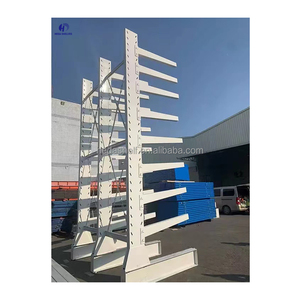
Factory Price Cantilever Material Rack Heavy Duty Cantilever Racks Warehouse Cantilever Racking for Rebar Storage
Long-Stock Timber & Rebar Profiles | High Yield Steel
Technical Specs
Designed to integrate seamlessly across extreme temperature transitions and heavy industrial loading profiles, these systems maximize cubic volume while preserving operational safety.
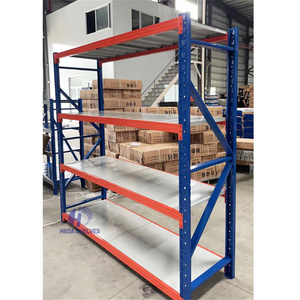
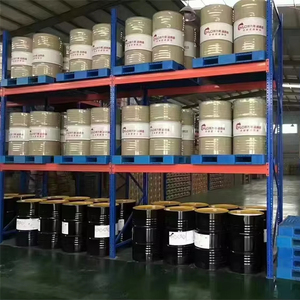
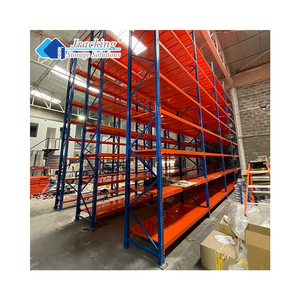
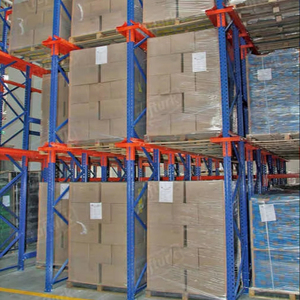
Logistics infrastructure in Finland faces distinct geophysical and economic parameters. With high heating costs during extended sub-zero winters, maximizing cubic building efficiency over horizontal floor expansion is paramount. Warehousing facilities across the Helsinki-Vantaa logistical hub, Tampere's manufacturing corridor, and the marine logistics nodes of Turku and Kotka require high load capacities designed to endure intense cyclic operations.
Engineering Imperative: The combination of heavy industrial raw materials (such as forestry timber and Finnish structural steel) with ultra-dense multi-tier consumer goods distribution demands racking uprights that provide optimal resistance to forklift impact and high torsional stiffness at extreme temperature differentials.
Finland's world-leading forest industries demand cantilever and structural pallet racking systems engineered for exceptional load distributions. Heavy paper rolls and sawn timber bundles impose immense point loads. Our heavy-duty hot-rolled cantilever arms and high-yield steel beams eliminate arm deflection, safeguarding operations across mill-adjacent distribution centers in regions like South Karelia and Central Finland.
Energy conservation in Finnish frozen food depots necessitates maximum pallet density within insulated building footprints. Implementing deep Push-Back and Double-Deep systems minimizes cubic meter thermal loss. We treat steel surfaces with specialized micro-alloy primers and impact-resistant powder coatings to counter brittle failure mechanisms that occur when standard carbon steels operate constantly below -25°C.
Near maritime repair facilities and heavy equipment manufacturing in Vaasa and Rauma, pallet racking serves as buffer storage for oversized cast components, diesel engine blocks, and sub-assemblies. Heavy-duty structural channels with bolted connections ensure that heavy cyclical loading from counterbalanced forklifts does not loosen connections over years of rigorous throughput.
Comparing primary heavy-load architectures against Finnish operational constraints, floor slab considerations, and inventory retrieval dynamics:
| System Architecture | Load Rating (Per Bay) | Space Utilization | Inventory Rotation | Suitability in Finland |
|---|---|---|---|---|
| SK3000® Structural Channel Rack | Up to 22,000 kg | Moderate (Selective) | 100% Direct Selectivity (FIFO) | Best for rough-duty manufacturing, outdoor timber, and high-impact logistics yards. |
| SK2000® Closed Tubular Pallet Rack | Up to 16,500 kg | Moderate to High | Adjustable Beam Levels | Superior torsional resistance; ideal for automated hubs and general Nordic distribution. |
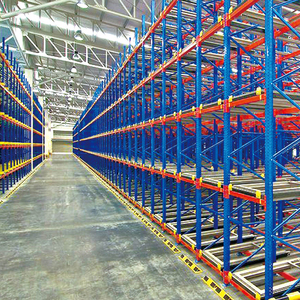
| 5-Layer Heavy Duty Push-Back | Up to 1,500 kg / pallet | Up to 75% Floor Recovery | LIFO Lane Gravity Feed | Optimal for temperature-controlled cold stores needing dense SKU consolidation without entry aisles. |
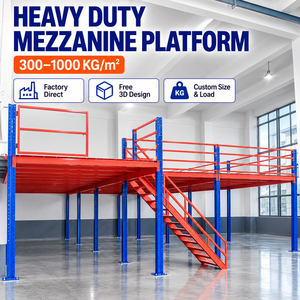
| Heavy Duty Multi-Tier Mezzanine | Up to 1,200 kg / m² | Vertical Doubling (200%) | Manual / AGV Picking | High heating cost mitigation by utilizing entire vertical warehouse clearance in Southern Finland. |
Racking procurement in Northern Europe is undergoing structural changes driven by green transition mandates, robotic automation, and supply chain security resilience.
With aggressive carbon neutrality targets set under Finland's Climate Act, heating large logistics spaces is a major operational expense. Operators are actively decommissioning shallow selective racking in favor of automated storage and retrieval systems (AS/RS) and multi-deep pallet shuttles that decrease required building footprint by up to 40% for the same SKU count.
Autonomous Mobile Robots (AMRs) and automated forklifts are rapidly entering distribution centers in Kerava and Tuusula to compensate for skilled labor shortages. Automated vehicles require stricter manufacturing tolerances (EN 15620 class 300/400). Deflection tolerances across beam spans must remain under 1/200th of the span, necessitating stiffer roll-formed or structural cross-sections.
Finnish workplace safety authorities (Työsuojeluhallinto) and insurance underwriters require annual rack inspections adhering to SFS-EN 15635 standards. Warehouses are shifting away from lightweight, open-lip profile racks toward heavy tubular and hot-rolled structural uprights with column protectors and full-depth rack base shielding to minimize catastrophic impact failures.
Combining over 55 years of American and global engineering rigor with European standard compliance, our direct manufacturing capability ensures zero middleman markups, certified steel sourcing, and tailored structural engineering.
From primary coil uncoiling, roll-forming, automated robotic welding, to electrostatic powder-coating, 100% of production takes place within certified production floors. This eliminates supply chain fragmentation, guaranteeing consistent metallurgical composition and weld integrity across entire high-bay configurations.
Every proposal supplied to Finnish operators is backed by full Finite Element Method (FEM) calculations conforming to EN 15512 and RMI ANSI MH16.1 specifications. We calculate concrete floor slab compression point loadings, anchor bolt shear forces, and thermal contraction allowances for freeze-thaw cycles.
Our experienced export operations manage containerized shipments directly to major Finnish ports (Helsinki Vuosaari, HaminaKotka, Naantali). Systems are packed in modular steel dunnage with anti-corrosion VCI liners to withstand maritime transit, ensuring components arrive load-ready.
Addressing structural certifications, sub-zero installation, and load-bearing parameters.
Consult with our structural engineering team today to review your warehouse CAD layouts, load profiles, and environmental requirements. Obtain factory-direct pricing, engineering calculations, and rapid Nordic delivery schedules.
Get a Quote