Heavy-Duty Storage Systems Engineered for Kenya
From high-turnover dynamic live storage gravity roller systems to structural high-bay frameworks, our factory manufactures export-grade solutions conforming to ISO 9001 and RMI standards for Kenyan logistics operators.
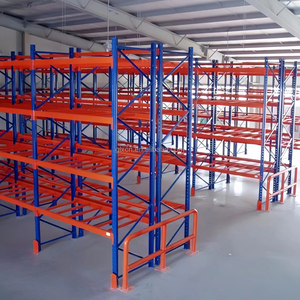
100% Selectivity
High-strength Q235B steel racking with adjustable 75mm/50mm pitch beam connectors. Perfect for multi-SKU retail and distribution facilities across Nairobi.
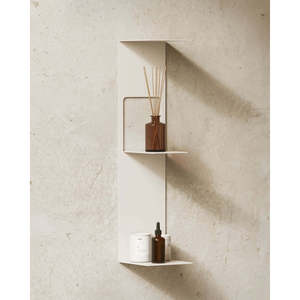
Commercial & Office
Architectural-grade matte powder-coated steel shelving tailored for executive warehouse dispatch offices, inventory archiving, and light technical staging.
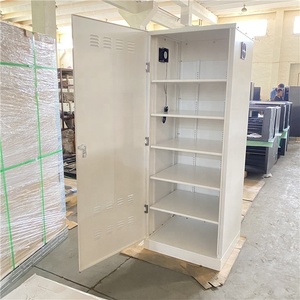
Solar & Microgrid
Weatherproof sealed IP55 rated enclosure for logistics yard solar backup, telecommunication off-grid nodes, and battery energy storage across rural Kenya.
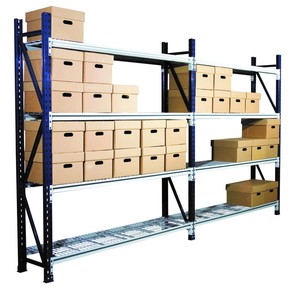
Manual Order Picking
Robust intermediate storage delivering 300kg–800kg per level. Built with roll-formed steel deck panels for e-commerce picking and pharmaceutical staging.
Turnkey Engineering
Complete structural high-bay integration and rack-supported building profiles tailored to clear floor heights up to 28 meters with crane or VNA guidance.
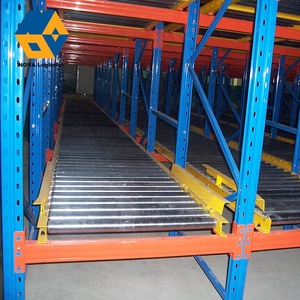
Dynamic FIFO Gravity
Engineered live pallet storage featuring calibrated brake rollers, centrifugal speed retarders, and separation safety stops for strict FIFO FMCG inventories.
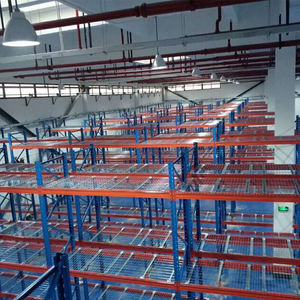
High Bay Structural
Heavy profile uprights exceeding 24,000kg frame capacity, engineered for seismic Rift Valley zone resistance and automated stacker-crane compatibility.
Modular High-Load
Reinforced box beams with safety interlocking pins, offering up to 4,500kg per level. Ideal for heavy beverage kegs, chemical drums, and construction goods.
65%
Floor Space Footprint Reduction compared to conventional selective aisle setups.
100%
Guaranteed First-In, First-Out (FIFO) stock turnover for perishable exports and FMCG.
1,800kg
Maximum dynamic unit load per pallet position supported by heavy-duty steel rollers.
25+ Yrs
Structural design lifecycle under rigorous sub-Saharan high-frequency operations.
Engineering Principles: Heavy-Duty Live Storage (Pallet Flow) Systems
Heavy-duty live storage racking—widely recognized across the intralogistics sector as Pallet Flow Racking or Gravity Roller Racking—is a high-density, dynamic storage methodology engineered specifically around strict First-In, First-Out (FIFO) inventory kinematics. Unlike static storage configurations requiring forklift aisles between every pair of racks, live storage utilizes consolidated blocks of inclined roller tracks where palletized unit loads travel smoothly from the loading (replenishment) face down to the unloading (picking) face driven entirely by natural gravitational potential.
For warehouse directors, supply chain engineers, and third-party logistics (3PL) executives operating in Kenya’s rapidly evolving industrial landscape, integrating live storage delivers a transformative competitive edge. By consolidating circulation pathways into two dedicated access corridors—one for incoming replenishment and one for outgoing retrieval—live storage immediately recovers up to 60% to 70% of unusable floor space, completely eliminates cross-aisle forklift traffic congestion, and guarantees that older inventory is dispatched before newer production runs.
Calibrated Gradient Control
Factory-machined gravity lanes are calibrated precisely at an inclination angle between 3.0% and 3.5%. This provides sufficient gravitational momentum to move 1,500kg pallets smoothly while preventing runaway velocity or sudden stalls along the roller path.
Centrifugal Speed Dampeners
Our heavy-duty tracks incorporate integrated centrifugal brake rollers positioned at designated 1.2-meter intervals. These mechanically retard pallet momentum to a safe, constant rolling speed below 0.3 meters per second, safeguarding fragile goods.
Pallet Separation Separators
At the discharge end, a heavy-duty mechanical load separator isolates the lead pallet from the hydrostatic pressure of the trailing queue. This allows forklift drivers to extract the front pallet cleanly without dangerous back-pressure or binding.
Kinematics & Structural Architecture Comparison
To evaluate how dynamic pallet flow compares structurally and economically to conventional high-density alternatives within Kenyan regional distribution hubs, review our comparative engineering matrix below:
| Storage System Type |
Space Utilization Ratio |
Stock Rotation Logic |
Forklift Aisle Demand |
Throughput Speed |
Optimum Industry Application |
| Heavy-Duty Live Storage (Pallet Flow) |
85% – 90% (Maximum) |
Strict FIFO |
2 Aisles (Feed & Discharge) |
Ultra-High (Simultaneous Putaway/Pick) |
Fresh horticulture, dairy, cold rooms, fast-moving beverage hubs |
| Standard Selective Pallet Racking |
40% – 50% (Low) |
Arbitrary / Manual |
1 Aisle per 2 Rack Rows |
Moderate (Subject to Aisle Traffic) |
Mixed SKU hardware, general bonded storage, spare parts depots |
| Drive-In / Drive-Through Racking |
70% – 80% (High) |
LIFO (Drive-Through can be FIFO) |
1 Aisle (Requires entering bay) |
Low (Forklift risks frame collision) |
Homogeneous bulk raw materials, seasonal agricultural grains |
| Push-Back Trolley / Roller Racking |
70% – 75% (Medium-High) |
Strict LIFO |
1 Operating Front Aisle |
Moderate (Limited to 2–6 pallets deep) |
Medium-turnover consumer goods, buffer holding for dry cargo |
Localized Application Scenarios in Kenya's Logistics Ecosystem
As East Africa’s economic anchor, Kenya serves as the primary multimodal transport gateway connecting the Indian Ocean maritime corridor with the landlinked markets of Uganda, Rwanda, South Sudan, and eastern Democratic Republic of the Congo (DRC). Implementing heavy-duty live storage requires in-depth familiarity with local geographic constraints, civil infrastructure profiles, and the operational demands of distinct commercial nodes:
Nairobi Metropolitan & Mavoko
Warehousing clusters in Industrial Area, Embakasi, Baba Dogo, and Mavoko/Athi River grapple with escalating land acquisition costs. Live storage maximizes vertical cubic capacity, enabling FMCG manufacturers, pharmaceuticals, and e-commerce distribution platforms to operate double-digit pallet depths without purchasing additional acreage.
Naivasha ICD & Flower Corridors
At the Naivasha Inland Container Depot and surrounding Lake Naivasha agricultural centers, export floriculture and horticulture rely on zero-delay cold chains. Live gravity flow systems installed in refrigerated facilities maintain flawless FIFO handling for cut roses, avocado pallets, and fresh produce destined for Jomo Kenyatta International Airport (JKIA) cargo flights.
Mombasa Maritime Gateway
Handling inbound marine container transshipment at Kilindini Harbour, Changamwe, and Miritini requires extreme structural durability. Our marine-grade pre-treatment and electrostatic powder coatings resist high saline relative humidity, serving tea export staging warehouses, bulk FMCG imports, and container freight stations (CFS).
Eldoret & Kisumu Western Hubs
Positioned along the Northern Corridor highway connecting through Malaba and Busia, these hubs handle high-frequency transshipment into the wider East African Community (EAC). Gravity flow lanes serve as high-speed buffer consolidation decks for rapid trailer loading and cross-border transport.
Regional Logistics Trends: Driving Live Storage Demand in Kenya (2025–2030)
The warehousing and material handling landscape in Kenya is transitioning from rudimentary go-downs and manual ground stacking toward world-class, automated, and semi-automated logistics infrastructure. Several critical macro drivers are accelerating the procurement of high-density live storage racking:
The Boom in Grade-A Master-Planned Logistics Parks
The rapid expansion of institutional developments—such as Africa Logistics Properties (ALP) in Tilisi and Northlands, alongside industrial zones in Tatu City Special Economic Zone (SEZ)—has introduced facilities offering 12-meter to 14.5-meter clear internal heights. Industrial tenants can no longer justify low-density floor stacking; they require engineered vertical live storage to maximize volumetric ROI per square meter of leased space.
Cold Chain Formalization & Export Compliance
With the European Union and Middle Eastern export markets imposing strict sanitary and phytosanitary (SPS) regulations on Kenya’s avocado, macadamia, and cut-flower shipments, cold storage facilities must eliminate temperature fluctuations caused by prolonged forklift movement. Live storage minimizes door-open times and interior forklift operation by keeping trucks restricted to loading and unloading corridors.
AfCFTA & Cross-Border Supply Chain Velocity
The implementation of the African Continental Free Trade Area (AfCFTA) has established Nairobi as a super-regional consolidation center. Wholesalers and pharmaceutical distributors manage higher throughput with shorter lead times. Gravitational live flow allows picking teams to fulfill orders up to 45% faster than selective setups by decoupling restocking from dispatch operations.
Why Direct-From-Factory Sourcing Gives Kenyan Buyers a Competitive Edge
Procuring structural industrial warehouse racking across the Indian Ocean requires a dedicated manufacturing partner capable of combining design-phase structural engineering, metallurgical certification, export packaging reliability, and project compliance. Here is how our single-source factory infrastructure supports industrial projects throughout Kenya:
Certified High-Yield Steel
We exclusively utilize prime Q235B and Q355B cold-rolled structural carbon steel, backed by independent metallurgical mill test certificates. Uprights are cold-roll-formed continuously through up to 26 roll passes for uniform structural integrity without residual internal stresses.
Full KEBS PVoC Compliance
Navigating the Kenya Bureau of Standards (KEBS) Pre-Export Verification of Conformity (PVoC) program is essential to avoid port delays. We arrange accredited laboratory testing, third-party inspection (SGS/Bureau Veritas), and issue verified Certificates of Conformity (CoC) prior to ocean dispatch.
Seismic Zone Calculations
Kenya’s Rift Valley (Nakuru, Naivasha, Eldoret) is characterized by active tectonic faults. Our structural engineering department carries out rigorous seismic calculations per EN 15512 and RMI MH16.1, configuring baseplates, heavy anchor bolts, and bracing towers to safeguard your staff and inventory.
Optimal Containerized Packing
To minimize maritime freight costs per pallet location, components are engineered for dense nesting inside 40ft High Cube containers. Upright frames are bundled with protective corrugated profiles, and roller beds are palletized in moisture-barrier film to prevent maritime transit degradation.
Frequently Asked Questions by Kenyan Warehouse Buyers
Technical answers addressing structural planning, local pallet standards, customs processing, and maintenance across sub-Saharan operations.
What concrete floor slab specification is required for heavy live storage racking in Kenya?
Live storage systems exert concentrated dynamic and point loads through their upright baseplates. We recommend a reinforced concrete slab with a minimum compressive strength of Class C25/C30 (25 to 30 MPa), a minimum thickness of 180mm to 200mm, and floor flatness conforming to DIN 18202 Table 3 Line 3 or TR34 FM2. Level floors are essential: deviations in slab incline will distort the calibrated 3.2% roller gradient, causing pallet skewing.
Are live storage roller beds compatible with local Kenyan wooden pallets?
Gravity roller lanes require pallets with intact, continuous bottom runners that sit perpendicular to the rollers. While standard 1200x1000mm and 1200x800mm EUR/ISO wooden or plastic pallets work flawlessly, rough-sawn local timber pallets (such as unplaned blue gum/eucalyptus) with missing bottom boards or protruding nails can jam gravity rollers. If non-standard pallets are used, we install continuous multi-track full-width rollers or equip the lines with metal slave pallets.
How do you handle shipping, customs clearance, and port handling at Mombasa?
We supply shipments under CIF Mombasa, CFR Mombasa, or DDP terms. All export documentation is prepared in accordance with Kenyan customs and KRA requirements, including commercial invoices with HS Codes (7308.90), packing lists, bills of lading, and the mandatory KEBS Certificate of Conformity (CoC) issued via authorized PVoC inspecting agencies. Clients can clear goods through their licensed clearing agent or utilize our logistics partners in Nairobi.
How does dusty or humid ambient weather in Kenya affect roller bed maintenance?
For dry, dusty environments such as Mavoko, Athi River, or inland Rift Valley depots, we use sealed, precision pre-lubricated ball bearings with double labyrinth dust seals (6204-2RS grade) that prevent fine dust ingress from jamming rollers. For coastal Mombasa operations with high ambient salt humidity, rollers are hot-dip galvanized or fabricated from corrosion-resistant zinc-passivated steel to ensure rust-free longevity.
Can live storage racking be installed inside cold rooms and blast freezers in Kenya?
Yes. Live pallet flow is one of the most efficient systems for refrigerated warehouses (-2°C to +4°C) and sub-zero blast freezers (-25°C to -30°C) across Kenya’s meat and dairy supply chains. Because dense pallet consolidation reduces refrigerated cubic air space, power cooling costs drop significantly. For cold installations, we use low-temperature structural steel, specialized synthetic low-viscosity bearing grease, and stainless steel internal brake spring components.
What is the typical manufacturing and ocean shipping lead time from factory to Nairobi?
Standard engineering layout validation and factory fabrication take between 20 to 30 working days, depending on total tonnage. Ocean freight from our primary export terminal to the Port of Mombasa typically requires 18 to 26 days at sea. Customs clearance and inland transit via the Standard Gauge Railway (SGR) freight train from Mombasa to the Nairobi Inland Container Depot (ICD Embakasi) takes an additional 4 to 7 days.
Ready to Optimize Your Kenyan Warehouse Cubic Storage?
Speak directly with our senior intralogistics engineering team. We provide complimentary CAD warehouse layout schematics, dynamic pallet load calculations, and competitive CIF Mombasa export quotations tailored to your operational KPIs.