High-Density Dynamic Storage Systems Available for Exporters & Importers
Verified manufacturing quality featuring precision cold-rolled structural steel, dynamic roller integration, and custom load-bearing capabilities engineered to elevate intralogistics efficiency.
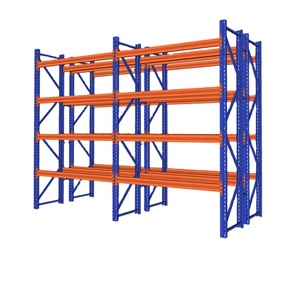
Customized Heavy-Duty 5-Layer Industrial Pallet Rack System Steel Warehouse Storage Shelf with Metal Shelving Industrial Rack
View Specifications →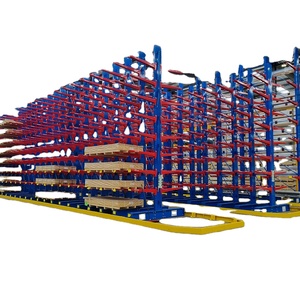
Jracking Cantilever Rack High Standard Warehouse Storage Heavy Duty Racks
View Specifications →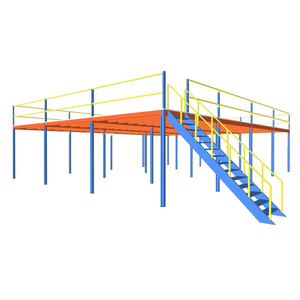
Industrial Steel Mezzanine Floors Powder Coated Warehouse Shelves and Platform Storage Racks For Stacking Racks
View Specifications →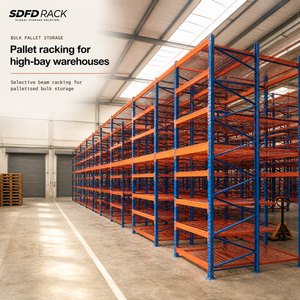
Heavy Duty Steel Drive-In Pallet Rack 5-Layer High-Density Warehouse Storage with Corrosion Protection
View Specifications →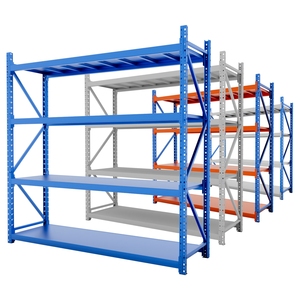
Factory Direct Steel 4Layer/500kg Load Heavy Duty Pallet Rack Bolt Metal Long Span Shelving Industrial Warehouse Storage Racking
View Specifications →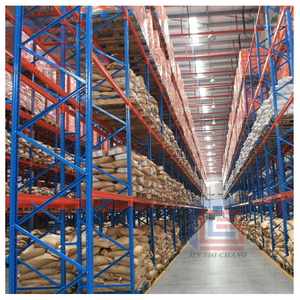
Manufacturer Steel Selective Pallet Rack For Warehouse Storage
View Specifications →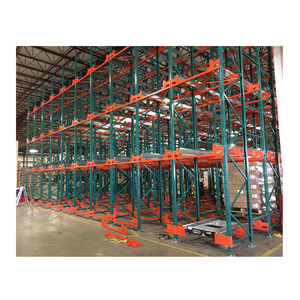
Heavy Duty Automatic Radio Shuttle Rack High Efficiency Automated Pallet Storage Racking System FILO/FIFO
View Specifications →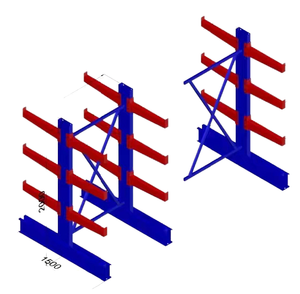
Light Medium Heavy Duty Steel Cantilever Rack 500kg 800kg 1000kg Per Arm Adjustable Storage System for Warehouse
View Specifications →Tailored Gravity Flow Systems for Greater Nagoya & Chubu Manufacturing Hubs
Operating at the heart of Japan's primary industrial belt—encompassing Aichi Prefecture, Komaki, Toyota City, and the Port of Nagoya—requires racking engineering that respects strict spatial ergonomics, inventory turns, and earthquake risk management.
Automotive Tier-1 / Tier-2 Just-In-Time Sequencing
The Nagoya automotive cluster operates on synchronized Kanban timing. Our gravity flow pallet racks feature dynamic skate-wheel and full-width roller beds configured to deliver standardized plastic containers, wire mesh bins, and heavy JIS T11 pallets (1,100 × 1,100 mm) directly to picking faces without forklift cross-interference. The separation of loading aisles and unloading aisles eradicates internal congestion, safeguarding assembly line uptime.
Cold Chain Optimization along Isewangan Expressway
Perishable food logistics and temperature-controlled storage nodes along the Isewangan Expressway and Nagoya Port face rising power costs. Gravity flow systems utilize ambient kinetic gravitational energy, eliminating battery-charging needs within minus 25°C environments. By reducing operating aisles by up to 60%, cubic thermal density is maximized, substantially lowering the refrigeration cost per stored unit load.
Export Buffer Staging at Port of Nagoya Terminals
Handling peak containerized export cargo surges requires dynamic accumulation buffers. Gravity flow lanes serve as high-density accumulation zones for palletized mechanical components, consumer electronics, and ceramics. Speed controllers and entry guides guarantee that heavy loads settle gently against extraction stops, preventing transit fatigue or physical packaging degradation prior to maritime shipping.
Dynamic Flow Dynamics vs. Alternative High-Density Systems
A technical structural comparison evaluating dynamic pallet flow against conventional selective, drive-in, and automated radio shuttle systems in the context of Japanese warehouse cost profiles.
| Evaluation Parameter | Gravity Flow (Pallet Flow) | Drive-In Racking | Radio Shuttle System | Selective Racking |
|---|---|---|---|---|
| Inventory Rotation | Strict First-In, First-Out (FIFO) | Last-In, First-Out (LIFO) | Flexible FIFO or LIFO | Unrestricted Access (Any) |
| Volumetric Efficiency | Up to 80% Cube Utilization | Up to 70% Cube Utilization | Up to 85% Cube Utilization | 40% - 45% Cube Utilization |
| Forklift Aisle Demand | Dedicated 2 Aisles (Load / Unload) | Multiple Shared Drive-In Aisles | Single or Dual Operating Aisles | 1 Aisle Per 2 Storage Rows |
| Mechanical Dependency | Zero Electrical / 100% Gravity Run | Static Steel Framework | Robotic Shuttle + Battery Fleet | Static Steel Framework |
| Labor Travel Reduction | 50% - 65% Reduction in Travel | Moderate (High Transit Time in Rack) | 60% Reduction in Travel | Zero Reduction (Full Travel) |
| Seismic Performance (Japan) | Braked Roller Dampening Absorbs Inertia | High Overturning Risk Under Quakes | Top Bracing Tied Rigidity | Standard Column Anchoring |
Technical Note: For installations situated in Tokai earthquake observation zones, engineering calculations incorporate Japanese Building Standards Law (BSL) horizontal seismic coefficient (k-values up to 0.3g–0.6g) to eliminate catastrophic beam twist and rail displacement.
The 2024 Problem & Why Flow Racking Is Booming in Chubu
The convergence of labor regulatory shifts, high commercial real estate rents, and automated factory adoption has created rapid architectural changes across central Japanese supply chains.
Overcoming the "2024 Truck Driver Constraint"
With Japan's statutory overtime caps on freight vehicle operators strictly enforced, freight loading times at cross-dock hubs around Komaki and Kasugai must drop drastically. Gravity flow systems present continuous pick lines that preload entire truckloads into gravity accumulation buffers. Drivers back into loading bays and turnaround within 15 minutes, directly resolving dispatch dwell-time violations.
Automated Guided Vehicle (AGV & AMR) Integration
Nagoya smart factories are aggressively pairing automated forklifts and autonomous mobile robots (AMRs) with high-density storage. The consistent discharge alignment of gravity flow pick stops provides fixed pickup coordinates for robotic arms and AGV vision systems, removing human variable positioning errors while boosting 24/7 dark-warehouse throughput.
Decarbonization & Green Logistics Mandates
Energy management plans led by the Chubu Bureau of Economy, Trade and Industry require enterprise carbon footprint reductions. Unlike complex electrified carousel or continuous vertical conveyor models, gravity flow racks utilize zero kilowatts to propel 1,500 kg loads down an inclined 3-to-4-degree trajectory. The passive gravitational design ensures maximum operational resiliency and zero carbon overhead.
Why International Buyers & Japanese EPC Firms Partner With Us
Combining world-class steel fabrication expertise with export precision, we manage everything from seismic structural design to on-site assembly guidance.
Certified High-Tensile Steel
Fabricated exclusively with SS400 or equivalent high-tensile hot-rolled channel and cold-rolled closed tubular profiles, ensuring superior torsional resistance against dynamic forklift impact.
Custom Engineered Speed Controllers
Equipped with centrifugal brake rollers calibrated to internal load profiles, maintaining uniform 0.25 m/s travel speeds regardless of load weight variance from 250 kg to 2,000 kg.
Full Japanese JIS/RMI Compliance
Structural validation adhering strictly to JIS B 8923 and international RMI MH16.1 specifications, verified by registered structural engineering finite element calculations.
Complete Export & Logistics Service
Containerized bundling with seaworthy, anti-corrosive VCI packing, consolidated shipping to Port of Nagoya (Meiko), and complete bilingual technical drawing packages for smooth customs clearance.
Frequently Asked Questions by Nagoya Logistics Managers
Expert answers addressing the practical, technical, and regulatory concerns of regional warehouse operators when sourcing industrial pallet flow systems.
Upgrade Your Warehouse Density with Precision Gravity Flow Engineering
Consult with our storage engineering specialists today to receive custom CAD layout schemes, load calculations, and turnkey factory-direct export proposals customized for your Nagoya or global facility.
Contact Us