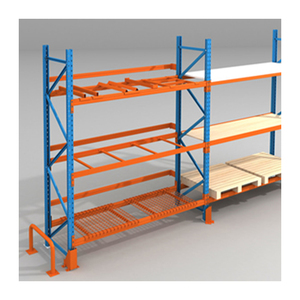
◆ All-Metal Heavy Duty
Dual-Purpose Industrial Warehouse Racking System 5-Layer All Metal Corrosion Protected Heavy Duty Storage Rack
5-Layer Corrosion Shield
Get Catalog
Precision-machined, hot-rolled structural steel, and dual-slot upright configurations tailored for rapid containerized shipping to Umm Qasr Port and nationwide Iraqi project sites.
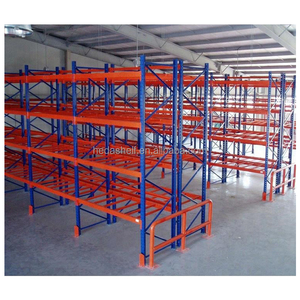
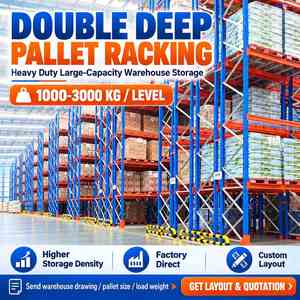
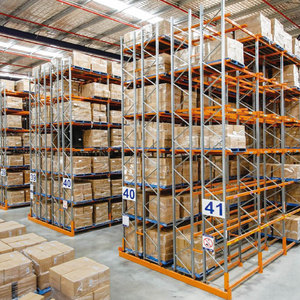
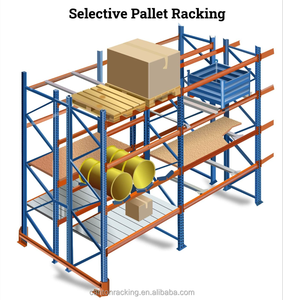
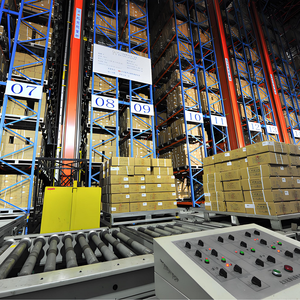
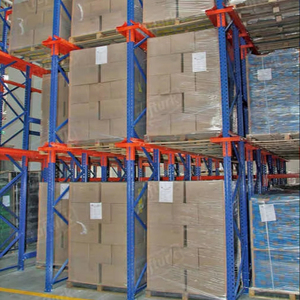
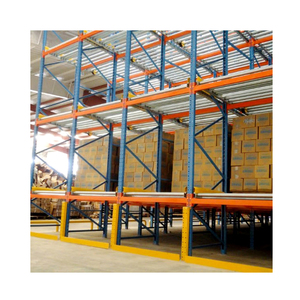
In modern industrial warehouse infrastructure across the Middle East, structural integrity goes beyond mere load bearing. Deploying heavy-duty double deep racking systems throughout Iraq—from the alluvial logistics hubs in Baghdad and high-humidity marine corridors of Basra (Umm Qasr) to the mountainous trade gateways around Erbil and Sulaymaniyah—requires rigorous material science and geotechnical calculation.
Double deep racking increases warehouse storage density by up to 50% to 60% compared to traditional single-selective pallet racking. By storing pallets two-deep in back-to-back configurations, it reduces the required forklift aisles by half. However, this increased vertical and horizontal concentration of mass places severe static and dynamic stress on warehouse floor slabs, upright columns, and beam-locking mechanisms.
Furthermore, structural compliance with RMI ANSI MH16.1 and European EN 15512 standards ensures each upright profile provides exceptional torsional stiffness. Closed tubular uprights or hot-rolled structural steel channel profiles are used specifically to resist heavy forklift mast impact and withstand horizontal kinetic acceleration during loading cycles.
Heavy drilling spares, valve assemblies, and bagged chemicals stored near the North Rumaila and Zubair fields require rigid beam capacities exceeding 4,000 kg per level, alongside zinc-chromate anti-corrosive treatments suited for marine desert air.
High-turnover dry food, packaged beverage, and consumer packaged goods distribution centers along the Abu Ghraib corridor utilize deep-reach pantograph reach trucks to double their SKU batch capacity without acquiring costly new real estate.
In Erbil and Dohuk cold chains, sub-zero energy loss is critical. Double deep configurations maximize the cubic thermal efficiency of refrigerated warehouses (-25°C), drastically lowering cooling utility costs per pallet footprint.
Selecting the optimal material handling system requires evaluating pallet selectivity, warehouse footprint, equipment capital expenditures, and SKU throughput velocity. The engineering comparison below illustrates why double deep systems represent the highest ROI sweet spot for Iraqi logistics operators facing rising land costs.
| System Type | Cubic Space Utilization | Pallet Selectivity | Handling Equipment Required | Floor Slab Stress Factor | Suitable Industry Application |
|---|---|---|---|---|---|
| Double Deep Racking | High (60% - 65%) | 50% Direct Immediate Access | Deep-reach / Pantograph Forklift | Medium to High (Engineered baseplates) | FMCG, Industrial OEM, Cold Stores, Petrochemical |
| Standard Selective Rack | Low to Medium (35% - 40%) | 100% Direct Immediate Access | Standard Counterbalance Forklift | Standard Point Load | High-mix low-volume distribution, retail sorting |
| Drive-In Racking | Very High (75% - 85%) | Low (Last-In, First-Out Only) | Standard Forklift (enters rack) | Concentrated High Base Stress | Single-SKU bulk agricultural goods, raw materials |
| Pallet Flow (Gravity) | Extremely High (70% - 80%) | FIFO Lane by Lane | Standard Mast Counterbalance | Dynamic Inclined Live Load | Perishable food, pharmaceuticals with strict expiry |
Geotechnical & Seismic Considerations for Iraq: Northern Iraq (Erbil, Sulaymaniyah, Nineveh) lies within active seismic fault zones adjacent to the Zagros fold-and-thrust belt. We configure upright frames with enlarged anchor footprints (minimum 150mm × 150mm × 8mm high-grade baseplates) anchored with Hilti/Fischer mechanical expansion bolts. Dynamic finite element modeling (FEM) validates horizontal drift and ductile deformation under simulated seismic ground motion.
The material handling market in Iraq is experiencing a historic pivot from low-ceilinged flat storage and unorganized masonry sheds toward Grade-A automated and high-bay logistics terminals. This transition is propelled by large infrastructure megaprojects, including the Grand Faw Port and the multi-modal Iraq Development Road (Dry Canal) project connecting Basra to Europe via Turkey.
Warehouse rents in Baghdad Industrial Zone and Basra Highway hubs have increased substantially. Operators can no longer afford standard wooden pallet floor stacking. Double deep systems unlock vertical clear heights of up to 12 to 14 meters, cutting storage cost per pallet by over 40%.
As Iraqi logistics firms integrate Warehouse Management Systems (WMS), double deep racks are increasingly customized to support radio-frequency (RF) pallet shuttles running on precision guide rails, eliminating lift-truck transit deep inside rack bays.
Iraq Civil Defense Directorate standards increasingly mandate flue space compliance. Our double deep frame configurations feature engineered longitudinal flue spaces (75mm to 150mm) that accommodate in-rack sprinkler pipework, ensuring rapid permit approvals.
Drawing on more than five decades of industrial rack engineering heritage, our facilities manufacture and deliver robust, reliable storage systems worldwide. Here is why procurement authorities, EPC contractors, and logistics directors across Iraq trust our manufacturing infrastructure:
Every frame, connector bracket, and box beam is calculated using cold-formed and hot-rolled structural engineering guidelines, complete with third-party stamped finite element calculations.
Unlike fragile open-back omega profiles, our heavy tubular and structural steel columns deliver up to 250 times more torsional resistance against forklift fork impacts in high-traffic aisles.
Steel profiles are bundled with heavy polymer dunnage, high-gauge steel banding, and desiccant-packed moisture wrap to ensure zero rust or transit distortion during the sea journey to Umm Qasr Port.
From initial slab analysis and dynamic 3D BIM clash detection to providing detailed bilingual installation manuals and dispatched assembly supervisors, we provide comprehensive project accountability.
Clear, direct answers for procurement directors, logistics engineers, and warehouse operations managers importing industrial steel racking into Iraq.
Double deep racking systems require a specialized material handling vehicle equipped with reach-extension capabilities. The most common solution is a pantograph-reach truck (scissor-reach mechanism) or a lift truck with telescopic deep-reach forks. In high-bay installations exceeding 8 meters, reach trucks equipped with wireless mast-head camera systems and height-preselection controls are strongly recommended to provide Iraqi operators with accurate visibility when loading the secondary (rear) pallet position.
Shipments are dispatched via ocean freight in 40ft High Cube (40HC) or 40ft Open Top (OT) containers directly to Umm Qasr Port (Basra), or via bonded overland transit corridors from Turkish ports (Mersin/Iskenderun) directly into the Kurdistan Region (Ibrahim Khalil border crossing). We provide full documentation: Commercial Invoice attested by Iraqi embassies (where required), Certificate of Origin (COO), Packing Lists with exact piece weight breakdown, and third-party Pre-Shipment Inspection (PSI) certificates (such as BV, SGS, or TUV) to guarantee smooth customs processing under Iraqi tariff regulations.
Yes. Warehouses in Iraq frequently handle mixed pallet standards, including European wooden pallets (800mm × 1200mm EUR/EPAL), ISO standard industrial pallets (1000mm × 1200mm), and heavy custom steel/plastic pallets used in the oil and gas sector (1200mm × 1200mm). As an OEM manufacturer, we engineer frame depths (typically 900mm to 1100mm per rack run) and provide structural pallet support bars (fork entries), heavy wire mesh decking, or solid drop-in steel panels to guarantee safe, unyielding load positioning regardless of pallet footprint variation.
Because double deep racks concentrate multiple tiers of heavy pallet weight across fewer aisles, the floor slab experiences higher localized point loads under upright baseplates. Typically, a reinforced concrete slab with a minimum thickness of 180mm to 250mm and compressive strength of at least C25/30 or C30/37 (minimum 3,500 to 4,000 PSI) is recommended. During project engineering, our structural team calculates exact point-load data so your civil contractor can verify slab capacity, rebar depth, and joint locations before anchoring.
Double deep aisles are tighter, which increases the likelihood of forklift impact at lower upright sections. Our engineering packages include heavy-gauge wrap-around steel column protectors, welded structural reinforcement shoes on the lower 600mm of the front upright, and solid structural channel end-of-aisle guard rails anchored directly into the slab. These energy-absorbing safety additions safeguard upright geometry, preventing localized buckling and costly warehouse shutdowns.
Standard OEM manufacturing lead time ranges from 3 to 5 weeks depending on tonnage and custom color/powder-coating specifications. Ocean transit to Umm Qasr Port generally requires 18 to 28 days depending on the shipping line. For fast-track warehouse projects in Baghdad or Erbil, we offer accelerated fabrication options and pre-assembled upright frames to save valuable installation time on site.