Featured Industrial Storage & Roller Racking Systems
Factory-direct structural steel racks, heavy roller flow tracks, and robotic handling systems manufactured with certified Q235B/Q355B steel, purpose-built for Argentine warehousing operations.
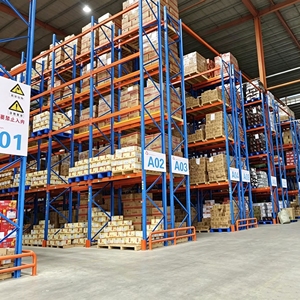
Factory Direct 4 6 8 Layer Warehouse Pallet Rack System High Load Metal Anti-Rust Selective Pallet Racking
- Load Capacity: 1,000 – 4,500 kg/level
- Upright: 80/90/100/120mm Omega profile
- Epoxy electrostatic powder coating
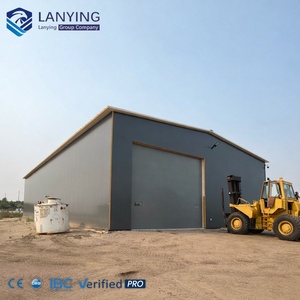
Free Design Prefabricated Steel Factory Industrial Warehouse Buildings
- Primary Frame: Q355B H-Section Steel
- Seismic resistance: Grade 8.0 CIRSOC 103
- Wind Load: Up to 150 km/h rated
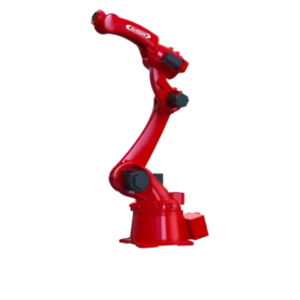
12kg Payload 1465mm Reach 6 Axis Articulated Industrial Robotic Arm For Welding Handling Palletizing Automation Solution
- Repeatability Precision: ±0.05 mm
- Integration: Automated roller line feed
- IP Protection: IP54/IP67 mechanical arm
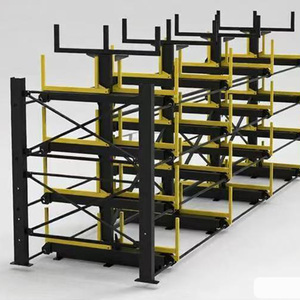
Maxdom Professional Industrial Cantilever Rack Double Sided Metal Arm Storage Racking System For Pipe And Timber
- Arm Load Rating: 400 – 1,800 kg/arm
- Hot-rolled structural I-beam columns
- Single/Double-sided configuration
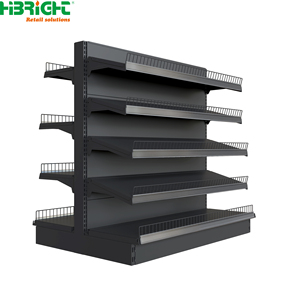
Strategic Supply Partner Metal Storage Rack Seamless Robotic Welding 120kg/Tier Loading Turnkey Shopfitting Solution
- Uniform Distributed Load: 120 kg/tier
- Precision CNC robotic welding
- Rapid modular shelf reconfiguration
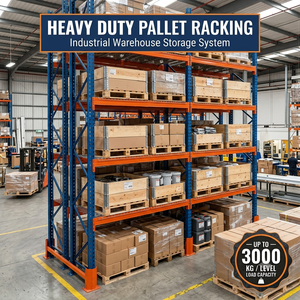
3000kg Heavy Duty Pallet Racking System | Adjustable Steel Beam Warehouse Shelving & Storage Rack
- Load: Tested up to 3,000 kg per level
- Interlocking safety drop-pins
- Roller bed & flow bed compatible
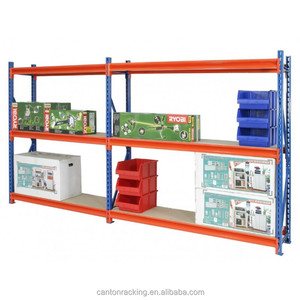
Long Span Shelving Optimizes Space with Durable Storage System. Perfect for Medium-duty Loads in E-commerce
- Capacity: 300 – 800 kg/tier
- High-speed split-case order picking
- Multi-tier mezzanine integration
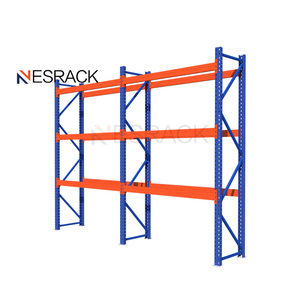
Industrial Steel Heavy Duty Corrosion Protection Stacking Shelving System Pallet Rack Warehouse Shelves Boltless Rack
- Treatment: Hot-dip galvanization ±85μm
- Temp Range: -35°C to +50°C for cold store
- Marine / coastal humidity protection
Structural Mechanics of High-Density Gravity Roller Racking
How advanced pallet flow gravity beds optimize space utilization up to 85% compared to conventional selective racking while assuring strict First-In, First-Out (FIFO) material rotation.
Centrifugal Speed Controller Technology
In deep-lane roller systems (ranging from 5 to 25 pallets deep), controlling terminal pallet velocity is vital to eliminate impact kinetic shock against end-stops. Our engineered pallet flow systems incorporate self-energizing magnetic and centrifugal brake rollers placed at intervals calculated according to pallet weight gradients (300 kg to 1,500 kg). This ensures a steady, regulated descent speed of 0.25 to 0.30 m/s regardless of ambient warehouse temperature.
Structural Beam & Upright Deflection Ratios
Unlike standard static racking, roller racking sustains live dynamic vibration as pallet loads transfer across roller axles. Our engineering follows ANSI MH16.1 and FEM 10.2.02 standard limiting vertical deflection to less than L/200 under maximum design load (SWL). Uprights utilize a closed tubular cold-formed Omega column section with continuous longitudinal welds, delivering 45% greater torsional resistance against side-sway forces induced by moving loads.
Mechanical Pallet Separation Mechanisms
At the unloading discharge face, back-pressure from a train of 10 or 15 trailing pallets can exert upwards of 12,000 kgf against the lead pallet, preventing safe forklift extraction and damaging wooden pallets. Our custom automatic time-delay mechanical pallet separators physically decouple the front pallet from trailing loads until it has been completely lifted clear by the forklift operator, guaranteeing operator safety and zero pallet jamming.
| Storage Racking System Type | Storage Density (%) | Inventory Rotation Logic | Forklift Aisle Demand | Seismic Adaptation (CIRSOC 103) | Typical Argentine Industry Use |
|---|---|---|---|---|---|
| Gravity Roller Pallet Flow | 85% – 90% (Ultra High) | Strict FIFO (First-In, First-Out) | Low (2 dedicated aisles: In/Out) | Integrated base plates & cross-ties | Food, Beverage, Cold Storage, FMCG |
| Selective Pallet Racking | 45% – 55% (Medium) | Random Access / FIFO / LIFO | High (Aisle every rack run) | Heavy base anchor bolts, 200mm slab | General Distribution, 3PL Warehousing |
| Push-Back Roller / Cart | 70% – 80% (High) | LIFO (Last-In, First-Out) | Low (Single frontal operating aisle) | Intermediate bracing struts | Raw Materials, Intermediate Manufacturing |
| Drive-In Pallet Racking | 75% – 85% (High) | LIFO (Limited Selectivity) | Very Low (Forklift enters rack lane) | Requires top & back longitudinal bracing | Seasonal Crops, Bulk Storage, Freezers |
Industrial Application Scenarios Across Argentina
Tailoring Chinese manufacturing precision to the specific geographic, seismic, and economic logistics hubs spanning the Argentine Republic.
E-Commerce, FMCG & Retail Hubs
In Buenos Aires Province logistics corridors (such as Panamericana Highway nodes, Tortuguitas, and Esteban Echeverría), high land lease costs demand maximum cubic density. Our roller flow picking lines and multi-tier mezzanine pick modules handle rapid throughput for regional e-commerce fulfillment and supermarket FMCG hubs, integrating seamlessly with MercadoLibre ecosystem logistics.
Automotive & Machinery Assembly
Serving OEM automotive manufacturers and tier-1 component suppliers in Córdoba's industrial cluster. Custom roller racks facilitate lean Just-in-Time (JIT) and Just-in-Sequence (JIS) line-side feeding. Heavy-duty galvanized roller chutes transfer engine blocks, stamped metal panels, and transmission assemblies directly from staging areas to the production cell.
Agro-Export & Cold Chain Storage
Surrounding the Paraná River agricultural export ports, our corrosion-protected hot-dip galvanized roller racks thrive in high humidity and sub-zero cold chain facilities. Designed to store perishable agro-chemical inputs, frozen beef quarters, and processed dairy products under strict SENASA sanitary regulations with zero rust hazard.
Viticulture & Wine Warehousing
The Cuyo wine belt demands specialized storage for heavy bottled wine pallets and wooden barrels. Located in Argentina's highest seismic hazard territory, all uprights and roller beds supplied to Mendoza comply with INPRES-CIRSOC 103 regulations, utilizing reinforced base plates, seismic tie-beams, and heavy anchoring systems.
Evolution of Warehousing & Supply Chain Infrastructure in Argentina
Critical macroeconomic shifts, bilateral trade realignments, and warehouse modernization drivers shaping Argentine capital expenditure.
Nearshoring & Energy Logistics in Vaca Muerta
The exponential expansion of unconventional oil and gas extraction across the Neuquén Basin (Vaca Muerta) has triggered an unprecedented surge in demand for heavy-duty structural steel racking, pipe cantilevers, and heavy spare-part storage. Chinese industrial racking manufacturers provide high-yield steel structures engineered to withstand abrasive desert dust and massive static loads, supplying turnkey staging warehouses in Añelo and Neuquén Capital.
Shift Towards Semi-Automated Pallet Shuttle & Flow
Escalating labor costs and operational overhead in Argentine metropolitan areas have motivated logistics operators to transition from manual forklift-intensive selective racks toward semi-automated high-density flow systems. Integrating gravity roller channels with 4-way radio shuttles reduces the required forklift fleet by up to 60%, drastically cutting down on fuel consumption, battery replacements, and structural rack collision incidents.
Bilateral Currency Swap & Direct Sourcing
The modernization of the Sino-Argentine financial framework and the expanded utility of Yuan-denominated letters of credit (LC) and bilateral currency arrangements enable Argentine enterprise buyers to circumvent stringent US-dollar availability constraints. Procuring directly from certified Chinese manufacturers yields a 30% to 45% capital cost advantage over European or domestic Argentine steel fabricators.
Why Argentine Supply Chains Choose Our Steel Racking Plant
Decades of dedicated heavy fabrication, certified robotic welding, strict metallurgical analysis, and end-to-end export risk mitigation.
Certified Metallurgy: Q235B & Q355B Steel
We source prime hot-rolled and cold-rolled steel coils exclusively from premier state mills (Baosteel, Shougang). Every batch is accompanied by 3.1 Mill Test Certificates (MTC) verifying yield strength (≥355 MPa for heavy uprights), tensile elongation, and chemical composition (low carbon for ductile weldability), fully compliant with ASTM A1011, EN 10025, and Argentine IRAM standards.
Robotic Automated Welding & Precision Roll Forming
Our facility operates 16 automated multi-station roll-forming lines and 28 6-axis ABB robotic welding cells. Beam end-connectors undergo continuous deep-penetration robotic fillet welding, eliminating human inconsistency and cold laps. Every roll-formed profile undergoes inline laser coordinate scanning with tolerances controlled within ±0.5 mm per 12-meter upright.
Optimized Ocean Export Packaging & Fast Transit
Shipping long-length structural steel 12,000 nautical miles requires specialized nesting packaging. Beams and uprights are bundled with steel strapping, heavy cardboard corner guards, and multi-layer waterproof stretch film, specifically engineered for 40ft HQ container stowage. We coordinate ocean charters directly from Ningbo/Shanghai to the Port of Buenos Aires and Zarate Terminal in 40–45 days.
Frequently Asked Questions by Argentine Procurement Teams
Direct, engineering-backed answers addressing import permits, structural codes, pallet dimensions, and seismic calculations in Argentina.
How do you engineer racking to comply with Argentine INPRES-CIRSOC 103 seismic codes?
Our in-house structural engineering department performs finite element seismic modeling (FEA) based on the specific seismic zoning of your installation site (from Zone 0 in Buenos Aires/Pampa Humeda up to Zone 4 in San Juan and Mendoza). We configure enlarged steel base plates, high-tensile Hilti/Fischer anchor bolts, diagonal bracing towers, and heavy structural back ties to counteract dynamic spectral ground acceleration according to CIRSOC 103 Part II.
Are your roller racking beds compatible with Argentine ARLOG pallet standards?
Yes. While international European pallets measure 800 x 1200 mm, Argentine logistics predominantly operates on the ARLOG standard (1000 x 1200 mm 4-way entry wood pallets, closely mirroring US GMA). Our roller bed track widths, roller wheel pitch (typically 50mm, 75mm, or 100mm), and entry guides are custom-tailored to prevent pallet bottom-board deflection and ensure smooth sliding of both standard ARLOG pallets and Euro-pallets.
What documentation do you provide for customs clearance at Aduana Argentina?
We supply complete import documentation compliant with Dirección General de Aduanas (DGA) and AFIP/ARCA protocols: Certified Commercial Invoice, Detailed Packing List with net/gross weights per bundle, Ocean Bill of Lading (B/L), Certificate of Origin (Form A or Mercosur equivalent), Mill Test Certificates (MTC) proving steel grades, and technical assembly drawings in Spanish for municipal permit filing.
Can we purchase using Chinese Yuan (RMB) to simplify foreign exchange procedures?
Yes. Given Argentina's bilateral currency swap arrangements with China, we regularly accept direct payments in RMB (Renminbi) via cross-border interbank payment systems (CIPS) as well as standard USD Letters of Credit (LC at sight) or T/T remittances. This flexibility facilitates smoother foreign exchange approvals through the Argentine Central Bank (BCRA).
How is structural maintenance and spare part delivery supported in Argentina?
Our systems utilize standardized modular connections with bolt-on components and universal upright pitch increments (50mm / 75mm). We ship 2% to 5% supplementary critical consumables with each project container (brake rollers, speed regulators, frame shims, and safety lock pins). In addition, replacement components are held in bonded warehousing or dispatched via air-freight to Ezeiza International Airport within 5 working days.
What is the lead time from CAD sign-off to delivery at the Port of Buenos Aires?
Standard fabrication cycle for a 500-to-2,000 pallet position project is approximately 20 to 25 business days at our factory. Direct ocean transit from Shanghai or Ningbo to Terminales Río de la Plata (TRP) or Zárate Terminal takes 35 to 42 days. In total, Argentine procurement teams can expect on-site arrival within 60 to 70 calendar days post design approval.
Request an Engineered Roller Racking Layout for Your Argentine Facility
Our engineering department delivers comprehensive 2D/3D CAD layouts, CIRSOC-compliant structural calculations, and factory-direct FOB/CIF price schedules tailored to your pallet metrics and seismic zone within 24 hours.