Engineered Industrial Rack Systems for Victoria's High-Velocity Hubs
Explore our heavy-duty structural steel platforms, automated shuttle modules, and heavy pallet racks fabricated to endure severe forklift cycles and seismic demands across Truganina, Dandenong South, and Altona logistics zones.
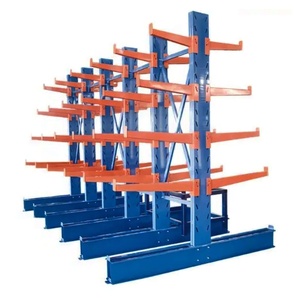
High Quality Cantilever Racks System Storage Racks Q235 Steel Shelves For Pipes Storage
View Technical Specs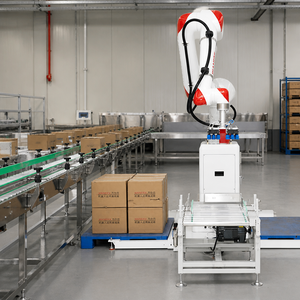
50kg Robotic Palletizing System with Suction Cup End Effector for Conveyor Lines
View Technical Specs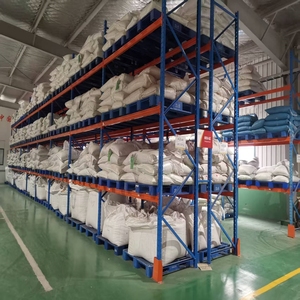
Industrial Storage Racks Custom 5 Layer US Teardrop Pallet Rack Cold Room Storage
View Technical Specs
Customizable Boltless Shelving Double Deep Selective Pallet Racking For Warehousing
View Technical Specs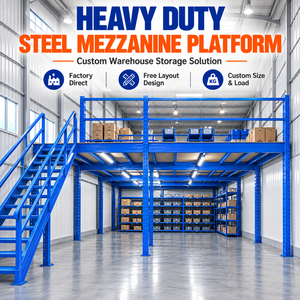
Heavy Duty Steel Mezzanine Floor Rack System With Interlocking Structure
View Technical Specs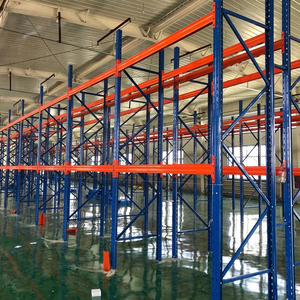
Heavy Duty Selective Pallet Rack Beam Racking System 5 Layer Reinforced Structure
View Technical Specs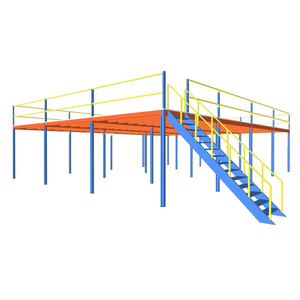
Industrial Steel Mezzanine Floors Powder Coated Warehouse Shelves and Platform
View Technical Specs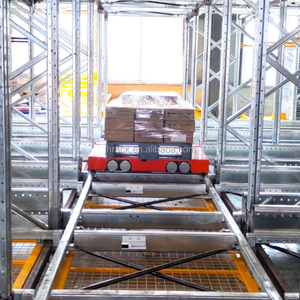
Automatic Autonomous Logistics Warehouse 4 Way Pallet Shuttle Racking System
View Technical SpecsEngineering Structural Integrity for Melbourne’s Modern Logistics Corridors
A comprehensive examination of design tolerances, seismic resistance, steel grade selection, and structural work platforms for Victoria's supply chain infrastructure.
Structural Engineering Baseline: AS 4084-2023 and CE Certification Convergence
In the contemporary Victorian logistics landscape—spanning massive distribution precincts across the Truganina-Ravenhall industrial corridor in the west to the dense manufacturing clusters of Dandenong South, Braeside, and Campbellfield—the specification of heavy-duty pallet racking platforms is governed by tight structural regulations. Warehouse operators can no longer treat steel racking as static shelving; it is an engineered building asset subject to combined axial, bending, and dynamic torsional forces.
As a global manufacturing partner certified under CE EN 1090-2 (Execution of Steel Structures) and compliant with the updated Australian standard AS 4084-2023 (Steel Storage Racking), our factory bridges international precision fabrication with Australian compliance mandates. The revised AS 4084:2023 puts substantial emphasis on ultimate limit state design (ULS), rigorous seismic actions (in accordance with AS 1170.4:2007), second-order structural analysis ($P-\Delta$ and $P-\delta$ effects), and verified beam-to-upright connection performance under repeated cyclic loading.
Our structural work platforms and mezzanine rack support matrices utilize cold-formed high-tensile steel alongside hot-rolled structural steel channels (SK3000 series profile). This structural hybridization delivers supreme impact resilience against standard 2.5-tonne counterbalanced forklifts and automated reach trucks while retaining the modular agility required for high-bay pick towers.
Structural Steel Grades & Chemistry
Every upright, pallet beam, and mezzanine bearer is rolled from certified structural steel—predominantly Q355B (equivalent to AS/NZS 3678 Grade 350) and high-performance cold-rolled Q235B. Guaranteed yield strengths exceeding 355 MPa ensure minimal plastic deformation under peak capacity spikes, while low carbon equivalents enhance welding integrity and ductility in sub-zero cold storage warehouses.
Closed-Tubular vs. Open Uprights
While standard open roll-formed lip uprights are prone to torsional twisting under lateral collision, our factory specializes in closed tubular profiles (SK2000 specification). Closed box geometry provides up to 250% higher torsional rigidity and 44 times greater resistance to rotational buckling, drastically reducing system deflection and long-term repair cycles in high-throughput distribution centres.
AS 1170.4 Seismic Optimization
Greater Melbourne is characterized by variable subgrade soils—ranging from basaltic clays in the western suburbs to sedimentary silts in coastal precincts. We engineer seismic baseplates, anchor embedments, and top-tier cross-bracing frameworks specifically configured to site-specific subsoil class (Class $C_e$ or $D_e$) to prevent dynamic resonance during low-frequency ground acceleration events.
Localized Applications Across Melbourne’s Industrial Hubs
Analyzing operating footprints, material handling automation, and space-optimization strategies tailored to local industrial land constraints.
E-Commerce & 3PL Fulfillment Towers: West Melbourne Corridors
The western logistics spine (Truganina, Derrimut, Ravenhall) is the epicentre of multi-client third-party logistics (3PL) and direct-to-consumer e-commerce fulfillment. Driven by steep industrial land rents, companies are capitalizing on building clearances ranging from 11.5 to 14.6 metres. Our Multi-Tier Pick Modules and Interlocking Mezzanine Platforms transform static cubic volume into 3-story active picking systems. By integrating heavy-duty spiral chutes, powered zero-pressure accumulation (ZPA) roller conveyors, and automated tote buffer staging directly into the rack upright framework, operators achieve 300% density increases without physical warehouse extensions.
Cold Chain & FMCG Fast-Flow: Port Melbourne & South-East Clusters
From meat processing and dairy exporters in Laverton North to pharmaceutical and chilled beverage hubs across Clayton and Dandenong, cold room footprint comes at a 4x premium in refrigeration power. We design and deliver Autonomous 4-Way Pallet Shuttle & High-Density Pushback Racking engineered for -28°C environments. Cold-galvanized framing, hot-dipped structural beams, and self-lubricating cryogenic drive components eliminate thermal expansion binding and maximize cube utilization by reducing wasted forklift access aisles down to a single retrieval face.
| Racking Architecture | Structural Load Rating (AS 4084) | Space Cube Utilization | Forklift / MHE Interface | Optimal Melbourne Industrial Scenario |
|---|---|---|---|---|
| Tubular Selective Pallet Rack | Up to 4,200 kg / beam pair | Medium (40% - 45%) | Standard Counterbalance & Reach Truck | High SKU variety, manufacturing spare parts, wholesale trade stores (Bayswater, Thomastown). |
| Structural Double Deep Rack | Up to 3,600 kg / beam pair | High (55% - 62%) | Pantograph Reach / Deep-Reach Forklifts | FMCG buffer stock, beverage distribution, medium-velocity retail reserves (Truganina, Altona). |
| Multi-Tier Mezzanine Platform | 500 to 1,500 kg / m² UDL | Maximum Vertical Footprint (85%+) | Conveyors, Vertical Goods Lifts, Hand Carts | E-commerce split-case picking, garment sorting, returns processing centers (Tullamarine, Derrimut). |
| 4-Way Autonomous Shuttle AS/RS | 1,500 kg / pallet slot | Ultra-Dense (80% - 88%) | Autonomous AGV, Lifters, Infeed Conveyors | Deep-freeze storage, blast freezers, high-volume seasonal beverage holding (Laverton North, Dandenong). |
Emerging Warehouse & Supply Chain Trends in Victoria (2025–2030)
Anticipating structural demands driven by automated guided vehicles, ESG decarbonization, and Victorian planning approvals.
Autonomous Material Handling & AMR Integration
Victoria's logistics hubs are experiencing an accelerated transition toward Autonomous Mobile Robots (AMRs) and automated side-loaders. This shift demands significantly tighter structural deflection tolerances ($L/300$ down to $L/500$), mirror-flat baseplate installations, and zero-interference upright design to ensure continuous sensor detection and prevent robotic navigational faulting.
Embodied Carbon & Sustainable Steel Procurement
Driven by National Construction Code (NCC) 2022 updates and corporate ESG governance, Victorian project engineers increasingly evaluate the embodied carbon footprint of steel platforms. Our manufacturing plant operates electric arc furnace (EAF) steel sourcing, high-solids eco-friendly powder coating lines, and scrap minimization nesting software that drastically lower carbon emissions per stored tonne.
Rigorous WorkSafe Victoria Rack Inspections
WorkSafe Victoria and Australian occupational safety guidelines demand mandatory annual rack load inspections and documented beam safety lock verifications. Industrial tenants are actively phasing out obsolete uncertified platforms in favor of CE-marked, traceable structural frameworks complete with engineering load compliance plaques and serialized impact guard protections.
Direct Factory Engineering Excellence & Turnkey Victorian Supply
Combining heavy manufacturing capacity, rigorous quality control, and localized project execution.
Single-Source Accountable Fabrication
Unlike middle-tier trading agencies, our modern manufacturing facility encompasses automated cold-roll forming, robotic continuous welding, multi-stage laser tube cutting, and automated electrostatic powder coating under one roof. With an engineering legacy reaching back over 50 years, we exercise end-to-end metallurgical quality control—from mill test certificates (MTC) to ultrasonic weld penetration checks. Every upright frame, support bracket, and platform joist is individually labeled with barcode traceability for swift assembly and compliance verification.
Certified Compliance & Australian Engineering Signs
We supply complete technical calculation books stamped by qualified structural engineers in accordance with AS 4084-2023, AS/NZS 4600 (Cold-formed Steel Structures), and AS 4100 (Steel Structures). We provide comprehensive finite element analysis (FEA) models, connection stiffness curves, and certified safe working load (SWL) signage. Whether your installation involves a standard 6-meter selective bay or an intricate multi-tier automated mezzanine platform, we ensure trouble-free sign-off by Victorian municipal building surveyors.
Melbourne Logistics Buyer FAQs: Engineering, Compliance & Logistics
Direct answers from structural engineers on Australian standards, permits, floor slab capacity, and port logistics.
✓ What are the core changes in AS 4084-2023 affecting Victorian racking?
The revised AS 4084-2023 mandates advanced second-order analysis ($P-\Delta$ and $P-\delta$ effects) rather than approximate first-order approximations, explicit seismic performance factors tied to AS 1170.4, higher safety factors on beam connector safety locks, and stricter tolerances on vertical frame out-of-plumb ($1/500$ maximum under full load).
✓ Does a pallet rack platform mezzanine require a Victorian Building Permit?
Yes. Any industrial work platform or structural mezzanine floor that accommodates personnel, increases usable floor area, or supports automated picking lines requires a Building Permit issued by a private or municipal Building Surveyor under the Victorian Building Regulations 2018. We provide complete engineered structural drawings and computations ready for council submission.
✓ How do we determine if the warehouse concrete slab can carry the platform loads?
A standard 150 mm–200 mm post-tensioned or fiber-reinforced industrial slab in Melbourne generally handles point punch loads between 35 kN and 80 kN per upright baseplate. Our engineering team conducts subgrade back-calculations to design oversized spread baseplates and anchor bolt groupings that ensure concentrated rack loads do not exceed concrete punching shear capacities.
✓ What steel corrosion protection is recommended for Melbourne humidity and coastal zones?
For ambient warehouses, our 70–90 micron thermoset polyester powder coating provides superior scratch and corrosion resistance. For facilities located near Port Melbourne, Western Port Bay, or corrosive cold-storage conditions, we supply pre-galvanized sheet roll-formed uprights or hot-dip galvanized structural steel (ISO 1461) to resist atmospheric oxidation.
✓ What is the standard lead time for factory-direct delivery to the Port of Melbourne?
Production cycles typically run 3 to 4 weeks depending on structural tonnage, followed by sea container transit of approximately 14 to 18 days directly into DP World or Patrick Terminals at the Port of Melbourne. We handle all export packing, steel bundling, flat-rack containerization, and customs export clearances for seamless handling.
✓ How does CE EN 1090-2 certification benefit Australian procurement teams?
CE EN 1090-2 certifies that our factory enforces a certified Factory Production Control (FPC) system, including qualified welding procedures (WPS), non-destructive weld testing (NDT), certified welding personnel, and raw steel mill traceability. This assures Victorian buyers of zero defective welds or sub-par steel substitutions.
✓ Can the pallet rack platform be integrated with existing automated conveyors?
Yes. Our engineering department develops custom header beam spans, clear under-platform spans (up to 9 meters without intermediate posts), conveyor suspension brackets, and precision dynamic floor drop openings tailored to fit systems from Dematic, Swisslog, Vanderlande, or local Australian integrators.
✓ How do you prevent forklift impact failure in high-traffic distribution corridors?
We supply heavy structural wrap-around column protectors, reinforced double-angle upright legs for the bottom 1,200 mm of the frame, heavy-gauge bull-nose end-of-aisle safety barriers anchored with high-tensile trubolts, and structural rub rails that deflect direct reach-truck collisions away from load-bearing elements.
Ready to Engineer Your Melbourne Warehouse Storage Infrastructure?
Connect directly with our senior structural racking engineers. Receive custom CAD layout designs, AS 4084-2023 certified capacity calculations, and comprehensive factory-direct pricing for your facility.
Send an Inquiry