Optimized Intralogistics Architecture for the Austrian Market
A comprehensive technical overview for Austrian supply chain executives, warehouse planners, and procurement directors seeking certified high-performance racking.
Structural Integrity, CE Conformity, and Alpine Operational Environments
Procuring industrial warehouse storage within the Republic of Austria requires strict adherence to European standards, harmonized building product regulations (CPR 305/2011), and regional building requirements. In Austria, racking systems are classified not merely as interior furniture, but as integrated structural elements subject to dynamic seismic assessments under ÖNORM B 4015 and the European standard EN 15512:2020 (Steel static storage systems - Specification of beam-and-upright systems).
Whether operating automated distribution centers along the Vienna-Bratislava logistics corridor, managing precision assembly staging in Upper Austria (Linz-Wels-Steyr industrial cluster), or handling temperature-controlled food distribution in Styria and Tyrol, medium duty and heavy duty racking systems must offer verifiable mechanical resilience. Our CE-certified medium-to-heavy racking systems utilize premium cold-rolled and hot-rolled structural steel with yield strengths verified against EN 10025 structural grades, providing structural deflection limits under 1/200th of span and ultimate impact resistance against industrial MHE (Material Handling Equipment) operations.
Austrian workplace safety mandates established by the General Accident Insurance Institution (AUVA) and the Workplace Ordinance (Arbeitsstättenverordnung - AStV) require continuous protection against accidental dislodgement, localized upright buckling, and beam shearing. By integrating precision beam locks, multi-point welded connector brackets, and seismic floor anchoring with heavy-duty chemical capsules, our manufactured storage systems provide reliable risk mitigation for continuous round-the-clock shift cycles.
High-Efficiency Storage Systems for Austrian Warehousing
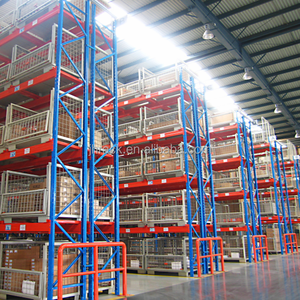
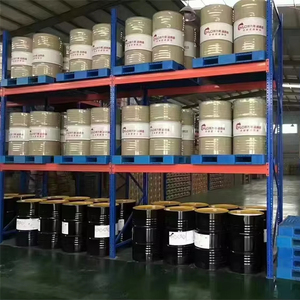
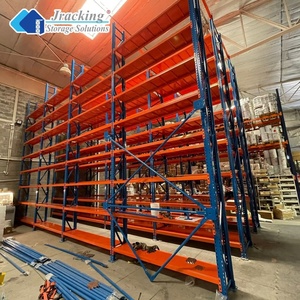
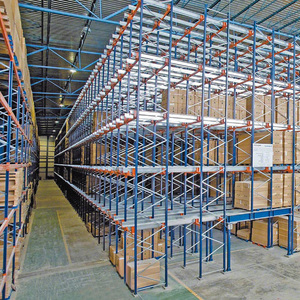
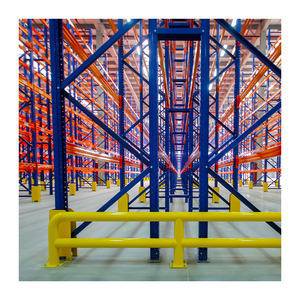
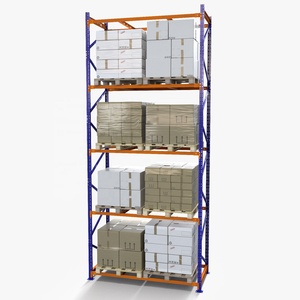
Standardized, modular, and high-density racking configurations fabricated for European pallet standards (EUR 1, EUR 2, EUR 3) and custom industrial containers.
Technical Specification & Austrian Compliance Parameters
Comparing structural configurations, beam profiles, and surface finishes across demanding DACH industrial environments.
| System Category | Material Specification | Load Rating (per level) | Austrian Seismic Class | Surface Treatment | Optimal MHE Match |
|---|---|---|---|---|---|
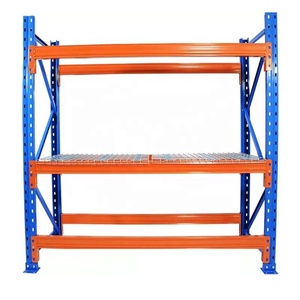
| Selective Medium-Duty | Certified Q235B / S235JR Cold-Formed Steel | 500 kg – 1,500 kg UDL | ÖNORM B 4015 Zone 1–3 | Epoxy Polyester Powder (60-80μm) | Counterbalance & Reach Trucks |
| Heavy-Duty Pallet Racking | Q355B / S355JR High-Tensile Steel | 1,000 kg – 4,000 kg UDL | Engineered for Zone 4 (Alpine Faults) | RAL Electrostatic Coat / Pre-Galvanized | VNA (Very Narrow Aisle) / Standard |
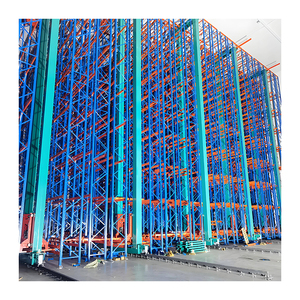
| Radio Shuttle High-Density | Structural Cold-Rolled Omega Uprights | 1,500 kg / pallet slot | Validated Multi-Directional Bracing | Hot-Dip Galvanized / Freezer Powder | Automated Shuttles + High-Reach Mast |
| Multi-Tier Mezzanine Rack | Heavy Tubular & Roll-Formed Channels | 350 kg – 1,000 kg / m² | Integrated Structural Framing | Non-Slip Perforated Steel / Powder | Order Pickers, Vertical Lifts, AGVs |
Strategic Applications Across Austrian Industrial Hubs
Aligning structural storage capabilities with regional supply chain topographies from Graz to Linz and Vienna.
Automotive & Mechatronics Clusters (Styria & Upper Austria)
In the automotive strongholds around Graz (ACstyria cluster) and Linz-Steyr, precision manufacturing depends on just-in-sequence (JIS) parts staging. Our medium-duty racking systems accommodate standardized European VDA KLT containers, heavy stamped press components, and customized die sets. Fitted with heavy-duty drop-in wire decks and structural shelf supports, these racks ensure zero-deflection storage under concentrated static loads.
Central European Hub Logistics (Vienna & Lower Austria)
Operating as the premier eastern gateway for the European Union, the Vienna-Schwechat logistics node requires massive SKU throughput and dense vertical space utilization. Our selective and radio shuttle racking frameworks provide high-bay density exceeding 12 meters clear height, matching the strict fire code clearance mandated by the Austrian Fire Brigade Association (ÖBFV TRVB 151 guideline for high-rack storage sprinkler design).
Cold Chain & Food Distribution (Tyrol, Salzburg & Carinthia)
The Austrian dairy, beverage, and frozen logistics sector demands high performance in sub-zero alpine environments (-25°C to -30°C). Cold steel embrittlement is prevented through European grade steel alloys impact-tested according to ISO 148 Charpy V-notch criteria. Thermal powder finishes and continuous hot-dip galvanized components withstand thermal cycling, aggressive sanitation washdowns, and condensation without blistering or delaminating.
Key Market Drivers Transforming Austrian Warehouses
Navigating land scarcity, Brownfield upgrades, carbon reduction mandates, and automated integration.
1. Extreme Land Scarcity and the Drive for Vertical Maximization
Topographical limitations in the Alpine valleys of Western Austria (Innsbruck, Vorarlberg, Salzburg) and strict municipal zoning ordinances on agricultural preservation have made logistics real estate among the most expensive in Central Europe. Consequently, Austrian operators can no longer expand horizontally. The trend has shifted decisively toward narrow-aisle (VNA) systems, multi-tier mezzanine pick towers, and automated shuttle platforms that exploit every millimeter of vertical clear height up to the ceiling trusses.
2. Mandatory Seismic Engineering Under ÖNORM EN 1998-1 (Eurocode 8)
While historically overlooked in conventional racking bids, seismic verification is now mandatory across many federal states in Austria. Regions such as the Vienna Basin, the Mur-Mürz Valley, and parts of Tyrol exhibit distinct seismic risk profiles under ÖNORM B 4015. CE certified racking exporters must provide Finite Element Analysis (FEA) structural documentation proving that rack frames, upright footplates, and floor anchorage will absorb torsional stress without catastrophic collapse during ground acceleration events.
3. Seamless Transition from Manual to Semi-Automated Fulfillment
Faced with skilled labor shortages in the logistics sector, Austrian enterprises are aggressively retrofitting standard racking with automated guided vehicle (AGV) guide paths, radio shuttle tracks, and sensor-integrated pick modules. Our systems are manufactured with robotic-welded tolerances within ±0.5mm, ensuring smooth robotic navigation, reliable pallet indexing, and trouble-free photoelectric sensor tracking throughout the facility's lifecycle.
Why Enterprise Buyers Partner With Our Engineering Team
Fifty-five years of structural mastery, end-to-end quality control, and rigorous international logistics execution.
In-House Fabrication
Complete control over cold-forming, continuous punching, welding, and surface treatment eliminates quality inconsistencies.
Full CE & Statics File
Every project ships with verified load capacity charts, structural calculation folders, and CE declarations of performance.
Automated Precision
Advanced CNC roll-forming lines guarantee millimeter-accurate upright pitch and uniform beam connector fit across thousands of bays.
Export & DACH Transit
Custom sea-and-rail flat packing ensures pristine transit protection directly to Vienna, Linz, Graz, or Salzburg job sites.
Frequently Asked Questions by Austrian Engineers & Buyers
Essential answers regarding CE certification, inspection cycles, floor loading, and freight forwarding to Austria.