Engineered Intralogistics Solutions for Sri Lanka Warehousing
Heavy-duty structural configurations designed for continuous First-In-First-Out (FIFO) live flows, rapid fulfillment hubs, cold chain integrity, and vertical bulk storage optimization.
1. The Mechanical Physics of Pallet Live Storage Racking: Principles of Controlled Gravity Flow
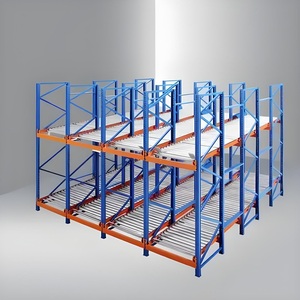
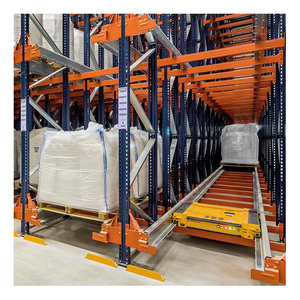
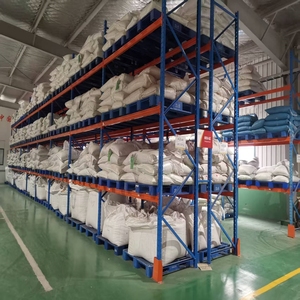
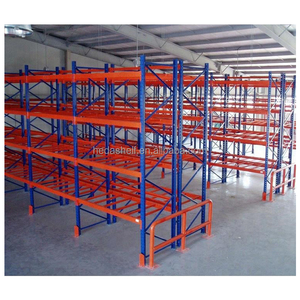
Pallet live storage racking—often classified industrially as Pallet Flow Racking or Gravity Roller Systems—operates on the integration of inclined rolling tracks (typically engineered at an incline grade of 3.0% to 3.8%) within a rigid, multi-tier steel structure. Unlike static selective pallet racking, live storage utilizes natural kinetic energy governed by gravity to transition pallets from the loading (induction) face to the picking (discharge) face along dedicated roller lanes. This layout enforces an immutable, physical First-In, First-Out (FIFO) stock cycle.
To sustain dynamic balance and absolute operational safety across extended lane depths (up to 20 pallets deep), high-precision mechanical braking rollers and centrifugal speed controllers are systematically spaced along the roller beds. These dampening devices restrict acceleration, maintaining a constant velocity of no more than 0.3 meters per second (m/s), regardless of whether the unit load weighs 400 kg or 1,500 kg. When the lead pallet reaches the extraction face, a specialized entry/exit mechanical separator disengages line back-pressure from accumulating trailing pallets. This mechanism completely neutralizes the hydrostatic surge that could otherwise buckle upright frames or destabilize material handling forklifts during unloading maneuvers.
CE Certification Directives & Structural Compliance (EN 15512 / EN 15620)
Structural reliability in high-capacity pallet flow racks requires full adhesion to European Harmonized Standards. Under the EN 15512:2020 structural design standard and CE Machinery & Construction Products Regulations (CPR 305/2011/EU), our live storage fabrications undergo finite element structural stress testing, dynamic cycle validation, and cold-formed profile yield checks. Every profile column uses high-tensile European standard steels (Q355B / S355JR structural channel and cold-rolled strip), engineered to handle dynamic surge loads, torsional displacement under uneven pallet settling, and seismic earth-movement profiles.
2. High-Density System Architectural Trade-Offs
Facility planners in Colombo, Biyagama, and Hambantota frequently balance capital costs, operational throughput, and inventory selectivity. The engineering matrix below evaluates how CE-certified live storage stacks against competing configurations in medium-to-large distribution environments:
| Storage Topology | Stock Rotation Logic | Space Efficiency Index | Aisle Requirements | Forklift Cycle Rate | Maintenance Complexity |
|---|---|---|---|---|---|
| Pallet Live Storage (Flow) | Pure FIFO (Automatic) | Very High (Up to 80%) | 2 Dedicated (Load / Pick) | Continuous / High Velocity | Low (Passive Mechanical Rollers) |
| Radio Shuttle Automation | Flexible (FIFO / LIFO) | Maximum (Up to 85%) | 1 or 2 Aisles | Semi-Automated Batches | Medium-High (Battery, Sensors) |
| Push-Back Racking | Pure LIFO | High (Up to 70%) | 1 Single Access Aisle | Moderate (Cart Resistance) | Low-Medium (Nested Carts) |
| Drive-In Racking | Strict LIFO | High (Up to 75%) | 1 Shared Travel Bay | Slow (Mast Navigation Hazard) | High (Frequent Column Collisions) |
| Double Deep Selective | Mixed LIFO | Medium (55-60%) | Standard Reach Aisle | Moderate (Double Handling) | Low (Standard Uprights & Beams) |
For high-throughput items, short-shelf-life foodstuffs, and fast-moving apparel components, live storage delivers the lowest cycle time per pallet handled. By keeping forklifts strictly outside storage channels, structural upright maintenance drops by up to 80% compared to drive-in bays.
3. Specialized Industrial Use Cases Across Sri Lanka's Modernizing Economy
Sri Lanka's logistics network is evolving rapidly. From bonded transshipment hubs near the Port of Colombo and the Katunayake Free Trade Zone (FTZ) to regional distribution depots in the Western and Southern Provinces, rising land costs and supply chain updates require vertical high-density systems. Live storage racking fits directly into the island's primary industrial sectors:
Apparel & Garments Export
Sri Lanka supplies major global fashion brands through operations in zones like Katunayake, Biyagama, and Seethawaka. Live roller storage provides continuous roll-in/roll-out buffers for fabric rolls, trims, and finished export cartons. This design speeds up sea and air container cross-docking at the Port of Colombo.
FMCG & Retail Groceries
Major local retailers (such as Keells, Cargills Food City, and Arpico) rely on centralized distribution centers to maintain uninterrupted store fulfillment. Live storage creates dedicated multi-tier FIFO picking faces, preventing SKU expiration risks and eliminating stock obsolescence across thousands of product lines.
Cold Chain Logistics & Seafood
Sri Lanka exports prime yellowfin tuna, shrimp, and fruits, which require high energy efficiency in sub-zero freezers (-18°C to -25°C). Because live storage eliminates unused operating aisles, cooling cubage is cut by 40% to 50%, lowering per-pallet electricity costs in warm coastal environments.
Pharmaceuticals & Vaccines
Strict NMRA regulations demand end-to-end batch traceability and strict FIFO management for medical supplies. Live gravity racking creates separate receiving and issuing corridors, preventing accidental staging errors during national healthcare distribution.
Ceylon Tea Packing & Blending
Ceylon tea manufacturing relies on batch blending routines that balance vintage dates, auction schedules, and humidity levels. Live storage tracks provide structured queuing for bulk tea chests and pallets without blocking intermediate inventory.
Port Transshipment & 3PL Hubs
Third-party logistics providers near Kelani River basins and Peliyagoda handle rapid multi-client cross-docking. Live storage lanes serve as direct dynamic transit buffers between inward destuffing containers and regional dispatch vehicles.
4. Macroeconomic Drivers Accelerating Live Storage Adoption in Sri Lanka
The modernization of Sri Lanka’s logistics sector is driven by infrastructure upgrades, land economics, and international trade investments:
Industrial Real Estate Constraints in Western Province
Logistics real estate within 25 kilometers of the Port of Colombo and Bandaranaike International Airport (Katunayake) commands premium lease rates. Facility operators can no longer rely on single-tier static racks or low-density floor stacking. Live storage systems raise volumetric utilization above 75%, unlocking substantial cubic capacity within existing building heights (8 to 14 meters) and delaying expensive land acquisitions.
Supply Chain Digitization & WMS Integration
Sri Lankan enterprise logistics providers are moving toward advanced Warehouse Management Systems (WMS). Live storage systems streamline warehouse operations by creating predictable, physical channel coordinates (Lane ID, Depth Index, Gravity Buffer Stage). Barcode and RFID scans at induction directly update inventory statuses, eliminating lost pallets and reducing labor costs.
Energy Resilience & Green Warehousing Demands
Fluctuating grid power tariffs encourage logistics operators to cut energy usage. Fully automated AS/RS systems require reliable high-voltage backup generators and complex circuitry. In contrast, CE-certified live storage delivers comparable high-density throughput using gravity alone. This passive approach lowers operational power needs and pairs well with rooftop industrial solar installations.
5. Tropicalized Metallurgy: Engineering for Island Humidity & Coastal Salinity
Installing industrial steel racking in coastal Sri Lanka—such as Colombo Harbour, Wattala, Ja-Ela, or Galle—exposes steel structures to warm temperatures, relative humidity exceeding 85%, and airborne marine chlorides (ISO 12944 Corrosivity Categories C3 to C4). Without suitable corrosion protection, standard powder-coated steel risks pinhole blistering, under-film creep, and premature structural failure.
Hot-Dip Galvanizing (HDG)
For unconditioned coastal warehouses and wet cold storage rooms, structural steel uprights, roller tracks, and footplates receive hot-dip galvanizing according to EN ISO 1461. A zinc coating of 65 to 85 μm provides decades of sacrificial cathodic protection against coastal salt air.
Epoxy-Polyester Dual Powder Coat
Controlled-ambient facilities utilize a multi-stage zirconium pre-treatment followed by electrostatically applied thermo-hardened epoxy-polyester powder (80–110 μm). This non-porous finish resists impacts, chemical washdowns, and continuous high humidity without flaking.
Stainless Steel Bearing Assemblies
Gravity roller cartridges incorporate shielded 2RS precision ball bearings lubricated with low-temperature synthetic grease, stainless steel axles, and zinc-passivated steel housings. This assembly prevents internal seizure and roller stalling over millions of pallet cycles.
6. Frequently Asked Questions: Sourcing Live Storage Racking in Sri Lanka
Key technical, regulatory, and logistics answers for engineering teams, procurement managers, and operations directors importing dynamic pallet systems into Sri Lanka.
What pallet types and bottom runner configurations work reliably on gravity flow beds?
Reliable gravity live storage requires continuous, rigid contact with the roller assemblies. Three-runner or five-runner wooden pallets (such as 1200x1000mm UK/Asian industrial formats or 1200x800mm Euro pallets) roll cleanly when runners travel parallel to the track slope. Defective, split, or soft-wood pallets can sag and stop moving along the track.
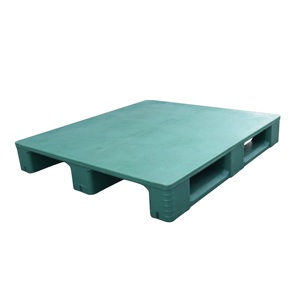
For consistent industrial operations, we recommend 100% Virgin HDPE Reinforced Plastic Pallets with solid steel under-reinforcements. Plastic pallets maintain structural dimensions, do not warp in tropical humidity, and maintain dependable contact with brake rollers across ambient and cold storage facilities.
How does the factory manage freight shipping, customs clearance, and delivery to Colombo?
We routinely export directly to the Port of Colombo (Sri Lanka Ports Authority / CICT) on CIF (Cost, Insurance, and Freight) or FOB terms. Heavy structural uprights, dynamic roller tracks, and cross beams are bundled with steel strapping, anti-corrosion stretch wrap, and foam edge protectors to safeguard surfaces during oceanic shipping.
Shipments include verified packing lists, mill test certificates (EN 10204 3.1), CE declarations of performance, and country-of-origin documentation. These papers ensure smooth customs clearance through the Sri Lanka Customs Department and Board of Investment (BOI) bonded processing centers.
How is pallet descent speed controlled to protect goods from hard impacts?
Descent velocity is governed by internal centrifugal brake rollers spaced at calculated pallet-pitch intervals (typically every two pallet depths). When a pallet rolls over a brake roller, internal flyweights extend outward against a friction drum, converting excess kinetic energy into harmless thermal dissipation.
This self-regulating braking keeps pallet descent below 0.3 m/s. At the discharge face, a heavy-duty mechanical end-stop and pallet separator isolate the front pallet from trailing line loads, allowing forklift operators to retrieve items without risk of rear pallet pressure.
Can live storage racking integrate with existing reach trucks and counterbalanced forklifts?
Yes. Live storage eliminates the need for specialized narrow-aisle (VNA) forklifts or articulating masts inside the rack bays. Induction and extraction take place at standard perimeter aisles. Standard counterbalanced electric forklifts, reach trucks, and electric walkie stackers can service the system easily.
For extraction levels, we often install tilt trays or roller entry guides that help drivers align their forks quickly and reduce accidental mast strikes against lower beams.
What slab foundation specs and seismic calculations are applied for Sri Lankan installations?
Although Sri Lanka sits within a low-to-moderate seismic zone, high concentrated point loads from multi-tier live flow racks require a reinforced concrete slab (typically C25/30 or C30/37 grade) at least 180mm to 250mm thick, with flat surface finishes per DIN 18202 standards.
Our engineering team models footplate anchors, expansion bolts, and upright thickness profiles against base shear limits and wind forces for coastal facilities, providing full structural calculations with our engineering drawings.
7. Direct-from-Factory Engineering & Export Infrastructure
Partnering with an experienced industrial racking exporter ensures your warehouse investments are backed by end-to-end manufacturing oversight, automated roll-forming lines, and strict quality control.
Precision Roll-Forming
Continuous CNC-monitored profile lines punch upright columns and step beams to tight tolerances (±0.5mm), ensuring square, level dynamic lanes.
Certified Metallurgy
Every steel batch is tracked with certified Mill Test Certificates. We verify tensile yield limits, chemical composition, and elongation parameters before fabrication.
Dynamic Rig Testing
Gravity roller beds, brake cylinders, and pallet separators undergo rigorous dynamic cycle tests using customer pallet samples to confirm smooth flow before container packing.
Direct Export Support
Our experienced export teams manage sea container stuffing, provide detailed 3D installation blueprints, and coordinate with Sri Lankan assembly partners for on-site commissioning.
Plan Your Facility's High-Density Layout
Connect with our structural engineers to request custom CAD layout designs, dynamic flow capacity assessments, and a direct CIF Colombo quotation.