Structural Racking Engineering Legacy
RMI ANSI MH16.1 Load Compliance
Maximum High-Density Bay Capacities
Direct OEM Export & Engineering Support
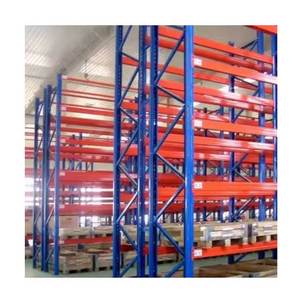
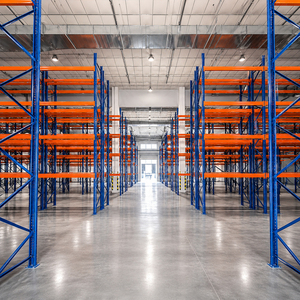
Verified Heavy-Duty Racking & Industrial Shelving Systems
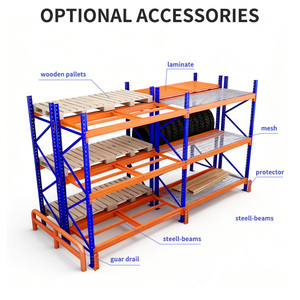
Explore our high-load selective, cantilever, and modular storage configurations built from premium Q235B/Q355B cold-rolled steel and hot-rolled structural channels for demanding warehouse operations.
Single-Source Industrial Manufacturing Excellence
Eliminate supply chain vulnerabilities and structural non-compliance. Our integrated roll-forming, robotic welding, and automated surface treatment plants deliver uncompromised structural integrity from mill coil to anchor installation.
Structural vs. Roll-Formed Hybrid Versatility
We engineer both hot-rolled structural steel channels (ASTM A36/A572 equivalent) for high-impact forklift aisles and precision cold roll-formed closed tubular uprights. This hybrid capability guarantees optimal load-to-cost efficiency without sacrificing impact resistance.
RMI & Global Code Certifications
All load-bearing calculations, seismic bracing nodes, and connection clips strictly conform to RMI ANSI MH16.1, FEM 10.2.02, and EN 15512 specifications. We provide site-specific professional engineer (PE) stamped dynamic load calculations across international jurisdictions.
Robotic Fabrication & Dual-Stage Finishing
Utilizing high-precision multi-spindle laser tube cutters and robotic seam welding cells (AWS D1.1 certified), our structural uprights maintain micro-tolerances necessary for automated high-bay facilities. Treated with eco-compliant electrostatic powder coating or hot-dip galvanization.
Comparative Engineering Specification Matrix
Evaluate mechanical thresholds, floor slab point-load distribution, and access selectivity to align structural designs with material handling fleet parameters.
| Racking System Classification | Structural Metallurgy | Rated Capacity per Level | Forklift Compatibility | Selectivity & Velocity | Seismic Drift Compliance |
|---|---|---|---|---|---|
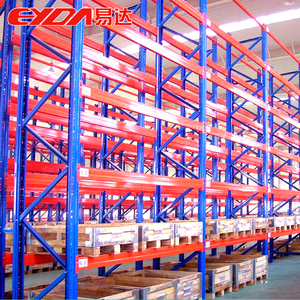
| Selective Pallet Racking | Q235B / Q355B Cold Rolled | 1,000 kg – 4,500 kg (UDL) | Counterbalance, Reach, VNA | 100% Direct Immediate Access | ASCE 7-22 / IBC Seismic Zone 1-4 |
| Structural Channel Racking | ASTM A36 Hot-Rolled Channel | 2,000 kg – 6,000 kg (UDL) | Heavy Forklifts, Drive-In Trucks | Moderate to High Impact Aisle | Severe Impact / Heavy Dynamic Load |
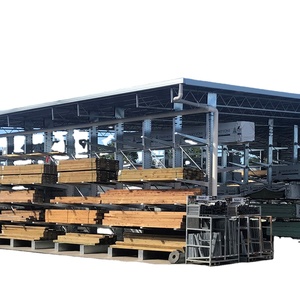
| Heavy Duty Cantilever | Q355B / I-Beam Profile | 500 kg – 3,500 kg per Arm | Side Loader, Multi-Directional | Unobstructed Length (Lumber/Steel) | High Wind & Outdoor Foundations |
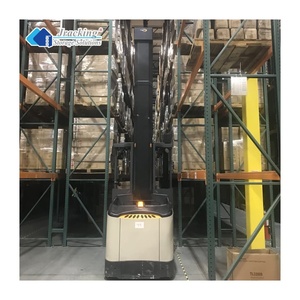
| Automated AS/RS Racking | Cold Drawn High Tensile | 1,500 kg – 3,000 kg (High Deflection) | Stacker Cranes / Shuttles | High-Velocity Automated Cycles | Deflection Limited to L/300 or ±2mm |
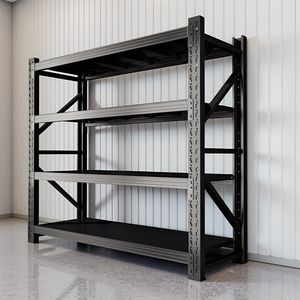
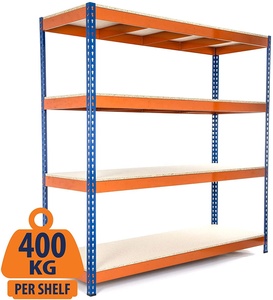
| Industrial Multi-Tier Shelving | Cold-Rolled Sheet + Tube | 300 kg – 800 kg per Shelf | Manual Cart / Vertical Lift (VLM) | High SKU Piece-Picking | Integrated Mezzanine Deck Bracing |
Future Trends in Heavy-Duty Industrial Racking & Storage
Warehouse logistics is pivoting toward extreme cube utilization, robotics integration, and sustainable metallurgy. Modern procurement teams must engineer for the following technological paradigm shifts.
AS/RS Integration & Sub-Millimeter Tolerances
Traditional tolerances (±5mm) cause optical sensor trips on modern Autonomous Mobile Robots (AMRs) and automated crane rails. Next-generation industrial shelving is moving to CNC robotic punch tooling that guarantees cumulative beam-run tolerances under ±1.5mm across 40-meter-tall vertical uprights.
Cold-Chain & Sub-Zero Cryogenic Toughness
With pharmaceutical and frozen perishable volumes expanding, steel formulations must withstand ductile-to-brittle transition temperatures down to -30°C. Modern procurement mandates Charpy V-notch impact testing to ensure beam connectors and anchor footplates avoid catastrophic low-temperature brittle fractures.
Structural Health Monitoring (SHM) & IoT Racks
Future-proof installations incorporate embedded fiber-optic strain sensors and real-time impact detection nodes directly into lower upright columns. Warehouse operations managers receive automated alerts when forklift collisions induce dynamic strain exceeding elastic yield thresholds, preventing progressive collapses.
Decarbonized EAF Green Steel Sourcing
Corporate ESG directives are reshaping warehouse equipment procurement. Industrial manufacturers are transitioning from blast-furnace hot metal to recycled-scrap Electric Arc Furnace (EAF) steel production, reducing embedded carbon emissions per metric ton of rack by up to 60% while maintaining yield strengths above 355 MPa.
Modularity for Dynamic SKU Velocity Reconfiguration
Supply chains require dynamic slotting flexibility. Modern heavy-duty storage uses tool-free teardrop and keyhole connection clips with dual-stage auto-locking safety locks, allowing logistics operators to reconfigure beam elevations in minutes as product volume profiles swing between palletized loads and dense tote picking.
Performance-Based Non-Linear Seismic Engineering
Global building codes increasingly enforce site-specific geotechnical analysis rather than generic table-based seismic factors. Racking manufacturers provide dynamic pushover analysis (FEMA P-695 criteria) to prove base-plate energy dissipation, keeping stored goods secure during high-magnitude ground motions without building envelope collapse.
Industrial Storage Procurement & Engineering FAQs
Clear, actionable answers regarding building code compliance, deflection limits, surface resilience, and project engineering requirements directly from our structural design specialists.
How do structural steel channel racks differ from cold roll-formed tubular racks?
Structural pallet racks are manufactured from hot-rolled C-channel steel shapes with heavy bolted connections, offering superior impact resistance against heavy forklift traffic in aggressive environments like cold storage and drive-in lanes. Roll-formed tubular racks use high-strength strip steel folded into closed tubular or open C-profiles with boltless teardrop clips, delivering higher torsional rigidity per steel pound, lower freight costs, and rapid beam height adjustability for general distribution centers.
What engineering parameters determine permissible beam deflection ratios?
According to RMI ANSI MH16.1 and EN 15512 standards, maximum allowable beam vertical deflection under uniform distributed load (UDL) cannot exceed L/180 (where L is the clear span distance between upright columns). For sensitive automated picking or AS/RS applications, deflection limits are tightened to L/240 or L/300 to ensure optical scanning clearance and prevent pallet hang-ups.
What geotechnical and building data is required for a certified seismic rack calculation?
Procurement teams must provide the site geotechnical soils report (defining Soil Site Class A through F), localized spectral acceleration parameters (Ss and S1 values from USGS or national seismic maps), slab thickness, concrete compressive strength (f'c ≥ 3,000–4,000 psi), and reinforcing rebar layouts to determine expansion or epoxy chemical anchor embedment depths and resist seismic overturning moments.
When should hot-dip galvanization be selected over electrostatic powder coating?
Powder coating provides a durable, cost-effective finish for indoor dry distribution with controlled humidity. Hot-dip galvanization (conforming to ASTM A123 / ISO 1461) is mandatory for outdoor yards, coastal zones with high salt-fog exposure, fertilizer or chemical storage, and unheated sub-zero freezer cold stores where condensation cycles induce rapid galvanic corrosion on raw welded joints.
How do ESFR fire sprinkler clearances dictate top-beam storage heights?
NFPA 13 regulations require a minimum vertical clearance of 18 inches (457 mm) to 36 inches (914 mm) between the top of the highest pallet load and the sprinkler head deflector plate across all warehouse bays. Racking engineering drawings must account for overall unit load heights (including skid, overhang, and product) to ensure flue space compliance without violating code-mandated fire suppression zones.
What are the critical OSHA/HSE inspection and rack maintenance requirements?
OSHA enforces structural safety under Section 5(a)(1) (General Duty Clause). Facilities must perform annual structural rack audits by a qualified engineer, alongside weekly visual inspections by floor supervisors. Any upright column displaying horizontal deflection exceeding 3mm over a 1-meter span or bent beam safety pins must be immediately unloaded and tagged out for structural replacement or certified engineered sleeve repair.
Ready to Engineer Your High-Density Storage Facility?
Connect with our technical design team for complimentary 3D layout simulations, load-capacity calculations, and direct OEM manufacturing quotations tailored to your exact facility footprint.