High-Capacity Industrial Racking & Wire Deck Solutions
Certified industrial warehouse racking, high-strength cold-rolled Q235B steel uprights, stepped wire mesh decking, and heavy-duty logistics equipment engineered for maximum structural reliability.
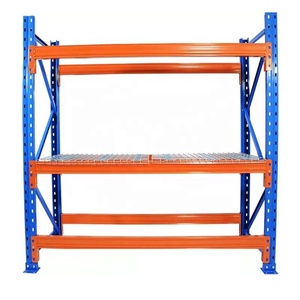
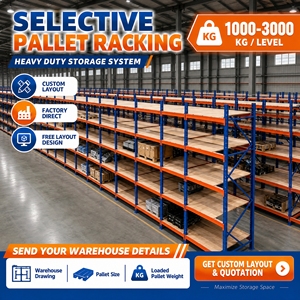
Selective Pallet Racking Heavy Duty Storage System 1000-4000kg/Layer
- Material: Certified Q235B Steel
- Layer Capacity: 1,000 – 4,000 kg/Beam
- Adjustment Pitch: 50mm / 75mm Adjustable
- Finish: Electrostatic Epoxy Powder
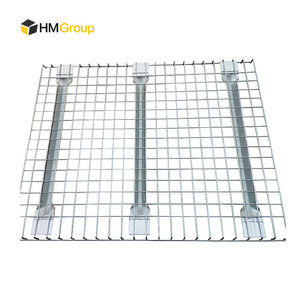
Pallet Racking Durable 880x1100 mm Fireproof Flared Wire Decking
- Dimensions: 880 x 1100 mm (Custom)
- Channel Type: Universal Flared Support
- Wire Gauge: 4.5mm - 6.0mm High Tensile
- Fire Rating: NFPA 13 Compliant Open Mesh
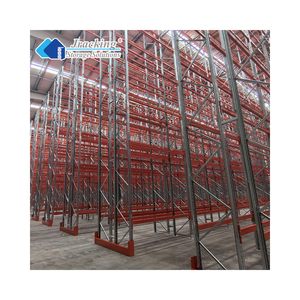
Heavy Duty Selective Pallet Rack System 5-Layer Anti-Corrosion
- Application: Textiles, Carpet, Bulky Goods
- Beam Structure: Roll-Formed Box Beam
- Safety Factor: 1.65 Structural Standard
- Coating: Anti-Corrosion Phosphatized
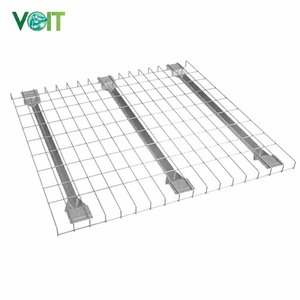
Heavy Duty Pallet Rack Eco-Friendly Wire Mesh Decking
- Grid Spacing: 50x100mm / 50x50mm Mesh
- Support Channels: 3 to 5 Welded Steel Ribs
- UDL Capacity: 1,000 – 1,500 kg Uniform
- Sprinkler Clearance: >70% Free Water Flow
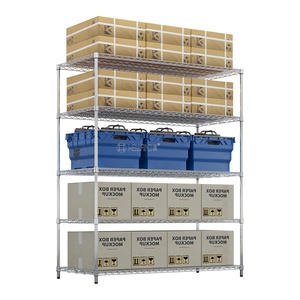
Custom Adjustable 5 Tiers Chrome Industrial Wire Shelving Racks
- Finish: Triple Electroplated Chrome
- Configuration: Toolless Tapered Split Sleeve
- Air Circulation: 100% Ventilated Cleanroom
- Load Index: Up to 350 kg/Shelf Tier
Galvanized Wire Mesh Decking Reinforced Frame 2000kg Load
- Surface: Hot-Dip / Cold Galvanized Zinc
- Reinforcement: Inverted / Step Flange
- Cold Storage: Tested at -30°C Freezer Ready
- Impact Guard: Waterfall Safety Lip Design
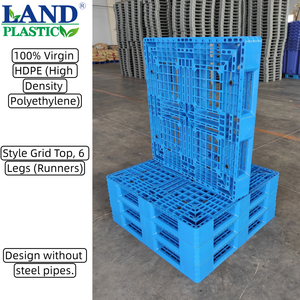
Heavy Duty Euro Plastic Pallet 1100x1100mm 4-Way Entry Grid Deck
- Compatibility: Shuttle, Conveyor & AS/RS
- Dynamic Load: 1,500 kg (Reinforced Tubes)
- Racking Load: 1,200 kg Certified Safety
- Entry Profile: 4-Way Forklift Entry Chamfer
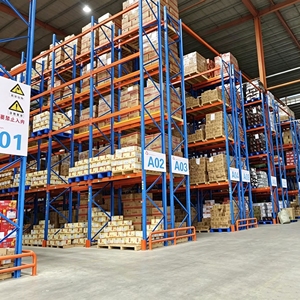
Factory Direct 4-8 Layer High Load Anti-Rust Selective Racking
- Frame Height: Up to 12,000 mm Column
- Welding Standard: AWS D1.1 / Robotic Gas Metal
- Seismic Criteria: Calculated to IBC & Eurocode
- Beam Pin Lock: Heavy Spring Steel Drop Lock
Engineering Specifications: Metallurgy, Load Deflection & Safety Compliance
A rigorous engineering benchmark for supply chain executives, warehouse safety directors, and logistics design engineers sourcing heavy-duty racking infrastructures from China.
Industrial pallet racking and heavy-duty wire mesh decking represent the structural backbone of modern supply chain distribution centers. Specifying storage systems requires deeper technical scrutiny than raw steel tonnage. As an engineering-first manufacturer based in China, we align our fabrication process with rigorous global standards, including the Rack Manufacturers Institute (RMI) ANSI MH16.1 specifications, ANSI MH26.2 for steel wire decking, and European Standard EN 15512.
Certified High-Tensile Metallurgy
We source prime cold-rolled steel coils certified under Q235B (yield strength ≥ 235 MPa, tensile strength up to 510 MPa) and high-performance Q355B (yield strength ≥ 355 MPa). Every batch undergoes ultrasonic non-destructive flaw inspection and optical emission spectrometry to guarantee low carbon equivalents, preventing brittle fracturing under shock loads or sub-zero refrigeration conditions.
Elastic Deflection Limits (L/240 vs L/360)
Under design load conditions, structural integrity depends strictly on serviceability limit state (SLS) deflections. While standard warehouse storage permits maximum vertical deflection of L/240 of the clear span, our robotic roll-formed step beams and tubular structural uprights are precision-engineered to achieve L/360 or lower for seismic-resistant and automated shuttle environments, minimizing mechanical fatigue on automated handling equipment.
NFPA 13 Fire Sprinkler Permeability
Unlike dangerous solid timber or sheet plywood decking that create horizontal barriers against fire suppression systems, our industrial heavy-duty wire mesh decking delivers an open surface area exceeding 70%. This guarantees unrestricted water penetration from Early Suppression Fast Response (ESFR) ceiling sprinklers, meeting strict NFPA 13 guidelines and driving down facility insurance premiums.
| System Architecture | Material Specification | Channel Configuration | Seismic & Impact Rating | Recommended Intralogistics Profile |
|---|---|---|---|---|
| Standard Selective Rack | Roll-formed Q235B cold-rolled steel | Step Beam with Step Channel Mesh | Standard IBC Seismic Zone 1-2 | High SKU selectivity, general logistics, 100% direct pallet access |
| Structural Heavy-Duty Rack | Hot-rolled structural C-channels (ASTM A36/Q355) | Structural Channel Beams & Flared Mesh | Heavy Impact & Seismic Zone 3-4 | Freezer facilities, harsh forklift environments, heavy beverage distribution |
| AS/RS High-Bay Racking | Ultra-precision micro-alloy steel Q355B | Custom Box Beams with Guided Welded Decks | High-Tolerance Dynamic Rigidity | Crane-assisted high bays, crane-to-rack tolerances within ±1.5mm |
| Flared Wire Decking System | 4.5mm - 6.0mm drawn high-carbon steel wire | Universal Flared Channel Over-Flange | ANSI MH26.2 Class 1 Impact Load | Compatible with standard box beams, structural beams, and step beams |
| Inverted Sanitation Decking | Passivated 304 Stainless / Hot-Dip Zinc | Inverted U-Channel (Zero Dust Pocket) | Chemical & Washdown Resilient | Pharmaceutical cleanrooms, USDA food grade, cold meat processing |
Why International Procurement Leaders Partner With Us
Combining heavy industrial steel fabrication infrastructure, robotic automation, and direct supply chain accountability from China to your jobsite.
Vertical In-House Integration
From raw steel slitting, continuous multi-station roll-forming lines, 3D laser tube cutting, to multi-torch automated robotic mesh welding, 100% of fabrication occurs under our direct roof. No outsourced middleman subcontractors, guaranteeing rigid dimensional tolerances and verified metallurgical traceability.
Dual-Finish Corrosion Protection
Equipped with an automated 9-stage pre-treatment line featuring zinc-phosphate conversion and thermosetting electrostatic polyester powder coat (60-80μm thickness). For damp, outdoor, or sub-zero refrigeration warehouses, our industrial Hot-Dip Galvanization baths conform to ASTM A123 / ISO 1461 standards.
FEA Load Simulation & Testing
Our in-house structural engineering department runs full Finite Element Analysis (FEA) under ANSYS for non-linear buckling simulations, seismic moment frame modeling, and localized channel crippling checks before production. Physical static load testing rigs rigorously audit sample runs to failure.
Optimized Export Containerization
Over-the-road freight and trans-oceanic shipping require engineered packaging. We employ custom heavy-gauge steel nesting dunnage, high-tensile steel strapping with corner protection angles, and vapor-corrosion inhibitor (VCI) films to prevent saltwater oxidation, maximizing 40HQ cube utilization.
Emerging Procurement Trends in Warehouse Storage Systems (2025–2030)
Strategic analysis of intralogistics modernization, automation compatibility, and sustainable structural manufacturing reshaping global procurement decisions.
1. Automation-Ready Rigidity (AS/RS & AMR Integration)
The rapid global deployment of Autonomous Mobile Robots (AMRs), automatic 4-way pallet shuttles, and stacker cranes demands unprecedented structural racking tolerances. Procurement is shifting rapidly away from traditional bolted loose-fit racking to continuous closed-tube structural frames and precision laser-aligned uprights where horizontal deflection is tightly bounded (≤ 10mm under peak dynamic shuttle braking).
2. Carbon Border Adjustment Mechanism (CBAM) Compliance
European and North American supply chains increasingly audit Scope 1, 2, and 3 embodied carbon in steel storage assets. Leading Chinese manufacturers are embracing Electric Arc Furnace (EAF) recycled scrap steel and solar-powered finishing facilities. Procurement managers now demand Environmental Product Declarations (EPDs) alongside standard material mill test certificates (MTCs).
3. Cold Chain Surge & Low-Temperature Metallurgy
Driven by rapid e-grocery and biopharmaceutical expansion, deep-freeze logistics (-25°C to -30°C) is the fastest-growing racking niche. Procurement executives are moving away from traditional standard powder coatings toward hot-dip galvanization and micro-alloyed cryogenic steels containing trace titanium and nickel to eliminate low-temperature notch sensitivity and micro-cracking.
Key Procurement & Technical Queries Answered
Real-world insights addressing weight capacity, seismic criteria, channel geometries, and international logistics standards.
► What is the structural difference between Flared Channel and Step Channel wire decking?
Step channel wire decking features an engineered downward lip that nests specifically into the 7/8" or 1-5/8" interior step of roll-formed step beams, providing a flush load surface and preventing longitudinal displacement. Flared channel decking possesses a wide, universal flattened flange at both ends that sits comfortably on box beams, structural C-channel beams, or structural angle rails. For universal beam fleets, flared channels deliver superior operational flexibility, while step channels offer the cleanest flush profile.
► How do you verify Uniformly Distributed Load (UDL) capacities on wire mesh decks?
UDL ratings are verified strictly in compliance with ANSI MH26.2 standards using hydraulic plate press fixtures. A standard 42" x 46" 3-channel deck rated for 2,500 lbs (1,134 kg) UDL requires that the static load be evenly distributed across the entire wire mesh surface. If an application involves point loads, runner footings, or plastic pallet skate wheels, additional structural support channels (up to 4 or 5 ribs per deck) or heavier wire gauge (up to 6.0mm) must be specified to prevent localized wire punching.
► Can Chinese manufactured pallet racking pass local seismic and municipal building permits abroad?
Yes. Our engineering department provides comprehensive structural calculation books stamped with dynamic load coefficients, baseplate shear anchor calculations, and seismic response spectra ($S_s, S_1$) mapped to US IBC (International Building Code) and Eurocode 8. Uprights are designed with enlarged baseplates, heavy anchor hole arrays, and cold-formed bracing geometries that allow your local certified PE (Professional Engineer) to review and validate permit applications swiftly.
► Which surface coating should we choose: Electrostatic Powder Coating or Hot-Dip Galvanizing?
For standard climate-controlled ambient warehouses (10°C to 40°C, relative humidity <70%), electrostatic epoxy-polyester powder coating (60-80 μm) is the most cost-effective solution, offering outstanding abrasion resistance and custom corporate color matching. For outdoor storage, corrosive chemical environments, or deep-freeze cold storage with high condensation cycles, Hot-Dip Galvanization (HDG conforming to ISO 1461 with >55μm zinc layer) is mandatory to eliminate sacrificial edge rusting.
► What parameters are needed to request an accurate engineering quote and layout drawing?
To produce an optimized CAD proposal, our structural team requires: 1) Pallet dimensions (Length × Width × Height including cargo overhang); 2) Maximum gross pallet weight; 3) Clear warehouse ceiling height and overhead obstacle clearances (lighting, sprinklers, HVAC ducts); 4) Concrete floor slab thickness and compressive strength (e.g., 6" slab at 3,000 to 4,000 PSI); 5) Material handling equipment (forklift turning radius, mast lift height, reach truck dimensions); and 6) Target local seismic design category.
► How do you guarantee dimensional consistency and prevent freight damage during ocean transit?
All upright columns and step beams are formed on continuous automated roll-forming lines with inline servo CNC punching, ensuring pitch tolerances within ±0.5mm across a 12-meter profile. Finished goods are bundled using automated strapping machines with corrugated protective paper corners, wooden blocking skids, and heavy-duty shrink film moisture barriers. Critical accessories like beam safety pins and anchors are sealed in wooden crate packaging to eliminate ocean container transit damage.