Featured Warehouse & Pipe Handling Storage Systems
Precision-fabricated utilizing certified Q235B and Q355B structural steel, tailored for bulk pipe storage, coil handling, and heavy-payload industrial logistics.
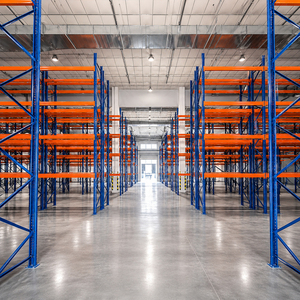
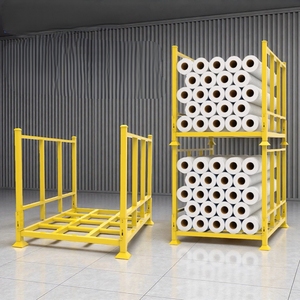
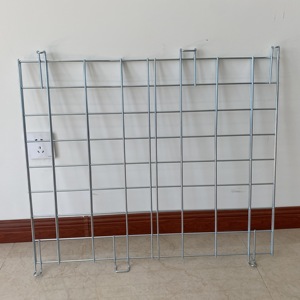
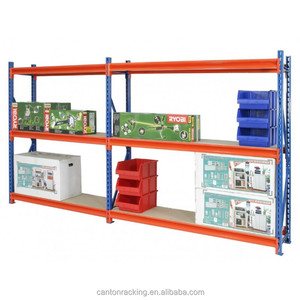
Structural Mechanics & Physics of Heavy-Duty Pipe Storage Racking
Demystifying cantilever load dynamics, rotational deflection thresholds, moment forces, and seismic anchor specifications for long bar stock and steel pipe warehousing.
In modern industrial logistics, the safe storage of structural steel tubing, petroleum drill pipes, Schedule 40/80 carbon piping, extruded aluminum profiles, and PVC conduit represents one of the most mechanically demanding challenges in structural engineering. Unlike standardized unitized pallets that distribute static downward loads across dual load-bearing step beams, pipe and long-stock materials exert extreme point loads, asymmetric cantilever arm bending moments, and dynamic impact spikes during forklift extraction and placement.
A rigorous evaluation of premier Chinese heavy-duty pipe storage racking manufacturers demands an engineering-first examination of material specifications, deflection formulas, and joint geometry. As documented under RMI (Rack Manufacturers Institute) ANSI MH16.1 and European Standard EN 15512, cantilever pipe racking structural integrity hinges on three interconnected structural nodes: the arm-to-column connection, the column upright modulus, and the floor anchor slab reaction.
Cantilever Arm Deflection (L/250 vs L/400)
Under full rated load, cantilever arms experience bending deflection. Superior pipe racking incorporates a deliberate 2° to 3° upward camber angle during arm fabrication. This counteracts elastic strain, ensuring that round pipes naturally roll backward toward the upright column rather than migrating toward the aisle edge under vibration.
Column Moment & Web Buckling Resistance
Structural I-beam profiles (such as hot-rolled HEA, HEB, or Chinese national standard GB/T 11263 H-beams) offer torsional rigidity up to 350% higher than roll-formed sheet steel. Dual-sided cantilever columns must resist combined axial compression ($P$) and bending moment ($M$), requiring precise calculation of the section modulus ($W_x$) and radius of gyration.
Seismic Dissipation & Base Anchor Shear
Pipe bundles act as unfixed distributed masses that can oscillate asynchronously during seismic excitation. Chinese top-tier fabricators perform dynamic modal analysis (Response Spectrum Method), employing extended structural base shoes anchored via heavy chemical wedge anchors (Grade 8.8 / 10.9) to prevent base tear-out and overturning.
Pipe Racking Structural Typologies & Configuration Matrix
Compare mechanical boundaries across roll-formed cantilever racks, structural I-beam frames, crank-out pipe racks, and automated honeycomb cassette systems.
| Racking Architecture | Steel Metallurgy | Rated Arm Load (kg) | Deflection Tolerance | Primary Pipe Cargo Type | Handling Mechanism |
|---|---|---|---|---|---|
| Structural I-Beam Cantilever | Hot-Rolled Q355B / ASTM A572 Gr 50 | 1,500 – 6,000+ kg/arm | $\le L/350$ under full load | Heavy oil pipes, large-bore steel tubes, cast iron | Side-loader, Counterbalance Forklift |
| Roll-Formed Cantilever Rack | Cold-Coiled Q235B / EN S235JR | 300 – 1,200 kg/arm | $\le L/250$ under full load | PVC tubing, light conduit, copper pipe bundles | Standard reach truck, manual loading |
| Crank-Out / Roll-Out Arm Rack | Fabricated Solid Steel & Telescopic Rails | 1,000 – 3,500 kg/level | Zero cantilever droop (supported) | Precision tool steel, stainless bars, hydraulic tubes | Overhead crane with suction/slings (100% selective) |
| Automated Honeycomb AS/RS | Q355B Truss Column + Welded Cassettes | 2,000 – 5,000 kg/cassette | Engineered per DIN 15018 | High-throughput pipe manufacturing & aerospace alloys | Statically driven Stacker Crane / Shuttle Crane |
| Pigeon Hole / Vertical Pipe Rack | Welded Angle Iron & Structural Channel | 500 – 1,500 kg/bay | Negligible (vertical compression) | Short-run plumbing tubes, maintenance pipe offcuts | Manual retrieval with vertical safety retaining bar |
Future Procurement Trends in Heavy Pipe Storage Engineering
How automation, intelligent IoT strain-gauging, green metallurgy, and robotic heavy handling are redefining Chinese manufacturing outputs for international supply chains.
Integration with Autonomous Heavy-Tonnage Shuttles
Traditional cantilever storage has long been restricted to manual side-loaders and 4-way multi-directional forklifts. Leading Chinese racking manufacturers are redesigning arm base plates with embedded magnetic guidance tracks and LiDAR reflectors to support 5-ton capacity Autonomous Mobile Robots (AMRs) capable of picking 12-meter tube bundles without human intervention.
Fiber-Optic & Wireless Real-Time Strain Monitoring
The integration of wireless micro-strain sensors into critical cantilever base welds is eliminating structural failure risks in heavy pipe yards. Overloading and accidental forklift impacts are instantly transmitted to cloud-based warehouse execution systems (WES), triggering automated structural alerts before plastic deformation manifests.
Hot-Dip Galvanizing (HDG) per ISO 1461 for Extreme Yards
Outdoor steel tube yards encounter harsh marine and desert weathering. Sourcing trends show a 42% pivot from traditional electrostatic epoxy powder coatings to continuous hot-dip zinc baths delivering $>85\mu\text{m}$ coating thickness, ensuring 30+ year maintenance-free lifecycle in C4/C5 coastal environments.
EPD-Certified Green Steel & Cold-Chain Pipe Staging
Global procurement protocols increasingly evaluate carbon accounting via Environmental Product Declarations (EPD). Tier-1 Chinese mills are shifting to Electric Arc Furnace (EAF) scrap recycling processes, providing verified lower embedded carbon profiles for international infrastructure developers seeking LEED-certified warehousing.
Why Direct-from-Factory Chinese Heavy Racking Delivers Strategic Advantage
Combining 55+ years of combined institutional engineering pedigree, multi-axis automated CNC production, and stringent end-to-end quality validation.
Navigating cross-border procurement for industrial racking systems requires transparent engineering credentials. Our partner manufacturing complexes represent the technological apex of Chinese structural steel fabrication, bridging high-volume cost efficiency with Western safety protocols:
- Full In-House Metallurgy Control: Raw structural plates are procured directly from prime domestic state-owned mills (Baosteel, Ansteel) with complete Mill Test Certificates (MTC EN 10204 3.1), verifying tensile strength, yield point, and Charpy V-notch impact toughness down to -20°C for cold-storage installations.
- Automated Submerged-Arc & Robotic Welding: Column-to-base flange joints and arm connector collars are welded using multi-axis OTC robotic welding cells, eliminating weld porosity, undercut, and cold lap defects common to manual welding operations.
- Custom Structural FEA Modeling: Every custom racking layout undergoes dynamic 3D Finite Element Analysis (ANSYS & SolidWorks Simulation) to simulate full-load deflection, eccentric forklift impacts, and geographic seismic parameters (PGA up to 0.4g).
- Pre-Assembled Export Trial Fits: Uprights, horizontal bracings, and adjustable cantilever arm connectors undergo dry-assembly verification on precision laser jigs prior to surface blasting and packaging, ensuring zero on-site bolt misalignment during overseas erection.
- Turnkey Container Flat-Packing: Specialized heavy-gauge dunnage, protective corner buffers, and moisture-absorbing vapor inhibitors prevent transit deformation inside ocean containers, optimizing 40ft High Cube freight loading volume by up to 28%.
Frequently Asked Questions by Industrial Sourcing Teams
Technical, logistical, and structural answers to simplify cross-border sourcing of heavy-duty pipe and profile racking.
The decision hinges on weight per level, forklift impact exposure, and warehouse environment. If your pipe bundles weigh over 1,500 kg per arm level, or if equipment traffic is intense (frequent impact risk), hot-rolled structural I-beam (such as Q355B structural steel) is mandatory due to its robust flange thickness and resistance to torsional twisting. Roll-formed racking is optimal for light-to-medium pipes, plastic tubing, or manual picking environments below 1,000 kg per arm.
All heavy-duty pipe arms must be equipped with removable or fixed front pipe stops (retaining pins), ranging from 100mm to 300mm in height. Furthermore, precision-fabricated cantilever arms feature an integrated upward incline (camber) of 2° to 3°. For loose pipes of varying diameters, curved arm saddles or bolt-on cradle attachments can be engineered to prevent lateral rolling and product scratching.
Provide: 1) Minimum, average, and maximum pipe bundle lengths, outside diameters, and total unit weights; 2) Loading method (standard forklift, multi-directional side-loader, or overhead crane); 3) Available building clear height and slab specification (concrete thickness, compressive strength, rebar layout); 4) Seismic zone classification or facility location zip code; 5) Environmental constraints (indoor ambient, cold storage, outdoor corrosive yard).
Tier-1 manufacturers operate internal structural engineering teams capable of issuing third-party PE (Professional Engineer) stamped structural calculations. These verify section modulus, axial compression, slenderness ratio, and moment capacity under regional codes (RMI ANSI MH16.1 for North America, EN 15512 / FEM 10.2.02 for the European Union, and AS 4084 for Australasia), backed by mechanical destructive load test reports.
Custom heavy cantilever and pipe racking production averages 4 to 6 weeks from final CAD approval. Components are packed with structural steel spacer frames, edge guard angle protectors, high-tensile steel strapping, and waterproof poly-wrapping. Upright columns and long arms are packed flat to fit standard 40ft HQ or 45ft shipping containers without overhang.
Yes. Roof-supporting cantilever systems (cantilever sheds) utilize extended upright columns with welded pitch trusses to support corrugated metal roofing. In outdoor applications, our engineering accounts for regional wind load (per ASCE 7 / Eurocode 1) and ground snow load, and all steel members are hot-dip galvanized per ISO 1461 to prevent corrosion.
Request an Engineered Pipe Racking Layout & Project Estimate
Connect directly with our structural engineering team for 3D layout modeling, FEA verification, and comprehensive DDP/FOB pricing tailored to your facility parameters.