Engineered Heavy-Duty Bulk Storage Systems
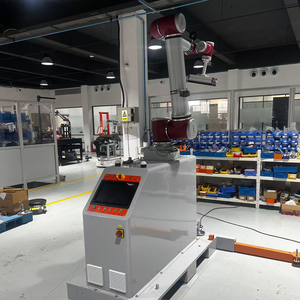
JAKA 20KG Automation Robot Palletizer & End-of-Line Stacker
- 20kg Payload Capacity
- High-Precision In-Aisle Stacking
- Custom End-Effector Compatible
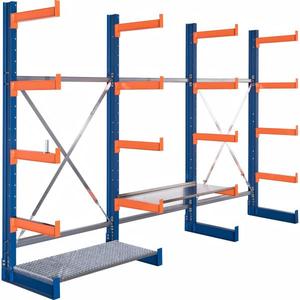
Peterack CE Certified Adjustable Heavy Duty Cantilever Rack
- Hot-Rolled H-Beam Columns
- Up to 5,000 kg/Arm Rating
- Unobstructed Long Bar Storage
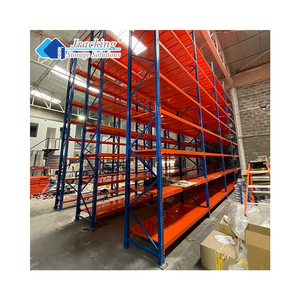
Jracking Dexion Compatible Heavy Duty Pallet Rack System
- 76.2mm Pitch Pattern
- High-Yield Cold-Rolled Q235B
- Global Replacement Compatibility
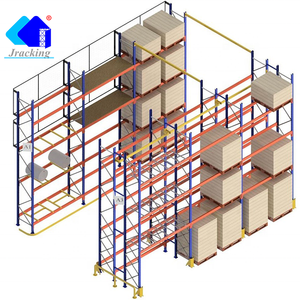
Warehouse Shed Industrial Heavy Duty Pallet Racking
- 1,000–4,500 kg Bay Capacities
- Dual Interlocking Safety Pins
- Weatherproof Primer Coating
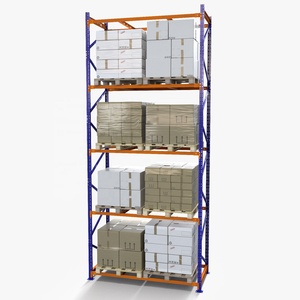
Multi-Level Pick Module & Integrated Mezzanine Racking
- Rack-Supported Floor System
- Integrated Stairs & Safety Gates
- 300% Footprint Multiplication
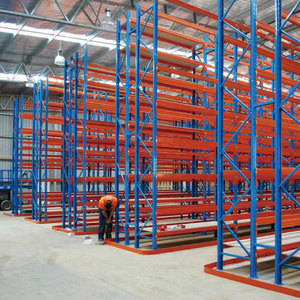
Adjustable Very Narrow Aisle (VNA) Heavy Duty Racks
- 1,600mm Aisles for Turret Trucks
- Up to 16-Meter Clear Heights
- Guide Rail & Wire Guidance Ready
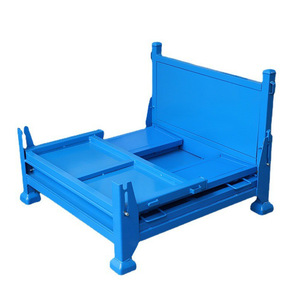
Multi-Layer Step Beam Pallet Rack & Thickened Shelves
- Thickened Box-Beam Geometry
- Drop-in Wire Decks or Steel Ties
- Powder Coat or Pre-Galvanized
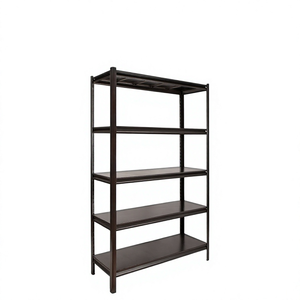
Boltless Steel Rivet Longspan Storage Shelving Units
- Tool-Free Rivet Assembly
- Anti-Rust Electrostatic Finish
- 300–800 kg/Tier Manual Loading
1. The China Heavy-Duty Storage Racking Ecosystem: Global Sourcing Whitepaper
The global intralogistics supply chain has undergone structural realignments over the last decade. As warehouse real estate costs climb exponentially across North America, Europe, Australia, and the Middle East, supply chain executives, industrial architects, and 3PL procurement teams face acute pressure: maximize cubic density while compressing capital expenditure timelines. Within this competitive reality, China’s heavy-duty industrial racking manufacturing hubs—predominantly concentrated in Jiangsu (Nanjing), Shandong, Zhejiang, and Guangdong—have evolved beyond basic commoditized metal fabrication into globally certified structural engineering powerhouses.
Sourcing industrial storage infrastructure directly from Chinese tier-1 exporters is no longer simply an arbitrage of raw labor costs. It is an engineering choice backed by fully integrated, mega-scale domestic steel supply chains (yielding direct mill access to prime Baosteel, Shougang, and Ansteel coils), automated multi-station cold-roll-forming lines, automated continuous laser punch presses, and multi-stage powder-coating finishing lines that meet strict international environmental and thickness standards.
Understanding this landscape requires rigorous technical analysis. International buyers must look past surface-level quotes and evaluate raw mill test certificates, seismic design calculations, upright column perforation geometries, beam connector locking mechanisms, and the dynamic interaction between fork trucks, autonomous mobile robots (AMRs), and static load-bearing frames.
2. Structural Configuration Matrix: Selecting the Optimum Load Profile
Heavy-duty bulk storage requires a precise calculation balancing pallet selectivity against storage density. In industrial warehousing, selecting the wrong system incurs catastrophic operational drag or unnecessary structural over-engineering. Below is an engineering comparison matrix used by leading structural designers:
| System Architecture | Structural Profile | Storage Density | Pallet Selectivity | Clear Height Range | Target Inventory Dynamic |
|---|---|---|---|---|---|
| Standard Selective Rack | Roll-Formed Box Beam / Open C Upright | Baseline (40–45% floor usage) | 100% Direct Immediate Access | Up to 12.0 Meters | High SKU variety, fast-turn FMCG, generic 3PL distribution |
| Very Narrow Aisle (VNA) | Heavy Gauge Uprights + Welded Base Trusses | High (+40% vs. Selective) | 100% via Turret / Swing-Mast | Up to 18.0 Meters | High-value parts, pharmaceuticals, dense high-bay hubs |
| Drive-In / Drive-Through | Structural Channel (Hot-Rolled) + Arm Rails | Very High (Up to 75% volume) | Low (Last-In, First-Out / LIFO) | Up to 11.0 Meters | Cold storage, blast freezers, homogeneous raw commodities |
| Pushback / Gravity Flow | Flow Tracks with Dynamic Braking Rollers | High Density (2 to 6 deep lanes) | Lane-Dependent FIFO or LIFO | Up to 9.0 Meters | Perishables, date-coded foods, staging buffers before dock |
| Automated AS/RS Crane Rack | High-Tolerance Tubular & Structural Steel | Maximum (Full cubic exploitation) | Automated System Selectivity | 15.0 to 45.0+ Meters | Lights-out warehouses, e-commerce mega-hubs, mission critical |
| Heavy Duty Cantilever | Hot-Rolled Welded I-Beams (IPE / HEA) | Open Longitudinal Profile | 100% Side-Loaded Access | Up to 10.0 Meters | Steel pipes, lumber bundles, sheet aluminum, extrusion packs |
*Note: Deflection criteria must adhere strictly to L/180 or L/240 based on automated material handling tolerances and local seismic building codes.
Roll-Formed vs. Hot-Rolled
Roll-formed closed tubular profiles provide unmatched torsional stiffness for standard distribution, while hot-rolled structural C-channel steel delivers maximum impact resistance against forklift abuse in sub-zero freezers and heavy industrial stamping operations.
Continuous Quality Rigor
Top Chinese exporters conduct automated non-destructive weld testing, spectrophotometric coating thickness verification (minimum 60–80 microns), and destructive tensile testing on raw coils to verify yield, tensile strength, and elongation before forming.
Seismic Finite Element Analysis
Full 3D FEA simulations evaluate second-order P-Delta structural effects, baseplate anchoring shears, and ductility under site-specific spectral acceleration parameters ($S_s$ and $S_1$) to prevent progressive collapse in earthquake-prone zones.
3. Future Procurement & Warehouse Engineering Trends (2025–2030)
As the industrial supply chain integrates with advanced robotics and smart facility management, the criteria for selecting bulk storage racking are shifting from passive steel framing to active, intelligent structural backbones. Global procurement managers must anticipate the following macro trajectories:
A. Robotic Integration & Ultra-Tight Tolerance Manufacturing
Autonomous mobile robots (AMRs), automated guided vehicles (AGVs), and rack-climbing robotic shuttles demand dimensional tolerances that standard hand-welded racking cannot satisfy. While conventional selective racking accepts horizontal beam tolerances of ±3mm to ±5mm, AS/RS-ready structures fabricated by top Chinese exporters achieve beam deflection and column straightness within ±1.0mm to ±1.5mm. Upright slots are punched on CNC continuous indexing dies to guarantee absolute pitch alignment across 30-meter high-bay installations.
B. Structural Decarbonization & Green Steel Auditing
Corporate ESG mandates and Carbon Border Adjustment Mechanisms (CBAM) in the European Union are transforming steel procurement. Chinese manufacturers are rapidly shifting energy inputs from blast furnaces to Electric Arc Furnaces (EAF) utilizing high-grade recycled steel scrap. Leading exporters now provide verified Product Carbon Footprints (PCF), low-VOC thermosetting powder finishes, and ISO 14001 certified closed-loop water treatment across all zinc-phosphating pretreatment lines.
C. High-Durability Zinc-Aluminum-Magnesium (ZAM) Coatings
For outdoor shed racking, harsh coastal logistics hubs, and blast-freeze cold chain facilities, standard hot-dip galvanization is being complemented by advanced ZAM (Zinc-Aluminum-Magnesium) alloy coated steels. ZAM offers cut-edge self-healing characteristics, superior salt-spray corrosion resistance exceeding 2,000 hours, and a smoother aesthetic finish that eliminates galvanizing dross and flash hazards.
Single-Source Accountability: From Mill Coils to Load-Ready Steel
Drawing upon over 50 years of accumulated manufacturing excellence, our integrated production plants eliminate intermediate distributor markups and operational risk. Every upright frame, load beam, row spacer, floor anchor, and safety barrier is engineered, formed, and certified under one roof.
By maintaining direct technical oversight over roll-forming lines, automated robotic welding cells, continuous CNC punching presses, and dual-lane electrostatic powder-coat baking ovens, we provide procurement directors with end-to-end traceability and project-stamped engineering calculations.
Send an Inquiry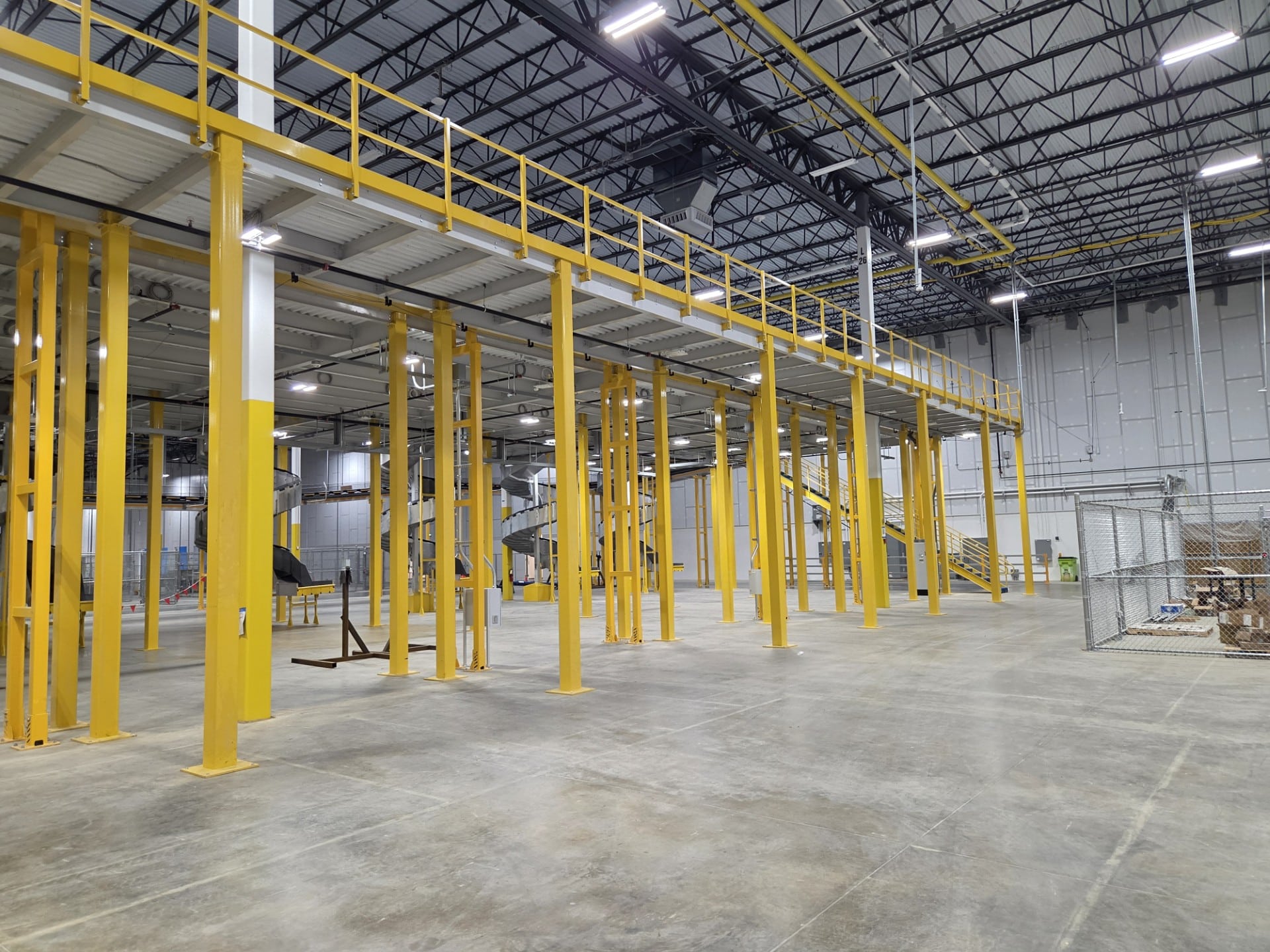
4. Strategic B2B Procurement FAQ: Technical Due Diligence
Direct responses from our chief structural engineers covering metallurgy, compliance, export packing, and installation risk mitigation.
What steel grades are utilized, and how do Chinese standards translate to ASTM and EN specifications?
How do you calculate and verify beam deflection limits and floor slab load capacity?
What surface treatment methods are recommended for cold storage vs. ambient industrial environments?
How are oversized upright frames and heavy beams packed for damage-free maritime container shipment?
Can your engineering team support custom warehouse layouts, PE structural stamps, and local building permits?
Transform Your Bulk Warehouse Operations Today
Collaborate directly with our senior intralogistics structural engineers. Receive fully calculated CAD layouts, load capacity calculations, and transparent factory-direct pricing within 24 hours.
Send an Inquiry