Featured Heavy Duty Cantilever & Industrial Storage Systems
Certified engineered capacity, structural I-beam rigidity, and custom column profiles engineered in accordance with RMI ANSI MH16.1 guidelines.
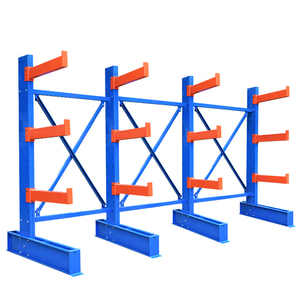
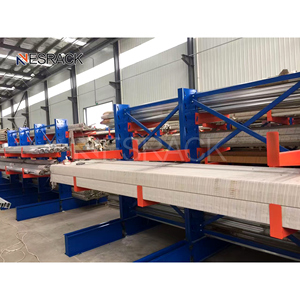
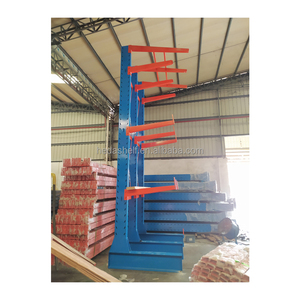
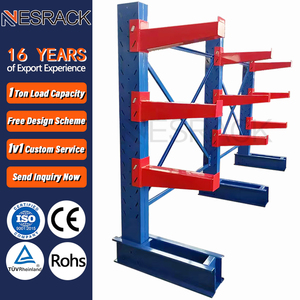
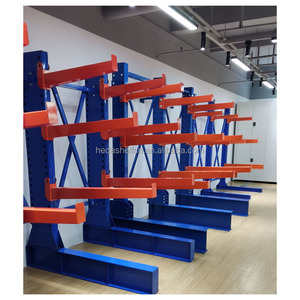
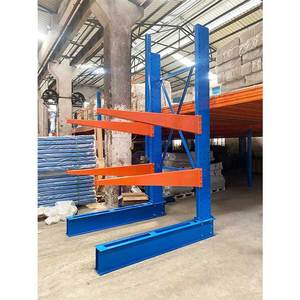
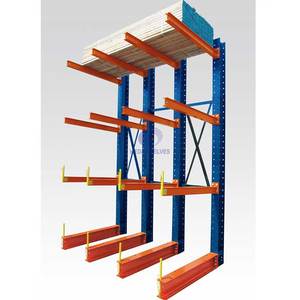
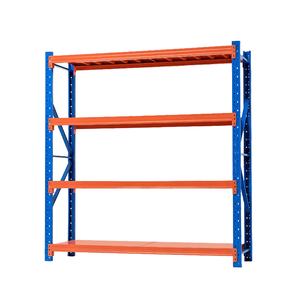
Comprehensive Engineering Analysis: Procuring Heavy-Duty Single Sided Cantilever Systems
In modern industrial warehousing, managing non-palletized, long-span, and irregular inventory presents a critical operational challenge. Facilities dealing with structural steel beams, extruded aluminum profiles, engineered timber packs, PVC conduits, bar stock, and industrial sheet metal cannot rely on conventional pallet racks without facing catastrophic frame obstruction or massive volumetric inefficiency. Single sided cantilever racking serves as the backbone for perimeter wall storage and narrow-aisle perimeter infrastructure, delivering completely unobstructed horizontal storage levels while anchoring heavy moments through deep base foundations.
As global supply chains place greater emphasis on vertical cube utilization, plant managers, logistics directors, and EPC procurement specialists face complex decisions when vetting structural racking fabricators. The distinction between light roll-formed steel columns and heavy-duty hot-rolled structural steel (W-Beam/I-Beam) sections directly dictates safe load thresholds, resilience against forklift impact abuse, and long-term asset life cycles.
1. Structural Anatomy: Hot-Rolled I-Beam vs. Roll-Formed Profiles
A heavy-duty single-sided cantilever system consists of four primary structural elements: the vertical column upright, the horizontal load-bearing base, the cantilever arms, and the diagonal/horizontal bracing core. Unlike double-sided configurations where loads placed on opposing arms provide an intrinsic counterbalancing effect, a single-sided cantilever column experiences massive, unmitigated cantilever bending moments (M = P × L) transferred down the column into the base connection.
Premium manufacturers deploy hot-rolled structural steel wide-flange shapes (ASTM A36 / ASTM A992 / ASTM A572 Grade 50) rather than light cold-rolled gauges. Structural channel and W-shape I-beams offer substantially superior torsional rigidity, thicker webs, and robust flange profiles. When side-loading forklifts, four-way reach trucks, or overhead cranes navigate tight aisles, structural I-beam columns resist torsional twisting and sustain high impacts from guide-rail misalignments without experiencing irreversible plastic deformation.
| Structural Parameter | Roll-Formed Sheet Cantilever | Structural I-Beam Cantilever (Steel King Benchmark) |
|---|---|---|
| Steel Forming Metallurgy | Cold-bent gauge steel coil (12–16 Ga.) | Hot-rolled solid steel structural sections (W-Beam / I-Beam / C-Channel) |
| Impact & Torsion Resistance | Moderate; vulnerable to corner twisting | Exceptional; withstands industrial forklift contact and torsional loads |
| Arm Connection Style | Pin-lock / Keyhole clip assembly | Heavy-gauge 4-to-6 bolt grade-8 flange plate or heavy pivot shear-pin |
| Single-Arm Dynamic Capacity | 250 kg – 600 kg per arm | 1,000 kg – 6,000+ kg (2,200 – 13,000+ lbs) per arm |
| Seismic & Wind Engineering | Limited adaptability in high seismic zones | Engineered in accordance with RMI ANSI MH16.1 & local building codes |
2. Key Engineering Criteria for Factory & Supplier Audits
When shortlisting the top single sided cantilever factories, procurement heads must inspect internal design integrity, steel traceability, automated weld penetrations, and surface treatment resilience. A reliable manufacturer operates under strict adherence to certified international standards, ensuring all moment connection welds are performed by certified robotic welders under AWS D1.1 (Structural Welding Code - Steel) specifications.
Furthermore, column base plates require deep-section engineering. Because single-sided units rely entirely on floor anchors to absorb overturning moments when outer arms are fully loaded, base-to-column joint configurations must utilize high-strength gussets and heavy continuous fillet welds. Top-tier factories deliver custom anchor-bolt patterns verified through anchor-pull calculations matched to local concrete slab compressive strengths (psi / MPa).
Certified Engineering Calc Sheets
Full structural calculations detailing maximum arm deflection thresholds, column combined stress ratios, and seismic site-class allowances.
Factory Automated Finishing
Continuous automated electrostatic powder coating lines or hot-dip galvanizing baths that ensure ASTM salt spray resistance for outdoor yards.
Export Crating & Bundle Integrity
Palletized nesting, threaded arm-pin protectors, and heavy timber skids engineered to survive transoceanic breakbulk or container shipping.
3. Product Purchasing & Global Procurement Trends
The procurement landscape for cantilever racking is shifting rapidly away from catalog-based "commodity ordering" toward fully integrated, engineer-to-order (ETO) operational systems. Leading trends include:
- Automated Crane & Stacker Interface: Conventional cantilever racks are increasingly customized to accept automated AS/RS stacker cranes, side-loader automatic guided vehicles (AGVs), and automated long-good handling shuttles. Tolerances on arm levelness and camber deflection must meet sub-millimeter tolerances.
- Outdoor Galvanized Shed & Roof Truss Conversions: Single-sided cantilever columns installed outdoors are engineered with integral roof arms and canopy supports. This converts the storage perimeter into a fully sheltered rack-supported storage structure, dramatically lowering civil roofing build-out capital expenditures.
- Dynamic Articulated Arm Designs: To prevent fork impact during fast vertical cycling, advanced installations implement pivot arms that yield upward and inward if struck from underneath by a rising lift truck mast, protecting both the rack column and forklift hydraulic mast.
4. Corporate Manufacturing Advantages: The Steel King Benchmark
As a single-source U.S. manufacturing leader founded in 1970, Steel King Industries sets the global standard for industrial storage systems, pallet racking, work platforms, and heavy structural I-beam cantilever systems. Procuring from an integrated engineering authority provides tangible advantages that de-risk major warehouse investments:
Total Quality Containment: Every column, base channel, structural arm, and tubular brace is designed, cut, drilled, welded, and finished 100% in-house across dedicated manufacturing facilities. By maintaining absolute control over the supply chain, we deliver structural integrity backed by certified mill reports and precise fabrication tolerances.
RMI ANSI MH16.1 Certified Compliance: Our cantilever systems comply with the Rack Manufacturers Institute (RMI) standards. Every rack configuration is backed by site-specific engineering reviews, structural finite element analysis (FEA), concrete anchor calculations, and seismic verification for zone compliance across global industrial hubs.
Complete Lifecycle Safety Integration: Beyond bare cantilever steel, Steel King designs integrated warehouse protection ecosystems including structural column guards, guide rail networks for narrow-aisle trucks, heavy-duty pipe stops, and steel work platforms, ensuring personnel safety and prolonged racking asset lifespan.
Frequently Asked Questions (FAQ)
Straight technical answers from heavy storage structural engineers to guide your procurement project.
What is the structural difference between single-sided and double-sided cantilever racks?
A single-sided cantilever rack has arms extending from one face only, typically positioned against warehouse walls. Because load distribution cannot be counterbalanced by an opposing arm, single-sided columns experience extreme bending moment tension along the rear flange and forward compression along the base. Double-sided racks distribute loads equally across a central shared column, achieving natural moment equilibrium when symmetrically loaded.
How do engineers calculate the required arm capacity and column spacing?
Arm capacity is determined by dividing total bundle weight by the number of supporting arms, assuming uniform load distribution without sag. Column spacing (center-to-center distance) is calculated to prevent excessive product overhang deflection: the cantilever overhang past the outer arms must not exceed one-half of the center-to-center column distance, preventing load droop and arm overloading.
Can single-sided cantilever racks be installed outdoors?
Yes, provided the steel is hot-dip galvanized according to ASTM A123 standards to resist corrosion, or treated with a heavy-duty marine-grade epoxy finish. Furthermore, the base plates and structural anchor bolts must be engineered by a licensed professional engineer (PE) to account for regional environmental factors including dynamic wind load uplift, snow pack, and thermal expansion.
What slab thickness is required to anchor a heavy-duty single-sided cantilever?
Due to the substantial overturning moments transferred to the concrete floor, single-sided cantilever systems typically require a minimum slab thickness of 6 to 10 inches (150 mm to 250 mm) with 3,000–4,500 psi reinforced concrete. High-capacity structural uprights exceeding 20 feet in height often necessitate isolated footings or chemically bonded wedge anchors verified by slab core sampling.
What critical data must procurement provide for an engineered quote?
Procurement teams should furnish: 1) Load characteristics (material, length, width, depth, bundle weight); 2) Clear building height and warehouse layout drawing; 3) Forklift reach height and mast clearance; 4) Concrete slab specifications (thickness, compressive strength); and 5) Applicable regional building, seismic, and fire safety codes.
Engineer Your Heavy Storage Infrastructure
Connect with our senior material handling specialists to receive certified structural calculations, customized layout AutoCAD drawings, and factory direct quotations.
Contact Us