AS/RS Automated
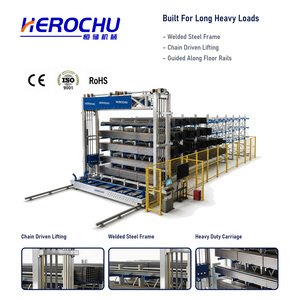
Honeycomb Steel Rack Warehouse Heavy Duty Rack Loading Unloading System Steel Storage Rack Long Metal Profile AS/RS
High Torsional Steel
Automated Pick
Comprehensive B2B Engineering Benchmark: Global High-Density FIFO Dynamics, Pallet Speed Controllers, Cold Chain Scalability, and Strategic Procurement Guidelines.
Precision-manufactured high-density gravity roller shelves, dynamic FIFO pallet flow systems, structural cantilever racks, and automated warehouse units built for extreme throughput.
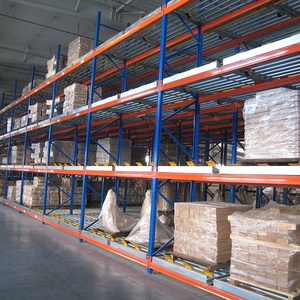
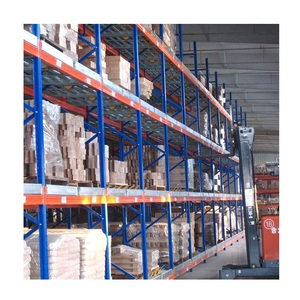
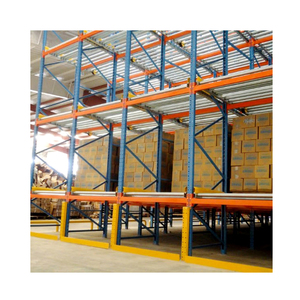
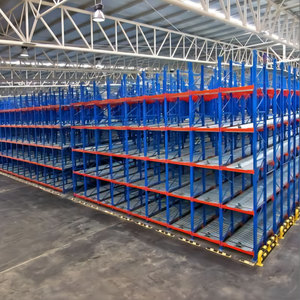
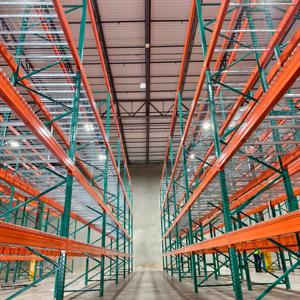
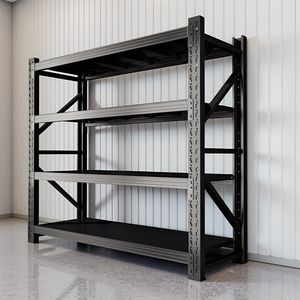
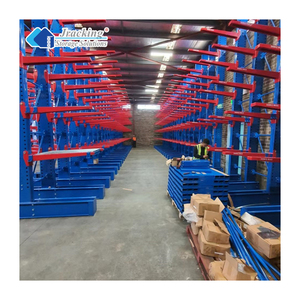
In modern high-density intralogistics, heavy duty gravity flow racking (frequently referred to as dynamic pallet flow racking or roller bed live storage) stands out as the ultimate physical manifestation of gravity-driven automation. Utilizing inclined roller beds engineered precisely between a 2.5% to 4.0% decline gradient, pallets loaded at the replenishment charging aisle glide effortlessly toward the forward picking retrieval face under the influence of natural gravitational force.
The engineering challenge of handling unit loads varying from 500 kg to over 1,800 kg per pallet requires sophisticated kinetic energy mitigation. Pallets accelerating down an unrestricted incline create exponential momentum, exposing warehouse workers to collision hazards and risking racking structural fatigue. Premium gravity flow manufacturers incorporate three decisive safety and mechanical subsystems:
1. Centrifugal Braking Rollers: Integrated directly into the roller tracks at calculated intervals (typically every pallet position), internal gear-driven centrifugal brake rollers absorb kinetic energy. As a pallet increases velocity, the internal flyweights expand against the brake hub, stabilizing descent speed to a uniform, controlled 0.25 to 0.3 meters per second regardless of gross pallet mass variance.
2. Automatic Load Separator Devices (Pallet Disconnectors): Positioned at the discharge picking face, mechanical separation stops hold back the entire queue of accumulated pallets behind the first pallet. This relieves the discharge pallet from hundreds of kilograms of hydrostatic-like lane backpressure, permitting forklift operators to extract the lead pallet cleanly and safely without friction binding or dangerous pallet pinching.
3. Entry Guidance & Alignment Ramps: Centering guides at the charging side ensure that off-center pallet placements by forklift drivers are mechanically centered onto the steel flow tracks before moving down-lane, eliminating lateral track derailment and track sidewall friction.
| Performance Dimension | Structural Channel (e.g., SK3000 C-Channel) | Roll-Formed / Boltless Tubular (SK2000 Style) | Galvanized Outdoor / Freezer Profile |
|---|---|---|---|
| Primary Steel Metallurgy | Hot-Rolled Structural ASTM A36 Channel | Cold-Rolled High-Tensile Closed Box/Tube | Pre-Galvanized / Hot-Dip HDG Structural Steel |
| Impact Resistance (Forklift Abuse) | Exceptional (Superior lower-leg flange rigidity) | Moderate to High (Torsional resistance) | High (Surface alloy armor against chipping) |
| Operating Temperature Envelope | -30°C to +45°C (Blast Freezers to Dry DC) | -10°C to +50°C (Ambient Distribution Centers) | -40°C to +60°C (Sub-zero cold storage & outdoor) |
| Maximum Lane Depth | Up to 25 Pallets Deep with Brake Rollers | 2 to 12 Pallets Deep typical | 2 to 18 Pallets Deep |
| Standard Unit Capacity | 1,000 kg – 2,000 kg per pallet position | 500 kg – 1,200 kg per pallet position | 800 kg – 1,800 kg per pallet position |
A global procurement review of the world's leading engineered pallet flow and gravity storage manufacturing powerhouses, evaluating fabrication capacity, compliance standards, and patent portfolios.
A flagship tier-one American manufacturer established in 1970. Celebrated for the SK2000® closed tubular design and SK3000® hot-rolled structural steel channel racks. Steel King's gravity flow systems incorporate heavy-duty structural uprights with internal engineered braking systems tailored for severe blast freezers, heavy automotive staging, and seismic compliance.
European intralogistics benchmark brand renowned for micron-accurate roller track tolerances and specialized dynamic flow carton live storage. Bito's heavy-duty pallet live storage lines emphasize low-angle starts (2.8%), ultra-quiet ball bearing roller tracks, and precision separators designed for pharmaceutical hygiene standards.
One of the world's most prolific storage manufacturers with automated flow rack facilities globally. Mecalux integrates automated pallet flow systems seamlessly with stacker cranes and conveyor loops. Their patented split-roller tracks adapt flexibly to weak or non-standard wooden pallets.
The definitive global leader in dynamic gravity roller tracks and brake roller engineering. While Interroll operates as a core OEM supplier of roller beds to global rack builders, their modular Pallet Flow and Carton Versi Flow modules set the benchmark for low breakaway torque and zero-maintenance gravity transport.
A heavyweight export powerhouse specializing in structural teardrop pallet racking, heavy galvanized cantilever, and high-density dynamic FIFO gravity roller solutions. With state-of-the-art robotic cold-forming lines and large-scale powder coating facilities, Jracking delivers cost-effective, high-capacity flow systems compliant with AS4084 and FEM standards.
The pioneering pioneer of 100% hot-rolled structural steel racking in North America. Frazier's gravity flow systems are built with structural C-channel steel that can withstand repeated forklift impacts, making them the industry favorite for aggressive 24/7 beverage handling hubs and blast freezer environments.
One of Europe's premier racking titans, recognized for high-density engineering, automated mobile racking, and pallet flow solutions. Stow's flow systems feature advanced zinc-plated corrosion-resistant roller beds, highly modular beam hook connections, and integrated safety net buffers for extreme high-bay systems.
An elite engineering-driven storage equipment creator with deep domain expertise in multi-tier automated pick modules and complex mezzanine flow integrations. Nedcon delivers mathematical structural modeling under Eurocodes and seismic criteria with zero operational compromise.
With an industrial heritage reaching back decades across the UK and Continental Europe, Dexion's pallet flow systems deliver robust modular roller beds, high adjustability in pitch, and ergonomic floor pick-levels that pair gravity storage with pick-to-light sorting technology.
The predominant Canadian material handling fabricator, providing structural and roll-formed high-density systems. Konstant's gravity flow systems are specifically engineered for heavy sub-zero conditions, thermal contraction tolerances in freezer food logistics, and extreme seismic zones.
How supply chain executives, warehouse architects, and third-party logistics (3PL) operators are evolving their capital expenditures toward hybrid gravity automation.
Modern flow racks are shedding conventional forklift-dependent designs. Future procurement focuses on optical and RFID docking guides integrated directly into rack entry beams, enabling Autonomous Mobile Robots (AMRs) and automated counterbalanced forklifts to feed and extract pallets without human intervention.
The integration of ultra-low-power IoT ultrasonic sensors along flow rails provides WMS (Warehouse Management Systems) with real-time, lane-by-lane volumetric data. Operations managers can instantly identify lane hang-ups, track consumption velocities, and automate replenishment triggers without physical audits.
With corporate ESG commitments and escalating energy kilowatt costs, gravity flow systems are replacing energy-intensive powered conveyor loops in accumulation buffers. Operating on zero electricity, gravity flow delivers continuous dynamic movement with zero operational carbon emissions during the storage cycle.
Single-source manufacturing reliability. From mill test certified raw steel coils and robotic welding to project-specific PE stamping and turnkey site delivery, we control the entire lifecycle.
Every frame, beam, and dynamic track assembly is engineered in accordance with rigorous RMI (Rack Manufacturers Institute) and ANSI MH16.1 specifications, supported by professional structural engineering stamps.
Tailor your facility with either closed seamless tubular profiles for unmatched torsional resistance (SK2000 style) or heavy hot-rolled structural steel channels (SK3000 style) for rugged impact resistance.
Global procurement teams receive full parametric BIM layouts, detailed slab loading calculations, anchor pull-out specs, and containerized sea freight packaging ensuring pristine job-site arrival.
We engineer end-of-aisle structural wrap-around guards, heavy column bullnose protectors, rub rails, and dynamic spring-loaded pallet stops that lower warehouse damage liabilities by over 75%.
Direct technical answers from senior storage systems engineers to guide your facility planning, floor slab preparation, and equipment selection.