High-Performance Heavy-Duty Storage Solutions
Explore our certified industrial racking and specialty storage systems engineered in-house with structural integrity, robotic weld precision, and severe-duty load ratings.
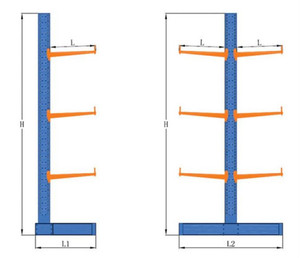
Jracking Reinforced Heavy-Duty Cantilever Rack System
Hot-rolled structural I-beam uprights engineered with bolted double-sided arm connections for safe handling of oversized timber, pipes, and extruded aluminum.
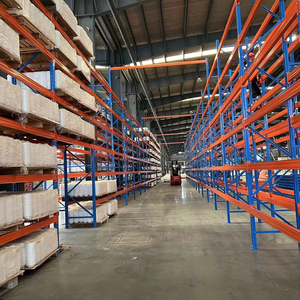
Heavy Duty Steel Selective Pallet Rack System
Universal industrial pallet racking providing 100% SKU selectivity, adjustable beam levels, and high-impact structural column safety enhancements.
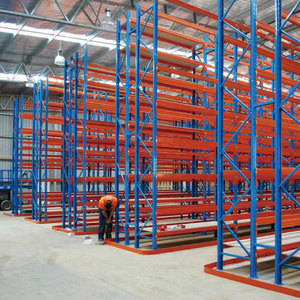
Adjustable Very Narrow Aisle (VNA) Warehouse Racks
High-bay cold-rolled steel racking designed for turret trucks, offering dramatic floor footprint reduction and optimized cubic storage yields.
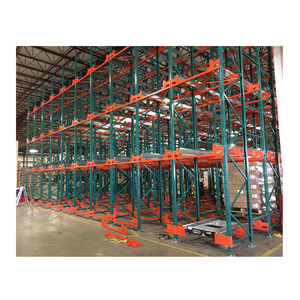
Heavy Duty Automatic Radio Shuttle Rack System
Semi-automated deep lane shuttle storage delivering high-throughput FILO and FIFO inventory operations in ambient and cold chain environments.
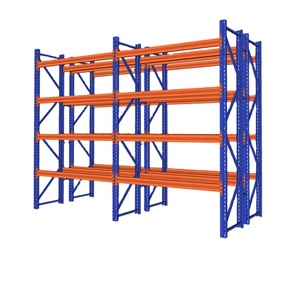
Customized Heavy-Duty 5-Layer Industrial Pallet Rack
Heavy duty multi-tier modular storage rack outfitted with wire decking and structural crossbars for dynamic picking facilities and spare parts hubs.
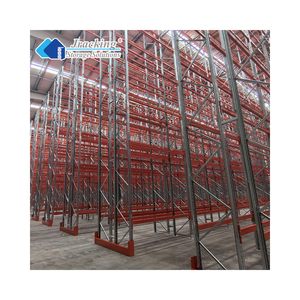
Heavy Duty Selective Pallet Rack for Carpet Rolls
Specialty long-span cradles with smooth roll-handling surfaces and corrosion-resistant powder coatings to store rugs, vinyl flooring, and fabric coils.
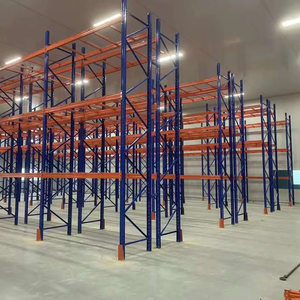
5-Tier Boltless Heavy Duty Pallet Rack (1000kg/Layer)
High-strength closed tubular upright technology designed for rapid boltless beam adjustability and superior resistance against forklift torsional damage.
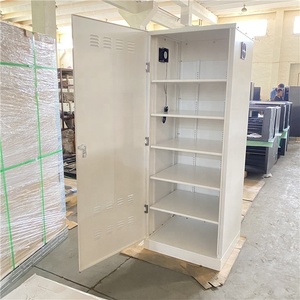
IP55 Outdoor Battery Rack Storage Cabinet Enclosure
Weatherproof, sealed galvanized enclosure for industrial ESS battery packs, featuring integrated cable trays, thermal insulation, and grounding points.
Heavy Duty Double Sided Cantilever Racking: Structural Mechanics, Load Engineering & Sourcing Governance
In modern heavy industrial manufacturing, distribution logistics, and yard inventory environments, the continuous management of non-standard, long-span structural materials poses critical challenges. Storing lumber bundles, structural steel beams, extruded aluminum channels, PVC and copper conduits, automotive sheet metal, and industrial coils requires a storage geometry that eliminates the restrictive front vertical columns found in traditional selective pallet racks.
Double sided cantilever racking represents the industry benchmark for bilateral, high-density vertical storage. By anchoring cantilevered load-bearing arms on both sides of a central vertical column spine, double-sided designs achieve optimal structural equilibrium. The opposing cantilever arms counterbalance bending moments along the transverse plane, dramatically mitigating structural deflection and optimizing warehouse floor-space footprints along dual forklift operating aisles.
1. Structural Anatomy & Metallurgical Integrity
The fundamental reliability of industrial cantilever systems rests upon steel grade selection and mechanical joint design. As an established OEM/ODM factory supplier, our structural cantilever product line is fabricated predominantly utilizing hot-rolled structural steel I-beams (W-shapes / UB sections) or custom heavy-gauge roll-formed sections:
- Central Column Towers: Formed from hot-rolled I-beams (such as IPE, HEA, or structural WF sections) capable of enduring intense combined axial compression and bidirectional flexural stresses. Vertical column heights can range from 3,000 mm to beyond 12,000 mm, pre-punched on precise 75 mm, 100 mm, or 101.6 mm (4-inch) centers to allow continuous beam level reconfigurations.
- Cantilever Arms: Engineered using tapered I-beam profiles or heavy rectangular hollow structural sections (HSS). Tapering the arms ensures uniform stress distribution across the cantilever span, compensating for the progressive increase in bending moment towards the connection pivot while maximizing vertical forklift clearance.
- Arm-to-Column Connection: Available in high-tensile bolted configurations (Grade 8.8 or Grade 10.9 structural bolts) or proprietary tool-less self-locking pinned pivots. Pinned joints provide a pivoting safety margin—if a forklift impacts an arm during elevation, the arm deflects upwards rather than transferring devastating torsional strain directly into the central tower.
- Heavy Base Assemblies: Dual-welded or bolted structural base channels extend horizontally from both sides of the column, acting as the primary point of load transfer to the building foundation while serving as the lowest fixed storage tier.
- X-Bracing & Horizontal Strut Framework: Longitudinal stability between adjacent vertical towers is sustained through tensioned diagonal rod bracing systems combined with rigid structural channel struts, neutralizing rack sway and longitudinal seismic forces.
| Component Specification | Roll-Formed Steel Cantilever | Hot-Rolled Structural I-Beam Cantilever |
|---|---|---|
| Primary Structural Steel Grade | Q235B / Cold-Rolled Carbon Strip | Q355B / ASTM A572 Grade 50 Hot-Rolled Channel/I-Beam |
| Arm Load Capacity Range | 300 kg to 1,200 kg per arm (UDL) | 1,000 kg to 6,000+ kg per arm (UDL) |
| Forklift Impact Resistance | Moderate; vulnerable to torsional twisting | Extreme; thick flange & web sections resist vehicular strikes |
| Installation Environment | Indoor light/medium logistics, retail DIY centers | Indoor heavy manufacturing, outdoor lumber & pipe yards |
| Corrosion Protection Finishes | Epoxy Electrostatic Powder Coating (60-80 µm) | Hot-Dip Galvanizing (ISO 1461, ≥85 µm) or Powder Coat |
2. Engineering Load Calculations & Safety Factors
Unlike static pallet positions, cantilever arms are subject to non-uniform, point, and cantilever flexural forces. When engineering an OEM/ODM double-sided cantilever setup, our engineering teams calculate three primary mechanical limits in adherence to the Rack Manufacturers Institute (RMI) MH16.1 code and Eurocode 3 (EN 1993-1-3):
A. Uniformly Distributed Load (UDL) vs. Concentrated Point Loads: Cantilever ratings are certified assuming a balanced, evenly distributed weight over the arm length ($L$). If inventory is concentrated near the outer tip, the resulting bending moment ($M = P \times L$) doubles relative to center-of-gravity placement, demanding substantial structural up-rating.
B. Transverse Arm Deflection Limits: Operational deflection under full design load is strictly constrained (typically limited to $\delta \le L/250$ or $L/300$) to prevent product slippage, forklift fork jamming, or dangerous inventory roll-offs. Arms are frequently engineered with a built-in upward pitch (camber) of $1^\circ$ to $2^\circ$ to maintain a horizontal plane when fully loaded.
C. Seismic Base Overturning & Anchoring Mechanics: In double-sided cantilever systems, base plates require dynamic anchoring via certified Hilti wedge anchors or chemical epoxy capsules into reinforced concrete slabs ($f'_c \ge 25\text{–}30\text{ MPa}$). Our PE-stamped calculation sheets consider site-specific spectral acceleration factors ($S_s, S_1$) to guarantee structural stability under maximum anticipated seismic shake.
3. Future Procurement & Technological Trends (2025–2030)
Industrial warehouse operators and procurement executives must anticipate rapid transitions currently transforming the global material handling ecosystem:
- Automated Cantilever Storing with AGVs and AS/RS: Traditional manual forklift access is rapidly giving way to customized automated guided vehicles (AGVs), multi-directional side-loaders, and automated stacker cranes. Cantilever systems now require precision manufacturing tolerances (sub-millimeter plumbness and leveling) to facilitate seamless sensor recognition and automated pick-and-place cycles for steel bars and timber packs.
- Weather-Resilient Outdoor Mega-Yards: Land acquisition costs are accelerating the deployment of outdoor double-sided cantilever racking engineered with integrated roof-truss canopies. Finished with high-mil hot-dip galvanization, these structures convert exterior raw yards into covered vertical storage facilities without requiring conventional building permits.
- IoT Structural Health Monitoring (SHM): Advanced mega-racks are integrating strain-gauge telemetry sensors and tilt sensors directly at column bases and primary arm roots. In the event of an undetected forklift impact or overload condition, warehouse maintenance teams receive automated alerts before catastrophic stress failure occurs.
- Supply Chain Nearshoring & Direct-to-Factory Procurement: International supply chain directors are increasingly consolidating OEM/ODM procurement directly with certified manufacturing mills. Bypassing regional multi-tier brokers yields 25–40% cost efficiency, tailored metallurgical certifications, verified third-party mill test reports (MTR), and complete customization over column sizing and hole matrices.
End-to-End OEM/ODM Manufacturing Excellence
From initial finite element analysis (FEA) to precision automated punching, robotic welding, and environmental surface finishing, we deliver unmatched industrial racking durability.
Single-Source Factory Direct Accountability
We eliminate trading intermediary markups. Our integrated production facilities control the entire fabrication lifecycle—slitting, automated roll-forming, CNC plasma drilling, robotic submerged arc welding, and electrostatic powder coating—under one roof.
Structural Hot-Rolled vs Tubular Flexibility
Tailor your racking investment based on operational hazard profiles. Choose our SK3000 heavy structural I-beam assemblies for high-impact lumber and steel yard zones, or SK2000 closed tubular designs for superior torsional rigidity in pallet warehousing.
Certified RMI ANSI MH16.1 & AWS Compliance
All load tables and structural engineering drawings conform to rigorous American RMI and international standards. Certified robotic and AWS-accredited manual welders ensure weld joint penetration and acoustic integrity across every column base and arm bracket.
Bespoke OEM/ODM Customization Capabilities
No two warehouse footprints are identical. We customize upright heights, arm lengths, column taper angles, arm retaining end-stops, continuous steel decking trays, axle pipe cradles, and seismic base anchors according to your unique handling machinery.
Extreme Environment Surface Finishing
Outdoor yard storage demands superior corrosion defense. In addition to high-durability epoxy and thermosetting polyester powder coatings, we offer batch hot-dip galvanization conforming to ASTM A123 / ISO 1461 standards for 25+ years of maintenance-free service.
Comprehensive International Logistics & Packing
Every shipment is packaged for intermodal ocean transit. Uprights and arms are nested, separated by non-abrasive dunnage, strapped with high-tensile steel bands, and protected with heavy-gauge poly-wrap to prevent maritime transit vibration and saltwater exposure.
Frequently Asked Questions by Industrial Sourcing Teams
Authoritative technical answers directly from our senior structural engineers and warehouse layout planners.
What is the definitive advantage of double-sided cantilever racking over single-sided installations?
Double-sided cantilever racks offer a significantly superior strength-to-steel weight ratio because arms loaded on opposing sides of the common central column create balanced counter-moments. This structural balance reduces eccentric rotational forces on the central upright and column foundation. Operationally, a double-sided rack forms a central spine serving two parallel working aisles, which cuts warehouse travel distances in half and maximizes vertical volumetric density compared to multiple single-sided rows positioned back-to-back.
How do I determine whether my application requires hot-rolled structural steel or roll-formed cantilever racking?
The decision hinges on load intensity and operational impact exposure. Roll-formed cantilever racking utilizes cold-formed light-gauge steel, making it cost-efficient for light-to-medium loads (furniture, lightweight PVC tubing, conduit retail display) where forklift traffic is cautious. Hot-rolled structural I-beam cantilever racking (such as our SK3000-grade systems) is mandatory for heavy manufacturing, raw lumber packs, structural steel tubing, bars, and outdoor yards. Structural hot-rolled steel channels feature thick structural flanges and solid webs that resist severe vehicular impacts without catastrophic buckling.
What floor slab specifications and concrete foundation parameters are required to anchor heavy-duty cantilever racks?
Because cantilever uprights concentrate high overturning moments directly at their bases, the host concrete floor slab must be engineered accordingly. Typical heavy industrial installations require a non-cracked, steel-reinforced slab with a minimum thickness of 150 mm to 250 mm (6 to 10 inches) and a compressive strength ($f'_c$) of at least 3,000 to 4,000 PSI (20.7 to 27.6 MPa). For extreme heights exceeding 7 meters or high seismic design categories (SDC D, E, F), isolated continuous footings or deepened foundation pads may be required by local structural codes.
Can double-sided cantilever racks be equipped with continuous steel decking or wire mesh shelves?
Yes. While cantilever arms are natively designed for self-supporting rigid lengths (such as lumber packs and steel pipes), many distribution warehouses store variable-length items or bulk skids across the cantilever levels. We engineer custom drop-in corrugated steel decks, heavy wire mesh panels, or structural channel cross-beams that rest flush or waterfall across consecutive cantilever arms, creating an uninterrupted horizontal storage deck with no front columns.
What key project technical parameters are required to generate an OEM/ODM engineering quotation?
To deliver an accurate, code-compliant proposal with structural drawings, please supply: (1) Total warehouse building layout, clear ceiling height, and floor obstacle locations; (2) Product specifications—maximum package length, depth, height, and unit weight; (3) Operating method (standard forklift, multi-directional side-loader, or automated system); (4) Installation environment (interior dry, refrigerated, or outdoor exposed); and (5) Local seismic zone, wind load (for outdoor roofed systems), and soil bearing capacities.
How does our factory ensure export quality control and international shipping protection?
Every production batch undergoes comprehensive chemical composition verification, ultrasonic weld inspection, and tensile pull tests in accordance with ISO 9001 quality management protocols. Prior to container stuffing, components are individually cataloged and bundled using protective lumber dunnage, high-density edge protectors, and marine-grade shrink film. All sea-freight containers are professionally choked and braced to prevent shifting or surface abrasion during international ocean transit.
Ready to Engineer Your Heavy Duty Storage Solution?
Connect directly with our experienced structural engineering team to request customized AutoCAD rack layouts, PE load certifications, or factory-direct volume pricing.