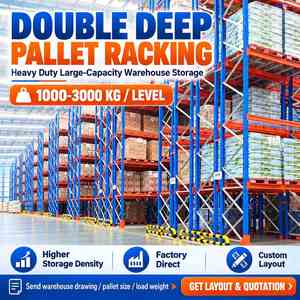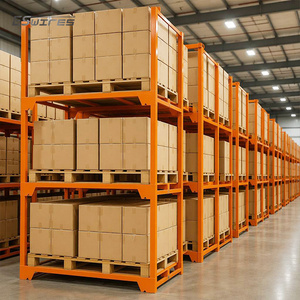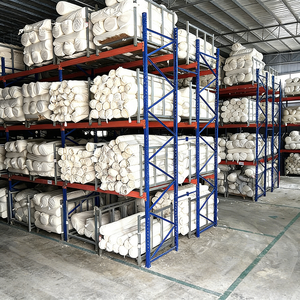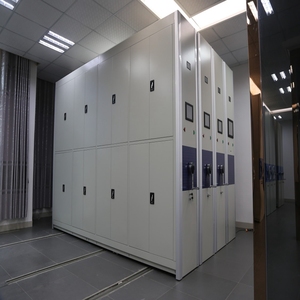
Modular Systems & Components

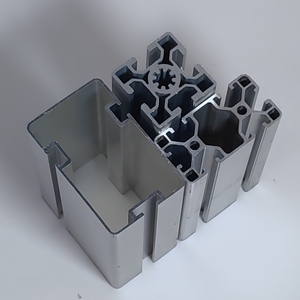
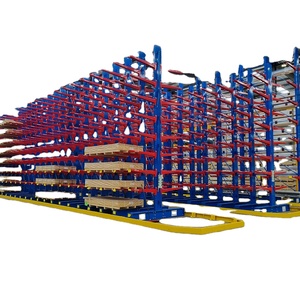
Precision Storage Racking & High-Bay Structural Assemblies

Built under ISO 9001 quality supervision, all systems are compatible with stacker cranes, high-capacity shuttles, double-reach mast trucks, and integrated warehouse control software.
Enterprise OEM/ODM Authority

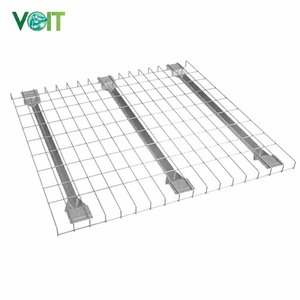
High-Yield Steel Fabrication & Engineering Pedigree Since 1970

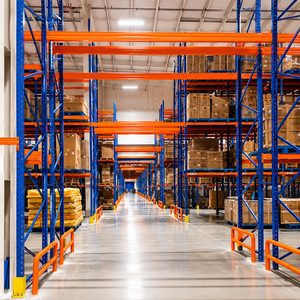
Providing global systems integrators, logistics operators, and turnkey EPC contractors with fully certified heavy-duty storage infrastructures backed by extensive structural calculations.

55+
Years Structural Engineering Expertise
100%
In-House Milling, Welding & Finishing
±1.5mm
Cumulative Deflection Tolerance to 40m
11+
Core Industrial Verticals Deployed

Structural Compliance & Seismic FEA

Every ASRS high-bay rack is custom calculated in compliance with RMI ANSI MH16.1, Eurocode 3 (EN 1993), and seismic criteria (UBC/IBC Zone 4). Finite Element Analysis (FEA) accounts for wind loads, dynamic crane vibrations, braking forces, and floor slab differential settlement.

Closed-Tube & Hot-Rolled Channel

We deploy closed-section seamless tubular steel and high-tensile hot-rolled C-channel (Q355B / ASTM A572 Grade 50). Tubular sections provide up to 250 times higher torsional resistance than standard open roll-formed uprights, preventing buckle failures from automated shuttle thrusts.

Single-Source Global Accountancy

From initial shop drawing packages, anchor bolt pullout shear calculations, and automatic robotic welding to epoxy-polyester electrostatic powder coating and containerized maritime packaging, we eliminate middle-tier handoffs, delivering complete traceability and on-time project execution.

Whitepaper & Market Insights

Future Procurement & Technological Trends in Heavy Duty ASRS (2025–2030)

How rapid automation cycles, cold chain intensification, and high-bay building architectures are redefining engineering requirements for racking procurement officers.

1. Rack-Supported Clad Buildings vs. Standalone Free-Standing Systems

Industrial real estate and construction costs have pushed enterprise logistics toward rack-clad buildings (High-Bay Warehouses exceeding 30 to 45 metres in height). In this structural architecture, the storage racking uprights also serve as the structural framework supporting the facility roof and exterior wall sandwich cladding.

  • Up to 40% civil cost reduction: Eliminates primary structural steel building columns.
  • Tighter Deflection Control: Engineered under FEM 9.831 / DIN EN 15620 tolerance Class 100 for high-speed crane tracking.
  • Sub-zero structural performance: Low-temperature impact-tested steel grades for -30°C automated cold storage environments.

2. Four-Way Pallet Shuttle Integration & Precision Micro-Tolerances

Traditional single-crane aisles are being supplemented or replaced by 3D 4-Directional Pallet Shuttles and autonomous mobile robots (AMRs). Because vehicles transition directly across transverse and longitudinal steel guide rails at speeds up to 2.0 m/s, rail joint offsets must not exceed ±0.5 mm.

  • Robotic CNC cold roll-forming: Guarantees uniform beam flange thickness and absolute parallel rail consistency.
  • Dynamic load spectrum design: Addresses repetitive fatigue cycles caused by high-frequency shuttle acceleration/braking.
  • High fire-safety deck integration: Openings calibrated for in-rack ESFR sprinkler penetration and rapid smoke dispersion.

3. Decarbonization & Green Steel Sourcing in Supply Chains

Global supply chain compliance, particularly across European and North American infrastructure projects, increasingly mandates environmental product declarations (EPD) and certified carbon-footprint reduction for imported structural steelwork.

  • Electric Arc Furnace (EAF) options: Utilization of high-recycled-content steel scrap lowering embodied CO2.
  • VOC-Free Surface Finishes: Lead-free thermosetting electrostatic powders offering salt-spray resistance up to 500 hours (ASTM B117).

4. Modular Pre-Engineered OEM/ODM Field Assembly

International on-site labor and crane rental costs represent significant percentages of total capital expenditure. Modern ASRS systems require boltless quick-connect interlocking mechanisms, factory-fitted guide-rail brackets, and pre-drilled cable conduits.

  • Containerized bundling systems: Precision nesting reducing maritime sea-freight volume by up to 25%.
  • Error-proof assembly kits: Color-coded upright frames, CNC slotted connectors, and complete CAD/BIM assembly documentation.
Technical Q&A

Frequently Asked Questions by Industrial Sourcing & Engineering Teams

Essential technical parameters, tolerance criteria, and export documentation required when procuring heavy-duty ASRS rack systems.

What deflection tolerances are maintained for ASRS high-bay structures?
Our automated storage racks comply with EN 15620 (Class 100 to Class 400) and FEM 9.831 tolerances. The maximum permissible deflection for horizontal load-supporting beams under maximum safe working load (SWL) is typically maintained at 1/200th to 1/300th of the clear span (L/200 to L/300). For tall high-bay structures exceeding 30 metres, overall vertical upright out-of-plumbness is maintained within ±10 mm to ensure unobstructed automated stacker crane travel.
What engineering details are mandatory to begin an OEM/ODM ASRS quotation?
To provide an accurate structural proposal, our design engineers require: (1) Architectural CAD layout with clear warehouse height, floor expansion joints, and column grids; (2) Unit load specifications (pallet dimensions, bottom runner orientations, overhang, maximum load weight); (3) Automation interface data (stacker crane acceleration/deceleration, top/bottom guide rail models, shuttle dimensions); (4) Site seismic accelerations (Ss, S1), basic wind speed, and concrete slab thickness/compressive strength.
Structural hot-rolled steel vs. cold-formed profiles: Which is right for our site?
Cold-formed high-strength profiles (such as roll-formed closed tubular uprights) offer the best cost-to-weight ratio for automated facilities up to 24–30 metres with controlled indoor conditions. Structural hot-rolled steel channels (such as SK3000 / European I-beams) are recommended for deep-freeze facilities (-25°C to -30°C), heavy industrial drive-in racks, high-impact forklift transfer stations, and rack-supported clad buildings subject to extreme external lateral loads.
How do you guarantee quality and batch consistency for export shipments?
Every production batch undergoes strict quality gates verified by certified mill test certificates (MTC EN 10204 3.1). Upright cold-rolling features inline laser sensor inspection for pitch and profile dimensions. Welds undergo routine non-destructive testing (NDT), and finished surfaces are tested for powder coating thickness (average 60–80 microns), cross-hatch adhesion (ISO 2409), and impact resistance. Pre-assembly testing is conducted in our factory before container loading.

Request Structural Engineering Layouts & Direct Factory Quotes

Collaborate with our structural engineering team on customized OEM/ODM ASRS racks, automated shuttle tracks, and heavy-duty industrial warehouse platforms. We respond with comprehensive CAD layouts and load calculations.