Precision-Engineered Pallet Racking & Industrial Storage Solutions
Explore our heavy-duty industrial storage portfolio, fabricated with continuous automated roll-forming lines, seamless robotic welding cells, and electrostatic multi-stage thermoset powder coatings.
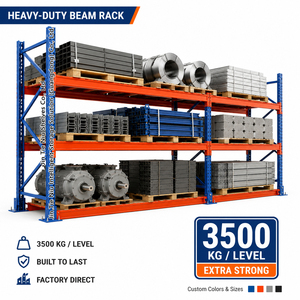
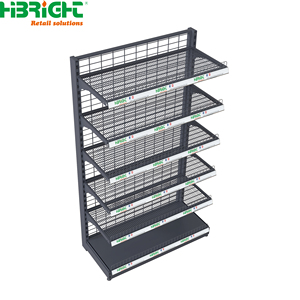
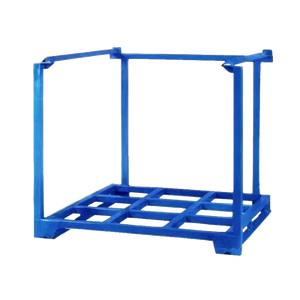
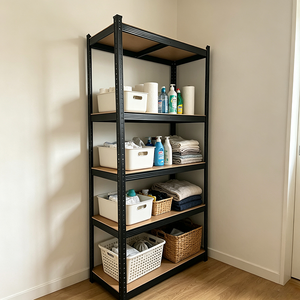
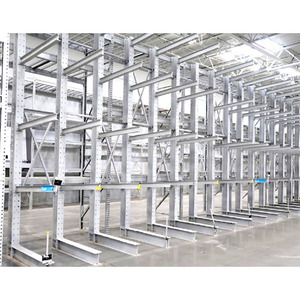
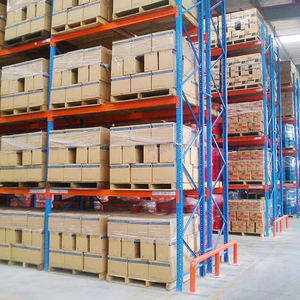
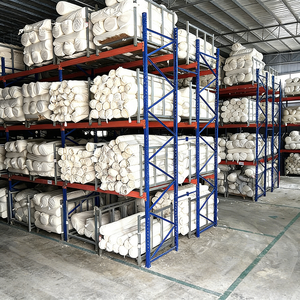
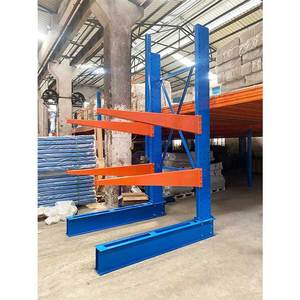
Engineering Architecture of Industrial Selective Pallet Racking Systems
Selective pallet racking stands as the foundational backbone of contemporary global supply chain infrastructure. Unlike static light-duty shelving or generic retail fixtures, industrial selective pallet racking is a dynamic structural steel system calculated to endure static dead loads, dynamic live forklift impacts, seismic vibrations, and thermal fatigue in temperature-controlled deep-freeze environments.
In modern industrial facilities, the selective racking configuration delivers 100% direct accessibility to every single pallet position without repositioning neighboring stock keeping units (SKUs). This makes it indispensable for fast-moving consumer goods (FMCG), third-party logistics (3PL) fulfillment hubs, cold chain distributions, and automated distribution terminals where pallet velocity and throughput flexibility take precedence over ultra-dense compaction.
Cold-Formed Roll-Formed Steel Racking
Engineered from high-yield structural steel coils (ASTM A1011 SS Grade 50 or Q355B equivalent), cold-rolled through multi-station automated roll-forming machines.
- Optimized Strength-to-Weight Ratio: Ribbed profiles, return flanges, and multi-bend profiles create stiff structural sections using minimal raw dead weight.
- Rapid Boltless Connector Adjustment: 50mm or 75mm (2-inch / 3-inch) pitch teardrop or diamond slot patterns enable rapid vertical reconfiguration as pallet height changes.
- Economic Capital Cost: Low freight weight per position, reducing international shipping cubic costs and lowering total procurement expenditure.
- Ideal Application: High-throughput distribution centers, general retail logistics, 3PL contract warehousing, and light-to-medium manufacturing environments.
Hot-Rolled Structural Channel Racking
Manufactured directly from heavy structural C-channels (ASTM A36 / Q235B heavy grade) bolted rigidly with Grade 5 / Class 8.8 structural fasteners.
- Extreme Impact Resistance: Solid web construction exhibits up to 300% higher torsional stiffness and forklift fork puncture resistance than thin sheet sections.
- Sub-Zero Thermal Durability: Immune to brittle cold cracking down to -30°C (-22°F), rendering it standard for blast freezers and refrigerated distribution facilities.
- Heavy Bolted Connections: Semi-rigid bolted beam-to-column node connections deliver proven seismic energy dissipation under extreme lateral earth loads.
- Ideal Application: Heavy industrial manufacturing, raw metal coil storage, automotive tooling, heavy machinery warehousing, and harsh outdoor staging.
Industrial Selective Pallet Racking Engineering Specifications Matrix
| System Parameter | Cold-Formed Roll-Formed System | Heavy Structural Bolted Channel | Automated High-Bay AS/RS Compatible |
|---|---|---|---|
| Raw Material Standard | ASTM A1011 Grade 50 / Q355B Hot-Rolled Strip | ASTM A36 / Q235B Structural C-Channel | Ultra-Low Deflection Micro-Alloyed High-Tensile Steel |
| Upright Section Modulus | 80×60mm, 90×70mm, 100×70mm, 120×95mm | C3×4.1, C4×5.4, C5×6.7 Heavy Channel | Custom Boxed Double-C Profile with Robotic Seam |
| Deflection Limit Standard | L/200 (ANSI MH16.1 & FEM 10.2.02) | L/240 or L/300 for high-load applications | L/400 (Ultra-stringent Crane / Shuttle Tolerances) |
| Upright Steel Thickness | 1.8mm – 3.0mm (14 ga to 11 ga) | 4.5mm – 8.0mm Structural Flange Web | 2.5mm – 4.5mm Continuous Roll-Formed Profiles |
| Connection System | 3-4 Pin Tabbed Riveted Connector with Safety Lock | Heavy-Duty High-Tensile Bolted (M12/M16 Grade 8.8) | Precision CNC Machined Bolted Node Joint Clamps |
| Seismic Acceleration Design | Engineered per IBC Zone 1-4 / ASCE 7 Spectral Ss | High Damping Ductile Frame (High Drift Tolerance) | Full Dynamic Response Spectrum Analysis Model |
| Surface Protection System | 60–80μm Electrostatic Thermoset Epoxy Powder | Epoxy Powder / Hot-Dip Galvanized to ISO 1461 | Anti-Static Durable Industrial Hybrid Polyester Powder |
Future Procurement Trends in Global Industrial Selective Racking
Procurement directors and facility design engineers are navigating unprecedented shifts driven by warehouse automation, international trade carbon compliance, and operational resilience.
1. Convergence of Selective Racking with Autonomous Mobile Robots (AMRs)
Traditional static selective pallet racking is undergoing structural hybridization. Rather than relying solely on manual reach trucks, multinational DC operators are specifying widened bottom beam clear spans and recessed bottom front uprights to accommodate floor-running Autonomous Mobile Robots (AMRs) and automated pallet jacks. Upright frame base plates now demand laser-cut anchor holes with sub-millimeter tolerances to prevent interference with magnetic floor guidance strips and LiDAR navigation sensors.
2. Digital Twin Engineering & PE-Stamped Seismic Modeling
Global institutional buyers no longer accept generic load tables. Procurement workflows now mandate complete FEA (Finite Element Analysis) structural calculation reports, complete with Professional Engineer (PE) stamps compliant with the destination port's building codes—whether that is the International Building Code (IBC) in the USA, Eurocode 3 / EN 15512 across the European Union, or AS 4084 in Australasia. Racking engineering models must interface seamlessly with warehouse BIM (Building Information Modeling) Revit files.
3. Decarbonization & Green Steel Environmental Declarations (EPD)
With the European Union Carbon Border Adjustment Mechanism (CBAM) and corporate ESG audit trails rolling out globally, tier-1 procurement tenders penalize high-carbon steel structures. Future-proof selective racking manufacturers are adopting scrap-based Electric Arc Furnace (EAF) steel sourcing, low-VOC solvent-free electrostatic powder curing systems, and certified Environmental Product Declarations (EPD) that detail the embodied carbon footprint per installed pallet location.
Technological Frontiers in Industrial Racking Production
The transition from low-tech manual metal stamping to automated cyber-physical roll-forming lines is transforming structural rack reliability, durability, and total lifecycle economics.
Continuous Online CNC Punching & Cold-Rolling
Modern selective rack upright manufacturing utilizes synchronized servo-driven CNC piercing heads that punch teardrop, slotted, or hexagonal connector holes simultaneously while the steel strip is continuously fed at 40 meters per minute. This eliminates pitch cumulative error across upright heights exceeding 14 meters, guaranteeing that cross beams seat with zero play and absolute plumbness during field assembly.
Seamless Multi-Axis Robotic Beam Welding
Manual stick welding creates micro-porosity, spatter, and inconsistent throat thickness at the high-stress junction between step beams and 3-pin end connectors. We utilize multi-axis Panasonic and Fanuc robotic welding workstations with automated laser seam tracking. Every weld bead achieves deep root penetration certified to AWS D1.1 structural welding code, guaranteeing that dynamic forklift impacts do not precipitate sudden brittle failure.
Pre-Treatment Nanotechnology & Anti-Corrosion Finishing
To prevent rust creep underneath the paint layer, structural components pass through an automated 7-stage pre-treatment tunnel featuring alkaline degreasing, hot water rinsing, and zirconium nanoceramic conversion coating. This eco-friendly chemical bonding layer delivers over 500 hours of ASTM B117 salt spray resistance, ensuring superior durability in coastal distribution hubs and humidity-intensive cold stores.
Single-Source Manufacturing Excellence: From Concept to Commissioning
Combining over 50 years of rack engineering excellence with agile custom OEM manufacturing, we deliver turnkey reliability that eliminates third-party markups and communication bottlenecks.
Certified Compliance With Global Racking Standards
All structural designs, load charts, and seismic deflection calculations adhere rigorously to RMI (Rack Manufacturers Institute) ANSI MH16.1 specifications, European FEM 10.2.02 / EN 15512, and Australian AS 4084 standards. Every production batch is backed by mill test certificates (MTC 3.1) and certified static test verification.
Custom OEM/ODM Engineering & Fast Prototyping
From unique teardrop configurations compatible with legacy US installations to European 50mm pitch systems and custom structural steel coil saddles, our in-house engineering team designs bespoke profiles. We supply comprehensive 3D CAD models, finite element analysis (FEA), and physical load prototypes within 10 business days.
Full-Scale In-House Fabrication & Zero Outsourcing
We maintain full ownership of every manufacturing stage: raw coil slitting, roll-forming, robotic welding, shot blasting, automatic powder coating, and specialized ocean-export bundling. Eliminating third-party contract fabrication ensures uncompromised dimensional consistency, reliable shipment schedules, and guaranteed traceability.
Engineered Sea-Freight Bundling & Export Packaging
International container transport exposes steel components to severe humidity, marine salt, and rough dynamic shifting. We engineer custom nested steel bundling, corner edge guards, rust-inhibiting VCI film wraps, and custom wood dunnage that maximize 40HQ container cube utilization while guaranteeing zero transit deformation.
Lifecycle Safety Systems & Impact Guarding
Protecting the rack frame is vital for preventing catastrophic warehouse collapse. We supply a complete ecosystem of safety products including structural C-channel column protectors, wrap-around post guards, heavy-duty tubular aisle-end guardrails, backstop safety beams, and NFPA-compliant drop-in steel wire mesh decking.
Global Engineering Documentation & Permitting Support
Exporting to overseas markets requires navigating intricate municipal permitting and structural inspections. We equip our distributors and project managers with verified PE calculation packages, anchor pull-out test reports, comprehensive installation manuals, and detailed pallet load plaque signage conforming strictly to local safety mandates.
Frequently Asked Questions in Selective Pallet Racking Sourcing
Authoritative technical guidance compiled by senior structural engineers to resolve critical engineering, permitting, and commercial procurement inquiries.
Q1 What is the fundamental difference between roll-formed and structural pallet rack?
Roll-formed pallet racking is manufactured from thin-gauge sheet steel (typically 1.8mm to 2.5mm) cold-rolled into complex multi-bend open column shapes with teardrop or slotted holes, assembled with tool-free boltless connectors. Structural pallet racking is fabricated from hot-rolled structural steel C-channels (4.5mm to 8mm thick) with heavy-duty bolted beam connections. Roll-formed is economical, lightweight, and rapidly adjustable, making it ideal for standard warehousing. Structural racking provides superior impact resistance, making it essential for heavy industrial facilities, sub-zero freezers, and rough forklift traffic.
Q2 How do engineers calculate beam deflection limits according to RMI ANSI MH16.1?
Under ANSI MH16.1 specifications, the maximum allowable vertical deflection for pallet rack step beams under full design load is limited to L/200, where L equals the clear span distance between upright columns. For instance, on a standard 96-inch (2438mm) beam, maximum allowable deflection is 0.48 inches (12.2mm). In automated racking or high-precision AS/RS applications, deflection limits are tightened to L/300 or L/400 to prevent automated shuttle hang-ups and optical sensor misreads.
Q3 What critical parameters are required to generate an exact quotation and layout drawing?
To develop an engineered layout and price schedule, we require: (1) Warehouse architectural drawings detailing clear ceiling height, column grid spacing, building slab expansion joints, and fire door locations; (2) Pallet specifications including width, depth, overall height including cargo overhang, and maximum gross unit weight; (3) Material handling equipment specifications such as forklift mast collapsed height, maximum lift height, and minimum right-angle aisle stacking width; (4) Local seismic acceleration parameters (Ss and S1 values); and (5) Ambient facility temperature range.
Q4 How does selective pallet racking compare against drive-in and push-back rack systems?
Selective pallet racking provides 100% SKU selectivity—any pallet can be picked immediately without moving other inventory—making it the benchmark for high-mix inventory, but it yields lower floor space density (roughly 35-40% footprint utilization). Drive-in racking delivers up to 75% volumetric storage density by driving trucks inside deep lanes on a LIFO (Last-In, First-Out) or FIFO basis, but sacrifices SKU accessibility. Push-back racking uses nested rolling carts 2 to 6 pallets deep to balance moderate density with faster access than drive-in racking.
Q5 What concrete floor slab specifications are needed for heavy-duty selective racking?
Industrial selective pallet rack footplates transmit concentrated point loads into the floor slab. Standard installations require a minimum concrete slab thickness of 6 inches (150mm) to 8 inches (200mm) with a compressive strength of at least 3,000 to 4,000 PSI (20.7 to 27.6 MPa), reinforced with rebar or polypropylene fiber mesh. Heavy structural frames or high-bay installations exceeding 10 meters often demand specialized geotechnical core sampling and engineering slab verification to resist punch shear and dynamic overturn moments.
Q6 How do you ensure corrosion protection for cold storage and corrosive chemical facilities?
For sub-zero cold stores and moisture-condensing environments, we offer hot-dip galvanized finishes certified to ISO 1461 / ASTM A123, providing a minimum zinc thickness of 65–85μm that metallurgically bonds with the steel to resist corrosion even if scratched. Alternatively, for dry ambient warehouses, our multi-stage electrostatic thermoset polyester powder coating provides a continuous, pinhole-free 70μm film with superior chip resistance and high-contrast aisle visibility.
Q7 What safety accessories are mandatory to pass warehouse municipal and OSHA/HSE inspections?
Inspecting authorities routinely mandate: (1) Mechanical beam safety locking pins that resist accidental upward dislodgement by forklift forks; (2) Maximum load capacity plaques clearly displayed at the end of every rack row; (3) Post protectors at end-of-aisle intersections exposed to high forklift traffic; (4) Floor anchor bolts installed with verified torque settings on every upright base plate; and (5) Steel wire mesh decking or cross support bars when storing irregular or open-bottom pallets.
Q8 What is your typical manufacturing lead time and export delivery process?
Standard OEM production lead times range between 20 and 30 calendar days depending on tonnage and project complexity. We provide full export logistics support including FOB, CIF, DDP shipping terms, container loading balance plans, fumigated timber dunnage conforming to ISPM 15, and certified customs clearing documentation including Form E, CO, and mill test certificates.
Ready to Optimize Your Industrial Storage Density & Safety?
Consult directly with our structural intralogistics engineers. Whether you require standard teardrop selective racks, custom OEM automated high-bay components, or PE-stamped seismic warehouse designs, our manufacturing team delivers precision quality with single-source pricing.