Precision OEM Industrial Shelving & Racking Solutions
Engineered to handle extreme load dynamics, harsh distribution handling, and high-density warehouse throughput.
Why Tier-1 Integrators Choose Our Manufacturing Ecosystem
Combining structural hot-rolled and cold-formed tube engineering to eliminate supply-chain overhead and structural failures.
Single-Source OEM Accountability
We do not broker steel. From direct billet sourcing, progressive roll-forming, fully robotic welding to electrostatic thermoset powder coat lines, our vertically unified facility guarantees traceable metallurgical consistency, mill test reports (MTR), and zero finger-pointing during warranty cycles.
ANSI MH16.1 & Seismic Design
All upright columns, structural I-beams, and longspan box beams undergo rigorous Finite Element Analysis (FEA). Engineered according to strict RMI (Rack Manufacturers Institute) and ANSI MH16.1 codes, systems are dynamically calibrated against local ground accelerations (Ss, S1) and wind-shear thresholds.
Patented Closed Tube Geometry
Unlike conventional open C-channel sections prone to torsional twisting when side-swiped by material handling equipment, our closed seamless tubular column sections deliver up to 250% higher torsional rigidity and 44-times greater resistance to front-flange forklift impacts.
The Engineering Paradigm of Heavy Duty Longspan Racking
Structural calculation, deflection dynamics, and the economics of high-capacity storage optimization.
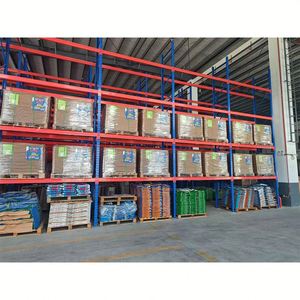
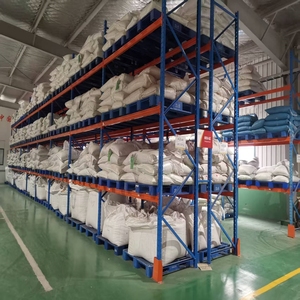
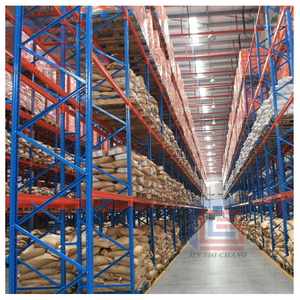
In modern industrial logistics, the physical rack system is no longer a passive warehouse accessory; it is an engineered, mission-critical load-bearing infrastructure. Custom OEM heavy duty longspan racking represents the nexus between manual bulk-goods storage and automated throughput facilities. When specifying longspan arrays for applications spanning heavy machinery spares, aerospace components, automotive manufacturing sub-assemblies, and high-density industrial archives, precision structural calculation takes precedence over mere sheet metal thickness.
1. Mechanical Topology: Open Profiles vs. Closed Structural Tube Uprights
A fundamental vulnerability of generic commercial racking is its reliance on open cold-rolled "C" or "Omega" profiles. When an axial load is introduced alongside lateral eccentricities—such as uneven pallet placement or unintended forklift fork impact—open sections exhibit rapid torsional-flexural buckling. As illustrated in physical laboratory testing and real-world warehouse failure data:
- Closed Tubular Columns (SK2000 Series Design): By utilizing high-yield strength structural steel cold-formed and continuously high-frequency induction welded into a closed rectangular profile, torsional resistance improves by a factor of 44 compared to open sections. Furthermore, with the beam-to-column locking pins fully protected within the neutral axis of the tube, dislodgment risks from snagging pallet edges are virtually eliminated.
- Hot-Rolled Structural Channel (SK3000 Series Design): In deep-freeze cold storage (-30°C) and heavy drive-in configurations, thermal embrittlement and high forklift collision frequencies demand hot-rolled structural steel channels (ASTM A36). Hot-rolled members retain ductile stress absorption profiles even in sub-zero environments, providing impact margins that thin cold-formed profiles cannot match.
2. Uniform Distributed Load (UDL) & Deflection Compliance (L/200)
Engineering longspan systems requires exact bay-width-to-beam-depth modeling. Standard industrial safety protocols dictate that under 100% capacity design loading, beam deflection must strictly adhere to a maximum limit of L/200 (deflection ratio under uniform load, where L equals clear span). When longspan beams exceed spans of 2,400mm up to 3,600mm to accommodate oversized industrial tooling or non-standard containerized payloads, standard single-lip step beams exhibit significant mid-span rotational sag. Our manufacturing lines resolve this through:
- Continuous Boxed Step Beams: Dual-gauge nested structural C-sections continuously stitched via robotic seam welders, ensuring zero web separation under severe dynamic torque.
- Integrated Multi-Tier Locking Hooks: High-tensile, 3-prong and 4-prong heavy gauge drop-forged connector brackets with automated spring-steel retention latches preventing accidental beam unseating during reach-truck elevation maneuvers.
| Profile Architecture | Standard Yield (MPa) | Torsional Rigidity | Forklift Impact Resistance | Primary Application Environment |
|---|---|---|---|---|
| Closed Tubular Section | 355 - 420 MPa | Extreme (Closed Ring) | High (Dents rather than buckles) | E-Commerce DC, High-Bay Longspan, Fast Pick |
| Hot-Rolled Structural Channel | 250 - 355 MPa | High (Heavy Wall Flanges) | Maximum (Absorbs heavy industrial impact) | Cold Storage, Foundry Dies, Drive-In Racks |
| Standard Open Omega Column | 235 - 345 MPa | Low (Prone to twisting) | Moderate (Requires external post-guards) | Light Commercial Archive, Manual Box Picking |
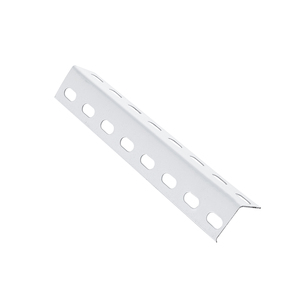
| Galvanized Slotted Angle | 195 - 235 MPa | Minimal (Flexible) | Low (Manual handling only) | Spare Parts Shelving, Workshop Hardware |
3. Future Procurement Trends: Intelligence, Sustainability, and Modular Convergence
Global supply chain leadership is experiencing seismic shifts in procurement dynamics. Corporate buyers, general contractors, and logistics vice presidents are aligning capital expenditures with three critical trends:
- Convergence with Automation (AS/RS & AMR Integration): The boundary between "static shelving" and "dynamic robotics" has dissolved. Modern longspan racking must feature laser-cut datum registration holes capable of accepting conveyor supports, Autonomous Mobile Robot (AMR) top-transfer brackets, and pick-to-light (PTL) cable ducting without compromising structural calculations.
- Full Life-Cycle Decarbonization (Scope 3 Alignment): Multinational procurement teams now demand Environmental Product Declarations (EPDs). Sourcing from facilities that run electric arc furnace (EAF) recycled scrap steel, combined with VOC-free, heavy metal-free powder coating recovery loops, directly reduces Scope 3 carbon penalties for real estate developments.
- Direct-to-Plant Localization & Modular Standardization: The high freight-cube penalty of shipping pre-welded, low-density frames has spurred adoption of precision knockdown (KD) bolted upright frames. KD frames allow maximum container cube utilization—loading up to 26 metric tons per 40ft HQ ocean container—slashing international shipping costs by up to 42%.
Frequently Asked Questions for Project Engineers & Buyers
Direct answers from our structural manufacturing and international project engineering desk.
What are the key technical parameters required for custom OEM longspan structural engineering?
How does your factory handle quality control, dimensional tolerances, and coating adhesion?
Can your engineering team support seismic certification and stamped structural calculations for permitting?
What export packaging protocols are implemented to eliminate transit damage during ocean shipping?
What is the standard manufacturing turnaround time for large-scale multi-container OEM contracts?
Transform Your Warehouse Cubage Into Engineered Performance
Speak with our senior application engineers today to discuss your project layout, obtain structural load capacity calculations, and receive a factory-direct OEM estimate.