Optimizing Warehouse Density with First-In, First-Out (FIFO) Gravity Dynamics
As a leading Chinese wholesale industrial storage solutions manufacturer and global exporter, we supply high-capacity pallet flow racking, automated dynamic storage, and heavy-duty structural warehouse configurations. Combining RMI ANSI MH16.1 compliance, certified Q235B/Q355B hot-rolled structural steel, and high-precision centrifugal speed-controller rollers, our systems deliver up to 60% warehouse footprint recovery across cold-chain, pharmaceutical, food & beverage, and high-throughput distribution hubs.
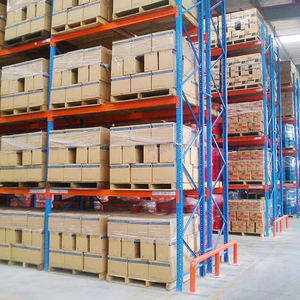
Combined Load-Row Connected Industrial Pallet Racking System Heavy Duty Warehouse Storage Racks 2000kg Steel
Heavy-duty row-connected structural system designed for uniform pallet distribution and high seismic stability up to 2000kg per bay.
View Specifications →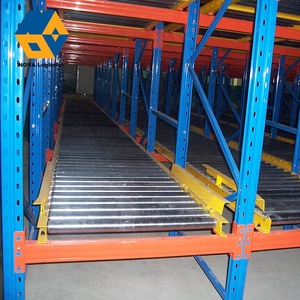
NOVA Warehouse Storage Steel Gravity Flow Rack, Heavy Duty Gravity Pallet Racking/
Engineered inclined roller tracks utilizing natural gravity for seamless pallet movement, ideal for fast-moving FMCG and food lines.
View Specifications →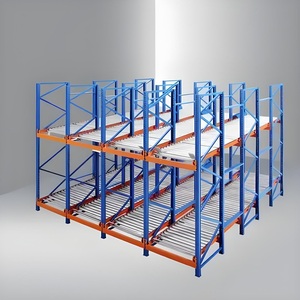
Custom Industrial Warehouse Pallet Flow Steel Roller Racks Gravity Racking
Custom-configured dynamic roller beds equipped with built-in speed controllers, entry guides, and automatic pallet-separation stops.
View Specifications →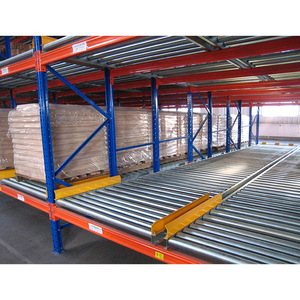
FIFO High Efficient Warehouse Storage Gravity Pallet Flow Racks Roller Rack/Pallet Flow Racking
Strict FIFO inventory turnover optimization eliminating cross-aisle forklift traffic, reducing labor cycle times by up to 45%.
View Specifications →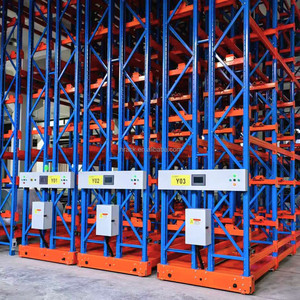
Industrial Heavy Duty High Efficiency Warehouse Electric Mobile Storage Shelf Automatic Mobile Racking System Pallet Rack
Motorized floor-rail high-density racking condensing multiple access aisles into a single operational aisle via programmable PLC control.
View Specifications →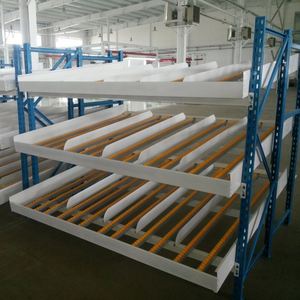
Large Metal Heavy Duty Warehouse Storage Racks Pallet Racking Gravity Flow Racks Safety Efficiency Anti-Rust Fifo Racking
Corrosion-resistant electrostatic powder-coated or hot-dip galvanized finish designed for cold rooms and rigorous industrial atmospheres.
View Specifications →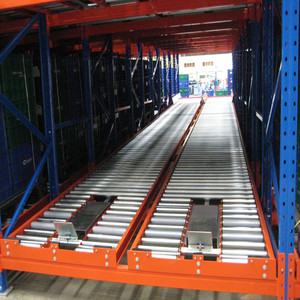
Factory Steel Durable Heavy Duty CE Certified Warehouse Gravity Carton Pallet Flow Roller Sliding Rack
Certified CE-compliant dual-purpose flow design supporting dynamic carton live-storage and heavy pallet glide integration.
View Specifications →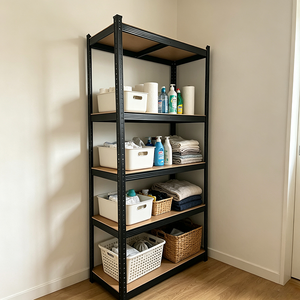
Light Duty Slotted Angle Storage Rack Adjustable 5 Tier Shelving Unit Assembly Garage Small Workshop Card Slot
Modular boltless quick-assembly shelving unit engineered for auxiliary warehouse operations, spare parts rooms, and light utility storage.
View Specifications →Pallet Flow Racking Engineering & High-Density System Comparison
Selecting the right deep-lane storage system requires evaluating inventory turnover speed, total SKU diversity, capital expenditure, and building constraints. Use this structural engineering matrix to evaluate gravity flow against alternative systems.
| System Type | Inventory Principle | Storage Density | Selectivity | Forklift Aisle Demand | Ideal Industrial Application |
|---|---|---|---|---|---|
| Pallet Flow (Gravity Flow) | Strict FIFO | Very High (Up to 20 deep) | High (Lane-level) | Low (Dedicated Loading / Discharge) | Cold storage, grocery, pharma, date-sensitive consumer goods |
| Push-Back Racking | LIFO | Moderate-High (2–6 deep) | Moderate | Moderate (Single service aisle) | Bulk warehousing, non-perishable batch manufacturing |
| Drive-In / Drive-Through | LIFO / FIFO | High | Low | High risk (Forklifts enter rack structure) | Homogenous low-SKU raw materials, seasonal storage |
| AS/RS & Shuttle Systems | FIFO / Dynamic LIFO | Maximum High-Bay | Automated Full Access | Zero manual forklift traffic | Fully automated mega-distribution hubs, e-commerce |
Future Procurement Trends in Industrial Pallet Flow Systems
Global warehousing is shifting from static steel frames to dynamic, automation-ready infrastructure. B2B buyers must anticipate these technical and supply chain developments over the next five to ten years.
1. Total Cost of Ownership (TCO) Prioritization
Procurement teams are transitioning from pure initial Capex evaluation to full lifecycle TCO models. High-precision dynamic rollers with sealed bearings, heavy-duty structural steel entry beams, and reinforced column bases prevent expensive catastrophic impacts, reducing maintenance expenditures by up to 38% over 10-year operating windows.
2. Convergence with AMR & AGV Material Handling
Pallet flow discharge ends are increasingly integrated with Autonomous Mobile Robots (AMRs) and Automated Guided Vehicles (AGVs). This requires strict manufacturing tolerances on roller pitch, friction-braking consistency, and pallet presentation indexing sensors to ensure reliable automated robotic pickups.
3. Stringent Seismic & Cold Storage Engineering
With severe global weather anomalies and stringent national safety mandates, international buyers demand seismic structural calculations (conforming to RMI MH16.1, EN 15512, and AS 4084). In cold-chain logistics (-25°C to -30°C), low-temperature lubricating greases and specialized steel ductility ensure zero embrittlement failures.
Pallet Flow Racking Technological Evolution
How gravity-fed dynamic racking evolved from rudimentary skate-wheel tracks into sophisticated flow management systems.
Stage 1: Conventional Skate Wheels
Early gravity systems relied on simple plastic skate wheels without speed regulation. While cost-effective for uniform, lightweight loads, they suffered high pallet runaway rates, point-load deflection, and accelerated pallet base splintering when handling loads over 800kg.
Stage 2: Continuous Full-Width Rollers & Centrifugal Brakes
The introduction of heavy-gauge full-width steel rollers paired with internal centrifugal speed controllers revolutionized the industry. These governors automatically apply braking resistance proportional to pallet speed, maintaining a steady, safe gliding velocity of 0.2 to 0.3 m/s regardless of whether the pallet weighs 300kg or 1500kg.
Stage 3: Smart Separators & Modular Track Systems
Modern flow systems feature mechanical pallet separator devices at the pick face. The separator isolates the front discharge pallet from the cumulative back-pressure of trailing pallets, eliminating forklift extraction resistance and significantly improving workplace safety.
Why Global Distributors Choose Our Manufacturing Facility
Combining comprehensive in-house cold roll-forming capabilities, certified robotic welding, and complete technical export documentation.
Single-Source In-House Production
From structural upright roll-forming to precision stamping of beam connectors and dynamic roller bed assembly, 100% of fabrication occurs within our state-of-the-art facility. This ensures stringent dimensional tolerances and continuous batch traceability.
Rigorous International Standards
All designs conform to American RMI ANSI MH16.1 and European EN 15512 specifications. We furnish certified seismic calculations, finite element analysis (FEA), and third-party material mill test certificates (MTC) with every export shipment.
Container-Optimized Export Packaging
Our engineering team maximizes 40ft High Cube (40HQ) container utilization via specialized bundling racks, steel strap bracing, protective corner-guards, and water-resistant shrink wrapping, preventing transit deformation and corrosion across sea voyages.
Frequently Asked Questions on Pallet Flow Racking Procurement
Critical technical, engineering, and logistics considerations addressable before issuing your RFQ.
What warehouse parameters are required to calculate lane slope and roller spacing?
How do speed controller brakes operate, and how many are installed per lane?
Can standard wooden GMA pallets be used on gravity roller beds safely?
What is the lead time for custom export orders and container shipping arrangements?
How does pallet separation technology protect forklift drivers and equipment?
Transform Your Warehouse Throughput with Factory-Direct Engineering
Consult with our storage design engineers, request detailed 2D/3D CAD layouts, or receive an exact competitive wholesale quotation tailored to your facility parameters.
Inquire Now