High-Capacity Boltless Rivet Shelving Solutions
Explore our export-certified heavy duty rivet racking series engineered for industrial distribution warehouses, commercial retail displays, cold storage operations, and automated logistics centers worldwide.
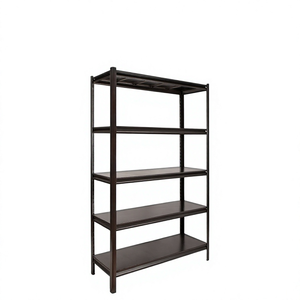
Warehouse Steel Boltless Rivet Storage Racks For Garage Anti-rust Heavy Duty Adjustable Metal Shelving Units
- Load / Tier400 - 650 KG
- Upright1.8-2.0mm Q235B
- FinishEpoxy Powder
- AssemblyBoltless Interlock
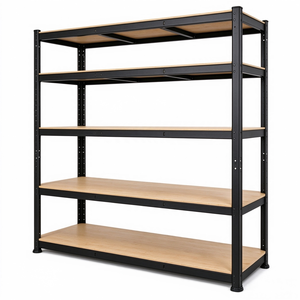
Rolled Steel Rivet Display Rack Adjustable 4 Tier Boltless Shelving Height for Grocery Shop Retail Warehouse Product Display
- Configuration4-Tier Modular
- DeckingSteel / MDF Mesh
- Pitch Adj.38.1mm (1.5")
- ApplicationRetail & Store
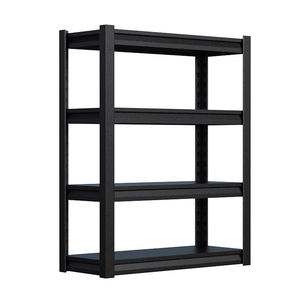
Yunbang Heavy Duty 5 Layer Steel Boltless Rivet Storage Rack Corrosion Protection Powder Coated Adjustable Warehouse Storage
- Structure5-Layer Tiered
- PretreatmentAcid-Pickle Phos.
- StandardISO9001 / CE
- SurfaceThermo-Cured Dry
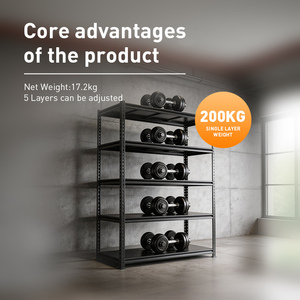
Heavy Duty Boltless Rivet Shelving Steel Storage Rack Iron Stacking Racks for Garage Kitchen Warehouse Industrial Metal Shelf
- CapacityUp to 800KG/Tier
- Lock TypeDual-Tear Keyhole
- UprightCold Form C-Post
- CertificationRMI / ANSI MH28
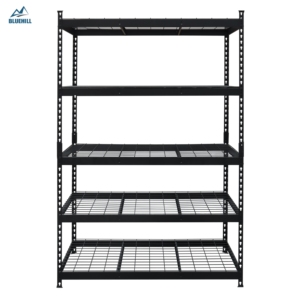
Factory Workshop Shelves Material Boltless Racks Industrial Heavy-Duty Rivet Shelving for Parts & Equipment
- Beam StyleDouble Rivet L/Z
- Deck Span1200 - 2400mm
- Impact Tol.Class IV Impact
- MaintenanceZero Bolt Torque
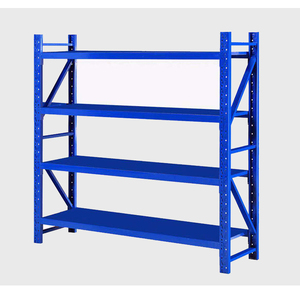
Heavy Duty 5 Layers Shelf Metal Steel Warehouse Stacking Storage Rivet Shelving Rack
- Total Height1800 - 3000mm
- Bay Depth450 - 900mm
- Safety PinsPositive Gravity
- PackagingFlat Export Pack
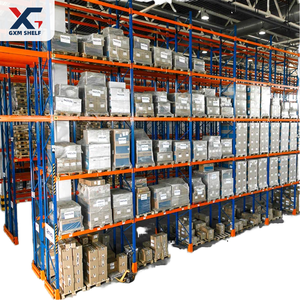
Heavy Duty Boltless Selective Pallet Rack Rivet Shelving Steel Warehouse Storage System with ESD Protection Epoxy Powder Coated
- ElectronicsESD Dissipative
- Pallet Access100% Selective
- Weld IntegrityAWS D1.1 Robotic
- CoatingElectrost. 80-120μ
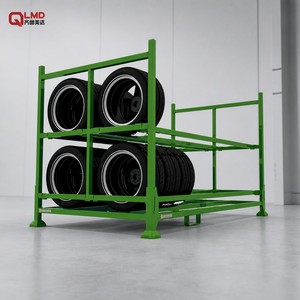
Boltless Riveted Steel Heavy Duty Storage Rack | 5-Layer Brushed Anti-Rust Stillage | 2000mm Length
- Bay Clear Span2000mm True Clear
- Steel GradeHigh Tensile SPCC
- BracingRigid Integrated
- Shelf DeckZinc Corrugated
Engineering Excellence in Heavy Duty Boltless Rivet Racking: Architectural White Paper
In modern warehousing, industrial order picking, and automated supply chains, manual assembly and structural adaptability dictate logistical throughput. Heavy duty rivet racking—often classified in international material handling nomenclature as boltless keyhole shelving or angle post rivet racking—occupies a vital engineering niche between lightweight slotted angle shelves and full-scale selective pallet racks. By eradicating nuts, bolts, clips, and cross-bracing hardware, rivet racking utilizes precision gravity-interlocking cold-rolled carbon steel posts and beams that maximize volume utilization while drastically mitigating maintenance lifecycle costs.
Deflection Limits & Structural Safety Ratio: Our export-grade rivet racking systems are engineered in strict compliance with ANSI MH28.2 and FEM 10.2.06 standards. Structural deflection under uniformly distributed loads (UDL) is held below L/200 across horizontal beams, with a static safety factor exceeding 1.65 to 1.8 against yield failure.
1. Cold-Formed Metallurgy & Structural Dynamics
The core structural integrity of heavy-duty rivet shelving systems depends strictly on the metallurgical yield strength of the steel grades utilized. As a premier Chinese manufacturing exporter, our lines standardize on certified cold-rolled coil steels, primarily Q235B structural carbon steel (equivalent to ASTM A36) and SPCC cold-rolled steel for tight tolerance profiles. The cold roll-forming process introduces strain hardening along the vertical bend radiuses, producing an upright post profile that displays remarkable torsional stiffness and high moment of inertia without inflating tare weight.
Unlike low-cost retail light-duty shelves manufactured from unverified commercial-grade strip scrap, our posts leverage full 1.5mm to 2.2mm wall thickness cold-formed into custom 38mm x 38mm or 45mm x 45mm angle sections. Keyhole drop punches are produced on automated high-speed mechanical press banks utilizing progressive CNC carbide tooling, ensuring a pitch tolerance within ±0.12mm across a 3000mm upright span. This microscopic precision prevents cumulative post twist, allowing multi-tier mezzanine floor construction up to 3 tiers high.
2. Mechanics of the Dual-Rivet Interlock Connection
The kinetic core of boltless racking is the tapered keyhole and shoulder-rivet interface. A precision-turned steel rivet featuring a stepped shoulder is hydraulically peened or robotic resistance-welded to the horizontal beam end-connector. When seated into the teardrop punch on the upright, gravity combined with shelf load drives the rivet shoulder firmly into the narrow lower taper.
This mechanical action generates a high-rigidity semi-rigid joint connection. Under downward gravitational force (UDL), the connection becomes progressively tighter, effectively eliminating sway without the diagonal rod bracing required by traditional bolted metal shelving. Consequently, four-sided open access is achieved, permitting 360-degree replenishment and picking operations in e-commerce fulfillment aisles.
| System Architecture | Structural Load Rating (UDL) | Assembly Labor / Cost | Reconfiguration Flexibility | Primary Industrial Application |
|---|---|---|---|---|
| Heavy Duty Double Rivet Racking | 400 - 800 KG / Shelf | Extremely Low (Rubber Mallet Only) | Instantaneous (No Tools Required) | Warehousing, Industrial Bins, Bulk Pick Modules |
| Single Rivet Low Profile Shelving | 150 - 300 KG / Shelf | Extremely Low (Tap-in Design) | High Vertical Clearance Optimization | Retail Backrooms, Office Archives, Auto Parts |
| Traditional Nut-and-Bolt Shelving | 80 - 180 KG / Shelf | High (Wrench / Screw Assemblies) | Rigid (Requires Complete Disassembly) | Light Commercial, Light Domestic Sheds |
| Structural Heavy Pallet Racking | 1000 - 4500 KG / Tier | Moderate (Crane/Forklift Erected) | Requires Engineered Mechanical Locking | Full Palletized Unit Loads, Drive-In, AS/RS |
Integrated Chinese Factory Advantages & Single-Source Control
From metallurgical decoiling to final flat-pack export container logistics, our automated manufacturing plants eliminate sub-supplier markups, secure structural quality, and accelerate worldwide lead times.
Single-Source In-House Fabrication
We eliminate sub-contractors. Rolling, progressive punching, robotic MIG/TIG welding, automated stamping, and surface coating take place under one centralized quality management system certified to ISO9001 and ISO14001.
Advanced Continuous Roll-Forming
18-station cold roll-forming lines guarantee consistent cross-sectional post geometry with zero twist or bow. Real-time laser dimension gauging checks hole center-to-center pitch down to ±0.08mm across batch runs.
Multi-Stage Anti-Rust Pretreatment
Our 9-tank automated pretreatment cycle incorporates alkaline degreasing, ultrasonic rust removal, zinc phosphating, and deionized water rinsing to ensure 500-hour neutral salt-spray (ASTM B117) corrosion resistance.
Specialized ESD Protective Coating
For cleanrooms, semiconductor parts staging, and electronics manufacturing, we apply thermoset conductive epoxy powder coatings that safely dissipate static charges (surface resistivity 10⁶ to 10⁹ Ω/sq).
High-Cube Knockdown Packaging
Engineered flat-pack cartons, strapped steel bundling, corner edge guards, and vapor-corrosion-inhibitor (VCI) shrink wrap maximize sea freight 40ft HQ container loading to over 26.5 Metric Tons without transit chafing.
Strategic Procurement Outlook & Technology Roadmap (2025–2030)
The global warehouse racking ecosystem is undergoing rapid transformation driven by labor automation, sustainable building standards, and real-time inventory velocity. Sourcing managers and material handling engineers are evaluating racking systems not merely as steel framing, but as integration-ready platforms for automated micro-fulfillment.
1. Micro-Fulfillment & Autonomous Mobile Robot (AMR) Integration
Traditional rivet shelving was exclusively designed for human foot traffic with pushcarts. However, e-commerce picking dynamics have catalyzed the adoption of Person-to-Goods (P2G) and Autonomous Mobile Robot (AMR) navigation. This evolution introduces strict new procurement requirements:
Upright bottom baseplates now feature recessed anchors to eliminate wheel path collisions for low-chassis AMRs. Shelf clear spans are standardizing around 1200mm, 1500mm, and 1800mm to perfectly align with standardized plastic tote matrices (600x400mm Euronorm bins). Furthermore, beam deflection thresholds are tightening from L/200 down to L/300 to guarantee that robotic vision sensors and optical barcode scanners do not experience focal depth errors caused by sagging shelf decks.
2. Metallurgical Light-Weighting via High-Yield Stiffened Profiles
Escalating global ocean freight volatility has prioritized steel design optimization. Chinese manufacturers are transitioning from thick-walled low-carbon steel to micro-alloyed, cold-rolled high-strength steels (HSLA) featuring proprietary continuous longitudinal rib embossing.
By rolling double-vee stiffening ribs along the web of angle posts and step beams, structural section modulus increases by 18% to 24% while reducing structural steel weight by 12%. This metallurgical evolution lowers ocean shipping freight charges per storage unit, providing immense cost savings for large-scale logistics hub tenders across North America, Europe, Australia, and the Middle East.
Procurement Trend: Nearshoring Buffer Stock
Global supply chain managers are adopting "China Primary OEM + Regional Hub Buffers". Wholesalers and regional distributors import standardized bulk Knock-Down (KD) containerized components from China, storing uprights and beams at regional ports for instantaneous cut-to-length custom assembly, dropping project fulfillment lead times from 12 weeks to 72 hours.
Technology Trend: VOC-Free Low-Carbon Powder Coating
ESG procurement mandates are phasing out solvent-heavy coatings. Our advanced automated finishing lines utilize 100% solid thermosetting polyester powder paints free of heavy metals and volatile organic compounds (VOCs). Excess overspray is recaptured at a 98% efficiency rate via multi-cyclone recovery booths, meeting global Net-Zero environmental standards.
Decking Trend: Modular Composite & Wire Infill
Traditional particleboard decking is susceptible to humidity sag and fire code penalties. Contemporary warehouse specs demand electro-galvanized wire mesh decks with integrated channel supports, promoting sprinkler water penetration (NFPA 13 compliance) and eliminating mold risks in pharmaceutical, chemical, and cold storage environments.
Digital Trend: BIM & CAD Integration in B2B RFQs
Procurement teams no longer accept static PDF quotes. We supply full parametric Revit BIM objects and 3D IFC models during initial RFQ proposal stages. This allows logistics architects to run automated collision detection against HVAC ducting, lighting conduits, and building structural columns before steel production commences.
Frequently Asked Questions on Rivet Racking Procurement
Direct technical answers from our structural engineers covering load testing, customization, ocean logistics, certifications, and warehouse building code compliance.
What is the structural difference between single-rivet and double-rivet beam racking?
How do your factories ensure uniformly distributed load (UDL) ratings comply with ANSI MH28.2?
Can your manufacturing lines produce custom keyhole punches, pitch spacing, and OEM brand colors?
What shelf decking materials are supplied, and what are their operational trade-offs?
How are heavy steel racking components protected against ocean freight corrosion and container damage?
What is the typical production lead time for full container load (FCL) orders?
How does rivet racking compare to boltless clip shelving in high-seismic zones?
What technical information is required to receive a comprehensive engineering proposal and quotation?
Ready to Engineer Your Next-Generation Storage Project?
Direct from our manufacturing facility: Get structural load calculations, custom profile drawings, 3D BIM models, and competitive wholesale export pricing tailored to your project requirements.