Engineered Storage & Material Handling Equipment
High-yield steel structures, ISO-certified load testing, and fully modular warehouse storage configurations ready for worldwide distribution.
Engineering Excellence in Heavy Duty Warehouse Storage: Strategic Procurement Guide
Modern global logistics networks face unprecedented pressure to increase vertical space efficiency, reduce footprint footprints, and seamlessly interface with robotic material handling fleets. As industrial supply chains pivot toward hyper-density, international procurement managers and project contractors are shifting away from commoditized rack suppliers in favor of verified engineering partners. Sourcing heavy duty warehouse storage systems from China offers immense cost-to-performance dividends, provided the systems are engineered under rigorous load, seismic, and metallurgical standards such as RMI ANSI MH16.1, FEM 10.2.02, and EN 15512.
Structural Integrity: Hot-Rolled Channels vs. Cold-Formed Tubular Profiles
The structural life of an industrial racking system is heavily influenced by cross-sectional beam design and steel grade selection. Standard warehouse selective racks often utilize cold-rolled roll-formed steel, which provides high yield strength and easy snap-in modular adjustment for fast installations. However, in heavy forklift impact zones, cold-storage environments below zero degrees Celsius, and high-turnover fast-moving consumer goods (FMCG) distribution centers, structural hot-rolled channel steel provides superior torsion resistance and withstands forklift collisions without catastrophic beam buckling.
China's elite manufacturing plants utilize continuous roll-forming lines, automated laser tube profiling, and robotic GMAW/FCAW welding stations. Integrating heavy-gauge Q235B or Q355B high-tensile hot-rolled coils ensures consistent steel composition, avoiding brittle fracture scenarios common in sub-standard recycled alloys. Dual-post structural uprights combined with high-ductility seismic baseplates ensure the entire system dissipates mechanical shear forces during seismic events or mechanical impacts.
Structural Load Calculations
Every bay is engineered with Finite Element Analysis (FEA) to confirm deflection tolerances well under L/200, strictly following ANSI MH16.1 and EN 15512 specifications.
Automated Anti-Corrosion Finishing
Multi-stage chemical pre-treatment, zirconium phosphating, and electrostatic powder coating cured at 200°C ensure scratch-resistant surfaces passing 500-hour salt spray testing.
Full Export Compliance & Traceability
Comprehensive mill test certificates (MTC), heat-number tracking, third-party weld ultrasonic inspection, and bilingual assembly manuals facilitate seamless customs and local permits.
Technical Selection Matrix: Aligning Storage Topology with Operational Velocity
Selecting the optimal storage configuration requires a careful balance between SKU diversity, storage density, and retrieval cycles. The table below outlines how engineering teams specify storage architectures based on operational velocity and site parameters:
| System Architecture | Volumetric Density | Selectivity Profile | Inventory Rotation | Ideal Industrial Applications |
|---|---|---|---|---|
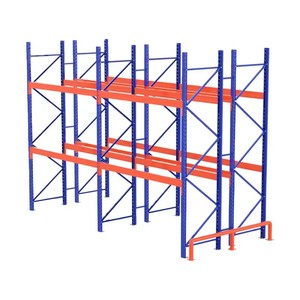
| Selective Pallet Racking | Baseline (40-50%) | 100% Direct Access | FIFO / LIFO Universal | High SKU variety, 3PL distribution, general e-commerce warehousing |
| Double Deep Systems | High (+30% vs. Selective) | 50% Direct Access | LIFO | Multi-pallet SKU batches, dry grocery, cold-room buffer storage |
| Drive-In / Drive-Through | Maximum Non-Automated | Low (Lane-specific) | LIFO (Drive-In) / FIFO (Drive-Thru) | Seasonal products, bulk ingredients, blast freezers with few SKUs |
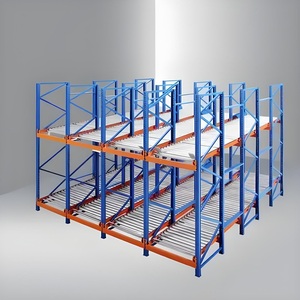
| Pallet Flow (Gravity Roller) | Very High | Lane Dependent | Strict FIFO | Perishable food, pharmaceuticals, dairy, fast-moving cross-docking |
| AS/RS High-Bay Clad Rack | Ultra-High (Up to 40m+) | Dynamic / Computerized | Fully Automated Dynamic | Labor-scarce hubs, 24/7 dark warehouses, high-value manufacturing |
Emerging Sourcing Trends: The Shift Toward Hybrid & Automated Logistics Warehouses
The warehouse equipment sector is undergoing three transformative transitions that are shaping enterprise procurement strategies worldwide:
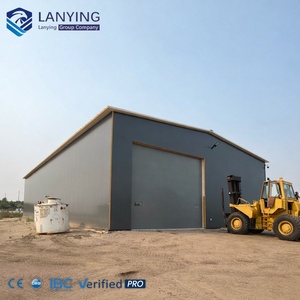
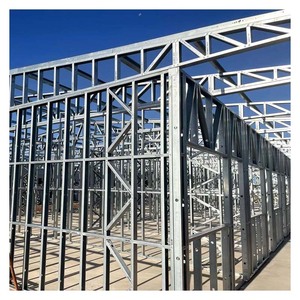
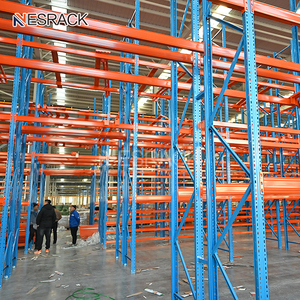
1. Rack-Supported Building Enclosures (Clad Racking): Rather than building an empty steel hangar and filling it with freestanding racks, logistics developers are increasingly procuring rack-supported structures. In this architecture, the heavy duty racking uprights serve a dual purpose: bearing internal pallet loads while acting as the primary building columns to support exterior wall cladding and roof framing. This approach cuts structural steel consumption by up to 25%, drastically accelerates project handover, and maximizes vertical clearance up to 45 meters.
2. AMR & Shuttle-Ready Engineering: Traditional forklift-only aisles are rapidly transforming into hybrid zones accommodating Autonomous Mobile Robots (AMRs) and automated radio shuttles. Sourcing racking systems today requires tighter manufacturing tolerances, specifically upright verticality within 1/1000 and deflection tolerances conforming to FEM 9.831 guidelines. Sub-millimeter precision in beam stamping and robotic welding prevents shuttle jamming and sensor trip-outs in unmanned warehouses.
3. Sustainable Surface Finishes & Circular Supply Chains: Leading international enterprises now require Environmental Product Declarations (EPD) and low-VOC powder coating processes. Chinese tier-1 suppliers utilize heavy metals-free TGIC polyester powder coatings, automated wastewater recycling during steel pre-treatment, and high-efficiency natural gas curing ovens to ensure systems comply with European RoHS and REACH standards.
Why Partner With Us: Engineering-Led Manufacturing Authority
Decades of continuous fabrication experience, international design accreditation, and transparent quality control pipelines provide peace of mind across complex turn-key installations.
Single-Source Responsibility
From initial structural static calculations and 3D BIM integration to custom fabrication, container loading optimization, and on-site supervisor dispatch, we eliminate multi-vendor finger-pointing.
Advanced Testing & Traceability
Our in-house QA laboratories conduct universal tensile tests, Charpy V-notch impact tests for cold-store alloys, ultrasonic weld non-destructive testing, and real-scale pallet beam loading tests.
Precision Packaging & Ocean Logistics
Custom steel packaging frames, foam-wrapped upright bundles, and rust-inhibiting VCI desiccants protect components against salt-fog corrosion and transit warping during 40-foot HQ maritime voyages.
Frequently Asked Questions on Heavy Duty Rack Procurement
Direct technical answers to common queries raised by procurement teams, warehouse architects, and logistics project managers.
Q: What engineering parameters are required to generate an accurate rack layout and structural quote?
To deliver verified engineering drawings and pricing, provide the facility's CAD architectural drawings (clear height, column grid, slab thickness, and expansion joints), pallet parameters (length, width, height including cargo overhang, and gross weight), material handling equipment specs (mast height, aisle turning radius), and target seismic or municipal codes.
Q: How do structural bolted channels compare with boltless teardrop uprights in heavy duty installations?
Boltless teardrop systems allow fast, tool-free installation and repositioning, making them ideal for light-to-medium retail distribution. Structural bolted systems use thick hot-rolled structural C-channels connected with Grade 5/8.8 bolts, delivering vastly superior resistance to forklift collisions, greater vertical load capacities, and extended fatigue lifespans in demanding deep-freeze and heavy industrial operations.
Q: How do you ensure steel quality consistency and prevent corrosion in sub-zero cold rooms?
We procure raw steel exclusively from Tier-1 state-owned mills accompanied by validated 3.1 Mill Test Certificates. For freezer applications down to -30°C, we specify low-temperature impact resistant steels (e.g., Q355D/E) to prevent low-temperature embrittlement, paired with multi-stage hot-dip galvanizing conforming to ISO 1461 for lifetime rust prevention.
Q: Can your manufacturing plant accommodate custom OEM dimensions and seismic load requirements?
Yes. More than 70% of our production volume is tailored to project-specific engineering profiles. Our engineering office performs localized seismic design calculations in accordance with RMI, AS4084, and Eurocode 3 standards, supplying full structural calculation packs to assist local permitting authorities.
Q: What is the standard manufacturing lead time and container packing efficiency for export orders?
Standard production lead time ranges between 20 to 35 business days following drawing sign-off. We deploy specialized 3D container packing software to maximize container volume and weight limits, securing upright frames on tailored steel cradles that streamline fork unloading at the destination port.
Q: Do you provide installation guidance and third-party site verification support?
Yes. We supply comprehensive 3D assembly animations, bilingual installation manuals, and detailed torque mark standards. For large-scale installations, we dispatch certified site supervisors to oversee the erection process, or partner with authorized local mechanical installation contractors globally.
Ready to Engineer Your High-Density Storage Facility?
Connect with our senior logistics structural engineers for free preliminary design layouts, beam deflection analyses, and competitive direct-from-factory quotes.