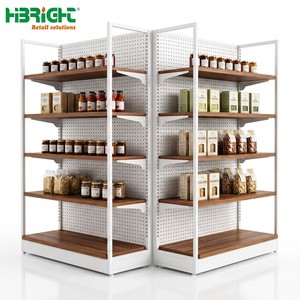
Industrial Fleet Lineup
State-of-the-Art Automated & Robotic Racking Solutions
Continuous robotic welding lines, Q235B/Q355B structural steel, and tight fabrication tolerances customized for modern AS/RS facilities, retail networks, and automated shuttle systems worldwide.
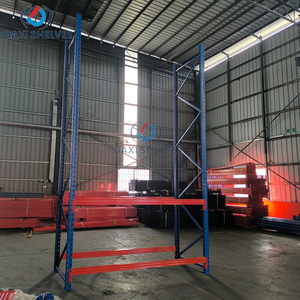
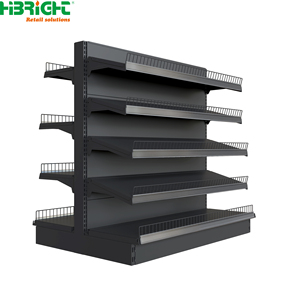
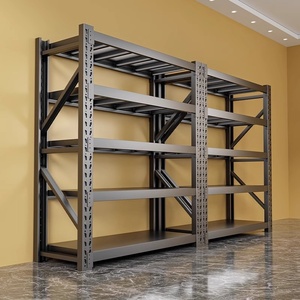
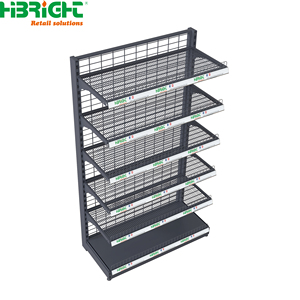
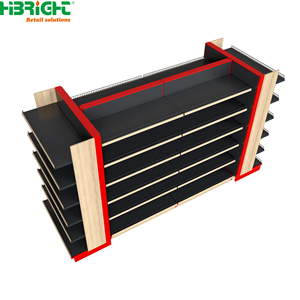
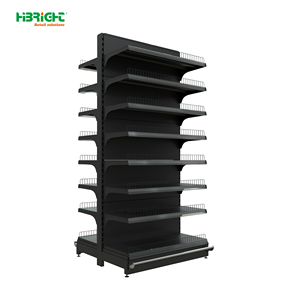
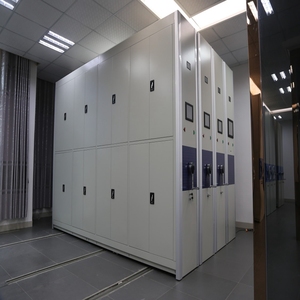
Manufacturing Rigor
Why Tier-1 Integrators Choose Our Chinese Manufacturing Core
Industrial racking within automated storage and retrieval systems (AS/RS) is not merely a steel shelving frame; it is an active mechanical superstructure where cumulative structural deflection directly dictates robotic cycle success and long-term operating safety.
Full-Chain Automated Production
Equipped with 6-axis OTC robotic welding workstations and 24-station continuous roll-forming mills. Each upright column and load beam is formed with laser-calibrated hole pitch (50mm/75mm adjustment) ensuring strict verticality without manual deviation.
Certified Static & Dynamic Load Tests
Every batch undergo physical destructive testing, finite element analysis (FEA), and seismic simulation according to ANSI MH16.1 and EN 15512 specifications. Guaranteed safety factor ratings ranging from 1.5 to 1.9 under full design payload.
Corrosion-Resistant Surface Finishing
Complete 7-stage chemical pre-treatment followed by Swiss Gema electrostatic powder coat curing at 200°C. Delivers a minimum coating thickness of 70–90μm, passing rigorous 500-hour neutral salt-spray (ASTM B117) tests for cold-chain resistance.
Future Procurement Horizon
Future Procurement & Technological Trends in Heavy-Duty Robotic Racking
As logistics operations transition toward dark warehouses and autonomous multi-agent orchestration, the physical tolerances expected of steel structural racking have experienced an order-of-magnitude leap.
1. Micron-Level Guidance Profiles for 4-Way Shuttles
Standard forklift tolerances (±3.0mm) trigger high abort rates for high-speed four-way shuttles and autonomous reach trucks. Next-generation procurement specs demand running track flatness within ±0.5mm per 2-meter track run to prevent wheel slip and optical misalignment.
2. High-Strength Ultra-Thin Structural Steels
By shifting from conventional Q235 carbon steel to micro-alloyed thermo-mechanically controlled high-tensile steels (e.g., Q355B and Q460), modern racking achieves 18% weight reduction while increasing seismic resilience and dynamic torsional stiffness in high-bay structures up to 40 meters.
3. Digital Twin & Embedded Structural Health Monitoring (SHM)
Smart rack columns now feature integrated fiber-optic strain gauges and tri-axial tilt sensors. These modules feed instantaneous deflection, impact, and overload data directly into warehouse execution software (WES) to preempt collapse hazards before routine safety audits detect them.
Architectural Benchmark
Structural System Selection Matrix for Automated Logistics
A rigorous engineering comparison to guide procurement teams, systems integrators, and plant engineers toward the optimal balance of throughput, space utilization, and floor payload.
| Racking Architecture | Maximum Bay Height | Payload Density | Robotic Interface Compatibility | Primary Industrial Use-Case |
|---|---|---|---|---|
| 4-Way Automated Shuttle Racking | Up to 24m | Ultra-High (85%-92% cube) | 4-Directional Autonomous Shuttles, Vertical Lifts | Cold Storage, FMCG, Pharmaceutical Buffers |
| Rack-Clad AS/RS Superstructures | Up to 45m | Maximum (Building structure is the rack) | Single/Double Mast Stacker Cranes (SRMs) | Raw Material Hubs, Mega Distribution Centers |
| Electric Mobile Pallet Racking | Up to 12m | High (65%-75% cube) | Standard Forklifts, AGVs, Guided Counterbalance | Heavy Dies, Raw Metals, Archival Storage |
| Seamless Welded Heavy Pallet Rack | Up to 14m | Medium (100% Selective) | Reach Trucks, AMR Lifters, Counterbalance | Supermarket Retail, High-SKU Distribution |
| Heavy Multi-Tier Pick Modules | Up to 16m (4 tiers) | High Velocity SKU Access | Conveyor Loops, Spiral Chutes, Autonomous Carts | E-commerce Fulfillment Centers, B2B Spare Parts |
Supply Chain Superiority
End-to-End Enterprise Manufacturing Infrastructure
We combine advanced metallurgy, automated robotics, and global supply logistics to mitigate operational friction for international procurement projects.
24h Fast Design Response
Dedicated engineering teams deploy structural CAD and 3D Tekla detailing within 24 hours, including preliminary calculation sheets and pallet load layout proposals.
Optimized Overseas Packaging
Custom steel packaging frames, anti-abrasive vapor-corrosion inhibitors (VCI), and precise container-loading schemas prevent transit damage and expedite port de-stuffing.
Verified Raw Material Source
Direct supply partnerships with tier-one domestic steel mills (Baosteel, Shougang). Mill test certificates (MTC) accompanying every batch confirm mechanical yield strengths.
Comprehensive Site Supervision
Global field engineering support, including on-site installation guidance, laser alignment validation, and certification handovers compliant with local regional construction laws.
Procurement Due Diligence
Frequently Asked Questions on Heavy-Duty Robotic Racking
Authoritative technical answers to common queries raised by warehouse developers, supply chain consultants, and industrial procurement directors.
What engineering documentation is mandatory before manufacturing automated racking?
A comprehensive procurement packet requires accurate architectural drawings of the concrete slab (including slab thickness, rebar grade, compressive strength F'c ≥ 25-30 MPa, and floor flatness FF/FL values according to ASTM E1155 or DIN 18202). Furthermore, equipment kinematic data (acceleration, decelerations, and wheel loads of stacker cranes or 4-way shuttles) alongside geotechnical seismic design spectral response parameters (Ss, S1) must be formally confirmed.
How does seamless robotic welding affect pallet rack fatigue life under dynamic loads?
Robotic gas metal arc welding (GMAW) eliminates localized manual weld defects like spatter, porosity, undercut, and cold lap. Consistent robotic bead geometry yields smooth stress concentration factors at critical structural transitions—especially beam-end connectors and base plate assemblies. Under cyclic pallet loading, robotic welds withstand 35% higher fatigue cycles compared to variable manual welds.
What are the primary differences between roll-formed and structural steel racking for automated warehouses?
Roll-formed steel components (typically Q235B or Q355B coils) are cost-effective, versatile, and offer rapid modular adjustment through teardrop or slotted profiles. Structural channel steel (hot-rolled C-channels) exhibits thicker webs and flanges, offering extreme impact resistance against heavy counterbalance forklifts and high thermal stability in sub-zero blast freezers down to -30°C.
How do you ensure verticality tolerances over a 30-meter high-bay AS/RS installation?
High-bay tolerances are strictly enforced according to EN 15620 (Class 100 to 400). We employ CNC punched upright components with progressive dies ensuring hole pitch error across entire columns is within ±0.5mm. During field erection, total-station laser instruments and calibrated micro-shimming beneath column base plates lock global plumbness within 1/1000th of absolute height.
Can your heavy-duty racking systems integrate third-party shuttle robots and WCS systems?
Yes. Our shuttle rail profiles, cross-aisle transfer stations, and hoist interfaces are non-proprietary and engineered to integrate with worldwide shuttle manufacturers (including European, American, and Japanese brands). Custom guide rail geometries, optical target mounting brackets, and RFID floor tag slots can be integrated during the roll-forming stage.
How are export shipments protected from corrosion and damage during maritime transport?
Uprights and beams are bundled using heavy-gauge strapping over corner protective angle boards, cushioned with closed-cell EPE foam. Exposed zinc hardware and raw surfaces are treated with volatile corrosion inhibitor (VCI) films and heavy desiccant packets, preventing white rust and salt-fog oxidation during intermodal ocean transit across multiple climatic zones.